
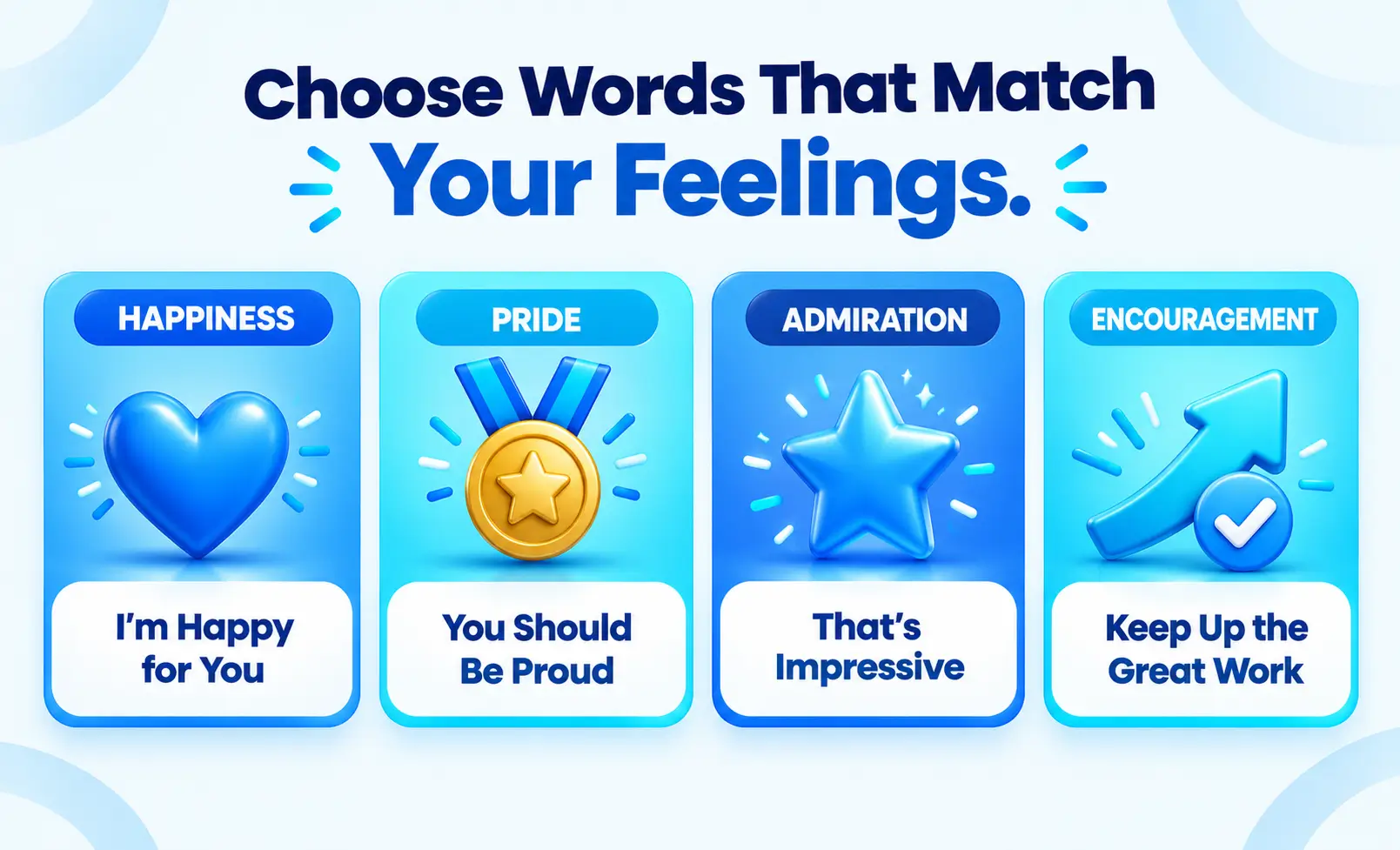
Another way to say “good for you” includes “congratulations,” “well done,” “that’s impressive,” “I’m happy for you,” and “you should be proud.” The best alternative depends on your intention. Use encouraging phrases to celebrate achievements, express genuine happiness for someone, or respond casually when a friend shares good news.
Key Takeaways
- “Good for you” can express praise, encouragement, or happiness for another person.
- “Congratulations” works well when someone achieves an important goal.
- “Well done” recognizes effort, skill, or a successful result.
- “I’m happy for you” sounds warm and sincere.
- Context and tone determine whether a phrase feels supportive or sarcastic.
Finding another way to say good for you can help you express praise more clearly. Although this phrase often sounds positive, its meaning can change depending on your tone, relationship, and situation.
You might congratulate a coworker on a promotion, encourage a friend who started exercising, or celebrate a family member’s success. Choosing the right words makes your response sound more natural, personal, and sincere.
What Does “Good for You” Mean?

“Good for you” is a common American English expression used to show approval, encouragement, or happiness about someone’s actions or achievements. People often use it when someone reaches a goal, makes a positive change, or shares exciting news.
For example, you might say it when a friend finishes a difficult course or a colleague receives a promotion. The expression can communicate genuine support, but it may also sound sarcastic if you use a dismissive tone.
The context matters just as much as the words themselves. Choosing a more specific expression can make your meaning easier to understand.
Why Use Other Ways to Say “Good for You”?
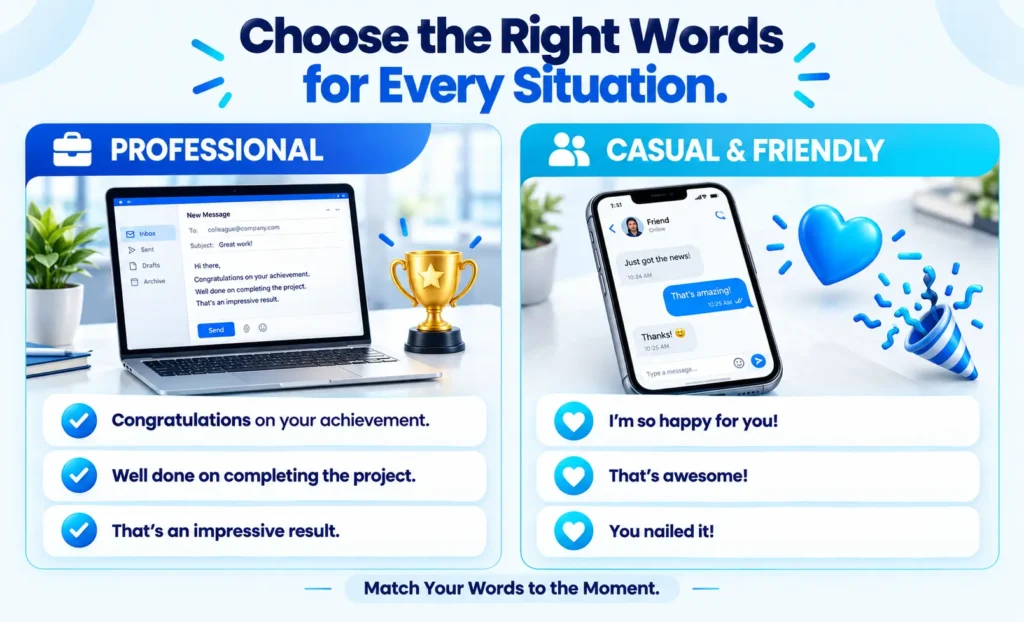
Using different expressions helps you match your words to the situation. It also makes everyday conversations and professional messages feel less repetitive.
Consider using an alternative when you want to:
- Avoid repetition: Keep conversations fresh and natural.
- Sound more sincere: Show that you genuinely care about someone’s success.
- Recognize effort: Praise the hard work behind an achievement.
- Communicate professionally: Respond appropriately to workplace news.
- Express encouragement: Help someone feel confident about their progress.
For example, “Well done” recognizes a successful result, while “I’m happy for you” emphasizes your personal happiness. Both communicate support, but they create slightly different feelings.
10 Best Other Ways to Say “Good for You”
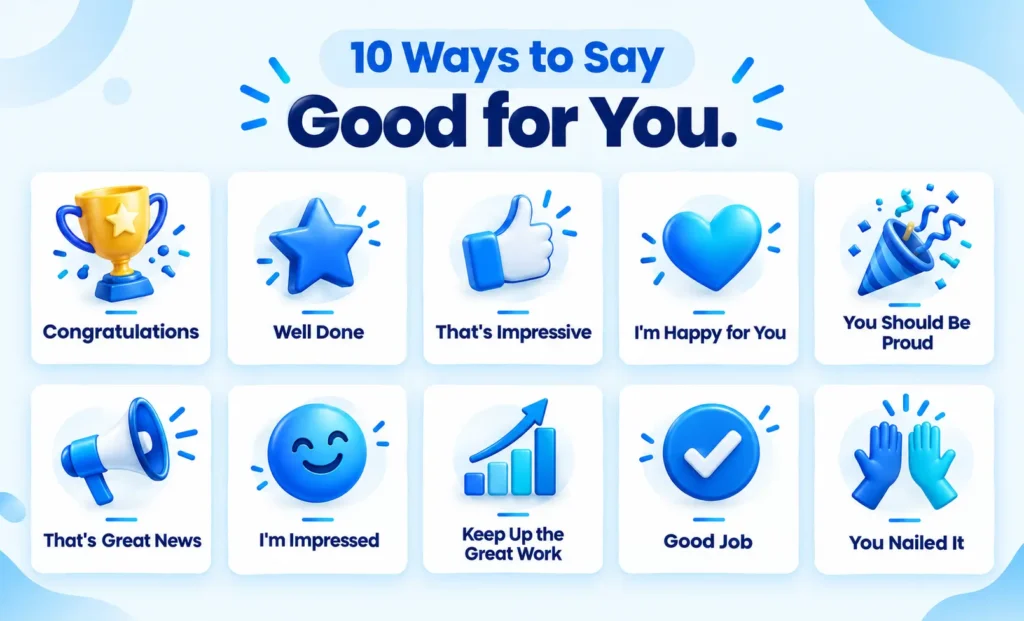
1. Congratulations
Meaning
“Congratulations” is a positive expression used to celebrate someone’s achievement, good news, or important milestone. It works especially well when a person has reached a goal or received something worth celebrating.
Best For: Professional, Formal, Friendly, Warm
Example 1: Congratulations on your promotion! Your hard work has really paid off.
Example 2: Congratulations on completing your first marathon. You should be proud of yourself.
Quick Tip: Use this phrase for specific achievements, such as graduations, promotions, awards, and personal milestones.
2. Well Done
Meaning
“Well done” recognizes that someone has completed a task successfully or performed well. It places more emphasis on the person’s effort, skill, or results than on your personal feelings.
Best For: Professional, Friendly, Polite
Example 1: Well done on finishing the presentation ahead of schedule.
Example 2: You handled that difficult conversation with patience. Well done!
Quick Tip: Add a detail about what the person did well to make your praise more meaningful.
3. That’s Impressive
Meaning
“That’s impressive” expresses admiration for something that required talent, effort, persistence, or skill. It is useful when you want to recognize an accomplishment without sounding overly emotional.
Best For: Professional, Casual, Friendly
Example 1: You learned an entire new software system in two weeks? That’s impressive.
Example 2: Your team doubled its customer response rate this quarter. That’s impressive.
Quick Tip: Use this expression when someone’s achievement genuinely stands out or exceeds expectations.
4. I’m Happy for You
Meaning
“I’m happy for you” communicates genuine happiness about another person’s good news. It feels personal and supportive because it focuses on sharing their excitement rather than simply judging their achievement.
Best For: Friendly, Warm, Polite
Example 1: You finally found an apartment you love. I’m so happy for you!
Example 2: I’m happy for you now that you’ve found a job that fits your goals.
Quick Tip: Choose this phrase when you want to show emotional support, especially with friends, relatives, or close colleagues.
5. You Should Be Proud
Meaning
“You should be proud” encourages someone to recognize their own progress or achievement. It is particularly helpful when a person has worked hard, overcome a challenge, or accomplished something that matters to them.
Best For: Friendly, Warm, Polite
Example 1: You balanced school and a full-time job all semester. You should be proud.
Example 2: You kept practicing until you mastered that difficult song. You should be proud of yourself.
Quick Tip: Use this expression to recognize effort, not just the final result. It can be especially encouraging after a challenging experience.
6. That’s Great News
Meaning
“That’s great news” is a friendly way to respond when someone shares a positive update. It shows enthusiasm without requiring you to explain why the achievement matters.
Best For: Casual, Friendly, Warm
Example 1: You got the apartment you applied for? That’s great news!
Example 2: That’s great news about your scholarship. I know you’ve been waiting to hear back.
Quick Tip: Follow it with a question, such as “When do you start?” to keep the conversation going naturally.
7. I’m Impressed
Meaning
“I’m impressed” communicates that someone’s actions or results have earned your admiration. It can sound more personal than “that’s impressive” because it directly expresses your reaction.
Best For: Professional, Casual, Friendly
Example 1: I’m impressed by how clearly you explained the project to the client.
Example 2: You restored that old bicycle yourself? I’m genuinely impressed.
Quick Tip: Use this phrase when you can point to a specific skill, decision, or result that deserves recognition.
8. Keep Up the Great Work
Meaning
“Keep up the great work” recognizes someone’s current performance while encouraging them to continue. Unlike a simple compliment, it looks toward future progress and ongoing success.
Best For: Professional, Friendly, Polite
Example 1: Your weekly reports have been clear and accurate. Keep up the great work.
Example 2: Your reading practice is paying off. Keep up the great work!
Quick Tip: This expression works best when someone is making consistent progress. Avoid using it if the person needs rest or support rather than pressure to do more.
9. Good Job
Meaning
“Good job” is a simple, familiar way to praise someone for completing a task or doing something successfully. It suits everyday conversations and many informal workplace situations.
Best For: Casual, Friendly, Professional
Example 1: You fixed the formatting issues before the deadline. Good job!
Example 2: Good job organizing the family reunion. Everything ran smoothly.
Quick Tip: Make the praise more specific by mentioning the action or result. This helps the other person understand exactly what you appreciated.
10. You Nailed It
Meaning
“You nailed it” is an informal expression that means someone did something extremely well. It is common in American English and works especially well when a person performs confidently or achieves the desired result.
Best For: Casual, Friendly
Example 1: Your audition was fantastic. You nailed it!
Example 2: That was exactly the right answer during the meeting. You nailed it.
Quick Tip: Save this phrase for relaxed conversations or informal team settings. It may sound too casual in formal business correspondence.
Comparison Table
| Alternative | Best Used In | Tone |
|---|---|---|
| Congratulations | Achievements and milestones | Positive, celebratory |
| Well Done | Successful tasks and efforts | Appreciative |
| That’s Impressive | Remarkable accomplishments | Admiring |
| I’m Happy for You | Personal good news | Warm, supportive |
| You Should Be Proud | Personal growth and challenges | Encouraging |
| That’s Great News | Everyday positive updates | Enthusiastic |
| I’m Impressed | Notable skills or results | Respectful, admiring |
| Keep Up the Great Work | Ongoing performance | Motivational |
| Good Job | Everyday accomplishments | Casual, positive |
| You Nailed It | Informal successes | Enthusiastic, casual |
Common Mistakes When Saying “Good for You”
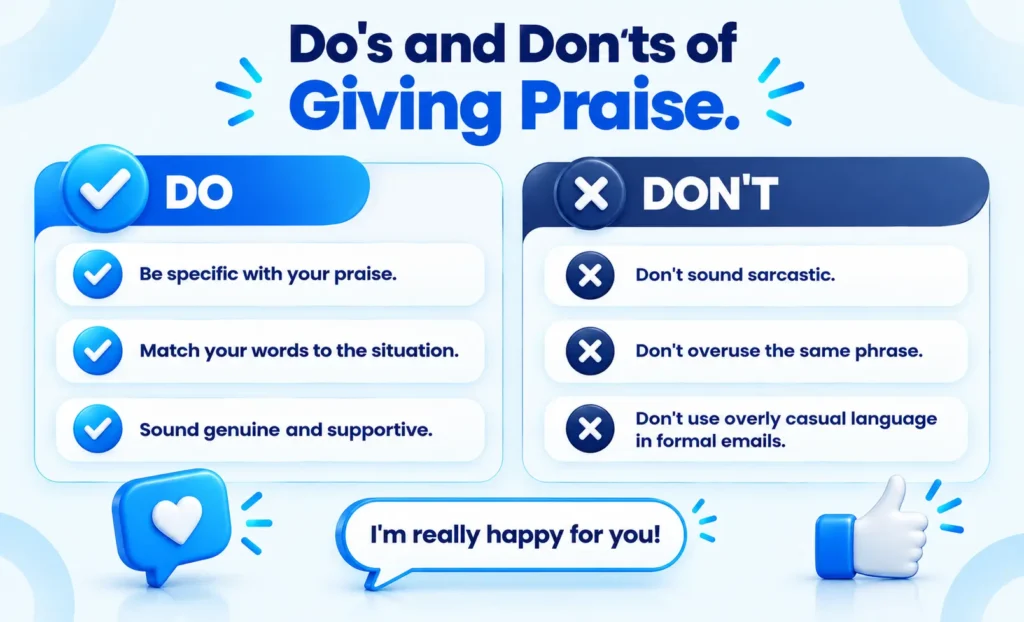
Choosing an alternative is not only about vocabulary. Your relationship with the person and the situation also affect how your words sound.
- Using casual phrases in formal emails. Expressions such as “You nailed it” may sound too relaxed when writing to a senior executive or an unfamiliar client. Choose “Congratulations” or “Well done” instead.
- Choosing overly formal language. A phrase such as “Please accept my congratulations” may feel unnatural when responding to a friend’s everyday success. Simple, friendly language usually works better.
- Repeating the same phrase. Using “Good job” in every conversation can make your praise sound automatic. Choose an expression that reflects the specific achievement.
- Ignoring the person’s feelings. Someone may have worked hard toward a goal but still feel disappointed with the outcome. Recognize their effort and listen before offering a quick compliment.
- Sounding sarcastic or insincere. “Good for you” can sound dismissive when delivered with the wrong tone. If you genuinely support someone, a direct statement such as “I’m happy for you” may communicate your feelings more clearly.
Frequently Asked Questions
1. What is another way to say “good for you”?
You can say “Congratulations,” “Well done,” “That’s impressive,” or “I’m happy for you.” Each phrase has a slightly different meaning. Choose “Congratulations” for an achievement, “Well done” to praise performance, and “I’m happy for you” when you want to express genuine personal happiness.
2. What is a professional way to say “good for you”?
“Congratulations,” “Well done,” and “That’s an impressive achievement” are professional alternatives. They communicate respect without sounding overly casual. In a workplace email, you can also mention the specific accomplishment to make your message more thoughtful and show that you recognize the person’s contribution.
3. How do you say “good for you” in a friendly way?
Try “I’m so happy for you,” “That’s awesome,” or “You nailed it!” These expressions work well when talking to friends or people you know well. Match your response to the news and your usual communication style so your enthusiasm feels genuine rather than exaggerated.
4. Is “good for you” a compliment?
Yes, “good for you” can be a compliment when it expresses approval, admiration, or encouragement. However, the phrase can also sound sarcastic, depending on the speaker’s tone and the situation. If you want to avoid confusion, use a clearer alternative such as “That’s wonderful news” or “I’m happy for you.”
5. What is another way to say “good for you” sarcastically?
People sometimes use “good for you” sarcastically to suggest that they are unimpressed or do not care about another person’s achievement. Sarcasm depends heavily on tone and context. If your goal is to communicate genuine support, avoid expressions that could be interpreted as dismissive.
6. What can I say instead of “good for you” in a text message?
For a text message, you can write “That’s amazing!”, “So happy for you!”, “Congrats!”, or “You did it!” These short expressions feel natural in everyday American English. Add a personal detail when appropriate, such as mentioning how hard the person worked or how long they waited for the news.
7. How do you respond when someone says “good for you”?
You can respond with “Thank you,” “I appreciate that,” or “Thanks, I’ve worked hard for this.” If the other person is celebrating your achievement, you can share a little more about your experience. A simple, sincere response is usually enough to keep the conversation comfortable.
8. Is “well done” better than “good for you”?
Neither expression is always better; the choice depends on context. “Well done” directly praises someone’s performance or effort, making it useful at work or after completing a task. “Good for you” is broader and can express approval, encouragement, or happiness about a personal decision.
Conclusion
Finding another way to say good for you helps you express encouragement, appreciation, and happiness with greater clarity. The best expression depends on what happened, how well you know the person, and the tone you want to convey.
Use “Congratulations” to celebrate a major achievement and “Well done” to recognize effort or successful performance. When a friend shares exciting personal news, “I’m happy for you” often sounds warmer and more sincere. For remarkable results, “That’s impressive” communicates admiration, while “Keep up the great work” encourages continued progress.
Remember that context matters as much as vocabulary. A phrase that sounds friendly in a casual conversation may feel too informal in a business email. Choose words that fit the relationship and acknowledge the person’s actual experience.
The best approach is simple: be specific, be genuine, and let your words show that you truly care about the other person’s success.

The Majestic Studio Editorial Team creates practical resources about synonyms, alternative phrases, vocabulary, and English usage. Our content is designed to help readers choose clearer, more natural words and communicate effectively in everyday, professional, and academic contexts.
Each article is researched, edited, and reviewed for clarity, context, usefulness, and language accuracy. We regularly update our content to keep examples and recommendations relevant.