
Looking for another way to say in this article? Try “in this post,” “in this guide,” “in this piece,” “throughout this article,” or “in the following sections.” These alternatives help introduce information, explain topics, and guide readers. The best choice depends on whether you’re writing a blog post, academic paper, professional report, or educational guide.
Key Takeaways
- “In this article” introduces the topic or purpose of written content.
- Alternatives such as “in this guide” and “in this post” sound natural and engaging.
- Formal writing often benefits from phrases like “this paper examines.”
- Different expressions help avoid repetition and improve readability.
- The best alternative depends on your audience, tone, and content type.
What Does “In This Article” Mean?

The phrase “in this article” tells readers what they can expect from a piece of writing. Writers commonly use it to introduce a topic, explain the purpose of their content, or highlight important information.
For example:
“In this article, we’ll explain how to improve your communication skills.”
This sentence clearly introduces the subject and helps readers understand what they’ll learn.
You’ll often find this expression in blog posts, online publications, educational resources, and professional articles.
Although it’s grammatically correct, repeating it can make writing feel predictable. Choosing another way to say in this article can make introductions more interesting.
Why Use Other Ways to Say “In This Article”?

Using different introductory phrases helps your writing sound more natural and professional.
Whether you’re creating educational content or preparing a business report, the right wording can improve your message.
Here are some benefits:
- Avoid repetition: Keep introductions fresh and interesting.
- Improve readability: Make sentences easier to follow.
- Match your audience: Choose formal or conversational language.
- Create smoother transitions: Connect ideas without awkward wording.
- Increase engagement: Give readers a clear reason to continue reading.
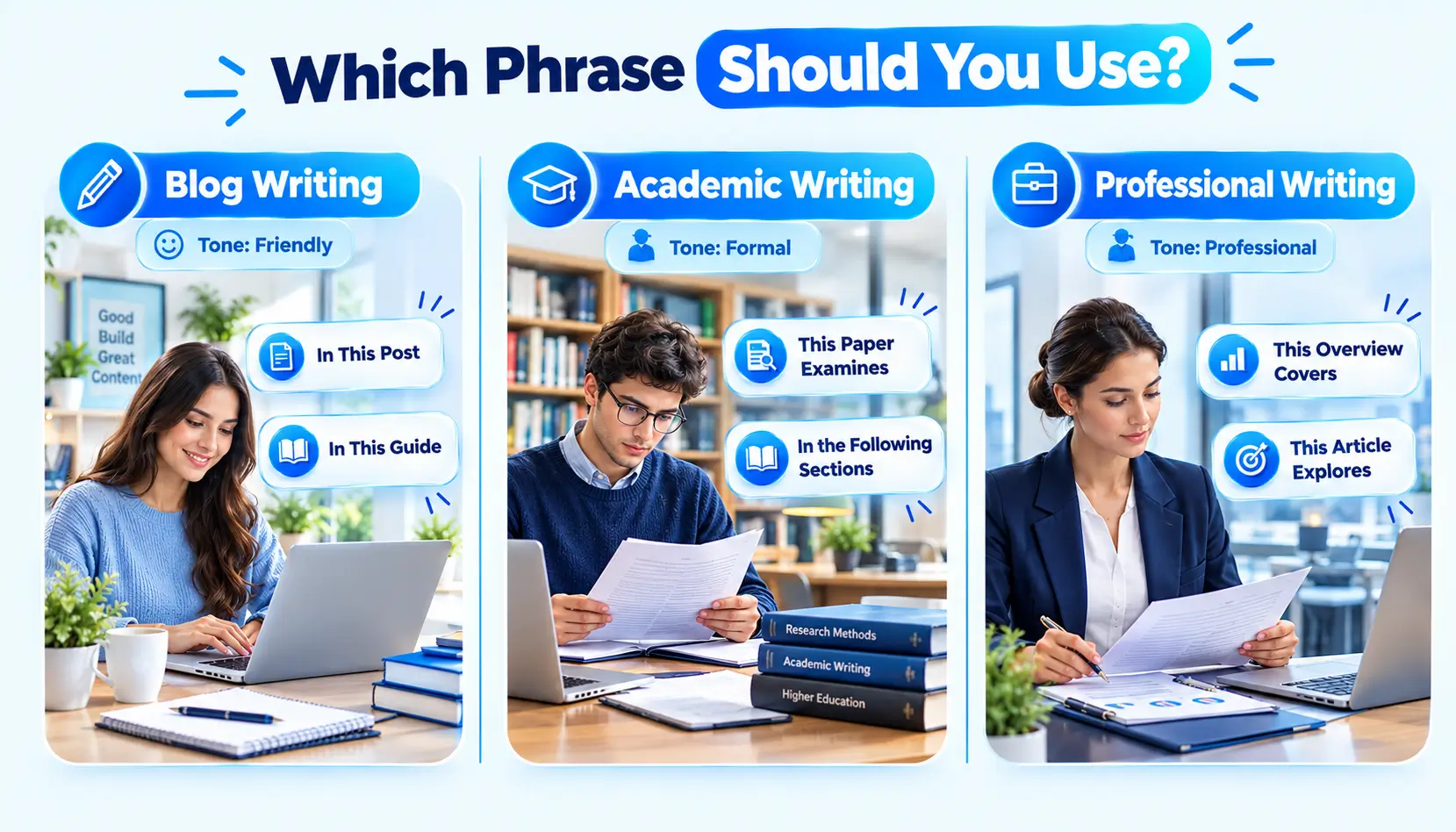
For example, “in this guide” works well for tutorials, while “this paper examines” fits academic writing.
10 Best Other Ways to Say “In This Article”
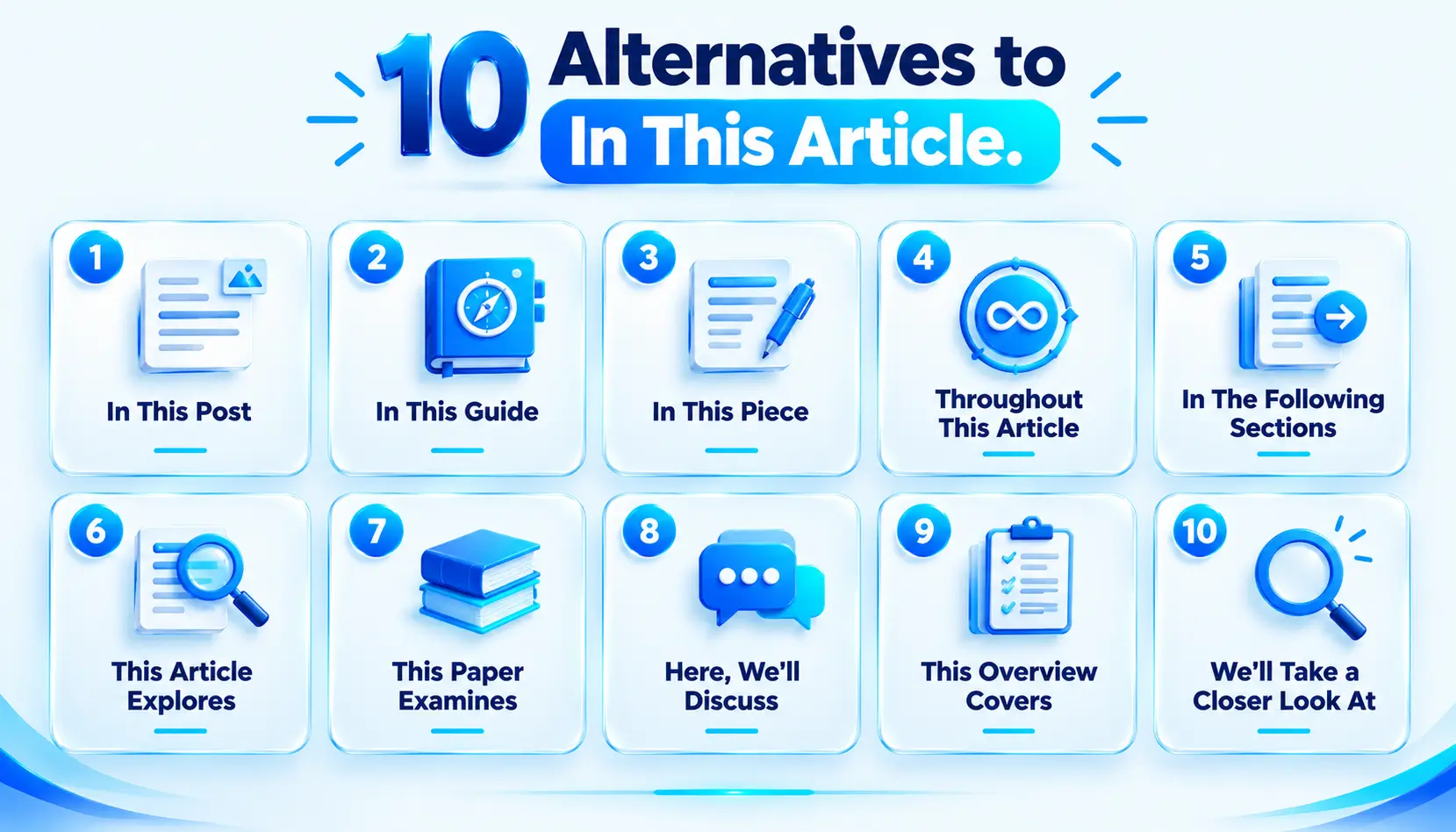
Here are 10 useful alternatives with meanings, examples, and practical tips.
1. In This Post
Meaning
“In this post” is a friendly alternative commonly used in blogs and online publications. It makes your writing feel approachable and conversational.
Best For: Casual, Friendly, Professional
Example 1: In this post, we’ll share five practical ways to improve your daily routine.
Example 2: In this post, you’ll discover simple strategies for managing your time.
Quick Tip: Use this expression for blog content, especially when addressing readers directly.
2. In This Guide
Meaning
“In this guide” suggests that your content provides instructions, explanations, or practical advice. It prepares readers for helpful information presented in an organized way.
Best For: Professional, Friendly, Polite
Example 1: In this guide, you’ll learn how to create a realistic monthly budget.
Example 2: In this guide, we explain the steps involved in starting a small business.
Quick Tip: Choose this phrase for tutorials, how-to articles, and detailed educational resources.
3. In This Piece
Meaning
“In this piece” refers to a written work without specifying its format. It sounds polished and works particularly well for opinion articles, commentary, and editorial writing.
Best For: Professional, Formal
Example 1: In this piece, we explore how technology influences modern relationships.
Example 2: In this piece, the author discusses the challenges facing independent artists.
Quick Tip: Use this alternative when your content focuses on analysis, opinions, or storytelling.
4. Throughout This Article
Meaning
“Throughout this article” emphasizes information discussed across multiple sections. Unlike a simple introduction, it suggests that a topic will appear repeatedly or develop as readers continue.
Best For: Professional, Formal
Example 1: Throughout this article, we’ll examine the benefits of regular physical activity.
Example 2: Throughout this article, several examples illustrate the importance of clear communication.
Quick Tip: Use this phrase when a subject continues across the entire article, not just one section.
5. In the Following Sections
Meaning
“In the following sections” directs readers toward information presented later in the document. It creates a clear transition between an introduction and the main discussion.
Best For: Formal, Professional, Polite
Example 1: In the following sections, we’ll compare several popular project management methods.
Example 2: In the following sections, you’ll find practical advice for preparing for a job interview.
Quick Tip: Choose this expression when your article contains multiple organized sections.
6. This Article Explores
Meaning
“This article explores” introduces a topic that requires discussion, investigation, or explanation. It sounds confident and avoids unnecessary introductory wording.
Best For: Professional, Formal
Example 1: This article explores the relationship between sleep quality and workplace productivity.
Example 2: This article explores how community programs support local families.
Quick Tip: Use “explores” when examining different aspects of a subject rather than providing step-by-step instructions.
7. This Paper Examines
Meaning
“This paper examines” is a formal expression used in academic and research writing. It indicates that the document analyzes a specific issue, argument, or research question.
Best For: Formal, Professional
Example 1: This paper examines the effects of remote learning on student participation.
Example 2: This paper examines the economic challenges experienced by small rural communities.
Quick Tip: Reserve this expression for research papers, academic essays, and formal analytical documents.
8. Here, We’ll Discuss
Meaning
“Here, we’ll discuss” introduces a topic in a direct, conversational manner. It creates a sense of connection between the writer and the reader.
Best For: Friendly, Casual, Professional
Example 1: Here, we’ll discuss simple ways to build stronger workplace relationships.
Example 2: Here, we’ll discuss what first-time homeowners should know before buying property.
Quick Tip: Use this phrase when you want your introduction to feel welcoming and easy to understand.
9. This Overview Covers
Meaning
“This overview covers” tells readers that the content summarizes essential information about a subject. It works best when presenting major points rather than exploring every detail.
Best For: Professional, Formal, Polite
Example 1: This overview covers the basic requirements for applying to college.
Example 2: This overview covers common cybersecurity risks facing small businesses.
Quick Tip: Choose this expression for summaries, introductory reports, and beginner-friendly explanations.
10. We’ll Take a Closer Look At
Meaning
“We’ll take a closer look at” signals that the writer will explain or examine something in greater detail. Its conversational tone helps create interest without sounding overly formal.
Best For: Friendly, Casual, Professional
Example 1: We’ll take a closer look at how healthy eating habits affect energy levels.
Example 2: We’ll take a closer look at the features that make electric vehicles appealing to drivers.
Quick Tip: Use this expression when moving from a broad introduction into a more detailed explanation.
Comparison Table: Alternatives to “In This Article”
The following table helps you choose the most suitable expression for your writing.
| Alternative | Best Used In | Tone |
|---|---|---|
| In This Post | Blogs, online content | Casual, Friendly |
| In This Guide | Tutorials, educational articles | Helpful, Professional |
| In This Piece | Editorials, opinion writing | Polished, Professional |
| Throughout This Article | Detailed discussions | Formal, Professional |
| In the Following Sections | Structured reports, long articles | Organized, Formal |
| This Article Explores | Analytical articles | Professional |
| This Paper Examines | Research papers, academic essays | Academic, Formal |
| Here, We’ll Discuss | Conversational blogs | Friendly, Casual |
| This Overview Covers | Summaries, introductory reports | Clear, Professional |
| We’ll Take a Closer Look At | Explanatory articles | Engaging, Friendly |
For most blog posts, “in this guide” and “in this post” are natural choices. Academic writing generally benefits from more precise expressions.
Common Mistakes When Replacing “In This Article”
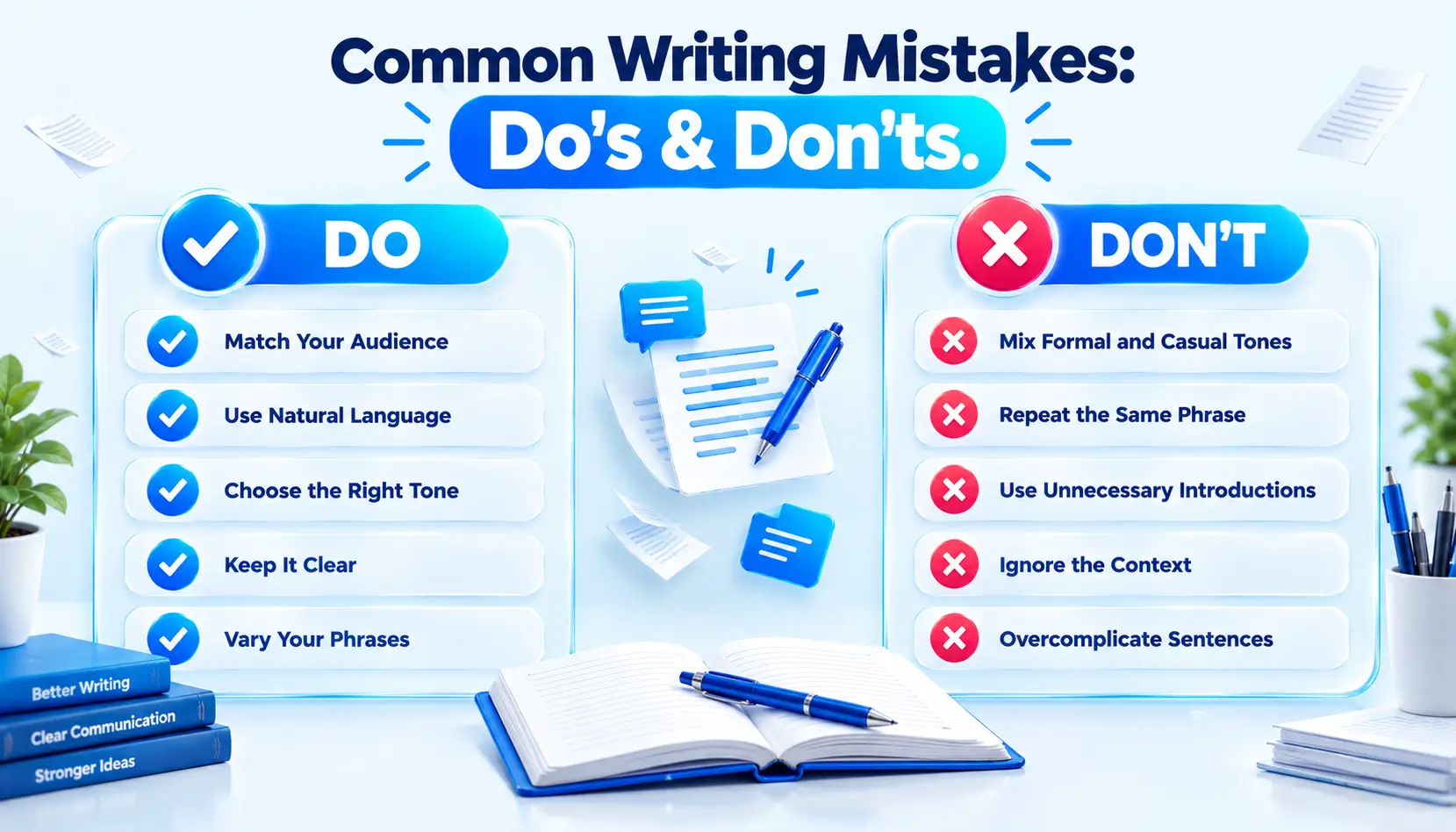
Even useful alternatives can weaken your writing when used incorrectly.
1. Using Casual Language in Academic Writing
Expressions like “here, we’ll discuss” may sound too conversational for formal research papers.
Choose “this paper examines” when a more academic tone is appropriate.
2. Choosing Overly Formal Expressions
Using “this paper examines” in a friendly lifestyle blog can make the introduction feel stiff.
Match your language to your readers’ expectations.
3. Repeating the Same Alternative
Replacing every occurrence of “in this article” with “in this guide” doesn’t solve repetition.
Vary your sentence structure and remove unnecessary introductions.
4. Ignoring the Content Format
Calling a short opinion post a “comprehensive guide” may create misleading expectations.
Choose descriptions that accurately represent your content.
5. Adding Unnecessary Introductory Phrases
Not every paragraph needs an expression announcing what comes next.
Sometimes, starting directly with useful information makes your writing stronger.
Frequently Asked Questions
1. What is another way to say “in this article”?
Common alternatives include “in this post,” “in this guide,” “in this piece,” and “in the following sections.” You can also write “this article explores” or “here, we’ll discuss.” Choose based on your writing style. Blogs often benefit from conversational expressions, while academic documents usually require more formal language.
2. How do you say “in this article” professionally?
Professional alternatives include “this article examines,” “this overview covers,” and “the following sections explain.” These expressions clearly communicate the purpose of your content without sounding overly casual. For business reports, you can also use “this report outlines” when introducing findings, recommendations, or important information.
3. What can I say instead of “in this article” in an essay?
In an academic essay, consider “this essay examines,” “this paper argues,” or “the following discussion explores.” Each phrase serves a different purpose. Use “argues” when presenting a central claim, “examines” when analyzing a subject, and “explores” when discussing several perspectives.
4. Is “in this article” grammatically correct?
Yes, “in this article” is grammatically correct and widely accepted in English writing. It helps introduce information that appears within a written work. However, it can become repetitive when used frequently. Replacing unnecessary introductory phrases with direct statements often improves clarity and keeps readers interested.
5. Can I use “in this guide” instead of “in this article”?
Yes, especially when your content teaches readers how to complete a task or understand a subject. “In this guide” suggests practical explanations or instructions. However, it may not fit short opinion pieces or news reports. Use it when your content genuinely provides guidance.
6. What is a formal alternative to “in this article”?
Formal alternatives include “this paper examines,” “the present study investigates,” and “the following discussion addresses.” The best choice depends on the document’s purpose. Research papers may use “the present study,” while professional reports often use “this report outlines” to introduce their main findings.
7. How can I introduce an article without saying “in this article”?
Start with the topic, a useful fact, or a clear statement about what readers will learn. For example, instead of writing “In this article, we’ll explain budgeting,” write “Creating a budget starts with understanding your monthly expenses.” This approach gets to the point and avoids unnecessary introductory wording.
8. Which alternative is best for SEO-friendly blog writing?
For SEO-friendly blogs, “in this guide” and “in this post” are clear, reader-friendly options. However, no particular alternative guarantees better Google rankings. Focus on helpful information, natural language, descriptive headings, and matching search intent. A direct introduction often works better than repeating the same phrase throughout your content.
Conclusion
Finding another way to say in this article can help you create clearer, more engaging, and more professional content. Although the original expression is perfectly acceptable, using suitable alternatives gives your writing greater variety.
For friendly blog posts, try “in this post,” “in this guide,” or “here, we’ll discuss.” These expressions create a natural connection with readers.
For academic essays and formal reports, choose phrases such as “this paper examines” or “in the following sections.” They communicate purpose while maintaining a professional tone.
If you’re writing an analytical article, “this article explores” may be especially effective. For instructional content, “in this guide” is often more appropriate.
Remember that strong writing isn’t about replacing every familiar expression. It’s about choosing words that suit your message.
The best alternative is the one that helps readers understand your content quickly and naturally.

The Majestic Studio Editorial Team creates practical resources about synonyms, alternative phrases, vocabulary, and English usage. Our content is designed to help readers choose clearer, more natural words and communicate effectively in everyday, professional, and academic contexts.
Each article is researched, edited, and reviewed for clarity, context, usefulness, and language accuracy. We regularly update our content to keep examples and recommendations relevant.