

Another way to say “How can I help you?” includes “How may I assist you?”, “What can I do for you?”, “How can I assist?”, and “What do you need help with?” The best choice depends on the setting. Use formal options in professional situations and warmer phrases when speaking with friends, customers, or people who need support.
Key Takeaways
- “How can I help you?” is a polite way to offer assistance or support.
- “How may I assist you?” works well in formal and professional settings.
- “What can I do for you?” sounds natural and conversational.
- “What do you need help with?” is useful when you want to identify a specific need.
- Choose your wording based on the relationship, setting, and level of formality.
What Does “Another Way to Say How Can I Help You” Mean?
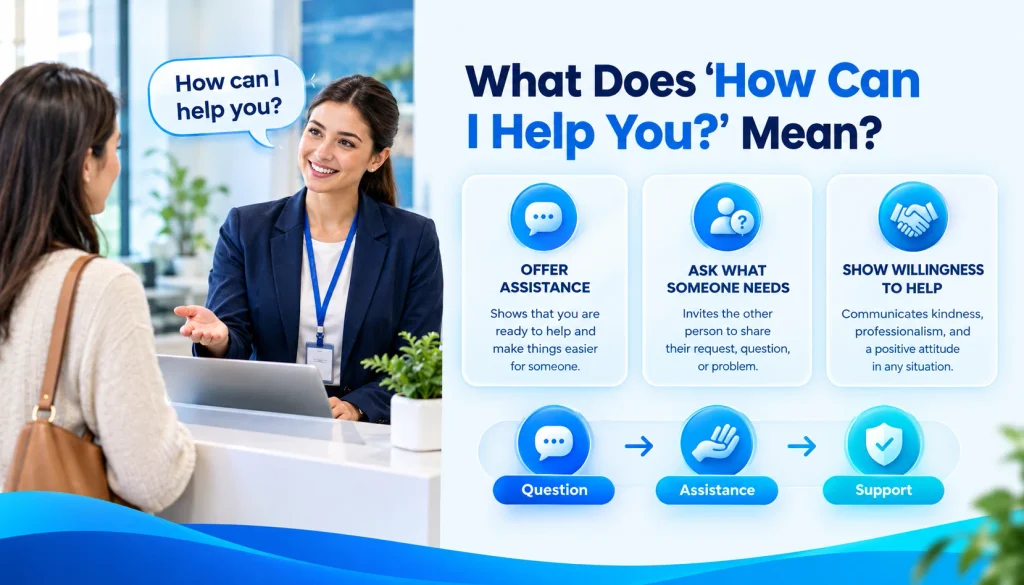
“How can I help you?” is a common English expression used when someone wants to offer assistance. It can be used by employees helping customers, coworkers supporting one another, or friends offering to solve a problem.
The phrase is polite and flexible, but repeating it too often can make your communication sound predictable. Choosing another way to say “How can I help you?” lets you adjust your tone to fit the situation.
For example, a receptionist might say “How may I assist you?”, while a friend might simply ask, “What can I do for you?”
Why Use Other Ways to Say “How Can I Help You”?
Using different expressions can make your communication sound more natural and appropriate for the situation.
Other ways to say “How can I help you?” can help you:
- Avoid repeating the same phrase.
- Sound more conversational and natural.
- Match formal and informal situations.
- Make professional communication more polished.
- Show warmth and genuine interest.
- Encourage someone to explain what they need.
The key is not to choose the most complicated phrase. Instead, choose wording that fits your relationship with the other person and the situation.

10 Best Other Ways to Say “How Can I Help You”
1. How May I Assist You?
Meaning
“How may I assist you?” is a more formal version of “How can I help you?” It shows that you are ready to provide assistance while maintaining a professional tone.
Best For
- Professional
- Formal
- Polite
Example 1
“Good morning. How may I assist you with your account today?”
Example 2
“Welcome to our office. How may I assist you?”
Quick Tip
Use this phrase with customers, clients, visitors, or people you do not know well.
2. What Can I Do for You?
Meaning
“What can I do for you?” is a natural and versatile alternative. It can communicate willingness to help without sounding overly formal.
Best For
- Friendly
- Casual
- Warm
- Polite
Example 1
“You look like you could use a hand. What can I do for you?”
Example 2
“I have a few minutes before my next meeting. What can I do for you?”
Quick Tip
This is a good everyday choice when you want to sound approachable.
3. How Can I Assist?
Meaning
“How can I assist?” offers help in a concise and professional way. Because it leaves out “you,” it can sound slightly more polished and direct.
Best For
- Professional
- Formal
- Polite
Example 1
“I’ve reviewed your request. How can I assist?”
Example 2
“If you’re having trouble with the form, how can I assist?”
Quick Tip
This works especially well in workplace conversations and customer service.
4. What Do You Need Help With?
Meaning
“What do you need help with?” focuses directly on the person’s specific problem. It encourages them to explain what they need rather than simply accepting a general offer of assistance.
Best For
- Friendly
- Casual
- Warm
- Polite
Example 1
“I saw that you were looking through the instructions. What do you need help with?”
Example 2
“Let me know what you’re working on. What do you need help with?”
Quick Tip
Use this when you already know the person needs assistance and want to identify the task.
5. Is There Anything I Can Do to Help?
Meaning
“Is there anything I can do to help?” sounds supportive and considerate. It gives the other person room to decide whether they want assistance.
Best For
- Warm
- Friendly
- Polite
Example 1
“You’ve had a long day. Is there anything I can do to help?”
Example 2
“If you’re preparing for the event, is there anything I can do to help?”
Quick Tip
This phrase is especially effective when you want your offer to sound caring rather than transactional.
6. How Can I Be of Assistance?
Meaning
“How can I be of assistance?” is a formal expression that emphasizes your willingness to provide support. It is more formal than everyday phrases such as “What can I do for you?”
Best For
- Formal
- Professional
- Polite
Example 1
“Please let me know how I can be of assistance during the transition.”
Example 2
“Our team is available to answer your questions and determine how we can be of assistance.”
Quick Tip
Reserve this phrase for formal workplace, service, or written communication where a polished tone is appropriate.
7. What Can I Help You With?
Meaning
“What can I help you with?” is a straightforward way to ask what someone needs. It feels natural in conversations and is common when assisting customers, coworkers, or acquaintances.
Best For
- Friendly
- Casual
- Professional
- Polite
Example 1
“Hi there! What can I help you with today?”
Example 2
“You mentioned having trouble with the software. What can I help you with?”
Quick Tip
This is a useful all-purpose option when you want to sound helpful without being overly formal.
8. What Do You Need From Me?
Meaning
“What do you need from me?” asks the person to identify exactly what support, information, or action they expect from you. It can sound direct while still being helpful.
Best For
- Professional
- Casual
- Friendly
Example 1
“We have the presentation tomorrow. What do you need from me?”
Example 2
“I’m available this afternoon, so what do you need from me?”
Quick Tip
Use this with coworkers or people you already have an established relationship with.
9. Let Me Know How I Can Help
Meaning
“Let me know how I can help” is a warm way to offer support without pressuring the other person to respond immediately. It works particularly well in emails, messages, and supportive conversations.
Best For
- Professional
- Warm
- Friendly
- Polite
Example 1
“I’ll be online this afternoon, so let me know how I can help.”
Example 2
“If you have questions about the project, let me know how I can help.”
Quick Tip
This is an excellent choice for professional emails because it sounds helpful without being too formal.
10. How Can I Support You?
Meaning
“How can I support you?” focuses on ongoing assistance rather than simply completing a task. It can sound especially thoughtful when someone is facing a challenge or working toward an important goal.
Best For
- Professional
- Warm
- Friendly
- Polite
Example 1
“You’re leading the new project, so how can I support you?”
Example 2
“I know this transition has been challenging. How can I support you?”
Quick Tip
Choose this phrase when emotional, practical, or ongoing support is more important than a single task.
Comparison Table

| Alternative | Best Used In | Tone |
|---|---|---|
| How May I Assist You? | Customer service, formal workplaces | Formal |
| What Can I Do for You? | Everyday conversations | Friendly |
| How Can I Assist? | Professional conversations | Professional |
| What Do You Need Help With? | Everyday support | Friendly |
| Is There Anything I Can Do to Help? | Personal or supportive situations | Warm |
| How Can I Be of Assistance? | Formal communication | Formal |
| What Can I Help You With? | Customer service, everyday conversations | Polite |
| What Do You Need From Me? | Workplace or familiar conversations | Direct |
| Let Me Know How I Can Help | Emails and workplace messages | Warm |
| How Can I Support You? | Teamwork and supportive conversations | Supportive |
Common Mistakes
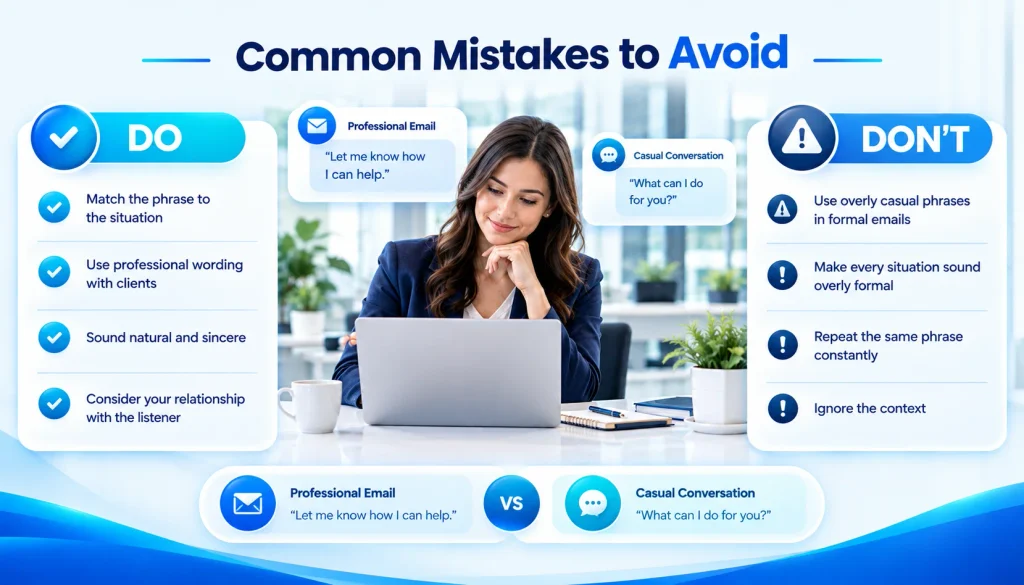
1. Using Casual Phrases in Professional Emails
Some expressions can sound too relaxed when communicating with a client, manager, or formal contact. Choose professional wording when the relationship or setting requires it.
2. Choosing Overly Formal Language
Not every situation needs “How may I assist you?” A simple “What can I do for you?” may sound more natural when speaking with a coworker or friend.
3. Repeating the Same Phrase
Using “How can I help you?” in every conversation can make your communication feel repetitive. Vary your wording when the context allows it.
4. Forgetting the Context
A phrase that works well with a customer may not fit a close friend. Consider the relationship, setting, and purpose before choosing an alternative.
5. Sounding Insincere
A polished phrase does not automatically sound caring. If someone is dealing with a difficult situation, choose language that communicates genuine support rather than simply offering a standard response.
Frequently Asked Questions

1. What is another way to say “How can I help you?” professionally?
A strong professional alternative is “How may I assist you?” Other choices include “How can I assist?”, “How can I be of assistance?”, and “Let me know how I can help.” The best option depends on how formal your workplace or communication needs to be.
2. What is a friendly way to say “How can I help you?”
“What can I do for you?” and “What do you need help with?” are friendly alternatives. They sound natural in everyday conversations and avoid the more formal tone of “How may I assist you?” They work well with friends, coworkers, customers, and acquaintances.
3. How do you say “How can I help you?” in an email?
For a professional email, you can write “Let me know how I can help” or “Please let me know how I can assist.” These expressions are polite and concise without sounding overly formal. They also make it easy for the recipient to explain what they need.
4. What is a more formal way to say “How can I help you?”
“How may I assist you?” is one of the most formal alternatives. “How can I be of assistance?” is another option for formal settings. These phrases can work in customer service, business correspondence, reception areas, and other professional environments.
5. Is “What can I do for you?” polite?
Yes, “What can I do for you?” is generally polite and natural. However, the tone can change depending on context and delivery. In most everyday conversations, it sounds friendly and helpful. In some situations, a more formal phrase may be better.
6. What can I say instead of “How can I help?” at work?
At work, you can say “How can I assist?”, “What can I help you with?”, “What do you need from me?”, or “Let me know how I can help.” Choose based on the situation. “What do you need from me?” is more direct, while “Let me know how I can help” sounds warmer.
7. What is a warm way to offer help?
“Is there anything I can do to help?” is a warm and considerate option. “How can I support you?” also works well when someone is dealing with a challenge or needs ongoing assistance. Both phrases communicate willingness to help without forcing the person to accept your offer.
8. What is the best alternative to “How can I help you?”
There is no single alternative that fits every situation. “How may I assist you?” suits formal communication, while “What can I do for you?” works naturally in everyday conversations. For supportive situations, “How can I support you?” may communicate your intention more clearly.
Conclusion
There are many natural ways to say “How can I help you,” and the right choice depends on your situation. For formal or professional communication, “How may I assist you?” and “How can I assist?” create a polished tone. For everyday conversations, “What can I do for you?” and “What can I help you with?” sound more relaxed and approachable.
If you want to show genuine care, try “Is there anything I can do to help?” or “How can I support you?” In workplace emails, “Let me know how I can help” is a simple and effective choice.
The best alternative is not necessarily the most formal one. Choose the phrase that matches your relationship, setting, and the kind of support you want to offer.

The Majestic Studio Editorial Team creates practical resources about synonyms, alternative phrases, vocabulary, and English usage. Our content is designed to help readers choose clearer, more natural words and communicate effectively in everyday, professional, and academic contexts.
Each article is researched, edited, and reviewed for clarity, context, usefulness, and language accuracy. We regularly update our content to keep examples and recommendations relevant.