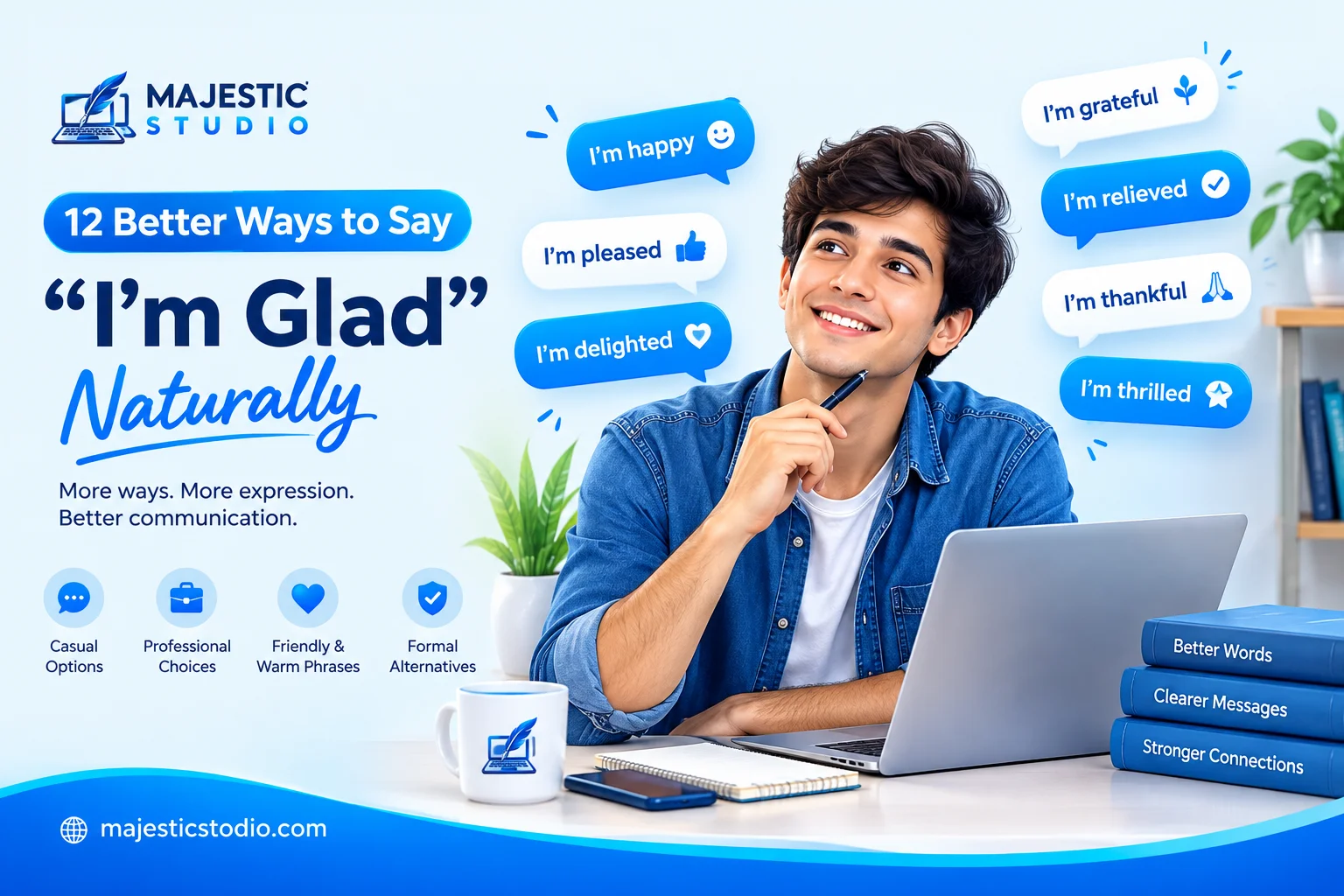
Another way to say “I’m glad” includes I’m happy, I’m pleased, I’m delighted, I’m grateful, I’m relieved, I’m thankful, I’m thrilled, I’m glad to hear that, I’m happy for you, and I’m pleased to know that. The best choice depends on whether you want to sound casual, warm, professional, or more enthusiastic.
Key Takeaways
- “I’m glad” expresses happiness, satisfaction, relief, or appreciation.
- I’m happy is the simplest everyday alternative.
- I’m pleased works well in professional and formal situations.
- I’m delighted adds warmth and stronger enthusiasm.
- Choose an alternative based on the situation, relationship, and level of emotion.
What Does “Another Way to Say I’m Glad” Mean?
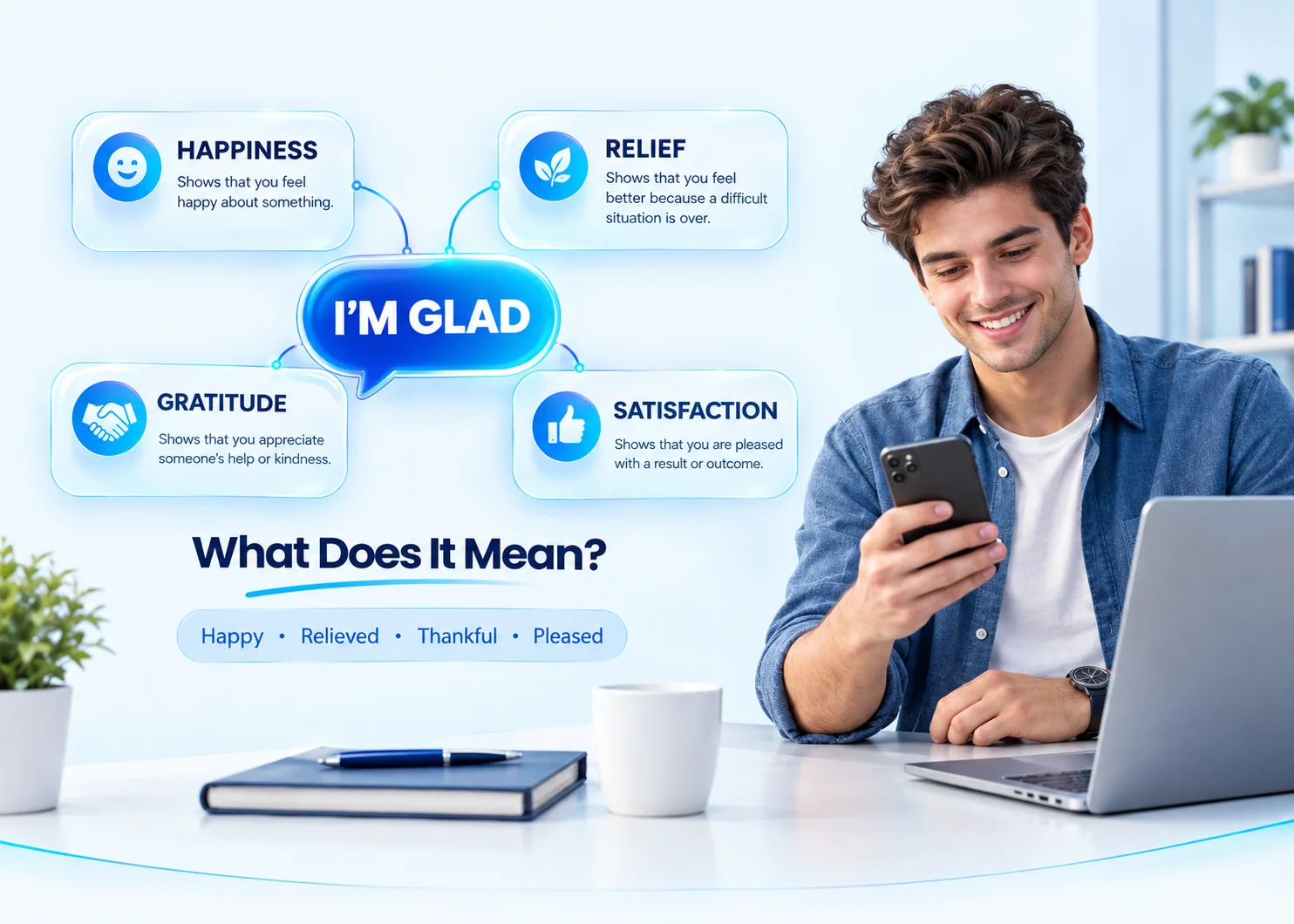
The phrase “I’m glad” usually means that you feel happy, pleased, relieved, or satisfied about something. For example, you might say, “I’m glad you made it home safely” to show that you feel relieved and happy about someone’s safe arrival.
People often look for another way to say “I’m glad” when they want to avoid repetition or express their feelings more precisely. The right alternative can make a message sound warmer, more professional, more enthusiastic, or more sincere.
Why Use Other Ways to Say “I’m Glad”?
Using different expressions can help you communicate the exact feeling you want to convey. While “I’m glad” is natural and versatile, it does not always capture the level of happiness, relief, or appreciation behind your message.
Other expressions can help you:
- Avoid repeating the same phrase.
- Sound more natural in conversation.
- Match a professional or formal setting.
- Show stronger excitement or enthusiasm.
- Express relief more clearly.
- Make congratulations and supportive messages warmer.
12 Best Other Ways to Say “I’m Glad”
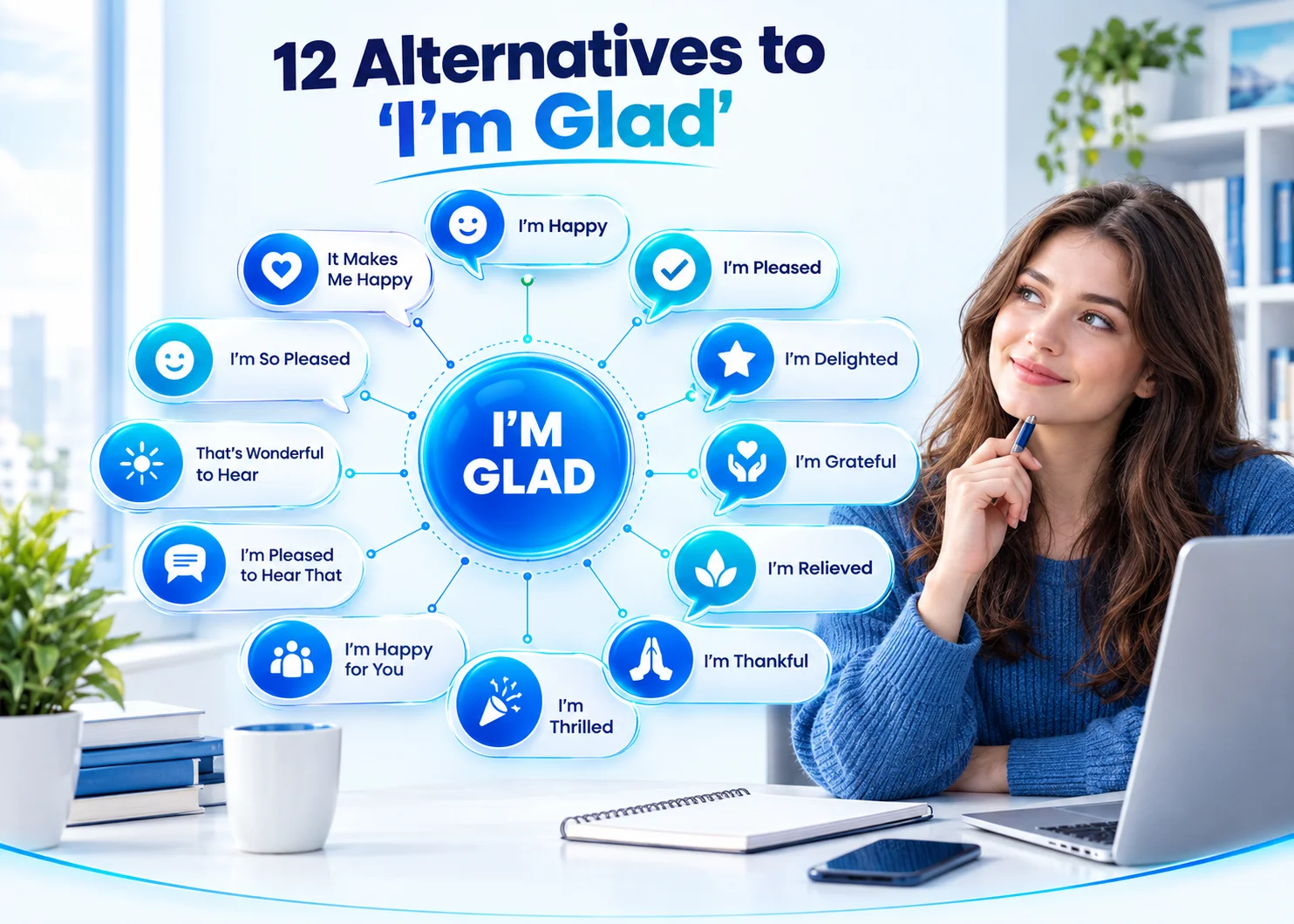
1. I’m Happy
Meaning
“I’m happy” is one of the most natural alternatives to “I’m glad.” It expresses genuine pleasure or positive feelings about a situation, person, or outcome.
Best For
- Casual
- Friendly
- Warm
- Polite
Example 1
I’m happy to hear that your interview went well.
Example 2
I’m happy that we finally had a chance to catch up.
Quick Tip
Use “I’m happy” when you want a simple, everyday expression that sounds natural in almost any conversation.
2. I’m Pleased
Meaning
“I’m pleased” communicates satisfaction or happiness in a slightly more polished way. It is especially useful when talking about positive results or professional situations.
Best For
- Professional
- Formal
- Polite
Example 1
I’m pleased to see how much progress the team has made.
Example 2
I’m pleased that the project was completed ahead of schedule.
Quick Tip
Choose “I’m pleased” instead of “I’m glad” when you want your message to sound more professional.
3. I’m Delighted
Meaning
“I’m delighted” expresses strong happiness and genuine pleasure. It sounds warmer and more enthusiastic than the simple phrase “I’m glad.”
Best For
- Formal
- Warm
- Friendly
- Polite
Example 1
I’m delighted to hear that you accepted the scholarship.
Example 2
I’m delighted that you’ll be joining us for dinner.
Quick Tip
Use this phrase when you want to show noticeable enthusiasm without sounding overly casual.
4. I’m Grateful
Meaning
“I’m grateful” focuses more on appreciation than simple happiness. It works particularly well when someone has helped you or something positive has happened because of another person.
Best For
- Warm
- Polite
- Formal
- Professional
Example 1
I’m grateful that you took the time to explain everything.
Example 2
I’m grateful for your support during a difficult week.
Quick Tip
Use “I’m grateful” when your happiness is connected to appreciation or someone’s kindness.
5. I’m Relieved
Meaning
“I’m relieved” specifically expresses happiness because a worry, fear, or difficult situation has ended. It is more precise than “I’m glad” when the main emotion is relief.
Best For
- Casual
- Friendly
- Warm
Example 1
I’m relieved to know that everyone arrived safely.
Example 2
I’m relieved that the doctor said everything looks normal.
Quick Tip
Use this expression when something went wrong, might have gone wrong, or caused concern before the positive outcome.
6. I’m Thankful
Meaning
“I’m thankful” communicates appreciation and positive feelings about something you have received or experienced. It can sound especially warm in personal conversations.
Best For
- Warm
- Friendly
- Polite
- Casual
Example 1
I’m thankful that you were there when I needed help.
Example 2
I’m thankful for the opportunity to work with such a supportive team.
Quick Tip
Choose “I’m thankful” when you want to emphasize appreciation rather than excitement.
7. I’m Thrilled
Meaning
“I’m thrilled” shows strong excitement and happiness. It is much more enthusiastic than “I’m glad,” so it works best when the news or event genuinely makes you very excited.
Best For
- Casual
- Friendly
- Warm
Example 1
I’m thrilled that you got the job you wanted.
Example 2
I’m thrilled to announce that our new office is finally open.
Quick Tip
Save “I’m thrilled” for situations where your excitement is genuinely strong.
8. I’m Happy for You
Meaning
“I’m happy for you” directly expresses happiness about another person’s success, good news, or positive experience. It is common in supportive conversations.
Best For
- Casual
- Friendly
- Warm
- Polite
Example 1
You worked hard for this promotion, and I’m happy for you.
Example 2
You finally found the right house, and I’m really happy for you.
Quick Tip
Use this phrase when the positive event belongs primarily to someone else.
9. I’m Pleased to Hear That
Meaning
“I’m pleased to hear that” communicates satisfaction after receiving positive information. It sounds polished while still being friendly.
Best For
- Professional
- Formal
- Polite
Example 1
I’m pleased to hear that the client approved the proposal.
Example 2
I’m pleased to hear that your recovery is going smoothly.
Quick Tip
This is a useful choice for professional emails, workplace conversations, and polite responses to good news.
10. That’s Wonderful to Hear
Meaning
“That’s wonderful to hear” expresses warm enthusiasm about someone else’s good news. It feels conversational and positive without being overly formal.
Best For
- Friendly
- Warm
- Casual
- Polite
Example 1
That’s wonderful to hear! I’m sure your family is excited.
Example 2
That’s wonderful to hear. Congratulations on the new opportunity!
Quick Tip
Use this phrase when responding directly to someone who has just shared positive news.
11. I’m So Pleased
Meaning
“I’m so pleased” adds extra warmth and emphasis to the idea of being happy or satisfied. It works well when the situation has personal importance.
Best For
- Warm
- Friendly
- Polite
- Formal
Example 1
I’m so pleased that you were able to attend the celebration.
Example 2
I’m so pleased with the final design; it turned out beautifully.
Quick Tip
The word “so” adds emotional emphasis, so use it when you want your happiness to feel more personal.
12. It Makes Me Happy
Meaning
“It makes me happy” describes the emotional effect that a person, action, or situation has on you. It can sound particularly sincere and personal.
Best For
- Warm
- Friendly
- Casual
- Polite
Example 1
It makes me happy to see everyone enjoying themselves.
Example 2
It makes me happy knowing that my advice was useful.
Quick Tip
Use this expression when you want to focus on how something positively affects your emotions.
Comparison Table
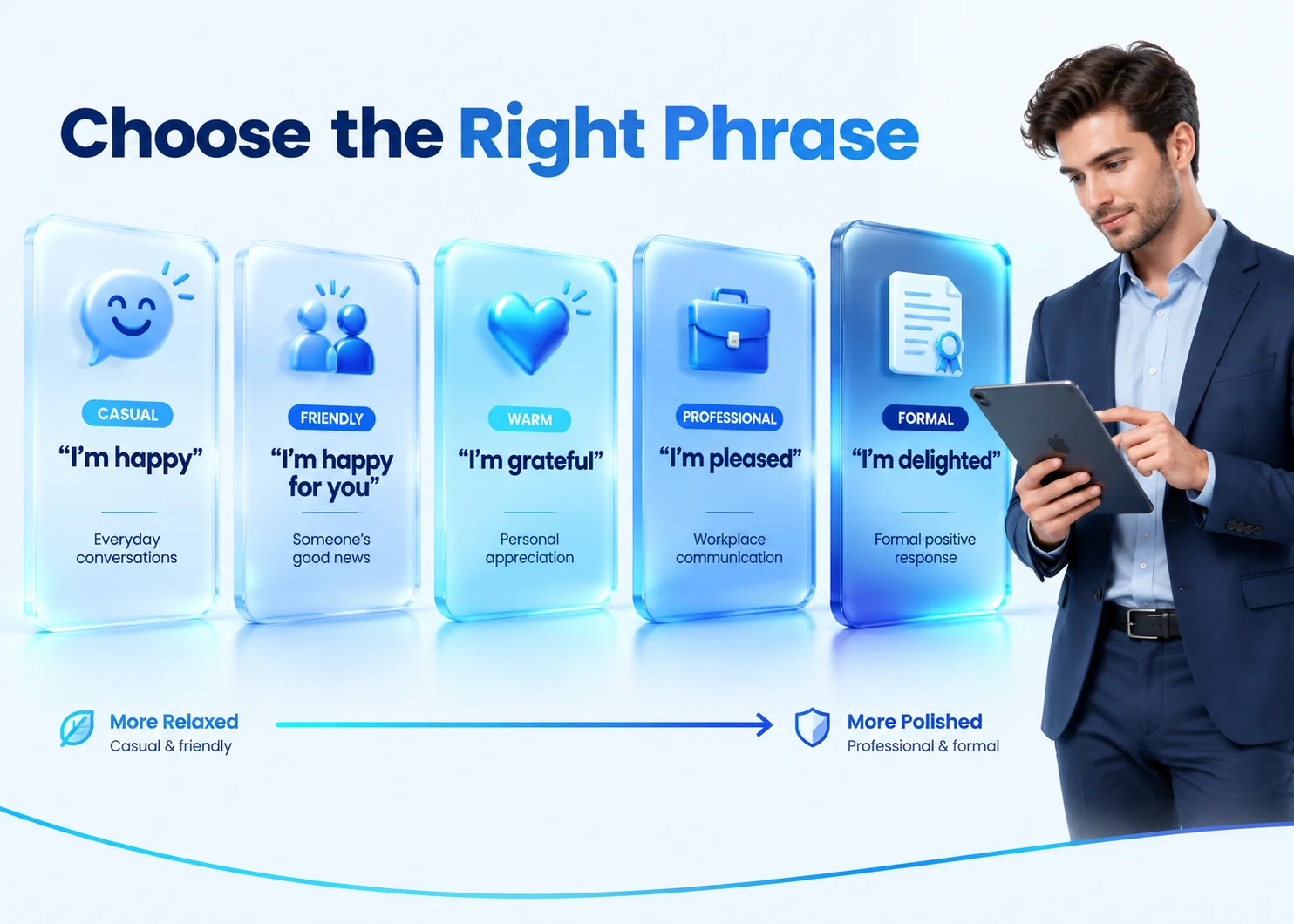
| Alternative | Best Used In | Tone |
|---|---|---|
| I’m Happy | Everyday conversations | Casual, Friendly |
| I’m Pleased | Work and formal situations | Professional, Polite |
| I’m Delighted | Good news and special occasions | Warm, Enthusiastic |
| I’m Grateful | Appreciation and support | Warm, Polite |
| I’m Relieved | Positive outcomes after worry | Warm, Casual |
| I’m Thankful | Personal appreciation | Warm, Friendly |
| I’m Thrilled | Exciting news | Enthusiastic, Casual |
| I’m Happy for You | Someone else’s success | Friendly, Warm |
| I’m Pleased to Hear That | Professional responses | Formal, Polite |
| That’s Wonderful to Hear | Responding to good news | Friendly, Warm |
| I’m So Pleased | Meaningful positive situations | Warm, Polite |
| It Makes Me Happy | Personal emotional reactions | Warm, Friendly |
Common Mistakes
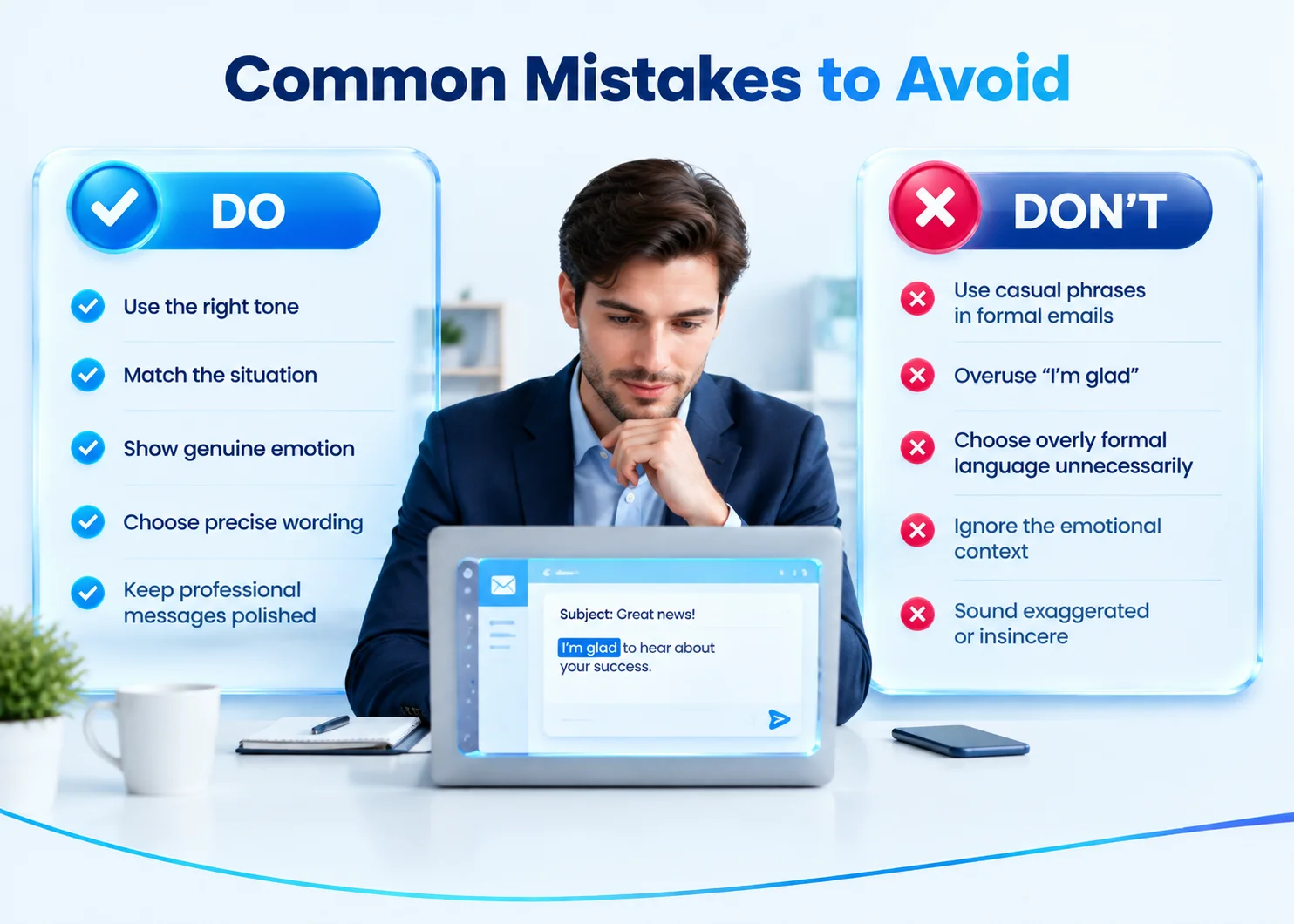
1. Using Casual Phrases in Professional Emails
Expressions such as “I’m thrilled” can sometimes sound too enthusiastic for a formal workplace message. Choose “I’m pleased” when a polished tone is more appropriate.
2. Choosing Overly Formal Language
Not every conversation needs sophisticated wording. Saying “I’m delighted” in a simple text message can feel less natural than “I’m happy.”
3. Repeating the Same Phrase
Using “I’m glad” several times in one conversation can make your writing feel repetitive. Vary your wording when the context or emotion changes.
4. Forgetting the Context
“I’m relieved” communicates a different emotion from “I’m thrilled.” Make sure your alternative matches what you actually feel.
5. Sounding Insincere
Very strong phrases can feel exaggerated if the situation is minor. Choose language that reflects the real level of emotion behind your message.
Frequently Asked Questions
What is another way to say “I’m glad”?
Common alternatives include “I’m happy,” “I’m pleased,” “I’m delighted,” “I’m grateful,” and “I’m relieved.” The best option depends on the situation. For everyday conversations, “I’m happy” sounds natural. For professional communication, “I’m pleased” is often a better fit.
What is a professional way to say “I’m glad”?
“I’m pleased” is a strong professional alternative to “I’m glad.” You can also say “I’m pleased to hear that” or “I’m pleased to know that” when responding to positive information. These expressions sound courteous and polished without being overly formal.
What is a formal way to say “I’m glad”?
For formal situations, you can use “I’m pleased,” “I’m delighted,” or “I’m grateful,” depending on the meaning. “I’m pleased” works well for professional satisfaction, while “I’m delighted” expresses stronger happiness.
How can I say “I’m glad to hear that” differently?
You can say “I’m happy to hear that,” “I’m pleased to hear that,” “That’s wonderful to hear,” or “I’m delighted to hear that.” Choose based on your desired tone. “I’m pleased to hear that” works especially well in professional communication.
What is a friendly way to say “I’m glad”?
“I’m happy,” “That’s wonderful to hear,” and “I’m happy for you” are friendly alternatives. They work naturally in texts, conversations, social messages, and supportive responses. For stronger excitement, “I’m thrilled” can add more energy.
What is another way to say “I’m glad you’re okay”?
“I’m relieved you’re okay” is especially natural when you were worried about the person. You could also say “I’m so happy you’re okay” for a warmer response or “It’s good to know you’re okay” for a calmer tone.
Is “I’m pleased” the same as “I’m glad”?
“I’m pleased” and “I’m glad” are closely related, but they can carry slightly different tones. “I’m glad” is more conversational and flexible, while “I’m pleased” often sounds more polished or professional. The surrounding context determines which one sounds most natural.
How do I choose the best alternative to “I’m glad”?
Start by identifying the emotion you want to express. Use “I’m happy” for simple positivity, “I’m pleased” for professional situations, “I’m relieved” after a worry ends, “I’m grateful” for appreciation, and “I’m thrilled” for strong excitement.
Conclusion
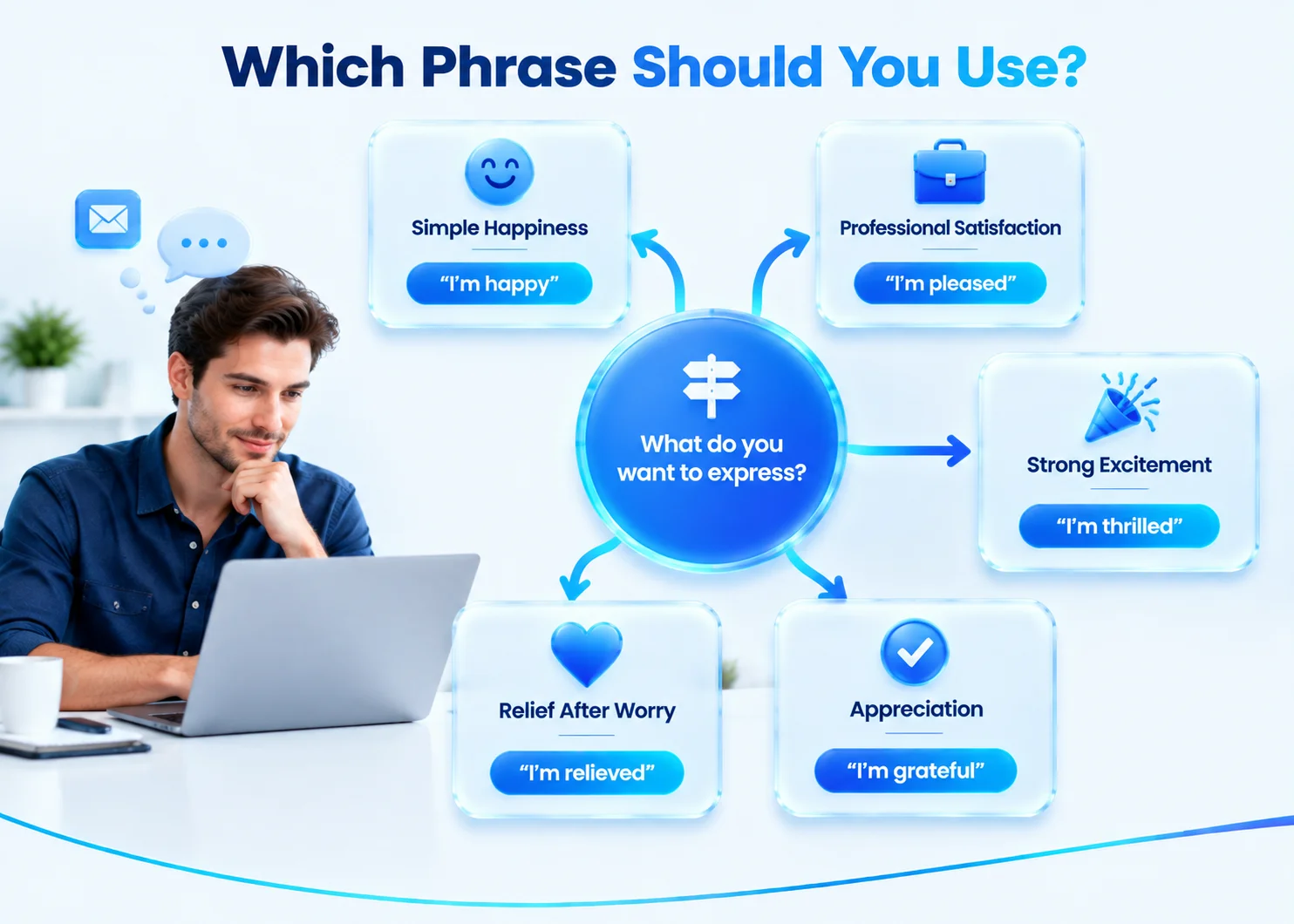
There are many natural ways to say “I’m glad,” and each one can communicate a slightly different feeling. “I’m happy” is an easy everyday choice, while “I’m pleased” works well in professional settings. For stronger emotion, “I’m delighted” or “I’m thrilled” can show greater enthusiasm.
If you want to express appreciation, “I’m grateful” or “I’m thankful” may be more accurate. When a difficult situation has a positive ending, “I’m relieved” makes the emotion clearer.
The key is to choose a phrase that matches both the situation and your relationship with the listener. A natural expression does more than replace a repeated phrase—it helps communicate exactly what you mean.

The Majestic Studio Editorial Team creates practical resources about synonyms, alternative phrases, vocabulary, and English usage. Our content is designed to help readers choose clearer, more natural words and communicate effectively in everyday, professional, and academic contexts.
Each article is researched, edited, and reviewed for clarity, context, usefulness, and language accuracy. We regularly update our content to keep examples and recommendations relevant.