
If you want another way to say “oh no,” try phrases such as “That’s unfortunate,” “Oh dear,” “What a shame,” “That’s terrible,” “I can’t believe it,” or “That’s not good.” The best choice depends on whether you want to sound casual, sympathetic, professional, surprised, or genuinely concerned.
Key Takeaways
- “Oh no” expresses surprise, concern, disappointment, or alarm.
- Casual options include “Oh dear,” “That’s not good,” and “Oh man.”
- Professional settings call for phrases such as “That’s unfortunate” or “I’m sorry to hear that.”
- Choose a phrase based on the seriousness of the situation and your relationship with the listener.
- A thoughtful alternative can make your response sound more natural and sincere.
What Does “Another Way to Say Oh No” Mean?
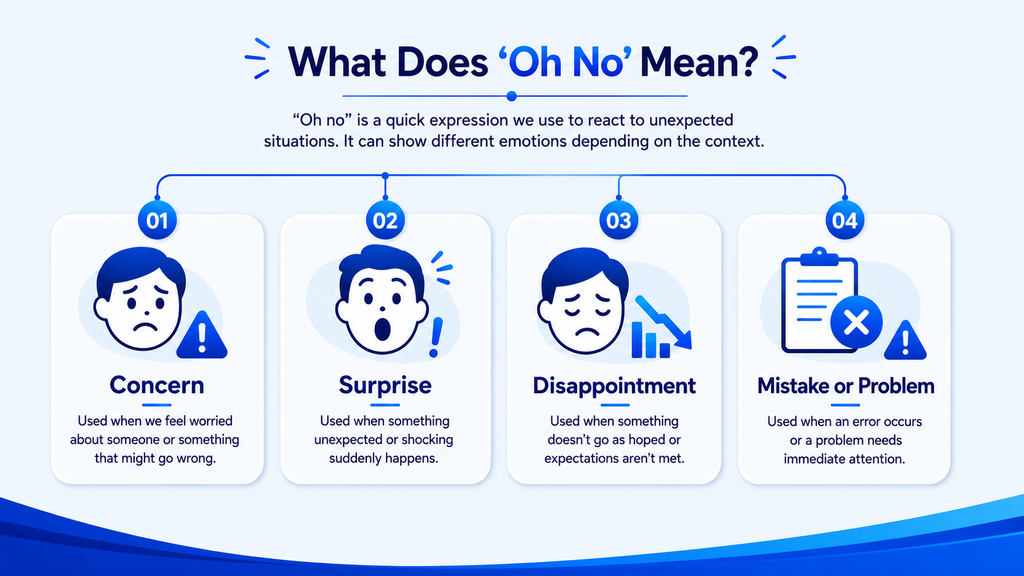
“Another way to say oh no” refers to different expressions you can use when you feel surprised, worried, disappointed, or upset about something.
People commonly say “oh no” after hearing bad news, seeing a mistake, or realizing that something went wrong. Because the phrase is informal and can express several emotions, choosing another expression can help you communicate your exact reaction more clearly.
Why Use Other Ways to Say “Oh No”?
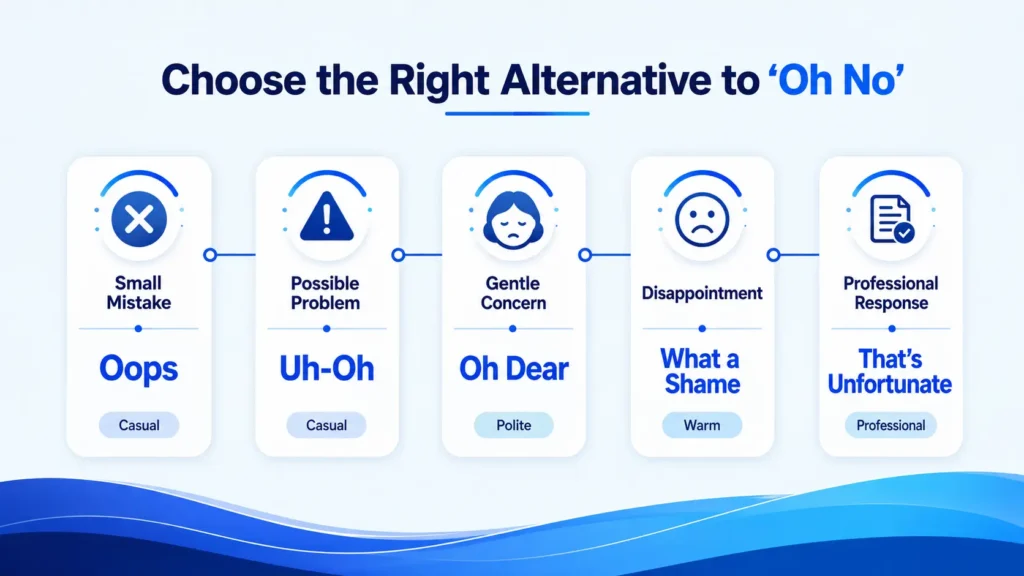
Using different expressions can make everyday conversations more natural and emotionally accurate. The right phrase can also help you adjust your response to a friend, coworker, customer, or family member.
You may want an alternative to:
- Avoid repeating the same expression.
- Show stronger concern or sympathy.
- Sound more professional at work.
- Express surprise more clearly.
- Match the seriousness of the situation.
- Make your response sound warmer and more genuine.
10 Best Other Ways to Say “Oh No”
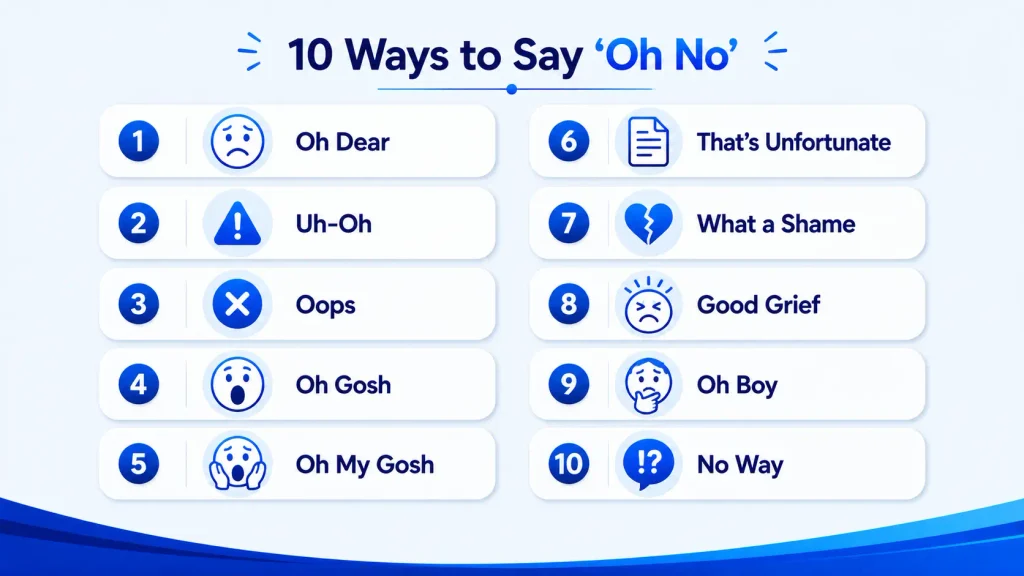
1. Oh Dear
Meaning
“Oh dear” is a gentle way to show concern, surprise, or disappointment. It usually sounds softer than “oh no,” so it works well when something has gone wrong but the situation is not extremely serious.
Best For
- Casual
- Friendly
- Warm
- Polite
Example 1
“Oh dear, I think I left my keys at the restaurant.”
Example 2
“Oh dear, your presentation file seems to have disappeared.”
Quick Tip
Use “oh dear” when you want to sound concerned without making your reaction feel dramatic.
2. That’s Unfortunate
Meaning
“That’s unfortunate” expresses sympathy or disappointment in a calm, controlled way. It is especially useful when you want to acknowledge bad news without sounding overly emotional.
Best For
- Professional
- Formal
- Polite
Example 1
“That’s unfortunate. I hope the airline can find your luggage soon.”
Example 2
“That’s unfortunate, but we can look for another solution.”
Quick Tip
This is one of the safest alternatives to “oh no” in professional conversations.
3. That’s Not Good
Meaning
“That’s not good” is a simple and natural expression of concern. It can describe anything from a small problem to a situation that may require immediate attention.
Best For
- Casual
- Friendly
- Polite
Example 1
“That’s not good. The car is making that noise again.”
Example 2
“That’s not good. We may have missed the last train.”
Quick Tip
Use it when you want to sound concerned but still keep your response straightforward.
4. What a Shame
Meaning
“What a shame” shows disappointment about an unfortunate outcome. It often carries a sympathetic feeling, especially when someone missed an opportunity or something they looked forward to did not happen.
Best For
- Friendly
- Warm
- Polite
- Casual
Example 1
“What a shame you couldn’t make it to the concert.”
Example 2
“What a shame the picnic was canceled because of the rain.”
Quick Tip
This phrase works especially well when you feel disappointed for someone else.
5. I’m Sorry to Hear That
Meaning
“I’m sorry to hear that” is a compassionate response to someone’s bad news or difficult experience. It focuses more on empathy than surprise.
Best For
- Professional
- Formal
- Friendly
- Warm
- Polite
Example 1
“I’m sorry to hear that your flight was canceled.”
Example 2
“I’m sorry to hear that your project didn’t receive approval.”
Quick Tip
Choose this expression when someone is sharing disappointing, stressful, or painful news.
6. Oh Man
Meaning
“Oh man” is an informal expression that can show surprise, frustration, disappointment, or concern. The meaning depends heavily on the speaker’s tone and the situation.
Best For
- Casual
- Friendly
Example 1
“Oh man, I forgot to charge my phone before leaving.”
Example 2
“Oh man, that was a tough game to lose.”
Quick Tip
Keep this phrase for relaxed conversations with friends, family, or people you know well.
7. That’s Terrible
Meaning
“That’s terrible” communicates strong concern or sympathy when something genuinely bad has happened. It carries more emotional weight than a simple “oh no.”
Best For
- Friendly
- Warm
- Polite
- Casual
Example 1
“That’s terrible. I hope everyone got home safely.”
Example 2
“That’s terrible news about the store closing.”
Quick Tip
Reserve it for situations that are serious enough to justify a stronger emotional response.
8. I Can’t Believe It
Meaning
“I can’t believe it” emphasizes shock or disbelief. You can use it when something unexpected happens, whether the outcome is disappointing, surprising, or simply hard to accept.
Best For
- Casual
- Friendly
- Warm
Example 1
“I can’t believe it—we actually missed the deadline.”
Example 2
“I can’t believe it. They sold out before we arrived.”
Quick Tip
Use this phrase when surprise is more important than sympathy.
9. That’s Too Bad
Meaning
“That’s too bad” is a common American English expression for showing mild sympathy or disappointment. It sounds natural in everyday conversations and is usually less intense than “that’s terrible.”
Best For
- Casual
- Friendly
- Polite
Example 1
“That’s too bad. Maybe you can join us next time.”
Example 2
“That’s too bad your favorite restaurant was closed.”
Quick Tip
This is a useful all-purpose option when you want to sound sympathetic without overreacting.
10. What Happened?
Meaning
“What happened?” is useful when something seems wrong and you want more information. Unlike “oh no,” it does not directly express disappointment, but it shows concern and invites the other person to explain.
Best For
- Casual
- Friendly
- Polite
- Professional
Example 1
“What happened? You looked excited about the trip yesterday.”
Example 2
“What happened to the order? It was supposed to arrive this morning.”
Quick Tip
Use this when you want to move beyond your initial reaction and understand the situation.
Comparison Table
| Alternative | Best Used In | Tone |
| Oh Dear | Casual conversations | Gentle, concerned |
| That’s Unfortunate | Work or formal situations | Professional, calm |
| That’s Not Good | Everyday conversations | Concerned, direct |
| What a Shame | Disappointing situations | Sympathetic, warm |
| I’m Sorry to Hear That | Bad news | Compassionate, caring |
| Oh Man | Casual conversations | Informal, emotional |
| That’s Terrible | Serious problems | Strong, sympathetic |
| I Can’t Believe It | Unexpected events | Surprised, emotional |
| That’s Too Bad | Mild disappointments | Casual, sympathetic |
| What Happened? | Unclear problems | Curious, concerned |
Common Mistakes
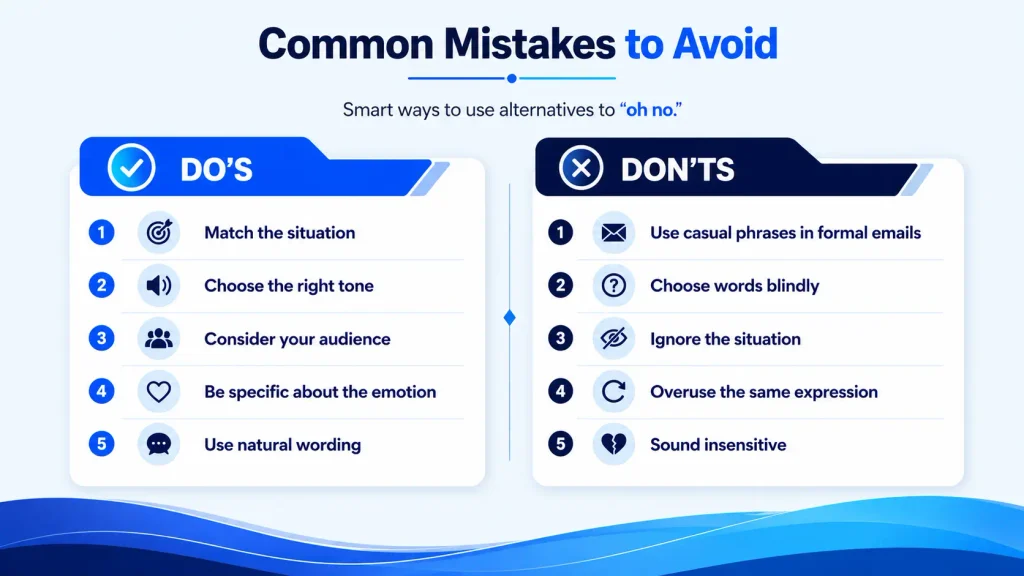
1. Using Casual Phrases in Professional Emails
Expressions such as “oh man” can sound too informal at work. Choose a calmer phrase such as “That’s unfortunate” instead.
2. Choosing an Overly Dramatic Response
Saying “That’s terrible” about a minor inconvenience can make your reaction seem exaggerated. Match the strength of your words to the situation.
3. Ignoring the Context
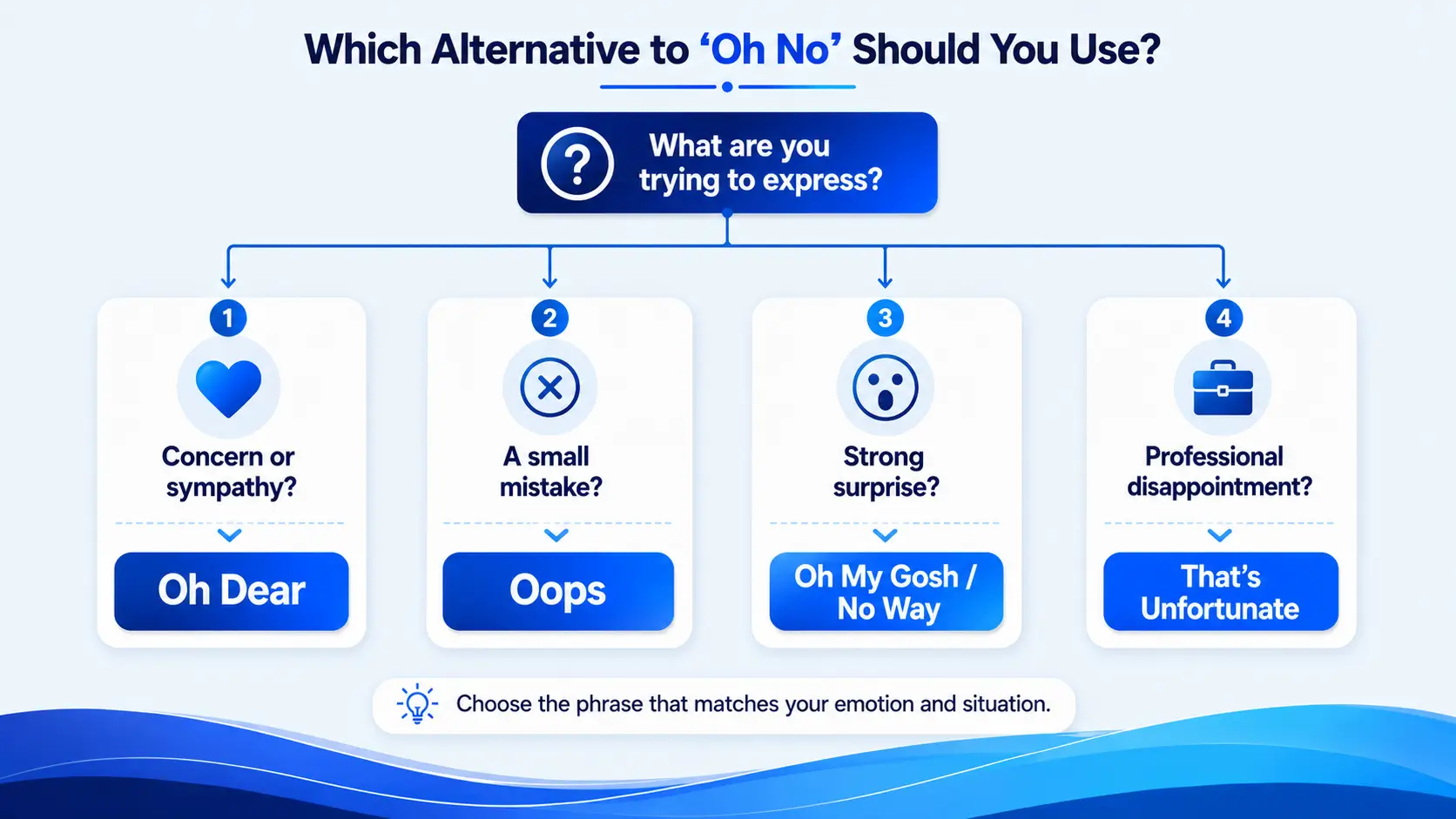
Not every alternative communicates the same emotion. “I can’t believe it” emphasizes surprise, while “I’m sorry to hear that” emphasizes sympathy.
4. Repeating the Same Phrase
Using “oh no” every time something goes wrong can make your conversations sound predictable. A few alternatives help you express more precise emotions.
5. Sounding Insincere
Avoid choosing a phrase simply because it sounds polite. Your response should match your actual feelings and the seriousness of what happened.
Frequently Asked Questions
What is a professional way to say “oh no”?
“That’s unfortunate” is a strong professional alternative to “oh no.” It communicates concern without sounding overly emotional or casual. “I’m sorry to hear that” is another good choice when someone has shared disappointing or difficult news with you.
What is a polite way to say “oh no”?
You can say “Oh dear,” “That’s unfortunate,” “What a shame,” or “I’m sorry to hear that.” The best choice depends on the situation. “Oh dear” sounds gentle, while “I’m sorry to hear that” communicates more direct sympathy.
What can I say instead of “oh no” in a text?
For a casual text, try “Oh man,” “That’s not good,” “That’s too bad,” or “I can’t believe it.” If someone is telling you about a serious problem, “I’m sorry to hear that” may sound more caring.
How do you say “oh no” without sounding rude?
Use a softer expression such as “Oh dear,” “That’s unfortunate,” or “What a shame.” Your tone also matters. Even a polite phrase can sound dismissive if you respond too quickly or fail to acknowledge the other person’s feelings.
What is another way to say “oh no” when surprised?
“I can’t believe it” is a natural choice when surprise is the main emotion. You can also say “Oh my goodness,” “That’s unexpected,” or “What happened?” depending on whether you want to emphasize shock, concern, or curiosity.
What is a sympathetic alternative to “oh no”?
“I’m sorry to hear that” is one of the most sympathetic alternatives. It directly acknowledges another person’s difficult experience. “That’s terrible” can also work when the situation is especially serious.
Can I use “that’s unfortunate” instead of “oh no”?
Yes. “That’s unfortunate” is a more restrained and professional alternative. It works especially well in workplace conversations, customer service, emails, and situations where “oh no” may sound too casual.
Is “that’s too bad” rude?
Usually, no. “That’s too bad” is a common American English expression of mild sympathy. However, it can sound dismissive if someone is describing a serious personal problem. For serious news, “I’m sorry to hear that” is usually warmer.
Conclusion
There are many natural ways to say “oh no,” and the best choice depends on your emotion and the situation. For casual conversations, “oh dear,” “oh man,” and “that’s too bad” sound relaxed and natural. When you want to express sympathy, “I’m sorry to hear that” or “what a shame” can feel more caring.
For workplace or formal communication, “that’s unfortunate” is a reliable choice because it sounds professional without being cold. If you’re mainly expressing shock, “I can’t believe it” works better than a sympathy-focused phrase.
The key is to match your words to the moment. A good alternative should communicate not only what happened but also how you genuinely feel about it. Understanding English interjections and expressions can also help you choose language that sounds natural and appropriate for the situation.