

Another way to say “on another note” is “on a different topic,” “changing the subject,” “on a related point,” “that reminds me,” or “speaking of something else.” The best alternative depends on whether you want to introduce a new subject, connect related ideas, or shift a conversation in a more professional or casual way.
Key Takeaways
- Use “on a different topic” to introduce an unrelated subject clearly.
- Choose “on a related note” when the next point connects to the previous one.
- Use “that reminds me” when something in the conversation triggers a new thought.
- Try “additionally” or “another point to consider” in professional writing.
- Match your wording to the audience, purpose, and tone of the conversation.
“On another note” is a common phrase in American English. People use it to change subjects, introduce a new idea, or move a conversation in a different direction without making the transition feel abrupt.
Although the phrase works in many situations, repeating it in every email, meeting, or conversation can make your communication sound predictable. Learning a few alternatives helps you express the same idea more naturally while matching your tone to the situation.
What Does “On Another Note” Mean?

“On another note” is a transitional phrase that signals a shift to a different subject or idea. It tells the reader or listener that the next statement may not directly follow from what came before.
People commonly use it in emails, text messages, workplace discussions, social conversations, and informal writing. For example, after discussing a project deadline, you might say, “On another note, are we still meeting on Friday?”
The phrase can introduce an unrelated topic or, depending on the context, a connected thought. Its main purpose is to make a change in direction feel smooth and natural.
Why Use Other Ways to Say “On Another Note”?

Choosing a different phrase can make your communication clearer and more engaging. It also helps you avoid relying on the same transition in every situation.
Consider using an alternative to:
- Avoid repetition: Keep emails and longer articles from sounding repetitive.
- Improve clarity: Show whether your next point is related or completely different.
- Sound more professional: Choose wording that fits meetings, reports, and business emails.
- Create a natural flow: Make everyday conversations feel less scripted.
- Match your tone: Use friendly, formal, or casual expressions when appropriate.
The key is to select a phrase that reflects the relationship between your current topic and the one you want to introduce.one you want to introduce.
12 Best Other Ways to Say “On Another Note”

These 12 alternatives help you transition between topics in professional emails, casual conversations, and formal writing. Each phrase has a slightly different meaning, so choose the one that best fits your message.
1. On a Different Topic
Meaning
“On a different topic” clearly signals that you are moving away from the current subject. It works especially well when your next point has little or no connection to the previous discussion.
Best For
Professional, Formal, Casual
Example 1
“On a different topic, have you reviewed the updated marketing proposal?”
Example 2
“On a different topic, I wanted to ask about the upcoming holiday schedule.”
Quick Tip
Use this phrase when you want to change subjects without confusing your reader.
2. On a Related Note
Meaning
“On a related note” introduces information that connects to something you have just mentioned. It helps you expand an idea or bring up a relevant detail without making a sudden transition.
Best For
Professional, Formal, Friendly, Polite
Example 1
“The team has finished the website redesign. On a related note, we should review the mobile layout before launch.”
Example 2
“Your presentation was very helpful. On a related note, could you share the research behind your final recommendation?”
Quick Tip
Choose this expression when your next point builds on the previous topic rather than introducing an unrelated subject.
3. Speaking of Something Else
Meaning
“Speaking of something else” tells your listener that you are about to discuss a different subject. It sounds conversational and works well when moving between topics during an informal discussion.
Best For
Casual, Friendly
Example 1
“The movie was better than I expected. Speaking of something else, have you tried the new restaurant downtown?”
Example 2
“We had a great time at the party. Speaking of something else, are you free this weekend?”
Quick Tip
Use this phrase with friends or familiar colleagues. For formal business writing, a more direct transition may sound better.
4. That Reminds Me
Meaning
“That reminds me” introduces a thought that comes to mind because of something previously discussed. The new topic does not have to be directly related, but the transition should feel natural.
Best For
Casual, Friendly, Professional
Example 1
“We need to update the client presentation. That reminds me, I still need your feedback on the latest draft.”
Example 2
“I enjoyed hearing about your vacation. That reminds me, I need to book my own summer trip.”
Quick Tip
Use this phrase when the previous conversation triggers a genuine thought, question, or reminder.
5. Changing the Subject
Meaning
“Changing the subject” openly acknowledges that you are moving to another topic. It is direct and easy to understand, especially when the current conversation has gone on long enough.
Best For
Casual, Friendly, Polite
Example 1
“Changing the subject, has anyone decided where we should go for dinner?”
Example 2
“Changing the subject for a moment, how is your new job going?”
Quick Tip
This phrase can sound abrupt if used without context. Add a friendly question when you want to keep the conversation comfortable.
6. Moving On to Something Else
Meaning
“Moving on to something else” signals that you are ready to leave one subject behind and discuss another. It is useful for keeping conversations and meetings organized.
Best For
Professional, Casual, Formal
Example 1
“We have covered the budget and timeline. Moving on to something else, let’s discuss the launch strategy.”
Example 2
“I think we’ve answered all the questions about the event. Moving on to something else, who will handle the invitations?”
Quick Tip
Use this phrase when you want to guide a discussion forward, especially during meetings or presentations.
7. Additionally
Meaning
“Additionally” introduces extra information that supports or extends an existing point. Unlike “on another note,” it usually suggests a connection between the information rather than a complete change of subject.
Best For
Professional, Formal
Example 1
“The new website loads faster on mobile devices. Additionally, its simplified navigation makes key pages easier to find.”
Example 2
“Our team completed the first phase ahead of schedule. Additionally, we identified several ways to reduce future costs.”
Quick Tip
Use “additionally” in reports, proposals, and business emails when introducing another supporting point.
8. Another Point to Consider
Meaning
“Another point to consider” introduces an additional factor, concern, or perspective. It encourages readers to look beyond the information already presented.
Best For
Professional, Formal, Polite
Example 1
“The current design meets our accessibility goals. Another point to consider is how it performs on older mobile devices.”
Example 2
“The proposal fits our budget. Another point to consider is the time required to train the staff.”
Quick Tip
Choose this phrase when you want to introduce a meaningful consideration rather than switch to an unrelated subject.
9. Before I Forget
Meaning
“Before I forget” introduces information that you do not want to leave unmentioned. It often signals a reminder, question, or small but important detail.
Best For
Casual, Friendly, Professional
Example 1
“Before I forget, could you send me the final version of the presentation?”
Example 2
“Before I forget, the office will be closed next Monday for the holiday.”
Quick Tip
This phrase works well for quick reminders, but avoid using it for major announcements that deserve a more formal introduction.
10. While We’re on the Subject
Meaning
“While we’re on the subject” introduces another point connected to the topic already being discussed. It helps you add information without making the transition feel unrelated.
Best For
Professional, Friendly, Casual
Example 1
“While we’re on the subject of website updates, we should also review the contact page.”
Example 2
“While we’re on the subject of travel, have you checked whether your passport is still valid?”
Quick Tip
Use this expression when the existing topic provides a natural opening for your next question or comment.
11. As for Something Else
Meaning
“As for” introduces a separate person, issue, or subject for discussion. However, the phrase “as for something else” is less idiomatic in everyday American English than many alternatives on this list.
Best For
Casual, Professional
Example 1
“As for the upcoming event, we still need to confirm the guest list.”
Example 2
“As for the second proposal, I’d like to review its estimated costs before making a decision.”
Quick Tip
For natural American English, use “as for the upcoming event” or “as for the budget” instead of “as for something else.” The wording should identify the subject you want to discuss.
12. On a Separate Note
Meaning
“On a separate note” introduces a point that deserves attention apart from the current discussion. It is similar to “on another note” but can emphasize that the new subject stands on its own.
Best For
Professional, Formal, Polite
Example 1
“The project report is ready for review. On a separate note, we should confirm the team’s availability for next month.”
Example 2
“Thank you for approving the revised design. On a separate note, could you confirm the date for our next meeting?”
Quick Tip
Use this expression in emails when you need to address a second matter without suggesting that it directly relates to the first.
Comparison Table

| Alternative | Best Used In | Tone |
|---|---|---|
| On a different topic | Emails and conversations | Direct |
| On a related note | Work discussions | Professional |
| Speaking of something else | Casual conversations | Friendly |
| That reminds me | Everyday discussions | Natural |
| Changing the subject | Informal conversations | Direct |
| Moving on to something else | Meetings and presentations | Organized |
| Additionally | Reports and proposals | Formal |
| Another point to consider | Business discussions | Thoughtful |
| Before I forget | Reminders and messages | Casual |
| While we’re on the subject | Related discussions | Conversational |
| As for the upcoming event | Emails and discussions | Neutral |
| On a separate note | Professional emails | Polite |
Common Mistakes When Using Alternatives
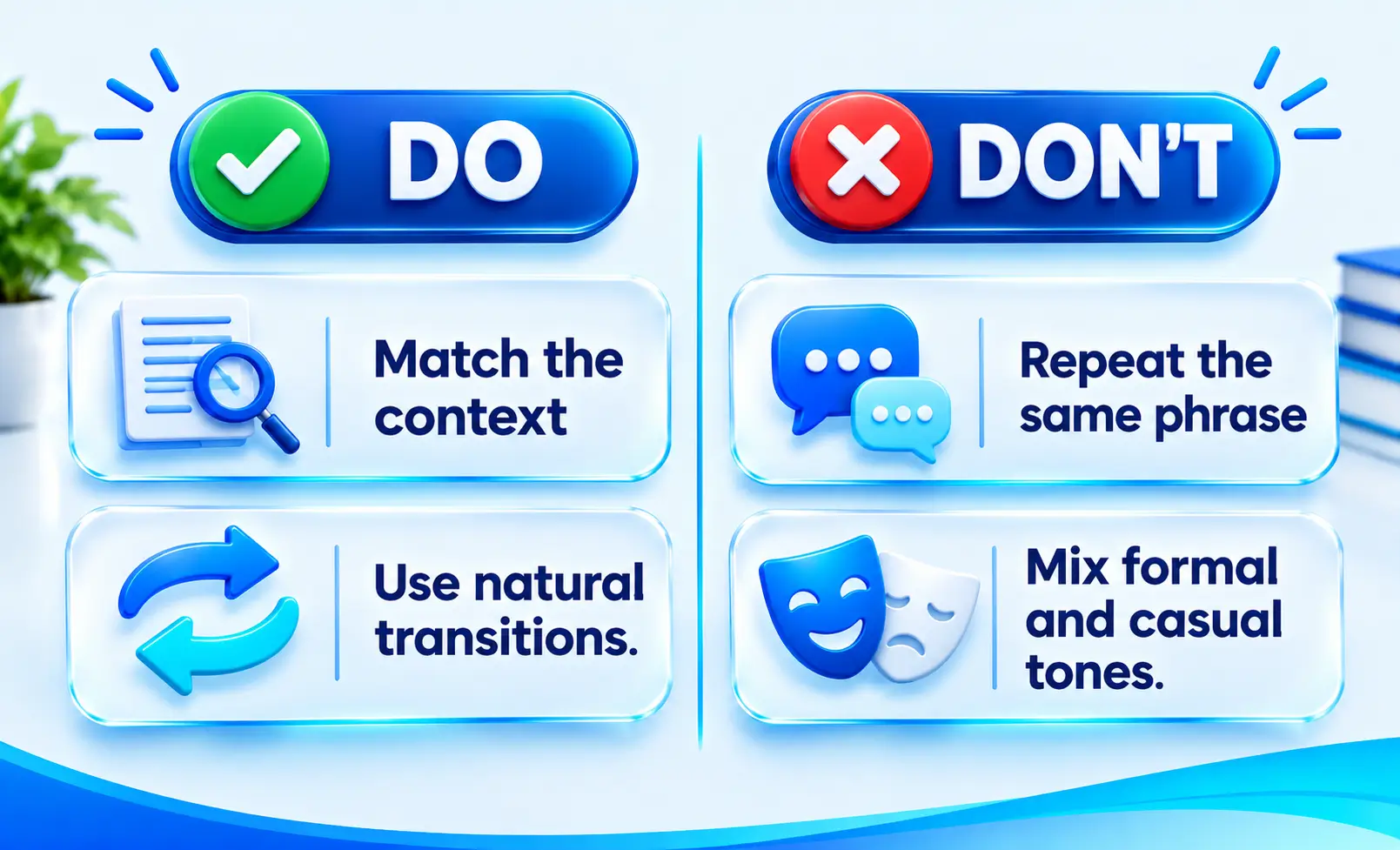
1. Using casual expressions in formal emails. Phrases such as “speaking of something else” may sound too conversational in a formal report. Choose “additionally” or a clear transition that suits your audience.
2. Choosing a phrase that does not fit the context. “On a related note” suggests a connection, while “on a different topic” signals a shift. Using the wrong expression can confuse readers.
3. Repeating the same transition too often. Starting every email paragraph with “on another note” makes your writing predictable. Vary your wording when the context supports it.
4. Making the transition unnecessarily formal. Everyday conversations rarely need complicated expressions. A simple “that reminds me” often sounds more natural than an elaborate transition.
5. Using a transition without a clear purpose. Every new phrase should help readers understand why you are introducing another point. If the change is obvious, you may not need a transition at all.
Frequently Asked Questions
1. What is the best alternative to “on another note”?
“On a different topic” is one of the clearest alternatives when you want to change subjects. However, “on a related note” is better when your next point connects to the previous one. The best choice depends on your purpose, audience, and whether you are speaking casually or writing professionally.
2. How do you say “on another note” professionally?
In professional communication, you can use “on a separate note,” “additionally,” or “another point to consider.” Use “additionally” to introduce supporting information and “on a separate note” to introduce another matter. For a meeting, “moving on to our next item” is also an effective way to guide the discussion.
3. Is “on another note” formal or informal?
“On another note” is a neutral, conversational expression that works in both professional and informal settings. You can use it in a workplace email, a team meeting, or a personal message. However, more specific alternatives may improve clarity when writing a formal report or introducing a clearly defined agenda item.
4. What can I use instead of “on another note” in an email?
For an email, try “on a separate note,” “additionally,” or “before I forget.” Choose “on a separate note” for a distinct subject, “additionally” for related information, and “before I forget” for a reminder. The right phrase helps your message flow naturally without making the transition feel forced.
5. What is a casual way to say “on another note”?
Casual alternatives include “that reminds me,” “speaking of something else,” and “changing the subject.” These expressions work well in conversations with friends, family, and familiar coworkers. Use “that reminds me” when something triggers a thought, or “changing the subject” when you want to introduce a different topic directly.
6. Can I use “additionally” instead of “on another note”?
Yes, but the phrases are not always interchangeable. “Additionally” usually introduces information that supports or extends an existing point, while “on another note” often signals a shift to a separate subject. Choose the phrase that accurately describes the relationship between your ideas so readers can follow your message easily.
7. Is “on a related note” the same as “on another note”?
Not exactly. “On a related note” specifically signals a connection between the current topic and the next point. “On another note” can introduce either a related idea or a completely different subject. If the relationship matters to your reader, choosing the more specific expression makes your writing clearer.
8. Should I use “on another note” in academic writing?
You can use it in less formal academic discussions, but it may not be the best choice for a formal essay or research paper. More precise transitions, such as “additionally,” “in contrast,” or “another consideration is,” can communicate the relationship between ideas more clearly. Select the phrase that fits your argument.
Conclusion
Choosing another way to say “on another note” can make your writing clearer, more natural, and more engaging. The best expression depends on the topic you are introducing and the tone you want to create.
For professional emails, “on a separate note” works well when addressing a different matter, while “additionally” introduces supporting information. In everyday conversations, “that reminds me” and “speaking of something else” sound friendly and relaxed. If you are leading a meeting, “moving on to something else” helps keep the discussion organized.
Remember that these phrases do not all mean exactly the same thing. Some introduce related ideas, while others signal a complete change of subject. Choose the transition that reflects your meaning, fits your audience, and helps your reader follow the conversation. Clear communication matters more than using an elaborate phrase.

The Majestic Studio Editorial Team creates practical resources about synonyms, alternative phrases, vocabulary, and English usage. Our content is designed to help readers choose clearer, more natural words and communicate effectively in everyday, professional, and academic contexts.
Each article is researched, edited, and reviewed for clarity, context, usefulness, and language accuracy. We regularly update our content to keep examples and recommendations relevant.