

Another way to say “thank God” depends on the situation. Common alternatives include “thank goodness,” “what a relief,” “I’m so glad,” “fortunately,” “thank heavens,” “I’m grateful,” “thankfully,” “that’s a relief,” “I’m relieved,” and “what a blessing.” Choose based on whether you want to sound casual, warm, formal, or thankful.
Key Takeaways
- “Thank goodness” is the closest casual alternative to “thank God.”
- “What a relief” works well when something stressful has ended.
- “Fortunately” and “thankfully” fit professional or written communication.
- “I’m so glad” sounds natural, warm, and conversational.
- The best phrase depends on your tone, audience, and situation.
What Does “Another Way to Say Thank God” Mean?
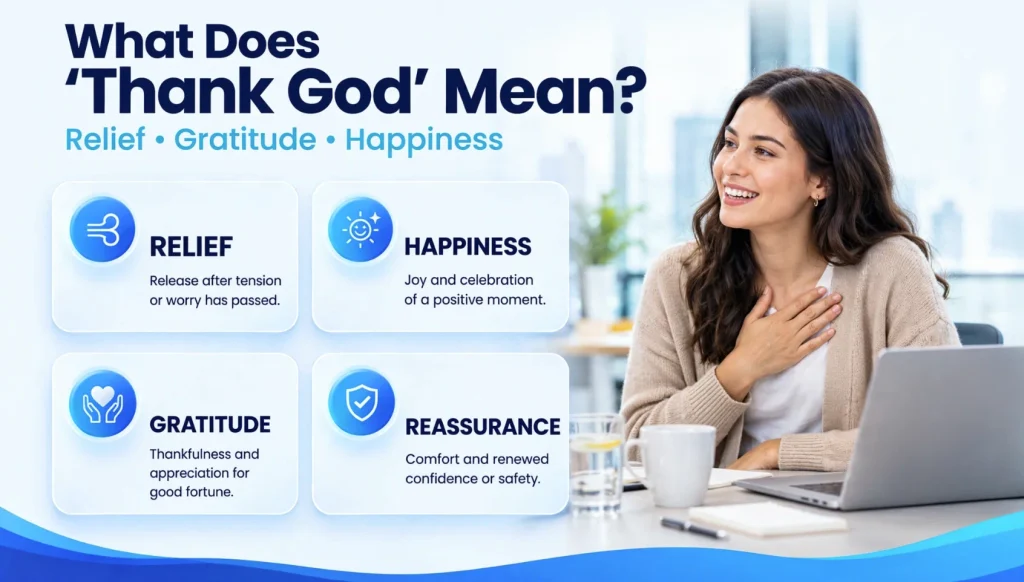
“Thank God” is an expression people use to show relief, gratitude, or happiness about a positive outcome. For example, someone might say, “Thank God you’re safe” after a stressful situation.
The phrase can have a religious meaning, but many Americans also use it as a general expression of relief. Because of that, alternatives can help you match your words to the setting, audience, and level of emotion.
Why Use Other Ways to Say “Thank God”?

Using a different expression can make your writing or speech sound more natural and precise.
You may want an alternative to:
- Avoid repeating the same phrase.
- Use language that fits a professional setting.
- Express relief without religious wording.
- Sound warmer or more conversational.
- Show gratitude in a more specific way.
- Match the emotional intensity of the moment.
10 Best Other Ways to Say “Thank God”

1. Thank Goodness
Meaning
“Thank goodness” is one of the closest alternatives to “thank God.” It expresses relief or happiness when something has ended well or a problem has been avoided.
Best For
- Casual
- Friendly
- Warm
- Polite
Example 1
Thank goodness we found the missing keys before leaving for the airport.
Example 2
Thank goodness the storm passed before the outdoor ceremony began.
Quick Tip
Use “thank goodness” when you want the familiar feeling of “thank God” without directly referring to religion.
2. What a Relief
Meaning
“What a relief” emphasizes the feeling that comes after worry, fear, or uncertainty disappears. It focuses more on emotional relief than gratitude.
Best For
- Casual
- Friendly
- Warm
Example 1
The doctor called with good news, and I thought, “What a relief.”
Example 2
The package arrived before the deadline. What a relief!
Quick Tip
Choose this phrase when the main emotion is relief after a stressful situation.
3. I’m So Glad
Meaning
“I’m so glad” communicates happiness about a positive result. It sounds personal and sincere, making it useful when responding directly to another person.
Best For
- Casual
- Friendly
- Warm
- Polite
Example 1
I’m so glad you made it home safely after the long drive.
Example 2
I’m so glad we were able to solve the problem before the meeting.
Quick Tip
Use “I’m so glad” when you want to put the focus on your own happiness rather than surprise or relief.
4. Fortunately
Meaning
“Fortunately” means that something happened in a favorable way, especially when the outcome could have been worse. It works especially well in writing.
Best For
- Professional
- Formal
- Polite
Example 1
Fortunately, the team had already backed up all of the important files.
Example 2
Fortunately, no one was injured when the car stopped suddenly.
Quick Tip
“Fortunately” is a strong choice when “thank God” sounds too casual for the situation.
5. Thank Heavens
Meaning
“Thank heavens” expresses strong relief or gratitude and is very close in meaning to “thank God.” It has a slightly old-fashioned or dramatic feel in some contexts.
Best For
- Casual
- Friendly
- Warm
Example 1
Thank heavens you remembered to bring an extra phone charger.
Example 2
Thank heavens the children were already inside when the rain started.
Quick Tip
Use it when you want a more expressive alternative while keeping the traditional structure of the original phrase.
6. I’m Grateful
Meaning
“I’m grateful” directly expresses appreciation. Unlike “thank God,” it clearly identifies the speaker as the person feeling thankful.
Best For
- Professional
- Formal
- Warm
- Polite
Example 1
I’m grateful that everyone offered their help during such a difficult week.
Example 2
I’m grateful we had enough time to correct the mistake before submitting the report.
Quick Tip
Choose “I’m grateful” when you want to sound sincere, thoughtful, and intentional.
7. Thankfully
Meaning
“Thankfully” tells the reader that a favorable outcome occurred. It often introduces a positive fact after describing a potentially difficult situation.
Best For
- Professional
- Formal
- Polite
- Casual
Example 1
Thankfully, the flight was delayed long enough for us to reach the airport.
Example 2
Thankfully, the repair was much less expensive than we expected.
Quick Tip
Place “thankfully” at the beginning of a sentence when you want to highlight a fortunate outcome.
8. That’s a Relief
Meaning
“That’s a relief” is a direct response to good news that removes worry. It sounds natural and understated in everyday American conversation.
Best For
- Casual
- Friendly
- Warm
- Polite
Example 1
The mechanic says the engine is fine. That’s a relief.
Example 2
You found your passport? That’s a relief!
Quick Tip
Use this phrase after receiving reassuring information or learning that a problem is less serious than expected.
9. I’m Relieved
Meaning
“I’m relieved” clearly describes the speaker’s emotional response to a difficult situation. It sounds more personal and direct than “fortunately.”
Best For
- Professional
- Casual
- Friendly
- Warm
Example 1
I’m relieved to hear that your surgery went smoothly.
Example 2
I’m relieved that we reached an agreement before the deadline.
Quick Tip
Use “I’m relieved” when you want to openly acknowledge that you were worried before receiving good news.
10. What a Blessing
Meaning
“What a blessing” expresses deep appreciation for a positive event, person, or circumstance. It can carry a spiritual meaning, but people also use it more generally.
Best For
- Warm
- Friendly
- Casual
- Polite
Example 1
Having such supportive neighbors during the move was a real blessing.
Example 2
What a blessing that everyone arrived safely despite the bad weather.
Quick Tip
Choose this phrase when the situation feels especially meaningful rather than simply lucky or convenient.
Comparison Table
| Alternative | Best Used In | Tone |
|---|---|---|
| Thank goodness | Everyday conversations | Casual, relieved |
| What a relief | Stressful situations | Casual, relieved |
| I’m so glad | Personal conversations | Warm, friendly |
| Fortunately | Professional writing | Formal, neutral |
| Thank heavens | Expressive conversations | Warm, dramatic |
| I’m grateful | Personal or professional settings | Sincere, appreciative |
| Thankfully | Conversation or writing | Neutral, positive |
| That’s a relief | Everyday responses | Casual, reassuring |
| I’m relieved | Personal or professional situations | Direct, sincere |
| What a blessing | Meaningful situations | Warm, appreciative |
Common Mistakes

- Using casual phrases in professional emails
Phrases such as “Thank goodness!” can sound too informal in business communication. “Fortunately” or “Thankfully” may fit better. - Choosing overly formal language
Not every conversation needs “Fortunately.” In a casual text, “That’s a relief!” may sound much more natural. - Repeating the same phrase
Using “thank God” several times in one conversation can become repetitive. Switching to a phrase such as “I’m relieved” adds variety. - Forgetting context
A phrase that works after finding lost luggage may not work when discussing a serious personal event. Consider the emotional weight of the situation. - Sounding insincere
Very dramatic wording can feel unnatural when the situation is minor. Choose language that matches how strongly you actually feel.
Frequently Asked Questions

What is another way to say “thank God”?
The closest everyday alternative is “thank goodness.” Other options include “thank heavens,” “thankfully,” “fortunately,” “what a relief,” and “I’m so glad.” The best choice depends on whether you want to emphasize relief, happiness, gratitude, or a fortunate outcome.
What is a non-religious way to say “thank God”?
“Thank goodness,” “what a relief,” “I’m so glad,” and “fortunately” can work as non-religious alternatives. These expressions communicate relief or happiness without directly referring to God or religion.
What is a professional way to say “thank God”?
In professional communication, “fortunately” and “thankfully” are often suitable choices. For example, instead of saying “Thank God we finished the project,” you could write, “Fortunately, we completed the project before the deadline.”
Is “thank goodness” the same as “thank God”?
The two expressions are very similar because both can show relief or gratitude after a positive outcome. However, “thank goodness” avoids a direct religious reference, so it may feel more neutral in mixed or professional settings.
What can I say instead of “thank God” in a text?
For a casual text, you could say “Thank goodness!”, “What a relief!”, “I’m so glad!”, or “Thankfully!” Choose the phrase that matches your emotion. “What a relief!” works especially well after receiving reassuring news.
What is another way to say “thank God you’re okay”?
You can say “I’m so glad you’re okay,” “What a relief that you’re safe,” or “I’m relieved you’re okay.” These options sound natural because they directly communicate concern and relief.
Can I use “thank heavens” instead of “thank God”?
Yes. “Thank heavens” has a similar meaning and can express relief or gratitude without using the word “God.” However, it can sound somewhat expressive or old-fashioned depending on the speaker and situation.
What is a better phrase than “thank God” for formal writing?
“Fortunately,” “thankfully,” and “I’m grateful” are useful choices for formal writing. “Fortunately” works when you are describing a favorable outcome, while “I’m grateful” works when you want to express personal appreciation.
Conclusion
There are many natural ways to say “thank God,” and the best alternative depends on what you want to express. For everyday conversations, “thank goodness,” “what a relief,” and “I’m so glad” sound friendly and natural. If you want to describe a fortunate outcome, “fortunately” or “thankfully” may fit better.
For professional or thoughtful communication, “I’m grateful” provides a clear and sincere expression of appreciation. Meanwhile, “thank heavens” and “what a blessing” add more emotion and personality.
The key is to consider your audience, setting, and intended meaning before choosing a phrase. When in doubt, pick the alternative that sounds like something you would naturally say in that situation. A good expression should communicate your relief or gratitude without feeling forced.

Sajid Ali is a web developer and digital publisher with experience in website development, WordPress, content publishing, and digital projects. He is interested in creating useful, well-structured online resources that make information easier to discover and understand.
At Majestic Studio, Sajid focuses on website development, content publishing, SEO-focused site structure, and maintaining a clear and user-friendly reading experience. He works with a practical, research-driven approach and continuously improves content and website usability based on reader needs and search behavior.