

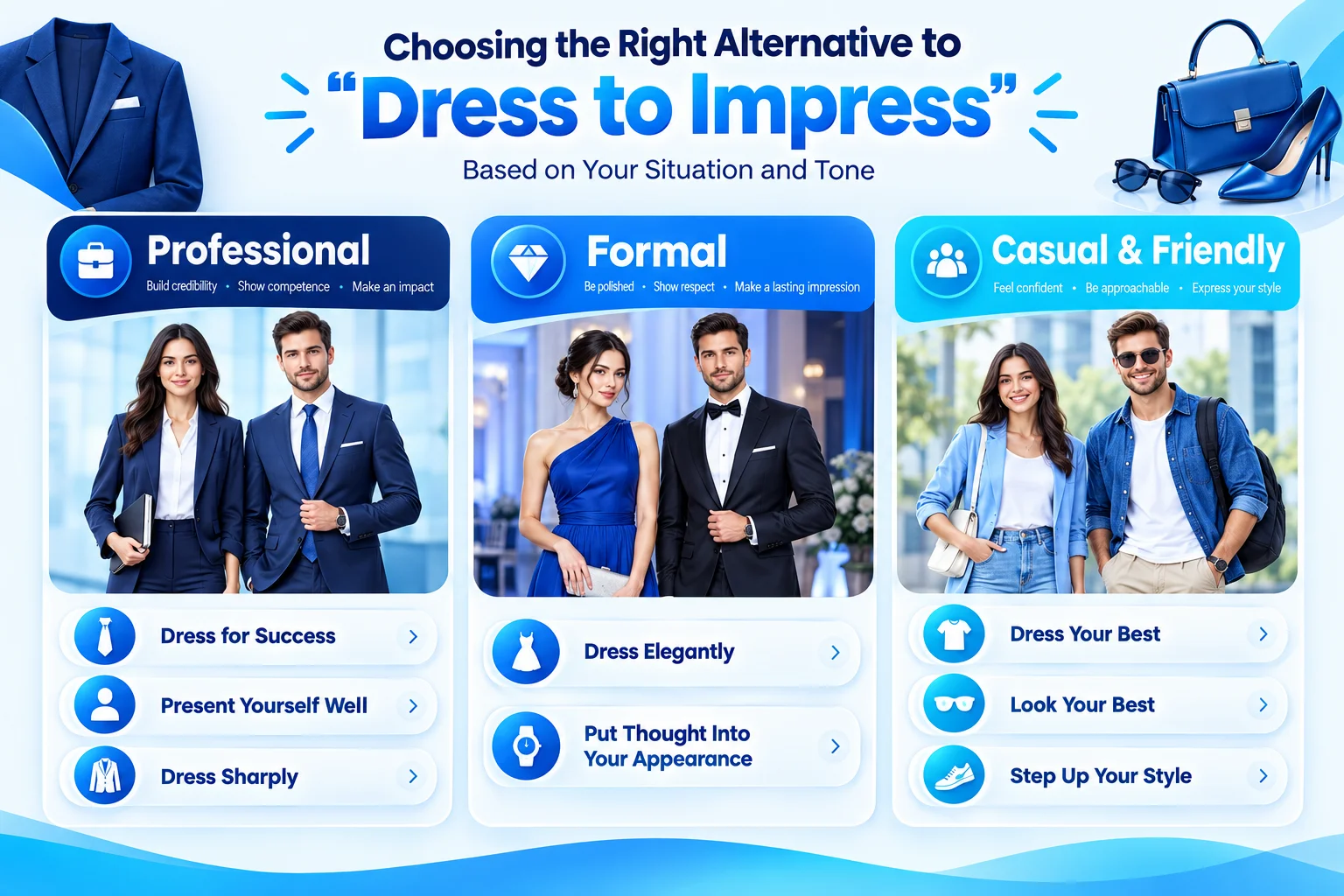
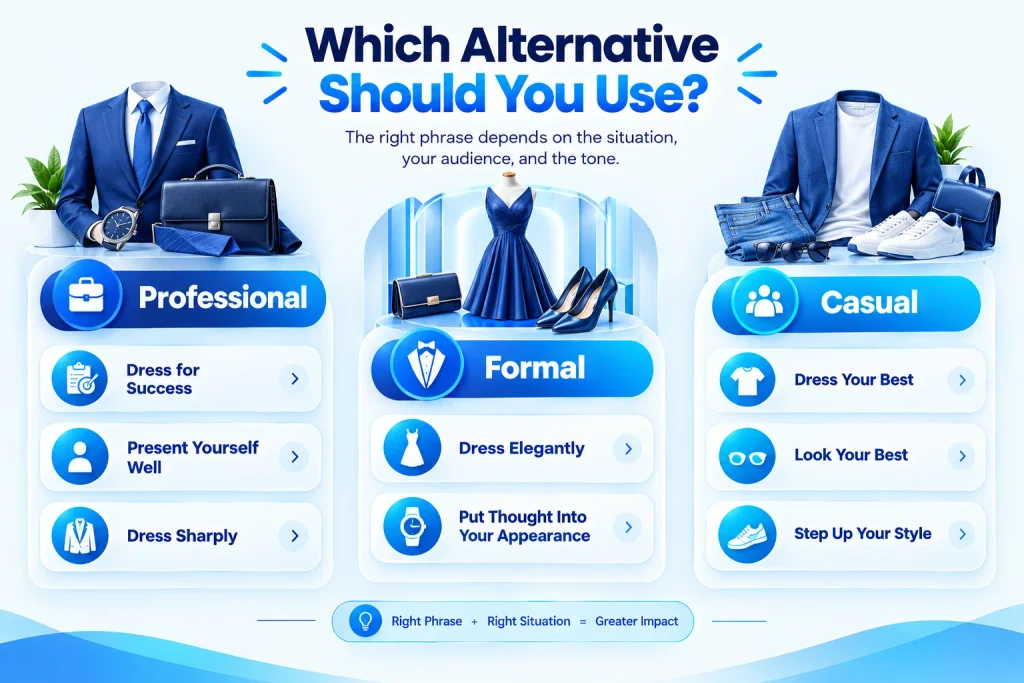
Another way to say dress to impress is “dress your best,” “dress for success,” “look your best,” or “dress sharply.” The best alternative depends on the setting. For professional situations, “dress for success” works well, while “dress your best” sounds more natural in casual or social conversations.
Key Takeaways
- “Dress your best” is a natural, flexible alternative to “dress to impress.”
- “Dress for success” works especially well in professional settings.
- “Look your best” sounds friendly and conversational.
- “Dress sharply” emphasizes a polished, stylish appearance.
- The right phrase depends on your audience, setting, and desired tone.
What Does “Another Way to Say Dress to Impress” Mean?
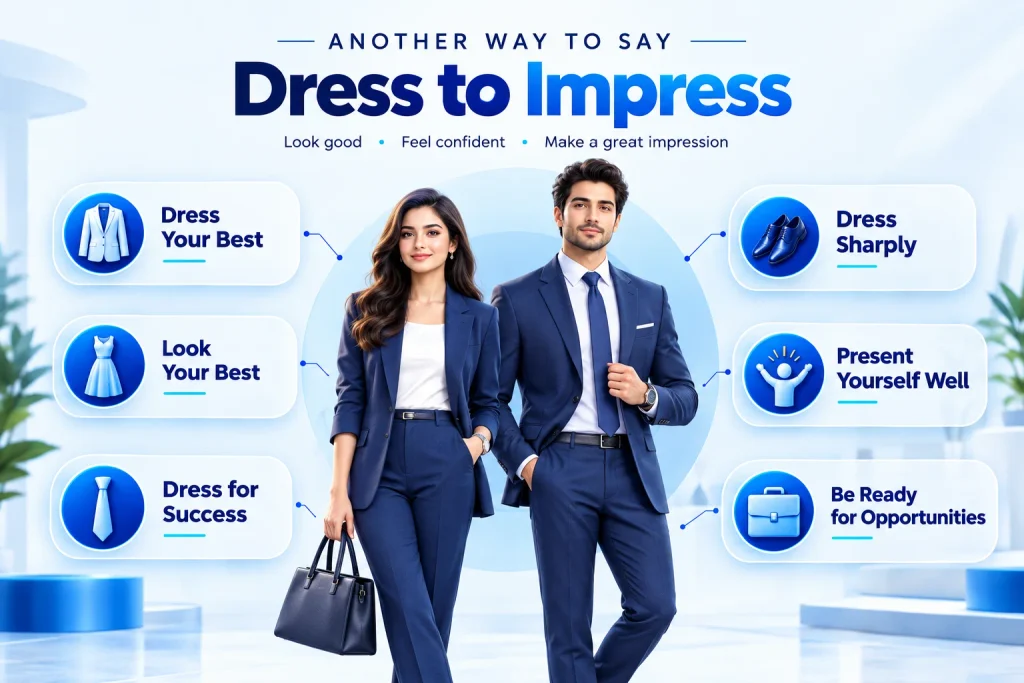
The phrase dress to impress means choosing clothes and accessories that create a strong, positive impression on other people. It often suggests looking polished, stylish, confident, or appropriate for an important occasion.
People commonly use the phrase when talking about job interviews, dates, weddings, parties, business events, presentations, and other situations where appearance matters. However, “dress to impress” can sometimes sound too promotional or repetitive.
Using a similar phrase lets you communicate the same idea while matching the tone of the situation more naturally.
Why Use Other Ways to Say “Dress to Impress”?
Choosing another expression can make your writing or conversation sound more precise and natural. It also helps you avoid using the same phrase repeatedly.
Other wording can help you:
- Match a professional or casual setting.
- Sound more polished in formal writing.
- Describe style without sounding exaggerated.
- Give fashion or appearance advice more naturally.
- Emphasize confidence, professionalism, or personal style.
10 Best Other Ways to Say “Dress to Impress”
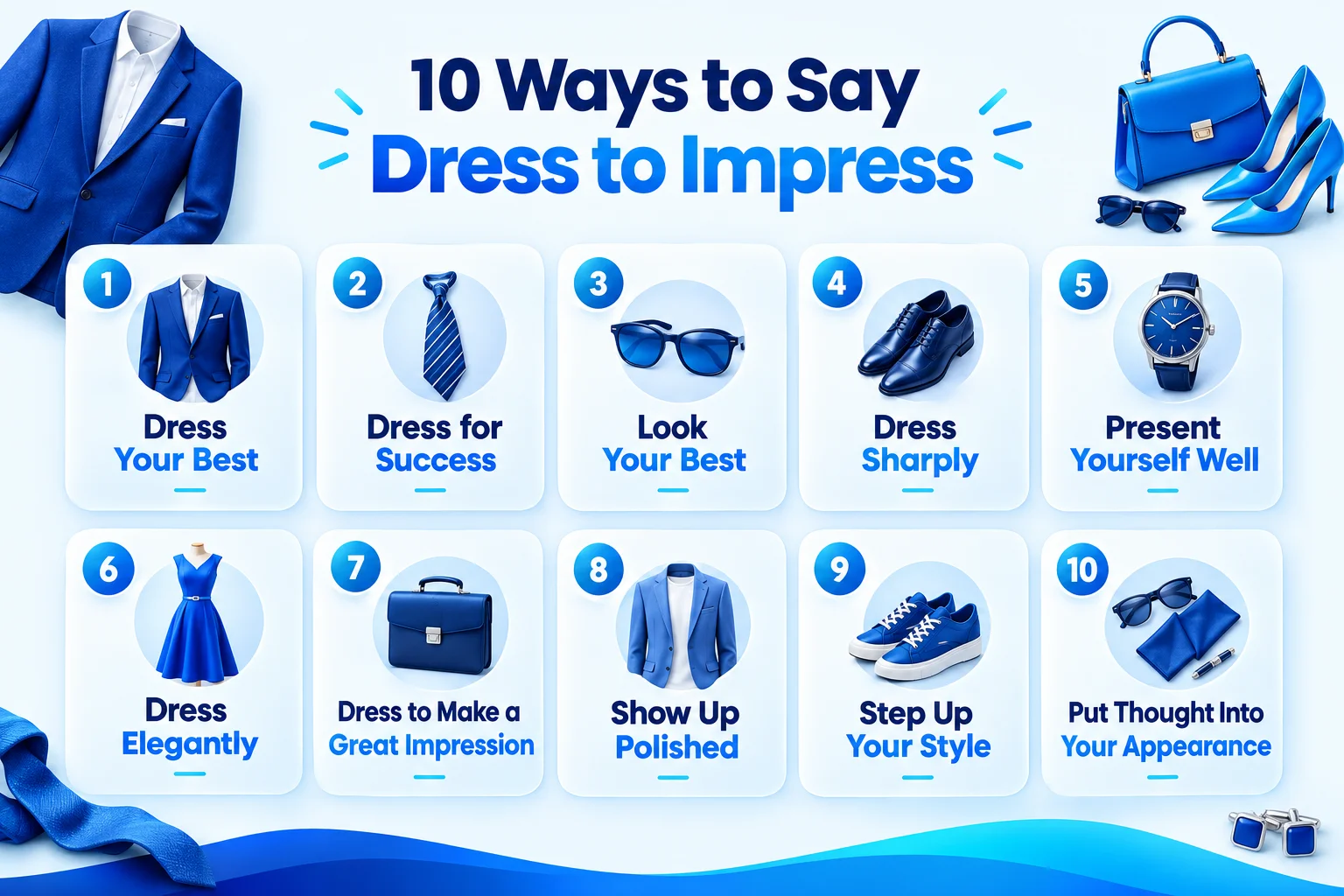
1. Dress Your Best
Meaning
“Dress your best” means wearing an outfit that makes you feel confident and look polished. It has a warm, natural tone and does not necessarily suggest that you are trying to impress someone.
Best For
- Casual
- Friendly
- Warm
- Polite
Example 1
“Dress your best for the family celebration because there will be plenty of photos.”
Example 2
“You should dress your best for the dinner and choose something that makes you feel comfortable.”
Quick Tip
Use this phrase when you want to encourage someone without making the advice sound demanding.
2. Dress for Success
Meaning
“Dress for success” connects clothing with confidence, professionalism, and achievement. It is especially common when discussing interviews, workplaces, presentations, and career events.
Best For
- Professional
- Formal
Example 1
“Many candidates choose to dress for success when meeting a potential employer.”
Example 2
“For the client presentation, dress for success and choose a polished business outfit.”
Quick Tip
This phrase works best when appearance has a clear professional purpose.
3. Look Your Best
Meaning
“Look your best” means making an effort to appear attractive, neat, or well put together. It is one of the most flexible alternatives because it works in both everyday conversation and special-event advice.
Best For
- Casual
- Friendly
- Warm
- Polite
Example 1
“Take your time getting ready so you can look your best at the wedding.”
Example 2
“She wanted to look her best before meeting her partner’s parents.”
Quick Tip
Choose this expression when you want to focus on the overall appearance rather than the clothing itself.
4. Dress Sharply
Meaning
“Dress sharply” suggests wearing stylish, well-fitting, and polished clothing. The phrase often brings to mind a clean, sophisticated appearance without sounding overly formal.
Best For
- Professional
- Casual
- Friendly
Example 1
“He always dresses sharply when he attends networking events.”
Example 2
“Dress sharply for the conference, but keep your outfit comfortable enough for a full day.”
Quick Tip
This phrase is especially useful when talking about men’s or women’s polished business-casual and formal styles.
5. Present Yourself Well
Meaning
“Present yourself well” goes beyond clothing and includes grooming, body language, and overall appearance. It is useful when appearance forms part of a larger first impression.
Best For
- Professional
- Formal
- Polite
Example 1
“Your résumé matters, but you should also present yourself well during the interview.”
Example 2
“Candidates should present themselves well when speaking with company representatives.”
Quick Tip
Use this phrase when you want to discuss appearance in a broader and more professional way.
6. Dress Elegantly
Meaning
“Dress elegantly” suggests wearing tasteful, refined clothing that suits the occasion. It works particularly well for formal events, dinners, weddings, and sophisticated social gatherings.
Best For
- Formal
- Warm
- Polite
Example 1
“Guests are encouraged to dress elegantly for the evening reception.”
Example 2
“She chose to dress elegantly for her anniversary dinner.”
Quick Tip
Use this phrase when the desired style is refined rather than trendy or flashy.
7. Dress to Make a Great Impression
Meaning
“Dress to make a great impression” keeps the original idea of “dress to impress” while making the purpose clearer. It directly connects your clothing choice with the impression you want others to have.
Best For
- Professional
- Formal
- Friendly
Example 1
“If you are meeting the hiring manager, dress to make a great impression.”
Example 2
“He dressed to make a great impression at his first meeting with the new team.”
Quick Tip
This is a useful choice when you want to preserve the meaning of the original phrase but make it more explicit.
8. Show Up Polished
Meaning
“Show up polished” means arriving with a neat, intentional, and well-groomed appearance. It sounds modern and conversational while still suggesting that you have taken the occasion seriously.
Best For
- Casual
- Professional
- Friendly
Example 1
“Show up polished for the networking event and make sure your outfit fits well.”
Example 2
“You do not need a designer outfit; just show up polished and confident.”
Quick Tip
This phrase fits contemporary workplace advice and informal style conversations particularly well.
9. Step Up Your Style
Meaning
“Step up your style” means making your appearance more refined, stylish, or appropriate for a special occasion. It suggests a noticeable improvement without requiring formal clothing.
Best For
- Casual
- Friendly
- Warm
Example 1
“Step up your style for the restaurant by swapping the sneakers for dress shoes.”
Example 2
“She stepped up her style for the party with a tailored jacket and simple accessories.”
Quick Tip
Use this phrase when someone needs to dress a little better than they normally would.
10. Put Thought Into Your Appearance
Meaning
“Put thought into your appearance” emphasizes effort and intention rather than expensive or fashionable clothing. It works well when you want to encourage someone to choose an outfit carefully.
Best For
- Professional
- Formal
- Warm
- Polite
Example 1
“Put some thought into your appearance before the interview and choose clothes that fit the company culture.”
Example 2
“He put thought into his appearance before attending the graduation ceremony.”
Quick Tip
Use this option when you want to emphasize preparation instead of impressing other people.
Comparison Table
| Alternative | Best Used In | Tone |
| Dress your best | Social events, special occasions | Warm |
| Dress for success | Interviews, workplaces | Professional |
| Look your best | Dates, parties, events | Friendly |
| Dress sharply | Business, networking | Polished |
| Present yourself well | Interviews, formal settings | Professional |
| Dress elegantly | Weddings, dinners, formal events | Refined |
| Dress to make a great impression | Interviews, meetings | Direct |
| Show up polished | Workplaces, events | Modern |
| Step up your style | Parties, casual events | Casual |
| Put thought into your appearance | Interviews, ceremonies | Thoughtful |
Common Mistakes
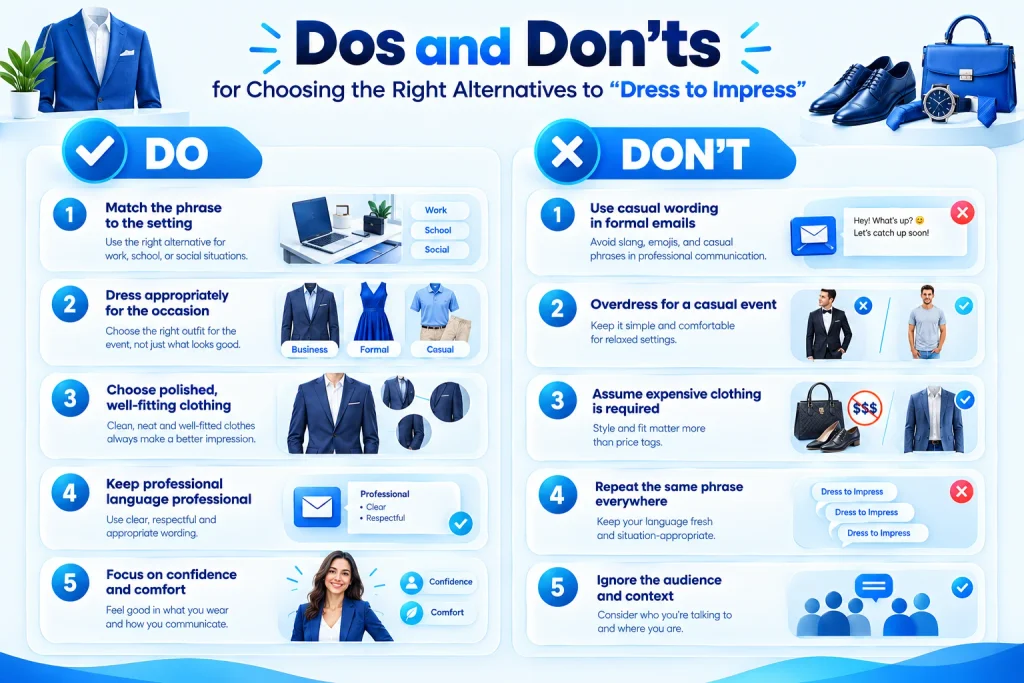
- Using casual phrases in professional writing.
Expressions such as “step up your style” may sound too relaxed for a formal business document. Choose “present yourself well” or “dress for success” instead. - Choosing overly formal language.
Saying “dress elegantly” at a casual backyard gathering may sound unnatural. Match the phrase to the event. - Repeating the same expression.
Using “dress to impress” several times can make an article, email, or conversation feel repetitive. Vary your wording when the context changes. - Forgetting the audience.
A phrase that works for a friend may not work for a client or hiring manager. Consider who will read or hear your words. - Sounding insincere.
Avoid implying that expensive clothing is necessary to make a good impression. Good fit, cleanliness, grooming, and appropriateness often matter more than price.
Frequently Asked Questions
What is another way to say “dress to impress”?
Common alternatives include “dress your best,” “dress for success,” “look your best,” “dress sharply,” and “present yourself well.” The best choice depends on the situation. “Dress for success” fits professional settings, while “look your best” and “dress your best” sound more natural in everyday conversations.
What is a professional way to say “dress to impress”?
“Dress for success” and “present yourself well” are strong professional alternatives. They focus on preparation and professionalism rather than simply trying to impress someone. For a workplace email or career guide, “present yourself well” can sound especially polished and neutral.
What is a casual way to say “dress to impress”?
For casual situations, you can say “dress your best,” “look your best,” or “step up your style.” These expressions feel friendly and natural when discussing dates, parties, dinners, celebrations, or social events with friends.
Is “dress to impress” a formal phrase?
“Dress to impress” is generally conversational rather than highly formal. People commonly use it in everyday speech, fashion advice, event descriptions, and social media content. In formal or professional writing, alternatives such as “present yourself well” may sound more appropriate.
What is another way to say “dress nicely”?
You can say “dress your best,” “look your best,” “dress sharply,” or “dress elegantly.” The choice depends on the desired level of formality. “Dress nicely” is broad, while “dress elegantly” suggests a more refined appearance and “dress sharply” suggests a polished style.
What does “dress for success” mean?
“Dress for success” means choosing clothing that supports a professional, confident, or prepared appearance. It is often used for interviews, presentations, networking events, and workplaces. The phrase focuses on dressing appropriately for a goal rather than simply trying to attract attention.
Can “dress to impress” be used for a job interview?
Yes. “Dress to impress” is commonly used when giving informal advice about job interviews. However, professional alternatives such as “dress for success” or “present yourself well” may sound more precise. The main idea is to choose clean, appropriate clothing that fits the workplace and interview setting.
What is the best synonym for “dress to impress”?
There is no single synonym that fits every situation. “Dress your best” is a flexible everyday option, “dress for success” works well professionally, and “dress elegantly” suits formal occasions. Consider the audience, event, and tone before choosing an alternative.
Conclusion
There are many natural ways to say dress to impress, and the best phrase depends on the situation. For everyday conversations, “dress your best” and “look your best” are simple and friendly choices. For professional settings, “dress for success” and “present yourself well” communicate preparation and confidence more clearly.
If you are describing a formal event, “dress elegantly” may be more precise, while “dress sharply” works well when you want to emphasize polished personal style. For casual fashion advice, “step up your style” has a relaxed, modern feel.
The key is to match your wording to the audience and occasion. Choose language that describes the desired appearance without making the advice sound forced or overly focused on impressing others. For more on the different uses of dress, see this guide to the meaning and uses of dress.
Editorial contributors help develop practical English-language resources covering vocabulary, expressions, synonyms, and writing. Contributions focus on clear explanations, useful examples, and context so readers can understand not only what a phrase means, but when and how to use it naturally.