

Another way to say “I don’t trust you” depends on the situation. You can say “I have my doubts about you,” “I’m not comfortable relying on you,” “I’m having trouble believing you,” or “I’m not sure I can count on you.” These alternatives let you express doubt, concern, or caution without always sounding harsh.
Key Takeaways
- Choose your wording based on how direct or polite you want to sound.
- “I have my doubts about you” clearly communicates suspicion.
- “I’m not sure I can count on you” focuses on reliability.
- Professional settings usually call for calm, respectful language.
- Context matters because some phrases sound much stronger than others.
What Does “Another Way to Say I Don’t Trust You” Mean?

The phrase “I don’t trust you” means you lack confidence in someone’s honesty, reliability, intentions, or judgment. People commonly use it when they believe someone may not tell the truth, keep a promise, protect confidential information, or act in their best interest.
However, the phrase can sound blunt or confrontational. Alternative expressions help you communicate the same concern while adjusting the tone for a workplace, relationship, friendship, or difficult conversation.
Why Use Other Ways to Say “I Don’t Trust You”?
Using a different expression can make your message clearer and more appropriate for the situation. Instead of making a direct accusation, you can explain what concerns you or what you need before you feel comfortable trusting someone.
Other wording can help you:
- Sound less confrontational.
- Explain the reason for your concern.
- Keep a professional conversation respectful.
- Express uncertainty without making an accusation.
- Communicate boundaries more clearly.
- Match your tone to the relationship.
12 Best Other Ways to Say “I Don’t Trust You”
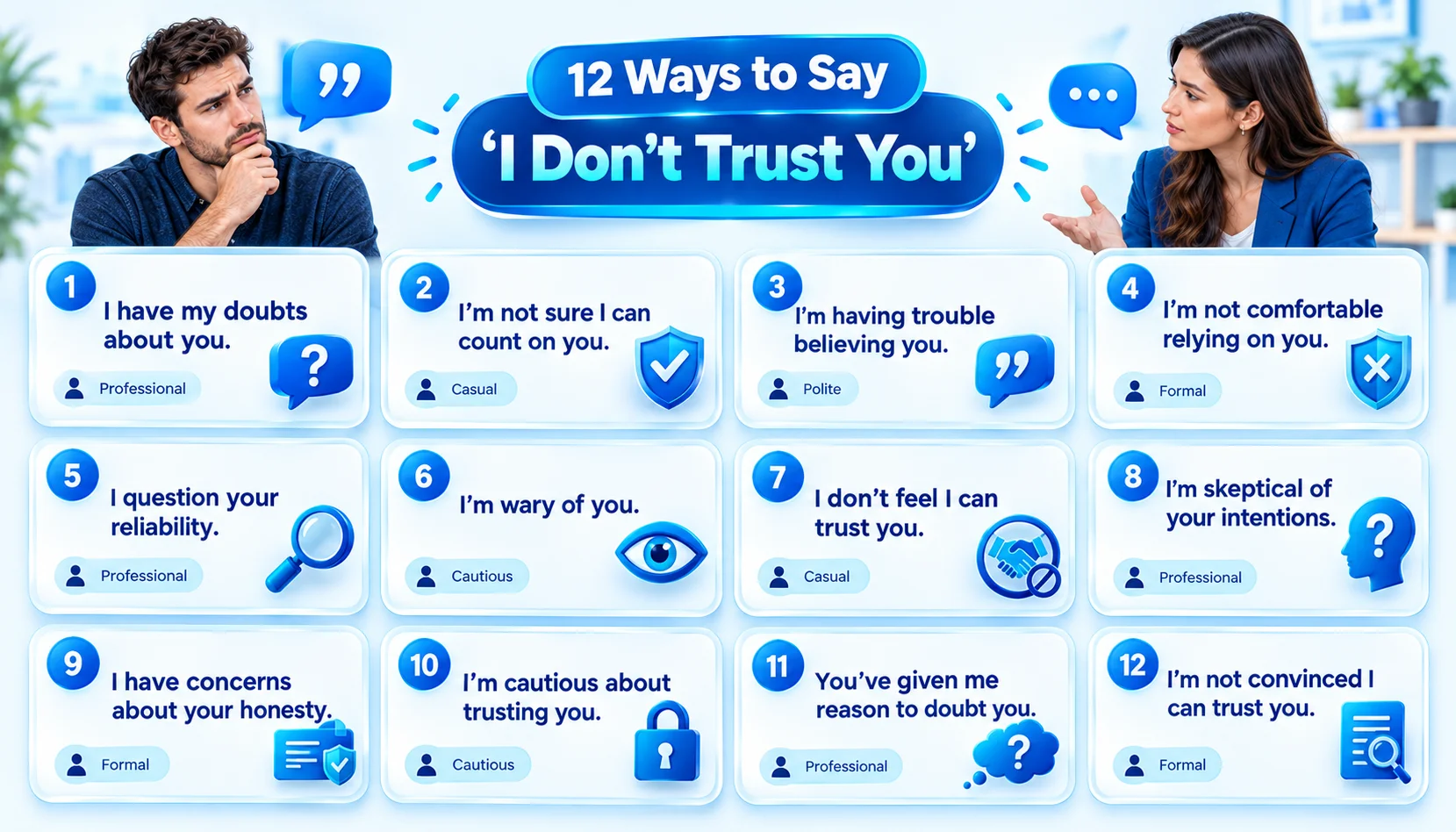
1. I Have My Doubts About You
Meaning
This phrase says that you have concerns about someone’s honesty, reliability, or intentions. It is direct, but it leaves some room for uncertainty rather than making an absolute accusation.
Best For
- Formal
- Professional
- Polite
Example 1
“I have my doubts about whether he will keep the information confidential.”
Example 2
“After what happened last time, I have my doubts about making another agreement.”
Quick Tip
Use this phrase when you want to express suspicion without saying that the person is definitely dishonest.
2. I’m Not Sure I Can Count on You
Meaning
This expression focuses on reliability rather than honesty. It suggests that you are uncertain whether someone will follow through on a promise, responsibility, or commitment.
Best For
- Casual
- Friendly
- Polite
Example 1
“I’m not sure I can count on you to finish this by Friday.”
Example 2
“After you canceled twice, I’m not sure I can count on you for the trip.”
Quick Tip
Choose this option when your main concern is whether someone will follow through.
3. I’m Having Trouble Believing You
Meaning
This phrase communicates doubt about what someone has said. It works well when you want to question a statement without directly calling the person a liar.
Best For
- Casual
- Polite
- Friendly
Example 1
“I’m having trouble believing you after hearing a different story yesterday.”
Example 2
“I’m having trouble believing you because the details keep changing.”
Quick Tip
Use it when the immediate issue is someone’s explanation or story rather than their overall character.
4. I’m Not Comfortable Relying on You
Meaning
This wording tells someone that you do not currently feel confident depending on them. It sounds measured and can work especially well when discussing responsibilities.
Best For
- Professional
- Formal
- Polite
Example 1
“I’m not comfortable relying on you for such an important deadline right now.”
Example 2
“Given the previous problems, I’m not comfortable relying on you to handle the account alone.”
Quick Tip
This is a useful professional alternative because it focuses on your comfort level rather than accusing the other person.
5. I Question Your Reliability
Meaning
This phrase directly raises concerns about whether someone can consistently be depended on. It is more formal and serious than many everyday alternatives.
Best For
- Professional
- Formal
Example 1
“Recent missed deadlines have caused me to question your reliability.”
Example 2
“I have to question your reliability after several commitments were not completed.”
Quick Tip
Use specific examples alongside this phrase when discussing a workplace concern.
6. I’m Wary of You
Meaning
Being wary means being cautious because you believe there may be a reason for concern. This phrase can suggest suspicion without directly claiming that someone has done something wrong.
Best For
- Formal
- Casual
- Polite
Example 1
“I’m wary of him because his explanation doesn’t match the records.”
Example 2
“I’m still wary of the offer because several details remain unclear.”
Quick Tip
“Wary” is often better for expressing caution than outright distrust.
7. I Don’t Feel I Can Trust You
Meaning
This is one of the closest alternatives to the original phrase. It communicates a clear lack of trust while sounding slightly more personal and reflective.
Best For
- Casual
- Friendly
- Warm
Example 1
“I don’t feel I can trust you with something this personal.”
Example 2
“After what happened, I don’t feel I can trust you the way I used to.”
Quick Tip
Use this when the issue involves a personal relationship or a loss of confidence.
8. I’m Skeptical of Your Intentions
Meaning
This phrase focuses on what you believe someone may be trying to accomplish. It suggests that you are uncertain whether their motives are honest or beneficial.
Best For
- Formal
- Professional
Example 1
“I’m skeptical of your intentions because the proposal seems one-sided.”
Example 2
“She remained skeptical of his intentions after he changed the agreement.”
Quick Tip
Use this carefully because questioning someone’s motives can sound serious and confrontational.
9. I Have Concerns About Your Honesty
Meaning
This is a direct but relatively controlled way to raise doubts about someone’s truthfulness. It clearly identifies honesty as the source of the problem.
Best For
- Professional
- Formal
- Polite
Example 1
“I have concerns about your honesty regarding the information you provided.”
Example 2
“After reviewing the messages, I have concerns about your honesty.”
Quick Tip
This works best when you can explain the specific facts behind your concern.
10. I’m Cautious About Trusting You
Meaning
This phrase communicates that you are holding back because previous experiences have made you cautious. It is softer than saying that you completely distrust someone.
Best For
- Friendly
- Polite
- Warm
Example 1
“I’m cautious about trusting you with this responsibility after the last incident.”
Example 2
“I’m cautious about trusting you again, but I’m willing to see how things go.”
Quick Tip
Choose this wording when you want to leave room for trust to be rebuilt.
11. You’ve Given Me Reason to Doubt You
Meaning
This expression connects your distrust to something the other person has done. It can sound firm while making it clear that your concern has a specific cause.
Best For
- Formal
- Casual
- Polite
Example 1
“You’ve given me reason to doubt you after changing your story.”
Example 2
“The missed commitments have given me reason to doubt you.”
Quick Tip
Pair this phrase with a specific behavior if you want the conversation to remain constructive.
12. I’m Not Convinced I Can Trust You
Meaning
This phrase communicates that trust has not been established or restored. It sounds firm without necessarily saying that the person is dishonest.
Best For
- Formal
- Casual
- Polite
Example 1
“I’m not convinced I can trust you with this information yet.”
Example 2
“I’m not convinced I can trust you after what happened last month.”
Quick Tip
“Yet” can soften the statement by suggesting that trust might develop with consistent actions.
Comparison Table

| Alternative | Best Used In | Tone |
|---|---|---|
| I Have My Doubts About You | Difficult conversations | Direct, cautious |
| I’m Not Sure I Can Count on You | Relationships, commitments | Honest, concerned |
| I’m Having Trouble Believing You | Disagreements | Skeptical |
| I’m Not Comfortable Relying on You | Workplace | Professional, measured |
| I Question Your Reliability | Workplace | Formal, firm |
| I’m Wary of You | Situations involving uncertainty | Cautious |
| I Don’t Feel I Can Trust You | Personal relationships | Direct, emotional |
| I’m Skeptical of Your Intentions | Serious discussions | Serious, guarded |
| I Have Concerns About Your Honesty | Workplace or disputes | Formal, direct |
| I’m Cautious About Trusting You | Personal relationships | Careful, softer |
| You’ve Given Me Reason to Doubt You | Conflict or accountability | Firm |
| I’m Not Convinced I Can Trust You | Rebuilding trust | Firm, measured |
Common Mistakes

- Using casual phrases in professional emails
Saying “I don’t trust you” can sound accusatory at work. Focus on specific behavior, reliability, or a process instead. - Choosing overly formal language
Phrases such as “I question your reliability” may sound unnatural between close friends. Use simpler language when the relationship is personal. - Repeating the same phrase
Repeating “I don’t trust you” can make a conversation feel hostile. Vary your wording while explaining the actual concern. - Forgetting context
Distrust can involve honesty, reliability, intentions, or confidentiality. Choose words that identify the specific issue. - Sounding insincere
Extremely soft language can hide the real problem. If trust has genuinely been damaged, state your concern clearly and calmly.
Frequently Asked Questions
What is a polite way to say “I don’t trust you”?
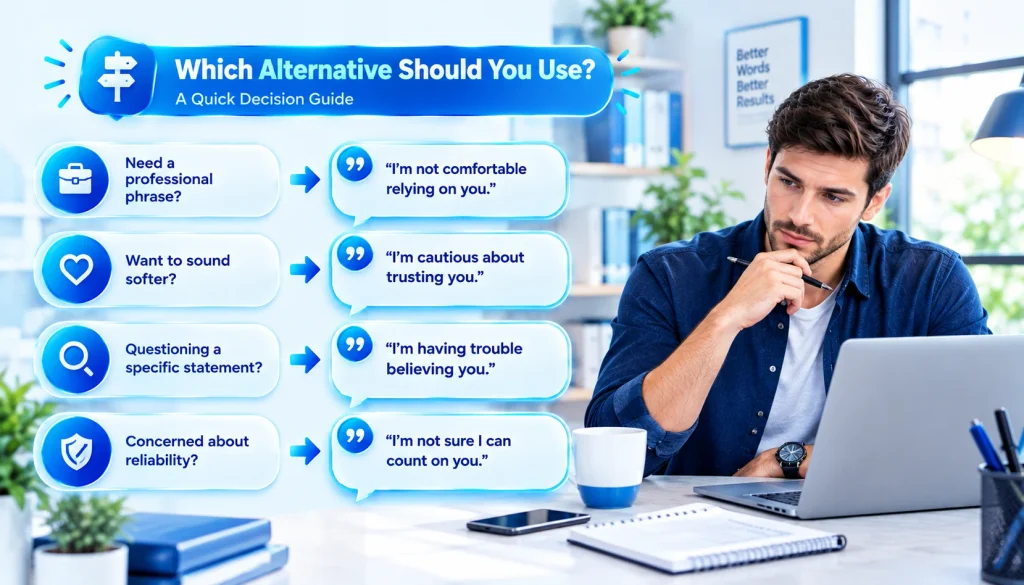
A polite option is “I’m not comfortable relying on you right now.” It focuses on your current level of confidence rather than accusing the other person of being dishonest. Another gentle choice is “I have some concerns about this,” especially when speaking in a professional setting.
What is a professional way to say “I don’t trust you”?
In a workplace, you can say “I’m not comfortable relying on you for this responsibility” or “I have concerns about your reliability.” These phrases focus on work-related behavior instead of making a broad personal accusation.
What is a softer way to say “I don’t trust you”?
Try “I’m cautious about trusting you right now” or “I’m not sure I can count on you.” These expressions communicate concern without making the statement sound as final or confrontational as “I don’t trust you.”
How do you say “I don’t trust you” without being rude?
Explain the specific concern instead of attacking the person’s character. For example, “I’m having trouble believing you because the details have changed” identifies the problem and gives the other person an opportunity to respond.
What is another word for distrust?
Common words related to distrust include suspicion, doubt, skepticism, caution, wariness, and uncertainty. The best choice depends on what you mean. “Skepticism” often relates to claims, while “wariness” suggests caution and “doubt” indicates uncertainty.
How do you say you don’t trust someone professionally?
Keep the focus on observable behavior. Instead of saying “I don’t trust you,” you might say, “I need more consistent follow-through before I can rely on you for this task.” This approach makes the concern clearer and more constructive.
How do you express that someone broke your trust?
You can say, “What happened made it difficult for me to trust you” or “I don’t feel I can trust you the way I did before.” These phrases acknowledge the change in the relationship without unnecessarily escalating the conversation.
What is the difference between “I don’t trust you” and “I doubt you”?
“I don’t trust you” usually expresses a broader lack of confidence in someone. “I doubt you” is often narrower and may refer to a particular statement, claim, or explanation. If you are questioning one specific claim, “I’m having trouble believing you” may be more precise.
Conclusion
There are many ways to say “I don’t trust you,” and the best choice depends on what caused your concern and how strongly you want to express it. For professional situations, phrases such as “I’m not comfortable relying on you” and “I have concerns about your reliability” keep the focus on behavior. In personal conversations, “I don’t feel I can trust you” or “I’m cautious about trusting you” may better describe damaged confidence.
If you are questioning a specific statement, “I’m having trouble believing you” can be more precise than making a broad accusation. The key is to match your words to the situation, explain your concern when appropriate, and avoid sounding harsher than you intend.