

Another way to say “you deserve it” includes phrases such as “you’ve earned it,” “you deserve every bit of it,” “you’ve worked hard for this,” and “it’s well deserved.” The best choice depends on the situation, relationship, and tone. Professional settings often call for “well deserved,” while casual conversations can sound warmer with “you’ve earned it.”
Key Takeaways
- “You’ve earned it” is a natural alternative to “you deserve it.”
- “Well deserved” works especially well in professional settings.
- “You’ve worked hard for this” highlights effort and achievement.
- Warm phrases can make praise feel more personal and sincere.
- Always choose an expression that fits the context and relationship.
What Does “Another Way to Say You Deserve It” Mean?
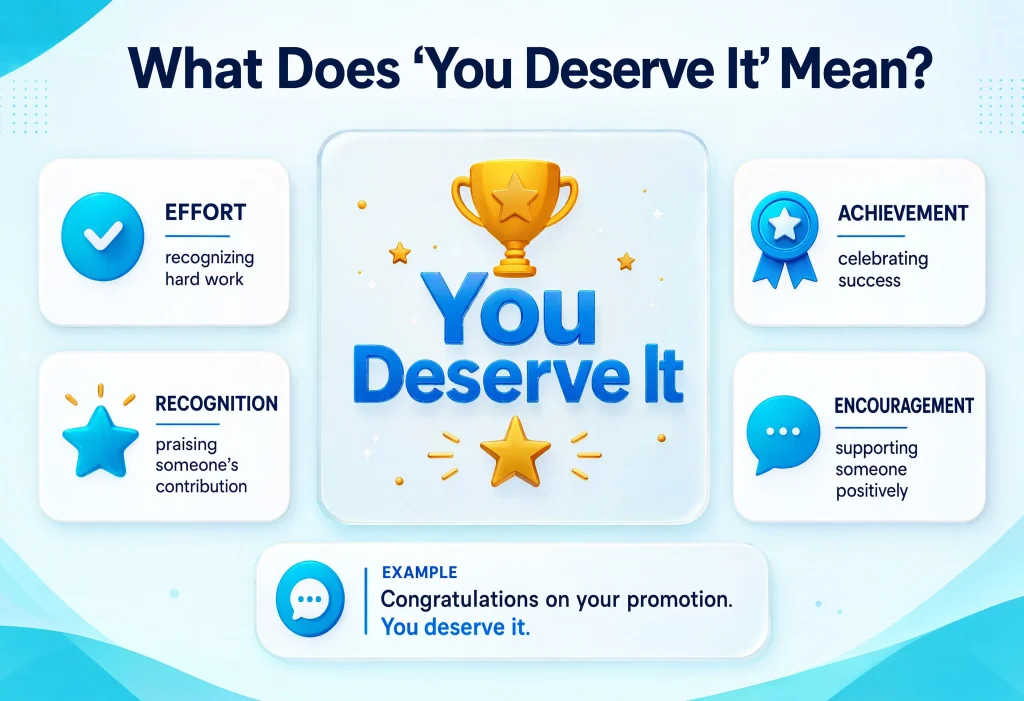
The phrase “you deserve it” is used to tell someone that they are worthy of something because of their actions, effort, qualities, or circumstances. It can express praise, encouragement, congratulations, or support.
For example, you might tell a coworker “you deserve it” after a promotion, a friend after a major achievement, or a family member who finally gets a chance to relax.
People often search for another way to say “you deserve it” because the original phrase can feel repetitive. Choosing a more specific expression can make your message sound more natural and thoughtful.
Why Use Other Ways to Say “You Deserve It”?
Using different expressions helps you match your words to the moment. A congratulatory message, professional email, casual text, and heartfelt conversation may all need different wording.
Other phrases can help you:
- Avoid repeating the same expression.
- Sound more natural and conversational.
- Match formal or casual situations.
- Make praise more specific.
- Express appreciation with greater warmth.
- Recognize someone’s effort or achievement.
10 Best Other Ways to Say “You Deserve It”
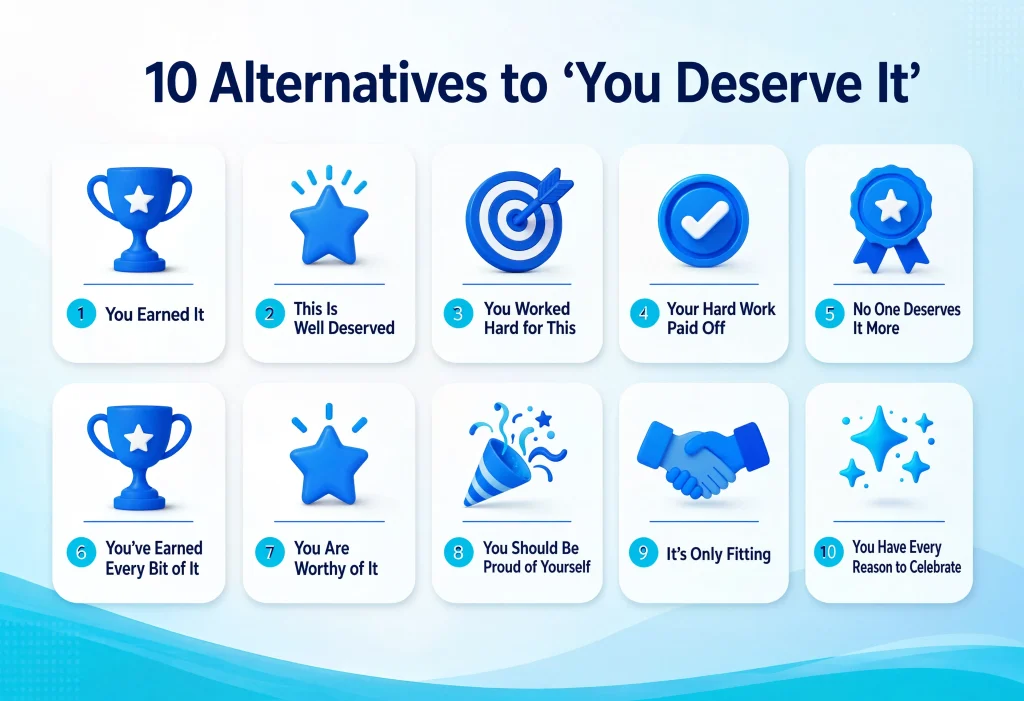
1. You’ve Earned It
Meaning
“You’ve earned it” focuses on the person’s effort or actions. It suggests that they worked for the reward and have a clear reason to receive it.
Best For
- Casual
- Friendly
- Warm
- Professional
Example 1
You’ve earned that vacation after everything you handled this year.
Example 2
Congratulations on the promotion—you’ve earned it.
Quick Tip
Use this phrase when you want to emphasize hard work rather than simply saying someone is worthy.
2. Well Deserved
Meaning
“Well deserved” is a concise way to recognize that someone has earned praise, success, recognition, or a reward. It sounds polished without being overly formal.
Best For
- Professional
- Formal
- Polite
- Friendly
Example 1
Congratulations on the award. It’s well deserved.
Example 2
That recognition is well deserved after your outstanding presentation.
Quick Tip
This is one of the safest choices for workplace messages, congratulatory emails, and professional social posts.
3. You Deserve Every Bit of It
Meaning
This phrase adds emphasis to the original idea. It tells someone that they fully deserve the positive result they are receiving.
Best For
- Warm
- Friendly
- Casual
- Polite
Example 1
Enjoy all the attention—you deserve every bit of it.
Example 2
You deserve every bit of this celebration after reaching such an important milestone.
Quick Tip
Choose this version when you want your praise to sound enthusiastic and genuine.
4. You’ve Worked Hard for This
Meaning
This expression directly recognizes someone’s effort. It works especially well when a person has spent significant time, energy, or patience reaching a goal.
Best For
- Warm
- Friendly
- Casual
- Professional
Example 1
Take the weekend off—you’ve worked hard for this.
Example 2
Be proud of this achievement; you’ve worked hard for it.
Quick Tip
Use it when effort is an important part of why the person deserves recognition.
5. You’ve More Than Earned It
Meaning
“You’ve more than earned it” provides stronger praise than “you’ve earned it.” It suggests that the person’s effort has clearly justified the reward.
Best For
- Warm
- Friendly
- Casual
- Polite
Example 1
After leading the project through all those challenges, you’ve more than earned the bonus.
Example 2
Go enjoy your time away—you’ve more than earned a break.
Quick Tip
This phrase is especially effective when you want to give someone extra encouragement.
6. You Deserve This
Meaning
“You deserve this” is shorter and more personal than “you deserve it.” It works when the reward or positive experience is clear from the conversation.
Best For
- Warm
- Friendly
- Casual
- Polite
Example 1
After everything you’ve accomplished, you deserve this.
Example 2
Seeing you reach this goal makes me happy because you deserve this moment.
Quick Tip
Use “this” when the thing being celebrated is visible or already understood.
7. I’m Happy for You
Meaning
“I’m happy for you” shifts the focus from whether someone deserves something to your genuine happiness about their success. It sounds supportive without making the statement overly formal.
Best For
- Friendly
- Warm
- Casual
- Polite
Example 1
You finally got the opportunity you wanted, and I’m genuinely happy for you.
Example 2
You should be proud of yourself. I’m so happy for you.
Quick Tip
This is ideal when you want to show emotional support rather than focus on the person’s deservingness.
8. You’ve Earned Every Bit of It
Meaning
This phrase strongly connects the reward to the person’s effort, persistence, or achievements. It gives praise a more enthusiastic and personal feel.
Best For
- Warm
- Friendly
- Casual
- Polite
Example 1
Enjoy your celebration—you’ve earned every bit of it.
Example 2
You’ve earned every bit of this success through your dedication.
Quick Tip
Use it when you want to celebrate both the person’s achievement and the work behind it.
9. I Can’t Think of Anyone More Deserving
Meaning
This expression gives especially strong praise. It tells someone that, in your view, they are an excellent choice for the recognition or opportunity they received.
Best For
- Formal
- Professional
- Warm
- Polite
Example 1
Congratulations on the honor. I can’t think of anyone more deserving.
Example 2
You were the perfect choice for this recognition—I can’t think of anyone more deserving.
Quick Tip
Save this phrase for meaningful achievements because it carries stronger emotional weight than a simple “you deserve it.”
10. You Should Be Proud of Yourself
Meaning
This phrase recognizes someone’s achievement while encouraging them to appreciate their own progress. It is less about the reward and more about personal accomplishment.
Best For
- Warm
- Friendly
- Casual
- Polite
Example 1
You finished the marathon after months of training. You should be proud of yourself.
Example 2
You handled that challenge with so much patience. You should be proud of yourself.
Quick Tip
Choose this when you want to encourage confidence and self-recognition rather than simply congratulate someone.
Comparison Table
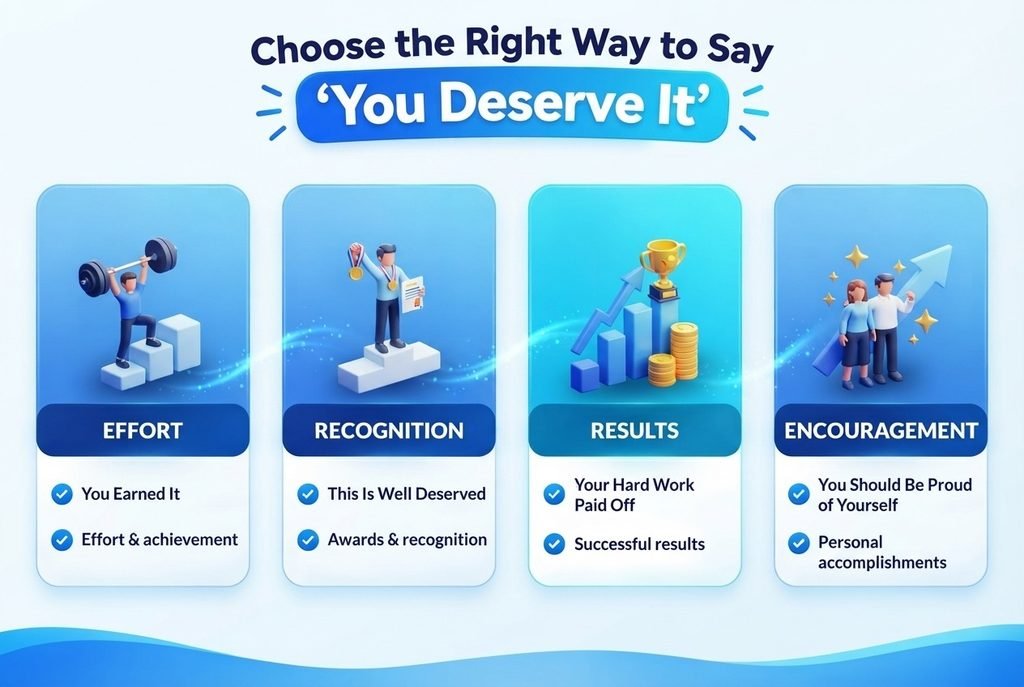
| Alternative | Best Used In | Tone |
|---|---|---|
| You’ve Earned It | Work, congratulations, everyday conversation | Warm, encouraging |
| Well Deserved | Emails, awards, professional praise | Polished, professional |
| You Deserve Every Bit of It | Celebrations and personal messages | Enthusiastic, warm |
| You’ve Worked Hard for This | Achievements and milestones | Supportive, sincere |
| You’ve More Than Earned It | Major accomplishments | Strong, encouraging |
| You Deserve This | Personal conversations | Warm, direct |
| I’m Happy for You | Friends, family, congratulations | Friendly, supportive |
| You’ve Earned Every Bit of It | Major rewards and successes | Enthusiastic, appreciative |
| I Can’t Think of Anyone More Deserving | Formal recognition | Respectful, heartfelt |
| You Should Be Proud of Yourself | Personal achievements | Encouraging, caring |
Common Mistakes
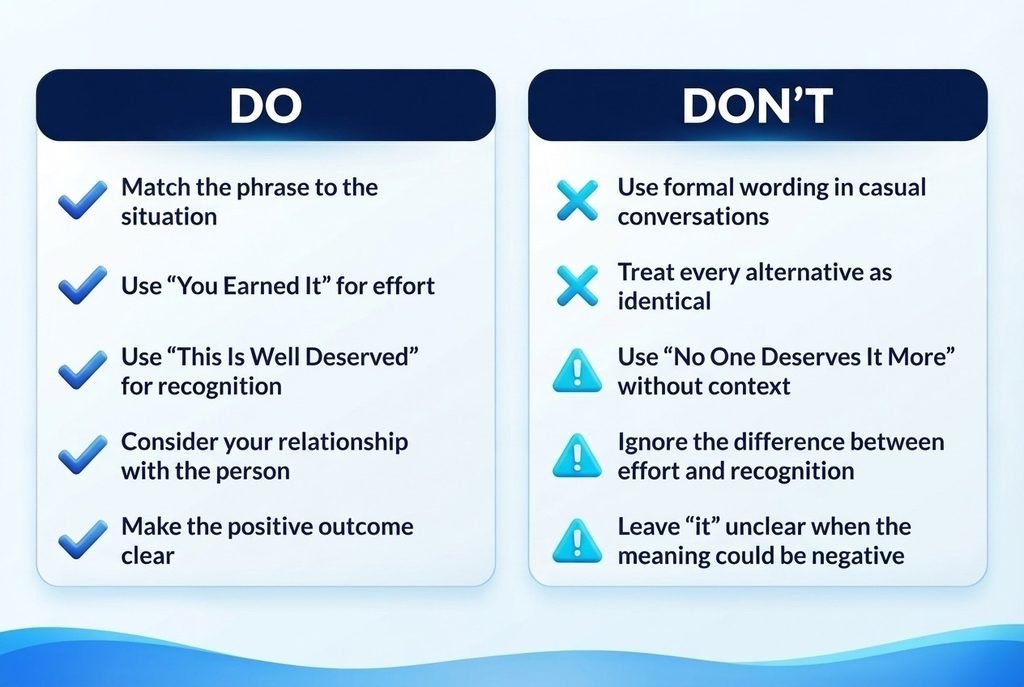
- Using casual phrases in professional emails.
A phrase such as “You’ve more than earned it!” may sound too conversational in a formal workplace message. “Well deserved” is often a better fit. - Choosing overly formal language.
Extremely polished wording can feel distant when you’re talking to a close friend. Match the expression to your relationship. - Repeating the same phrase.
Saying “you deserve it” several times can make your writing feel predictable. Choose a phrase that highlights effort, success, or emotion instead. - Forgetting context.
“You’ve worked hard for this” makes sense for an achievement based on effort, while “I’m happy for you” may work better when expressing personal support. - Sounding insincere.
Strong praise should fit the situation. Avoid exaggerated expressions if the achievement is minor or if the relationship does not call for emotional language.
Frequently Asked Questions
What is a professional way to say “you deserve it”?
“Well deserved” is a strong professional alternative to “you deserve it.” You can also say “You’ve earned this recognition” or “Your hard work has certainly paid off.” These options work well in emails, workplace messages, award announcements, and professional congratulations.
What is a casual way to say “you deserve it”?
“You’ve earned it” is one of the most natural casual alternatives. Depending on the situation, you could also say “You deserve this,” “You’ve worked hard for this,” or “Enjoy it—you’ve earned it.” These phrases sound relaxed and supportive without feeling overly formal.
How do you say “you deserve it” in a nicer way?
For a warmer message, try “You deserve every bit of it,” “You’ve more than earned it,” or “I’m so happy for you.” These expressions add emotion and make your message feel more personal than simply repeating “you deserve it.”
What is another way to say “you deserve this”?
You can say “You’ve earned this,” “You’ve worked hard for this,” or “You should be proud of yourself.” The best choice depends on what you want to emphasize. “You’ve earned this” focuses on effort, while “you should be proud of yourself” focuses on personal accomplishment.
How do you say “you deserve it” in a professional email?
Use a polished phrase such as “Well deserved,” “You’ve earned this recognition,” or “Your hard work has paid off.” For example, you could write, “Congratulations on the promotion. Your dedication and hard work have certainly paid off.”
Is “you’ve earned it” the same as “you deserve it”?
The two phrases have similar meanings, but they emphasize different ideas. “You deserve it” focuses on worthiness, while “you’ve earned it” usually points to the effort or actions that led to the reward. As a result, “you’ve earned it” can sound more specific and encouraging.
What is a heartfelt way to say “you deserve it”?
A heartfelt option is “You deserve every bit of this.” Another choice is “I can’t think of anyone more deserving.” These phrases work well for important milestones, personal achievements, and emotional messages where you want your congratulations to feel especially sincere.
What should I say instead of “you deserve it” after someone succeeds?
Consider what caused the success. If hard work was involved, say “You’ve worked hard for this.” For a professional achievement, “Well deserved” is appropriate. If you’re speaking to a close friend, “I’m so happy for you” can sound more personal and supportive.
Conclusion
There are many natural ways to say “you deserve it,” and the best choice depends on your relationship with the person and the situation. “You’ve earned it” works well when you want to recognize effort, while “well deserved” fits professional congratulations and formal praise.
For a warmer message, try “you deserve every bit of it” or “you’ve more than earned it.” If you want to focus on emotional support, “I’m happy for you” may feel more genuine. Meanwhile, “you should be proud of yourself” highlights personal achievement rather than the reward itself.
The key is to choose words that match the moment. A specific, sincere phrase will almost always sound better than repeating the same expression.

The Majestic Studio Editorial Team creates practical resources about synonyms, alternative phrases, vocabulary, and English usage. Our content is designed to help readers choose clearer, more natural words and communicate effectively in everyday, professional, and academic contexts.
Each article is researched, edited, and reviewed for clarity, context, usefulness, and language accuracy. We regularly update our content to keep examples and recommendations relevant.