

If you need another way to say “fuck you,” the best choice depends on your tone and situation. Alternatives range from blunt phrases like “go to hell” and “get lost” to calmer options such as “leave me alone,” “back off,” or “I’m done with this conversation.” Choose a phrase that matches how strongly you want to respond.
Key Takeaways
- “Fuck you” is a strong, highly offensive way to express anger, rejection, or contempt.
- “Go to hell,” “get lost,” and “screw you” offer similarly blunt alternatives.
- “Leave me alone” and “back off” are better when you want to set a clear boundary.
- Professional situations usually call for calm phrases such as “I strongly disagree” or “Please stop.”
- The best alternative depends on your relationship, audience, and level of anger.
What Does “Another Way to Say Fuck You” Mean?
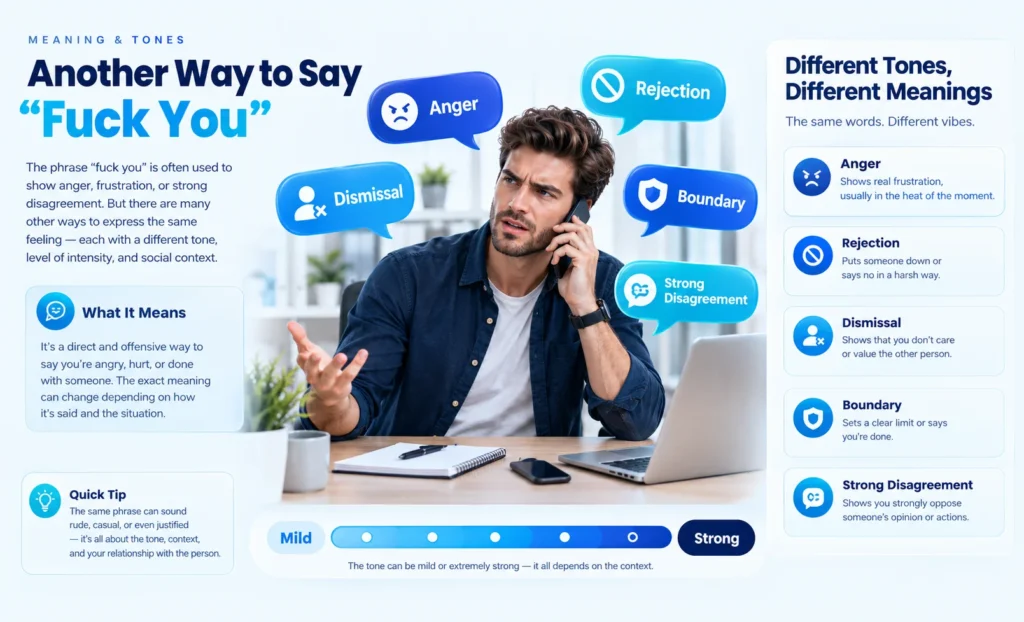
“Fuck you” is a profanity used to express intense anger, hostility, rejection, or contempt toward someone. Depending on context and tone, it can be a direct insult, a forceful dismissal, or an emotional reaction to something someone has said or done.
People often search for another way to say “fuck you” because they want to express the same basic feeling without using the exact profanity. The right replacement can make the message more humorous, less aggressive, more polite, or simply more appropriate for the situation.
You may hear alternatives in arguments, movies, casual conversations, online comments, texts, and other informal settings. However, even softer alternatives can sound rude when the situation calls for respect.
Why Use Other Ways to Say “Fuck You”?

Using a different phrase gives you more control over your message. Instead of relying on one strong expression, you can choose words that fit the level of frustration you actually want to communicate.
Common reasons include:
- Avoiding repetition: Use different expressions instead of saying the same phrase repeatedly.
- Changing the intensity: Some alternatives are harsh, while others simply establish a boundary.
- Matching the situation: A phrase that works with a close friend may be inappropriate at work.
- Sounding more natural: Everyday American English offers many ways to show annoyance.
- Staying professional: A firm response can communicate disagreement without profanity.
- Adding personality: Sarcastic or humorous alternatives can soften an otherwise angry message.
12 Best Other Ways to Say “Fuck You”
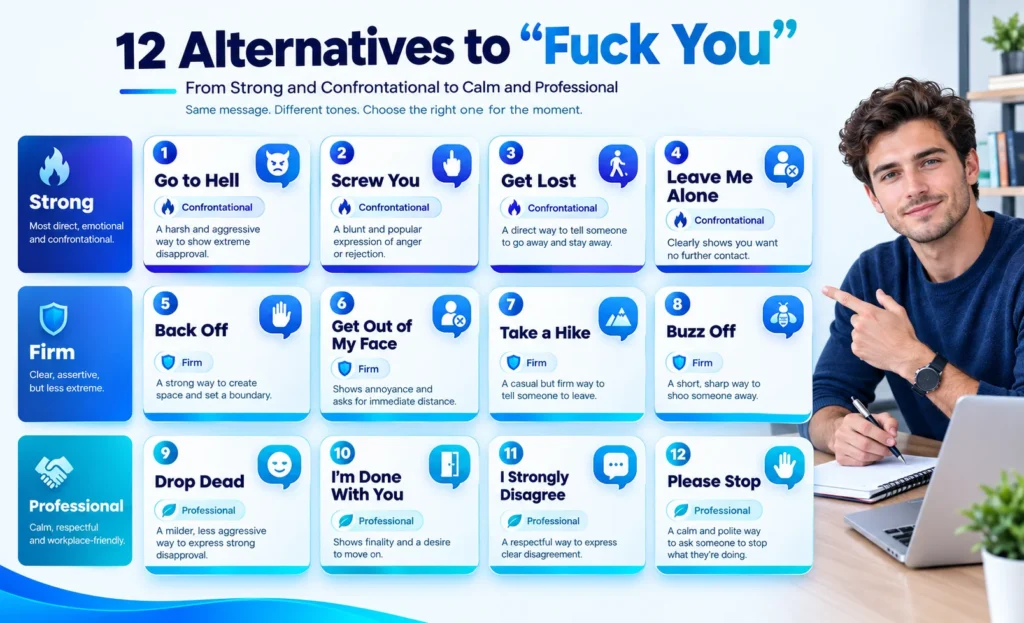
1. Go to Hell
Meaning
“Go to hell” is a strong way to tell someone you are angry and want them to leave you alone. It is insulting, but it generally sounds less vulgar than the original phrase.
Best For
- Casual
- Blunt
- Angry
Example 1
“After everything you did, you can go to hell.”
Example 2
“He told me to go to hell, so I ended the conversation.”
Quick Tip
Use this when you want a forceful response without using profanity.
2. Screw You
Meaning
“Screw you” is one of the closest everyday alternatives to “fuck you.” It communicates anger, rejection, or defiance while sounding slightly less explicit.
Best For
- Casual
- Blunt
Example 1
“You think I’m going to apologize for that? Screw you.”
Example 2
“She rolled her eyes and said, ‘Screw you,’ before walking away.”
Quick Tip
This phrase still sounds hostile, so avoid it in professional or formal situations.
3. Get Lost
Meaning
“Get lost” tells someone to leave or stop bothering you. It can sound genuinely angry or mildly dismissive depending on your tone.
Best For
- Casual
- Blunt
- Friendly, when joking
Example 1
“You’ve made your point. Now get lost.”
Example 2
“Get lost, Mike. I’m trying to finish this report.”
Quick Tip
Because tone matters, “get lost” can sometimes work as playful teasing between friends.
4. Leave Me Alone
Meaning
“Leave me alone” focuses on setting a boundary rather than insulting the other person. It is a useful choice when you want someone to stop contacting, bothering, or confronting you.
Best For
- Casual
- Polite
- Firm
Example 1
“I’m too upset to talk right now, so please leave me alone.”
Example 2
“Leave me alone and give me some time to think.”
Quick Tip
Choose this when your main goal is to end an interaction rather than insult someone.
5. Back Off
Meaning
“Back off” is a direct warning that someone should stop pressuring, confronting, or interfering with you. It is forceful without being highly vulgar.
Best For
- Casual
- Blunt
- Firm
Example 1
“Back off and let me handle this myself.”
Example 2
“He kept criticizing her until she finally told him to back off.”
Quick Tip
This works especially well when someone is crossing a personal boundary.
6. Get Out of My Face
Meaning
“Get out of my face” is an aggressive way to tell someone to stop confronting you. It is more intense than simply saying “leave me alone.”
Best For
- Casual
- Blunt
- Angry
Example 1
“Get out of my face before this argument gets worse.”
Example 2
“I told him to get out of my face and give me a minute.”
Quick Tip
Use it carefully because it can escalate an argument rather than end one.
7. Take a Hike
Meaning
“Take a hike” is an idiomatic way to tell someone to leave. It can sound dismissive and sarcastic rather than openly furious.
Best For
- Casual
- Humorous
- Blunt
Example 1
“If you’re only here to complain, take a hike.”
Example 2
“My brother laughed and told me to take a hike when I asked for his last slice of pizza.”
Quick Tip
Its old-fashioned, playful feel makes it better for light situations than serious conflicts.
8. Buzz Off
Meaning
“Buzz off” is a relatively mild way to tell someone to go away. It can express annoyance without carrying the same level of hostility as stronger insults.
Best For
- Casual
- Friendly
- Humorous
Example 1
“Buzz off—I’m trying to concentrate.”
Example 2
“She jokingly told her brother to buzz off while he was bothering her.”
Quick Tip
Use this when you want to sound annoyed without making the exchange extremely hostile.
9. Drop Dead
Meaning
“Drop dead” is a harsh dismissal that tells someone you strongly dislike their presence or behavior. It can sound dramatic and hostile.
Best For
- Casual
- Blunt
- Angry
Example 1
“He was furious and told the heckler to drop dead.”
Example 2
“‘Drop dead,’ she muttered after hearing another cruel remark.”
Quick Tip
Because it is unusually harsh, reserve it for situations where strong hostility is intentional.
10. I’m Done With You
Meaning
“I’m done with you” communicates that you no longer want to continue dealing with someone. It emphasizes ending the relationship or interaction instead of using a direct insult.
Best For
- Casual
- Firm
- Emotional
Example 1
“I’ve given you enough chances. I’m done with you.”
Example 2
“After the argument, he simply said, ‘I’m done with you,’ and left.”
Quick Tip
Choose this when you want to communicate finality rather than just anger.
11. I Strongly Disagree
Meaning
“I strongly disagree” is a calm alternative when the real issue is a serious difference of opinion. It lets you push back firmly without attacking the other person.
Best For
- Professional
- Formal
- Polite
Example 1
“I strongly disagree with your decision, and I think we should review the numbers.”
Example 2
“While I respect your opinion, I strongly disagree with that conclusion.”
Quick Tip
Use this when you need to challenge someone while protecting a professional relationship.
12. Please Stop
Meaning
“Please stop” is short, clear, and useful when someone’s behavior is upsetting or unwanted. It sets a boundary without adding an insult.
Best For
- Professional
- Formal
- Polite
- Firm
Example 1
“Please stop sending me messages after I’ve asked you not to.”
Example 2
“Please stop interrupting me so I can finish explaining my point.”
Quick Tip
When you want the behavior to end, a direct boundary is often more effective than an insult.
Comparison Table
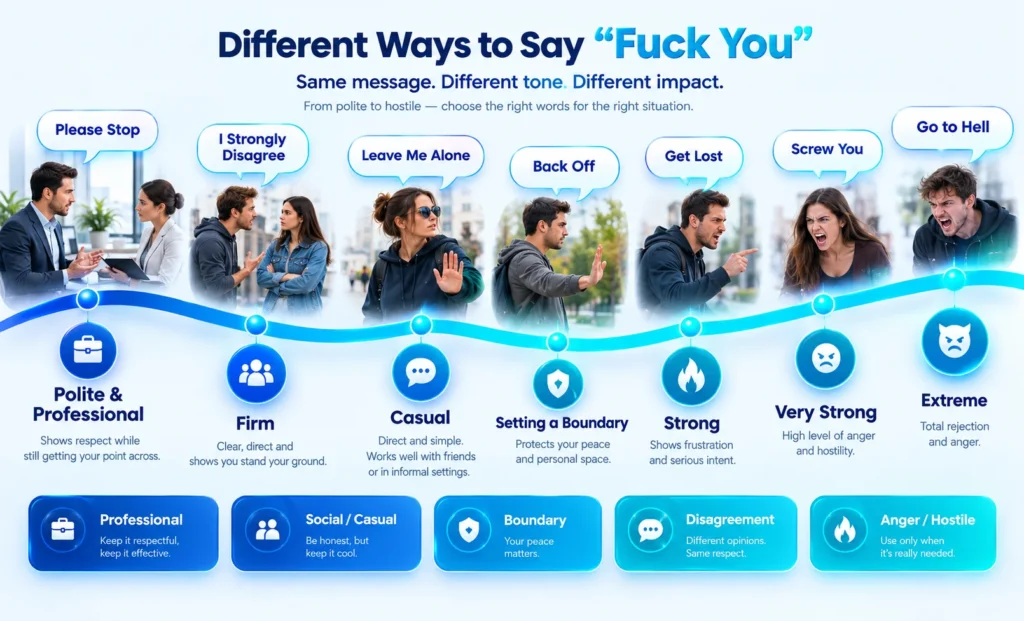
| Alternative | Best Used In | Tone |
|---|---|---|
| Go to hell | Arguments, casual conflicts | Strong |
| Screw you | Informal disagreements | Hostile |
| Get lost | Casual confrontations | Dismissive |
| Leave me alone | Personal boundaries | Firm |
| Back off | Confrontations | Forceful |
| Get out of my face | Heated arguments | Aggressive |
| Take a hike | Casual or humorous situations | Sarcastic |
| Buzz off | Light annoyance | Mild |
| Drop dead | Strong personal anger | Very harsh |
| I’m done with you | Ending an interaction | Final |
| I strongly disagree | Work and formal discussions | Professional |
| Please stop | Boundary-setting | Firm and polite |
Common Mistakes
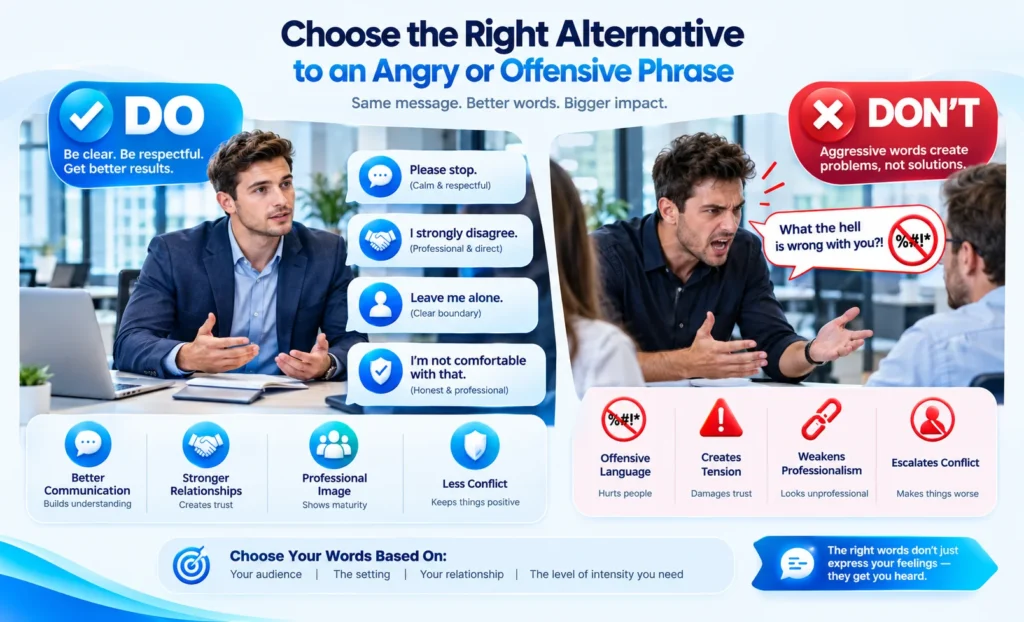
1. Using Casual Phrases in Professional Emails
Words such as “screw you” or “get lost” can damage your credibility at work. A phrase like “I strongly disagree” communicates opposition without creating unnecessary conflict.
2. Choosing a Phrase That Is Too Strong
Not every disagreement requires an aggressive response. If you only need someone to stop bothering you, “please stop” may work better than a hostile insult.
3. Repeating the Same Phrase
Repeating the same insult can make your writing sound immature or forced. Vary your language based on what you actually want to communicate.
4. Forgetting Context
A phrase can change meaning based on tone, relationship, and setting. “Buzz off” might be funny between close friends but rude when directed at a stranger.
5. Sounding Insincere
Overly polished language can sound unnatural when you are genuinely upset. Choose words that reflect your real emotion while still fitting the situation.
Frequently Asked Questions
What is a polite way to say “fuck you”?
“Please stop,” “leave me alone,” and “I strongly disagree” are more polite alternatives. They communicate boundaries or disagreement without directly insulting someone. The best choice depends on your goal. If you want the person to stop a behavior, “please stop” is usually clearer than using an insult.
What is a less offensive way to say “fuck you”?
“Screw you,” “get lost,” and “buzz off” are less explicit alternatives, although they can still sound rude. If you want to reduce the hostility even further, try “leave me alone” or “I’m done with this conversation.” Your tone can also make the same phrase sound harsher or softer.
What is a professional way to say “fuck you”?
In a professional setting, avoid replacing one insult with another. Instead, say “I strongly disagree,” “I’m not comfortable with that,” “Please stop,” or “I don’t think this conversation is productive.” These options communicate firm disagreement while protecting your professional image.
What is a funny way to say “fuck you”?
For a playful situation, phrases such as “take a hike,” “buzz off,” or “go bother someone else” can work. Humor depends heavily on your relationship with the other person, though. A phrase that makes a close friend laugh could easily offend a coworker, stranger, or customer.
What is another slang word for “fuck you”?
“Screw you” is one of the closest common slang alternatives. Other informal expressions include “get lost,” “buzz off,” and “back off.” These phrases vary in intensity, so they are not exact replacements in every situation. Choose based on whether you want to sound angry, dismissive, sarcastic, or simply firm.
How do you say “fuck you” without cursing?
You can say “leave me alone,” “back off,” “get lost,” “I’m done with you,” or “please stop.” These expressions communicate rejection or frustration without profanity. For a disagreement rather than a personal conflict, “I strongly disagree” is usually the clearest non-profane choice.
What can I say instead of “fuck you” when I’m angry?
If you want to express anger without escalating the situation, try “I’m really upset right now,” “I need you to stop,” or “I’m not continuing this conversation.” These statements focus on your feelings and boundaries instead of attacking the other person, which can make it easier to end the conflict.
Is “screw you” the same as “fuck you”?
“Screw you” has a similar basic meaning, but it is generally less explicit. Both phrases can communicate anger, rejection, or contempt. The difference is mostly in strength and vulgarity. Even though “screw you” is milder, it can still be offensive, especially in professional, formal, or unfamiliar settings.
Conclusion
There are many ways to say “fuck you,” and the best alternative depends on what you actually want to communicate. If you want a blunt insult, “go to hell,” “screw you,” or “get lost” can carry a similar attitude. For setting a boundary, “leave me alone,” “back off,” or “please stop” may be more effective.
In professional situations, avoid insults altogether. Phrases such as “I strongly disagree” let you express serious opposition while keeping the conversation productive.
The key is to match your words to the relationship, setting, and level of emotion. A good alternative does more than replace profanity—it communicates your message clearly without creating more conflict than necessary.

The Majestic Studio Editorial Team creates practical resources about synonyms, alternative phrases, vocabulary, and English usage. Our content is designed to help readers choose clearer, more natural words and communicate effectively in everyday, professional, and academic contexts.
Each article is researched, edited, and reviewed for clarity, context, usefulness, and language accuracy. We regularly update our content to keep examples and recommendations relevant.