
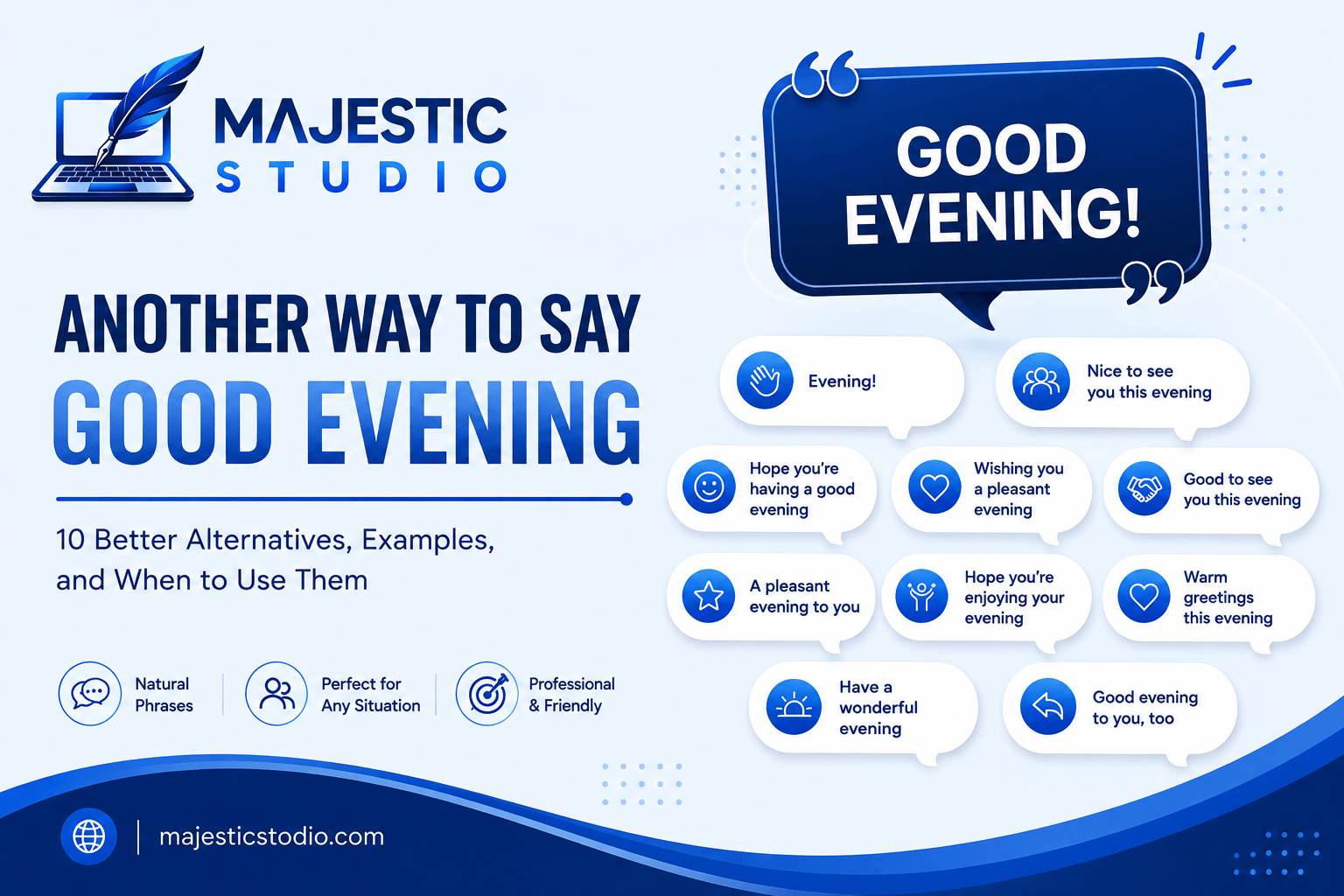
If you need another way to say “good evening,” try “Evening!”, “Nice to see you this evening,” “Hope you’re having a good evening,” or “Wishing you a pleasant evening.” The best choice depends on whether you want to sound casual, friendly, warm, polite, or professional.
Key Takeaways
- “Evening!” is a short, natural choice for casual conversations.
- “Nice to see you this evening” works well when greeting someone you know.
- “Hope you’re having a good evening” sounds friendly and conversational.
- “Wishing you a pleasant evening” is a polished, formal option.
- Choose your greeting based on the relationship, setting, and tone you want to create.
What Does “Another Way to Say Good Evening” Mean?
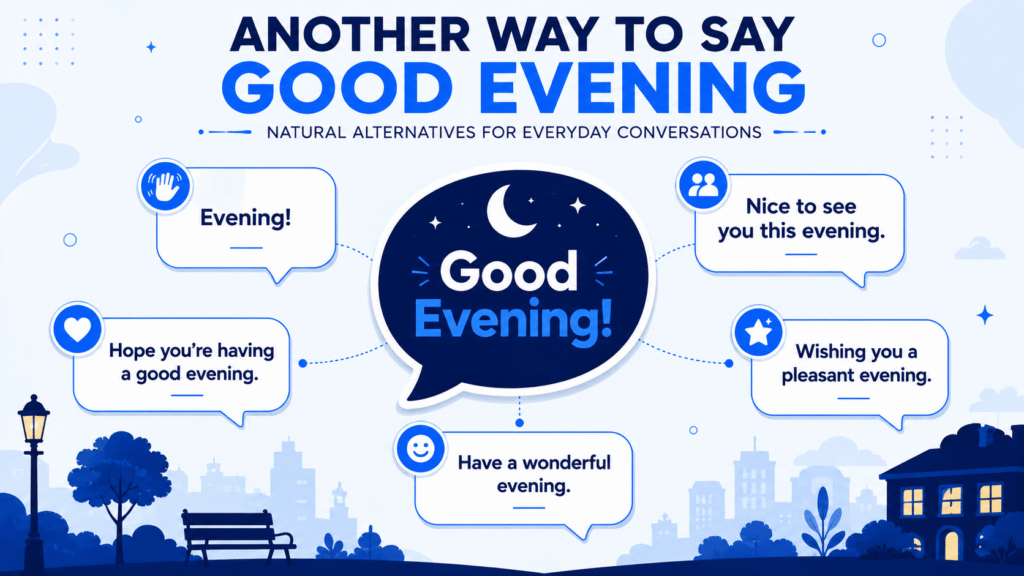
Looking for another way to say “good evening” means finding different phrases that can greet someone during the evening without using the exact words “good evening.”
People use these alternatives to sound more casual, friendly, warm, or professional. You might use a different greeting when meeting a friend, welcoming a group, starting an evening email, or speaking to someone at a formal event.
The right phrase depends on your relationship with the listener and the setting.
Why Use Other Ways to Say “Good Evening”?
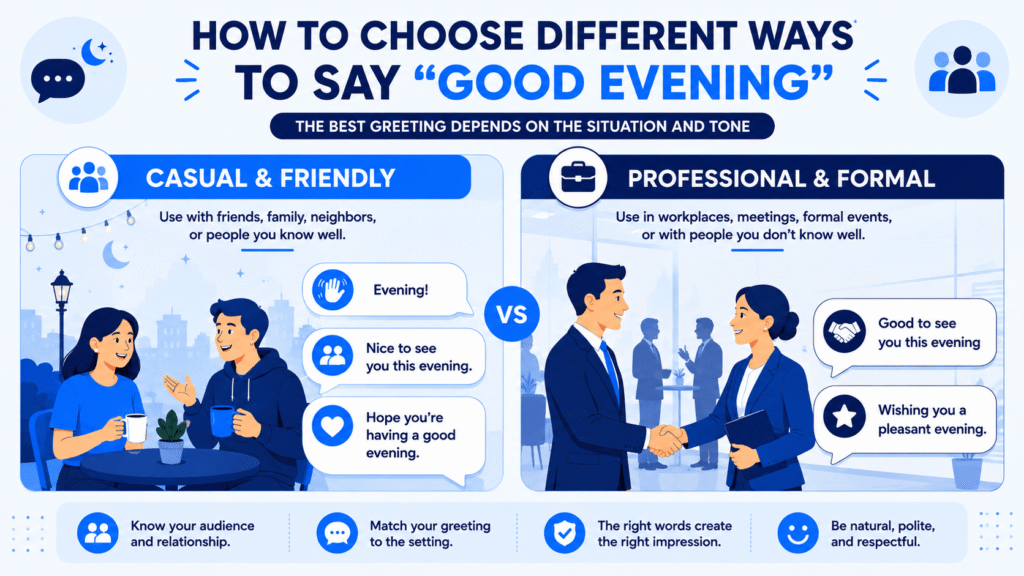
Using different evening greetings can make your communication feel more natural and less repetitive. It also lets you choose a phrase that fits the mood and relationship.
Other options can help you:
- Sound more conversational in everyday situations.
- Create a warmer first impression.
- Adjust your tone for professional or formal settings.
- Make greetings feel less repetitive.
- Show friendliness when meeting someone.
- Choose words that fit a specific social situation.
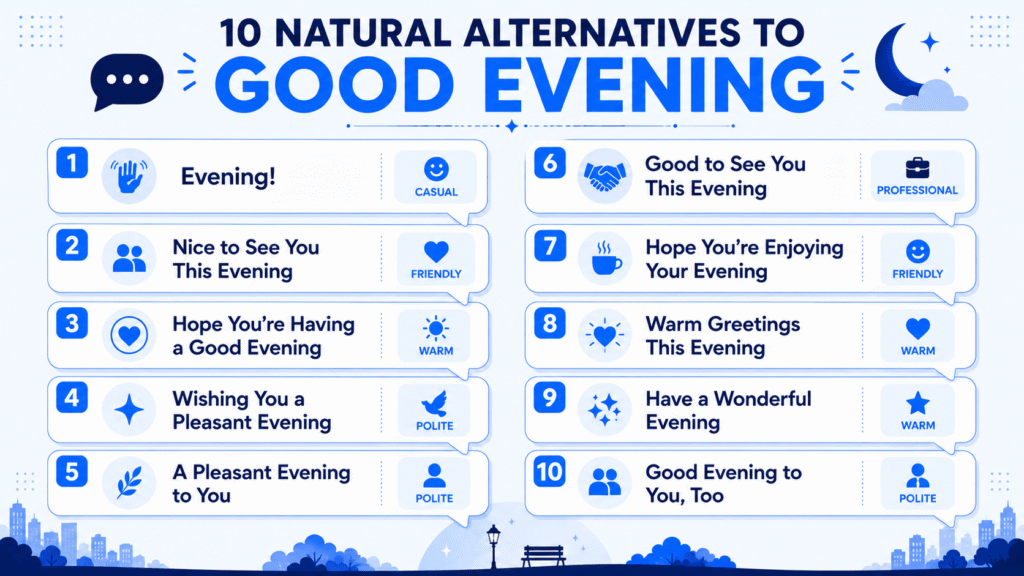
10 Best Other Ways to Say “Good Evening”
1. Evening!
Meaning
“Evening!” is a shortened and casual version of “Good evening.” It is common in everyday American English and works best when you already have a relaxed relationship with the person.
Best For
- Casual
- Friendly
Example 1
“Evening! How was your day?”
Example 2
“Evening, everyone! Ready to get started?”
Quick Tip
Use “Evening!” with friends, coworkers you know well, or groups in informal settings. Avoid it when you need a highly formal tone.
2. Nice to See You This Evening
Meaning
This greeting focuses on the person rather than simply acknowledging the time of day. It sounds warm and welcoming, especially when you are meeting someone in person.
Best For
- Friendly
- Warm
- Polite
Example 1
“Nice to see you this evening, Maria. How have you been?”
Example 2
“Nice to see you this evening. Thanks for coming to the event.”
Quick Tip
This phrase is especially useful when you want your greeting to feel more personal than a simple “good evening.”
3. Hope You’re Having a Good Evening
Meaning
This phrase combines a greeting with a friendly wish. It sounds natural when you are beginning a conversation or checking in with someone during the evening.
Best For
- Friendly
- Warm
- Casual
Example 1
“Hope you’re having a good evening! What have you been up to?”
Example 2
“Hope you’re having a good evening. I wanted to ask you about tomorrow’s meeting.”
Quick Tip
Use this phrase in texts, chats, emails, and relaxed conversations when you want to sound approachable.
4. Wishing You a Pleasant Evening
Meaning
“Wishing you a pleasant evening” is a polished and courteous greeting or well-wish. It has a more formal feel than “Hope you’re having a good evening.”
Best For
- Formal
- Professional
- Polite
Example 1
“Wishing you a pleasant evening, and thank you for joining us.”
Example 2
“Wishing you a pleasant evening as we conclude today’s conference.”
Quick Tip
This phrase is better suited to formal messages, events, and customer-facing communication than casual conversations with close friends.
5. A Pleasant Evening to You
Meaning
“A pleasant evening to you” is a courteous alternative that wishes the other person a nice evening. It sounds somewhat formal and deliberate.
Best For
- Formal
- Polite
- Professional
Example 1
“A pleasant evening to you, Mr. Carter. Please have a seat.”
Example 2
“A pleasant evening to you all, and thank you for attending.”
Quick Tip
Use this option when you want a respectful greeting with a slightly more traditional tone.
6. Good to See You This Evening
Meaning
“Good to see you this evening” is a friendly greeting for someone you are pleased to meet. It sounds natural and personal without being overly casual.
Best For
- Friendly
- Warm
- Professional
Example 1
“Good to see you this evening, James. I’m glad you could make it.”
Example 2
“It’s good to see you this evening. How has your week been?”
Quick Tip
This phrase works especially well at meetings, dinners, networking events, and social gatherings.
7. Hope You’re Enjoying Your Evening
Meaning
This greeting expresses interest in the other person’s experience. It is warmer than a basic time-based greeting and can make a conversation feel more thoughtful.
Best For
- Friendly
- Warm
- Polite
Example 1
“Hope you’re enjoying your evening! Are you staying for the whole event?”
Example 2
“Hope you’re enjoying your evening. I just wanted to check whether you received my message.”
Quick Tip
Use this when the person is already spending time at an event, gathering, or activity.
8. Warm Greetings This Evening
Meaning
“Warm greetings this evening” gives an evening greeting a friendly and welcoming quality. It is more polished than everyday speech and fits written communication particularly well.
Best For
- Formal
- Warm
- Professional
Example 1
“Warm greetings this evening to all our guests and speakers.”
Example 2
“Warm greetings this evening, and thank you for being part of our program.”
Quick Tip
This option is better for announcements, event introductions, and formal written messages than casual conversations.
9. Have a Wonderful Evening
Meaning
“Have a wonderful evening” is primarily an evening well-wish rather than a direct greeting. It is especially natural when ending a conversation or saying goodbye.
Best For
- Friendly
- Warm
- Polite
Example 1
“Thank you for meeting with me. Have a wonderful evening!”
Example 2
“It was great talking with you. Have a wonderful evening and take care!”
Quick Tip
Use this when you are parting ways rather than when you are first approaching someone.
10. Good Evening to You, Too
Meaning
“Good evening to you, too” is a natural response when someone has already greeted you with “Good evening.” It politely returns the greeting without simply repeating the same phrase.
Best For
- Polite
- Friendly
- Professional
Example 1
“Good evening to you, too. It’s nice to see you again.”
Example 2
“Good evening to you, too. How can I help you tonight?”
Quick Tip
This is an excellent response when you want to acknowledge someone’s greeting and continue the conversation naturally.
Comparison Table
| Alternative | Best Used In | Tone |
| Evening! | Casual conversations | Casual, friendly |
| Nice to See You This Evening | Social meetings | Warm, friendly |
| Hope You’re Having a Good Evening | Texts and everyday conversations | Friendly, warm |
| Wishing You a Pleasant Evening | Formal communication | Formal, polite |
| A Pleasant Evening to You | Formal settings | Polite, traditional |
| Good to See You This Evening | Meetings and gatherings | Warm, professional |
| Hope You’re Enjoying Your Evening | Events and social settings | Friendly, warm |
| Warm Greetings This Evening | Announcements and events | Formal, warm |
| Have a Wonderful Evening | Ending conversations | Warm, polite |
| Good Evening to You, Too | Responding to a greeting | Polite, friendly |
Common Mistakes
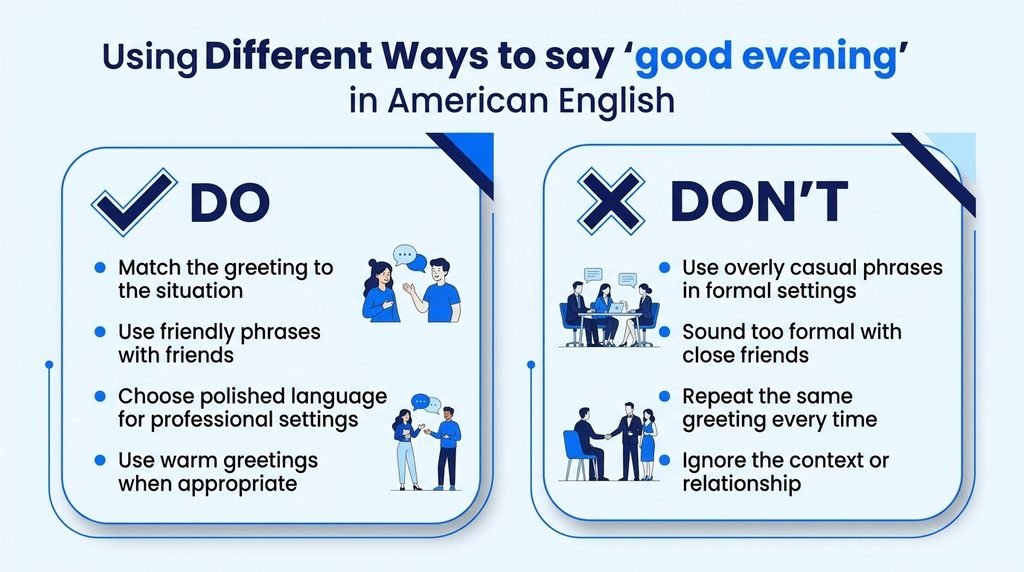
- Using casual phrases in formal situations
“Evening!” may sound too relaxed for a formal introduction, business presentation, or important client interaction. - Choosing overly formal language
Phrases such as “A pleasant evening to you” can sound stiff when talking casually with a close friend. - Repeating the same greeting too often
Using “good evening” in every message can make your communication feel repetitive. Small variations can make your language more natural. - Forgetting the context
A greeting and a farewell are not always interchangeable. For example, “Have a wonderful evening” usually works better when ending a conversation. - Sounding insincere
Choose wording that matches your normal speaking style. A simple “Evening!” can feel more genuine than an overly formal greeting in the wrong situation.
Frequently Asked Questions
What is a casual way to say “good evening”?
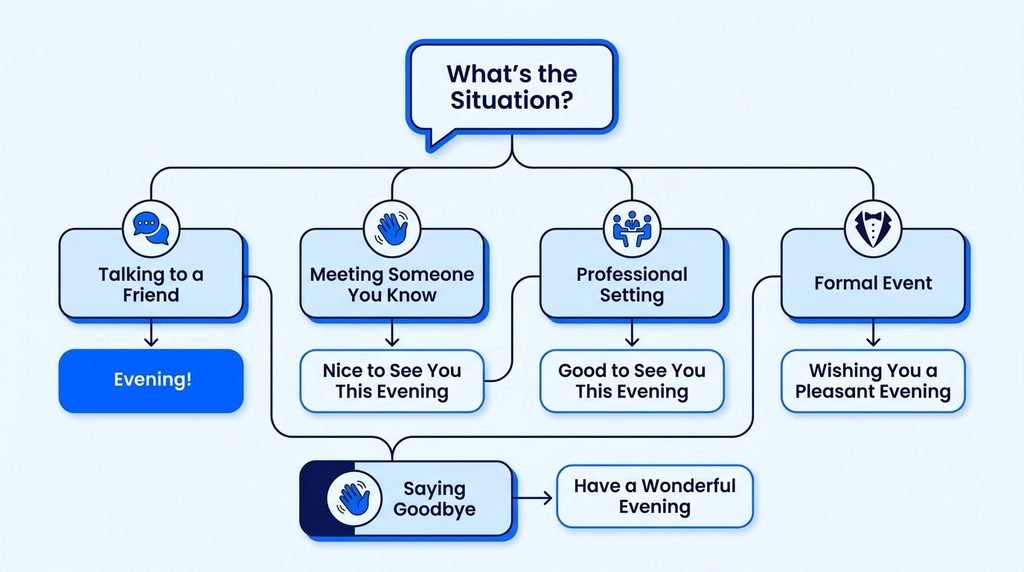
“Evening!” is one of the easiest casual alternatives to “good evening.” You can also say “Nice to see you this evening” or “Hope you’re having a good evening.” The best choice depends on whether you are greeting a friend, coworker, or someone you have just met.
What is a professional way to say “good evening”?
For professional situations, “Good to see you this evening” is a natural choice. “Wishing you a pleasant evening” also works in more formal communication. These phrases sound courteous without being unnecessarily complicated, making them useful for meetings, networking events, and professional messages.
How can I say “good evening” in a friendly way?
You can say “Evening!” for a short, relaxed greeting or “Nice to see you this evening” for something warmer. “Hope you’re having a good evening” is another friendly option, especially in texts, chats, and casual conversations.
What is a formal alternative to “good evening”?
“Wishing you a pleasant evening” and “A pleasant evening to you” are formal alternatives. They work well for events, announcements, customer communication, and other situations where you want to sound respectful and polished.
Can I use “evening” instead of “good evening”?
Yes. “Evening!” is a common shortened greeting in casual American English. It is friendly and natural when the situation is relaxed. However, “Good evening” is generally safer for formal situations, professional introductions, and conversations with people you do not know well.
What should I say instead of “good evening” in an email?
The best email greeting depends on the purpose of the message. For a professional email, you can use “Good evening” or address the person directly with “Hello, [Name].” If you are ending the email, “Have a wonderful evening” works as a warm closing sentiment.
Is “have a wonderful evening” a greeting or a goodbye?
“Have a wonderful evening” is usually a farewell or well-wish rather than a greeting. You would normally say it when ending a conversation or leaving an event. If you are meeting someone at the start of the evening, “Nice to see you this evening” is more appropriate.
What is the best alternative to “good evening”?
There is no single best alternative for every situation. “Evening!” is ideal for casual conversations, while “Good to see you this evening” works well for friendly or professional meetings. For formal settings, “Wishing you a pleasant evening” is a polished option.
Conclusion
There are many natural ways to say “good evening,” and the best choice depends on the situation, relationship, and tone you want to create. “Evening!” is a simple choice for casual conversations, while “Nice to see you this evening” adds a warmer, more personal touch.
For professional or formal situations, “Good to see you this evening” and “Wishing you a pleasant evening” sound polished and respectful. If you are ending a conversation, “Have a wonderful evening” is more appropriate than a direct greeting.
The key is to match your words to the setting. A short, natural phrase often sounds better than a complicated one. When in doubt, choose the option that feels comfortable and genuine for the conversation. For more context, you can also explore the meaning and usage of evening.

The Majestic Studio Editorial Team creates practical resources about synonyms, alternative phrases, vocabulary, and English usage. Our content is designed to help readers choose clearer, more natural words and communicate effectively in everyday, professional, and academic contexts.
Each article is researched, edited, and reviewed for clarity, context, usefulness, and language accuracy. We regularly update our content to keep examples and recommendations relevant.