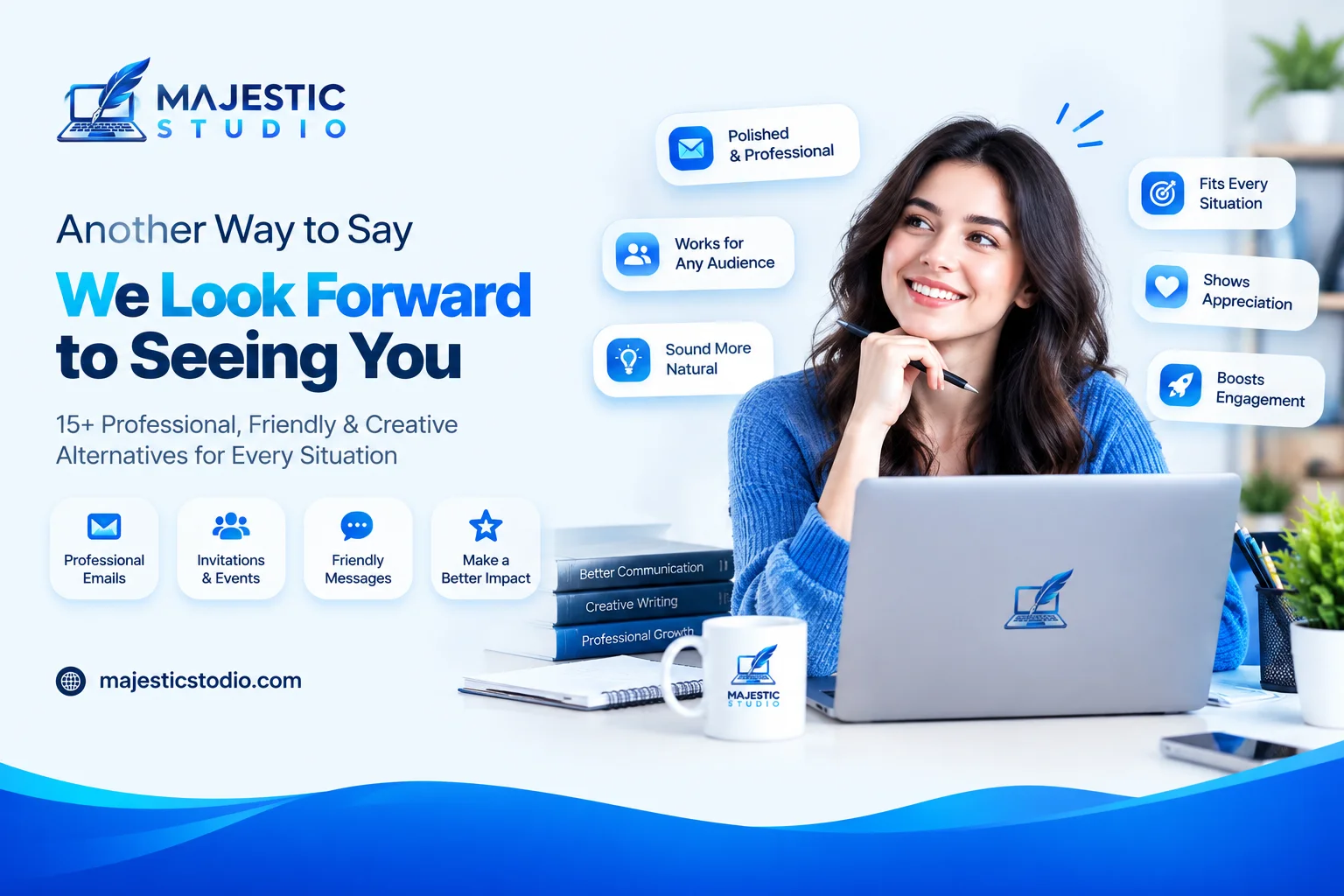
Looking for another way to say “we look forward to seeing you”? Try phrases such as “we’re excited to see you,” “we can’t wait to see you,” or “we’re looking forward to your visit.” The best choice depends on your tone, audience, and setting, from professional emails and invitations to friendly messages and events.
Key Takeaways
- “We look forward to seeing you” is polite, warm, and common in professional communication.
- The best alternative depends on how formal, friendly, or enthusiastic you want to sound.
- “We’re excited to see you” works well when you want to show genuine enthusiasm.
- “We can’t wait to see you” feels more casual and personal.
- Small wording changes can make invitations, emails, and event messages sound more natural.
What Does “Another Way to Say We Look Forward to Seeing You” Mean?
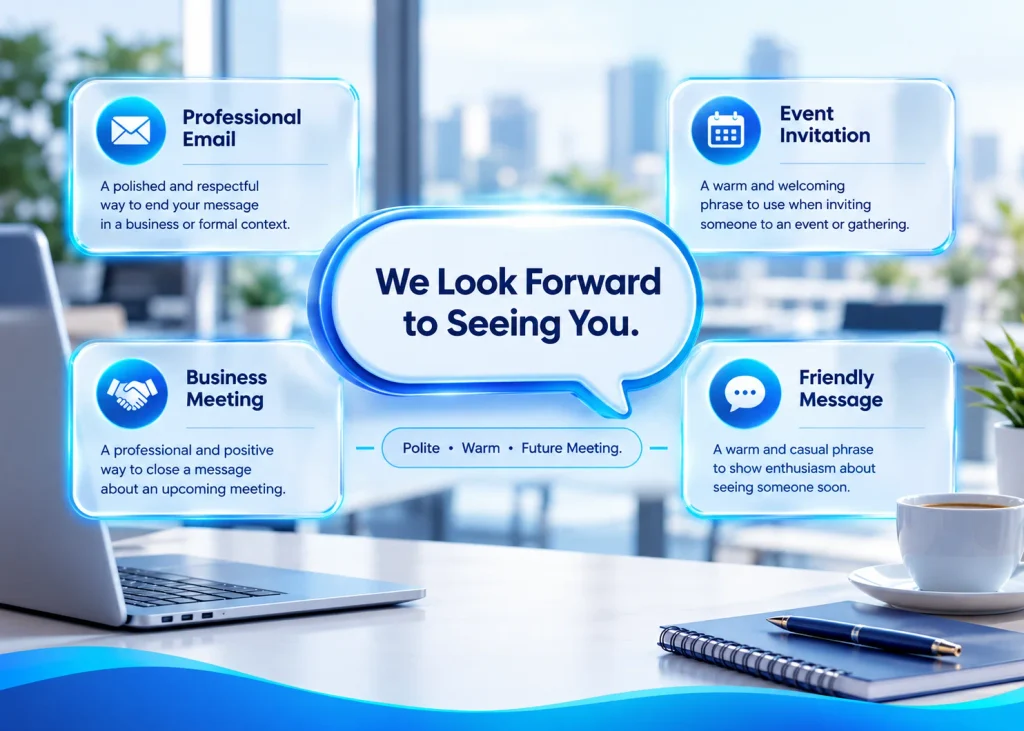
“We look forward to seeing you” is a polite way to express that you are happy or excited about meeting someone in the future. It commonly appears at the end of emails, invitations, appointment messages, event announcements, and personal notes.
The phrase sounds positive without being overly emotional. However, using the same wording repeatedly can make your communication feel predictable, so choosing a suitable alternative can help your message sound more natural.
Why Use Other Ways to Say “We Look Forward to Seeing You”?
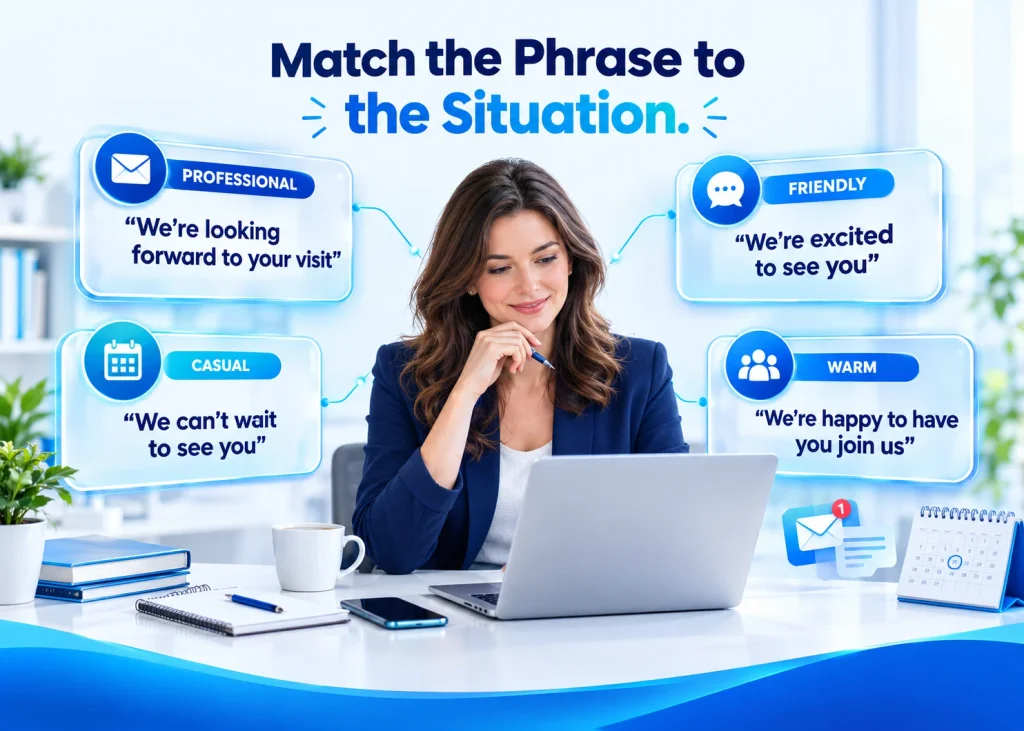
Different situations call for different levels of warmth and formality. A business email may need a polished expression, while a message to a friend can sound more relaxed.
Using alternatives can help you:
- Avoid repeating the same phrase.
- Make your writing sound more natural.
- Match your message to the audience.
- Show genuine excitement or warmth.
- Create a more personal invitation.
- Improve professional emails and event messages.
15 Best Other Ways to Say “We Look Forward to Seeing You”
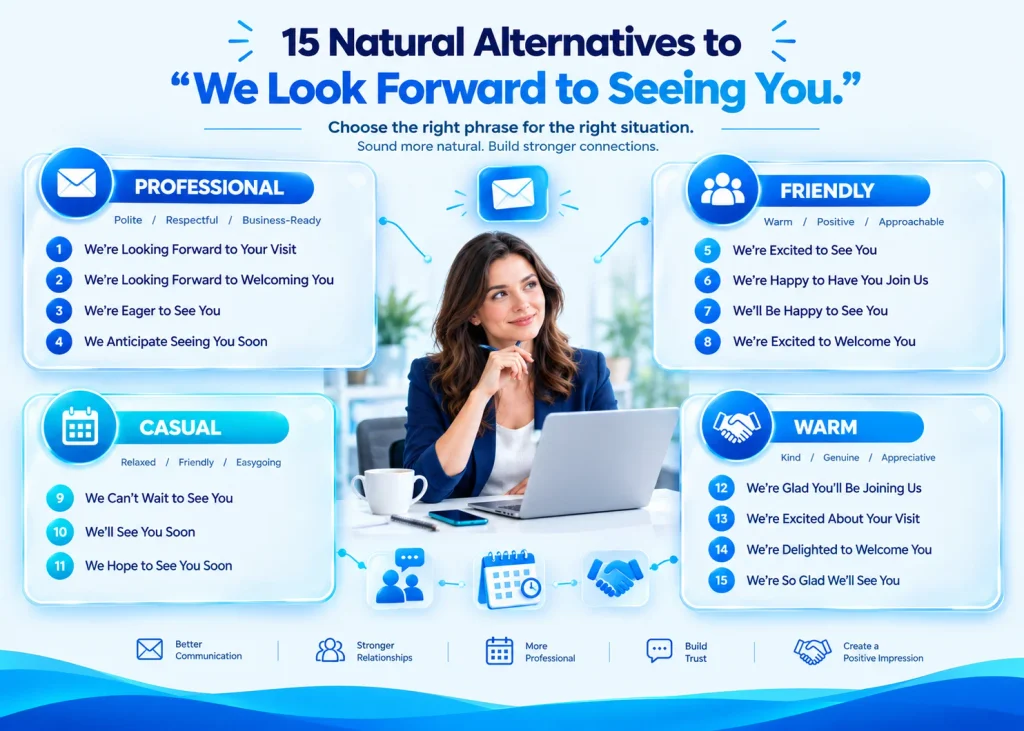
1. We’re Excited to See You
Meaning
This phrase communicates genuine enthusiasm about an upcoming meeting or visit. It sounds warmer and more energetic than the traditional expression.
Best For
- Friendly
- Warm
- Professional
- Polite
Example 1
We’re excited to see you at our annual client appreciation event next Friday.
Example 2
Our entire team is excited to see you and discuss your upcoming project.
Quick Tip
Use this phrase when you want your message to feel enthusiastic while remaining appropriate for professional communication.
2. We Can’t Wait to See You
Meaning
“We can’t wait to see you” expresses strong excitement about an upcoming meeting. It has a relaxed and personal feel.
Best For
- Casual
- Friendly
- Warm
Example 1
We can’t wait to see you at the family reunion this weekend.
Example 2
The kids can’t wait to see you when you arrive on Saturday.
Quick Tip
Because it sounds conversational, save this phrase for friendly messages, personal invitations, and informal events.
3. We’re Looking Forward to Your Visit
Meaning
This alternative focuses on the person’s upcoming visit rather than the act of seeing them. It sounds polished and welcoming.
Best For
- Professional
- Formal
- Warm
- Polite
Example 1
We’re looking forward to your visit to our Chicago office next month.
Example 2
Everyone here is looking forward to your visit and the opportunity to connect.
Quick Tip
This is an excellent choice for business emails, offices, hotels, appointments, and professional invitations.
4. We’re Excited About Your Visit
Meaning
This phrase shows that the upcoming visit is something you genuinely anticipate. It has a positive and welcoming tone.
Best For
- Professional
- Friendly
- Warm
- Polite
Example 1
We’re excited about your visit and have prepared a few activities for the afternoon.
Example 2
The whole team is excited about your visit to our headquarters.
Quick Tip
Choose this wording when the visit itself is the main focus of the message.
5. We Hope to See You Soon
Meaning
“We hope to see you soon” expresses a friendly desire to meet someone in the near future. It sounds softer and less formal than the original phrase.
Best For
- Friendly
- Casual
- Warm
- Polite
Example 1
Thanks for stopping by today. We hope to see you again soon.
Example 2
Have a safe trip home, and we hope to see you soon.
Quick Tip
Use it when the exact timing of the next meeting is uncertain.
6. We’re Eager to See You
Meaning
This phrase shows strong interest in an upcoming meeting. It is more enthusiastic than a standard professional closing but still sounds polished.
Best For
- Formal
- Professional
- Warm
Example 1
We’re eager to see you at the conference and hear your presentation.
Example 2
Our staff is eager to see you and welcome you to the new facility.
Quick Tip
Use “eager” when you want to communicate clear anticipation without sounding too casual.
7. We’re Glad You’ll Be Joining Us
Meaning
This expression welcomes someone who has agreed to attend an event, meeting, or gathering. It focuses on appreciation rather than anticipation.
Best For
- Professional
- Friendly
- Warm
- Polite
Example 1
We’re glad you’ll be joining us for the leadership workshop.
Example 2
We’re glad you’ll be joining us for dinner on Saturday evening.
Quick Tip
This works especially well after someone has confirmed their attendance.
8. We’ll Be Happy to See You
Meaning
This phrase communicates a warm welcome and positive feelings about an upcoming visit. It is straightforward and easy to understand.
Best For
- Friendly
- Warm
- Polite
- Professional
Example 1
We’ll be happy to see you when you arrive at the office.
Example 2
We’ll be happy to see you again during your next visit to Boston.
Quick Tip
Use it when you want to sound welcoming without expressing intense excitement.
9. We’re Delighted to Welcome You
Meaning
“We’re delighted to welcome you” sounds gracious and polished. It emphasizes the pleasure of having someone attend or visit.
Best For
- Formal
- Professional
- Warm
- Polite
Example 1
We’re delighted to welcome you to our annual business conference.
Example 2
We’re delighted to welcome you and your guests to our new location.
Quick Tip
This phrase is particularly useful for formal invitations, conferences, ceremonies, and hospitality settings.
10. We’re Happy to Have You Join Us
Meaning
This expression tells someone that their presence is appreciated. It feels friendly and inclusive without being overly formal.
Best For
- Friendly
- Professional
- Warm
- Polite
Example 1
We’re happy to have you join us for tomorrow’s team lunch.
Example 2
We’re happy to have you join us as we celebrate this important milestone.
Quick Tip
Use it when you want to emphasize that the person’s presence adds value to the gathering.
11. We Anticipate Seeing You Soon
Meaning
This is a more formal way to express that you expect and welcome an upcoming meeting. It has a polished, businesslike tone.
Best For
- Formal
- Professional
- Polite
Example 1
We anticipate seeing you at the scheduled meeting on Tuesday morning.
Example 2
We anticipate seeing you at the opening ceremony next month.
Quick Tip
This wording is best suited to formal correspondence rather than casual conversations.
12. We’re Excited to Welcome You
Meaning
This phrase combines enthusiasm with a warm welcome. It works particularly well when someone is attending an event, visiting a business, or joining a group.
Best For
- Professional
- Friendly
- Warm
- Polite
Example 1
We’re excited to welcome you to our new office next week.
Example 2
We’re excited to welcome you and your family to the community.
Quick Tip
Choose this phrase when the main purpose of your message is to make someone feel welcomed.
13. We’ll See You Soon
Meaning
“We’ll see you soon” is short, natural, and conversational. It suggests that the next meeting is expected to happen relatively soon.
Best For
- Casual
- Friendly
- Warm
Example 1
Thanks for confirming your plans. We’ll see you soon!
Example 2
Have a great weekend, and we’ll see you soon at the office.
Quick Tip
Its casual tone makes it better for texts, chats, and informal emails than formal business letters.
14. We’re Looking Forward to Welcoming You
Meaning
This phrase combines anticipation with hospitality. It tells the reader that their arrival is expected and appreciated.
Best For
- Professional
- Formal
- Warm
- Polite
Example 1
We’re looking forward to welcoming you to our customer appreciation event.
Example 2
Our team is looking forward to welcoming you to the training session.
Quick Tip
Use this alternative when you are hosting an event or receiving someone at a specific location.
15. We’re So Glad We’ll See You
Meaning
This warm expression emphasizes happiness about an upcoming meeting. It feels personal and sincere, making it a good choice for people you know well.
Best For
- Casual
- Friendly
- Warm
Example 1
We’re so glad we’ll see you during the holidays this year.
Example 2
We’re so glad we’ll see you at the graduation celebration.
Quick Tip
Use this phrase in personal communication when you want your message to sound genuinely warm and affectionate.
Comparison Table
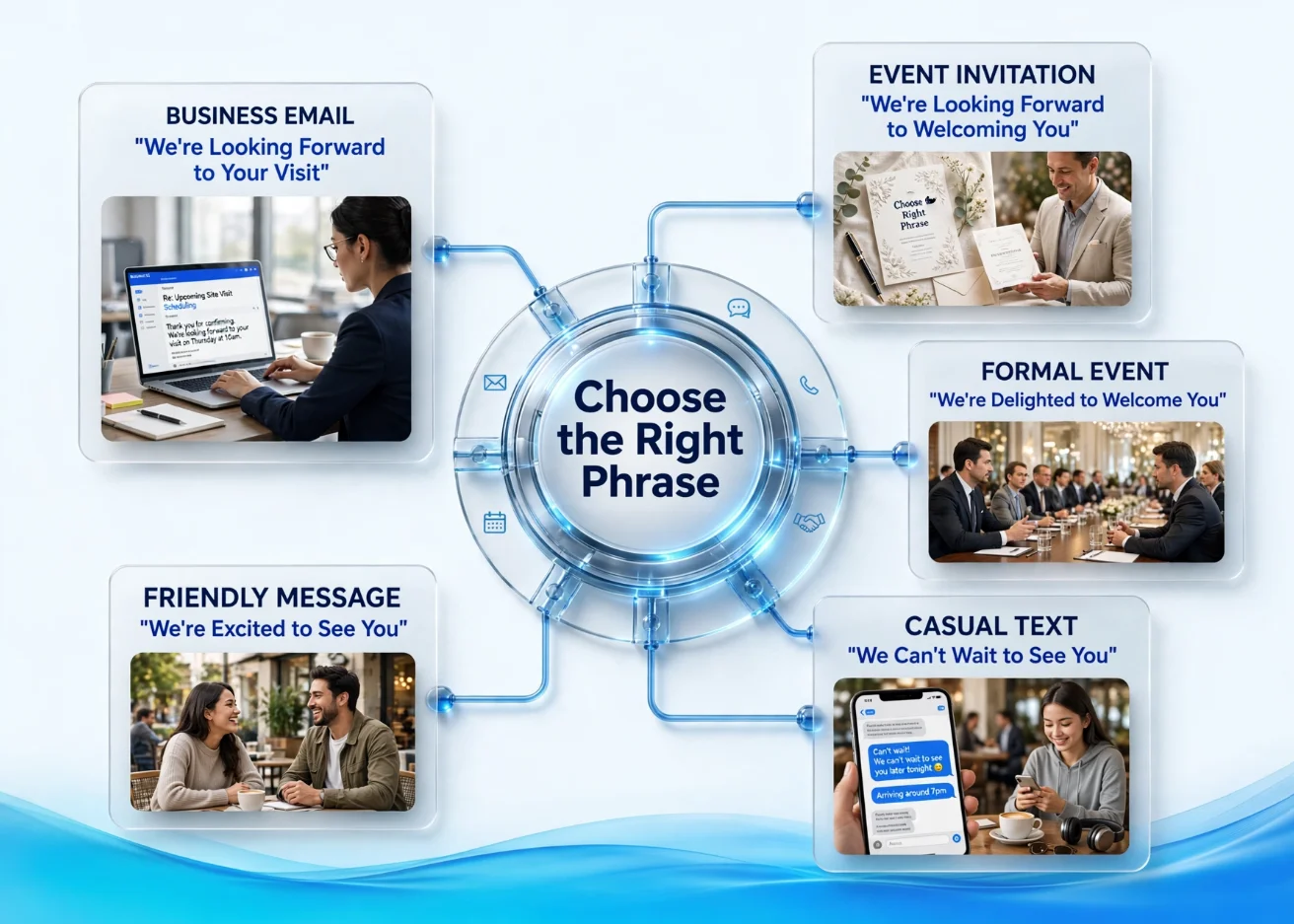
| Alternative | Best Used In | Tone |
|---|---|---|
| We’re Excited to See You | Events, emails, meetings | Warm, enthusiastic |
| We Can’t Wait to See You | Personal messages | Casual, enthusiastic |
| We’re Looking Forward to Your Visit | Business, appointments | Professional, warm |
| We’re Excited About Your Visit | Business, hospitality | Warm, positive |
| We Hope to See You Soon | Personal messages | Friendly, gentle |
| We’re Eager to See You | Formal correspondence | Professional, enthusiastic |
| We’re Glad You’ll Be Joining Us | Invitations, events | Warm, welcoming |
| We’ll Be Happy to See You | Visits, meetings | Polite, welcoming |
| We’re Delighted to Welcome You | Formal events | Formal, gracious |
| We’re Happy to Have You Join Us | Gatherings, meetings | Friendly, inclusive |
| We Anticipate Seeing You Soon | Formal business writing | Formal, polished |
| We’re Excited to Welcome You | Events, visits | Warm, enthusiastic |
| We’ll See You Soon | Texts, casual emails | Casual, friendly |
| We’re Looking Forward to Welcoming You | Hosted events | Professional, warm |
| We’re So Glad We’ll See You | Family, friends | Warm, personal |
Common Mistakes
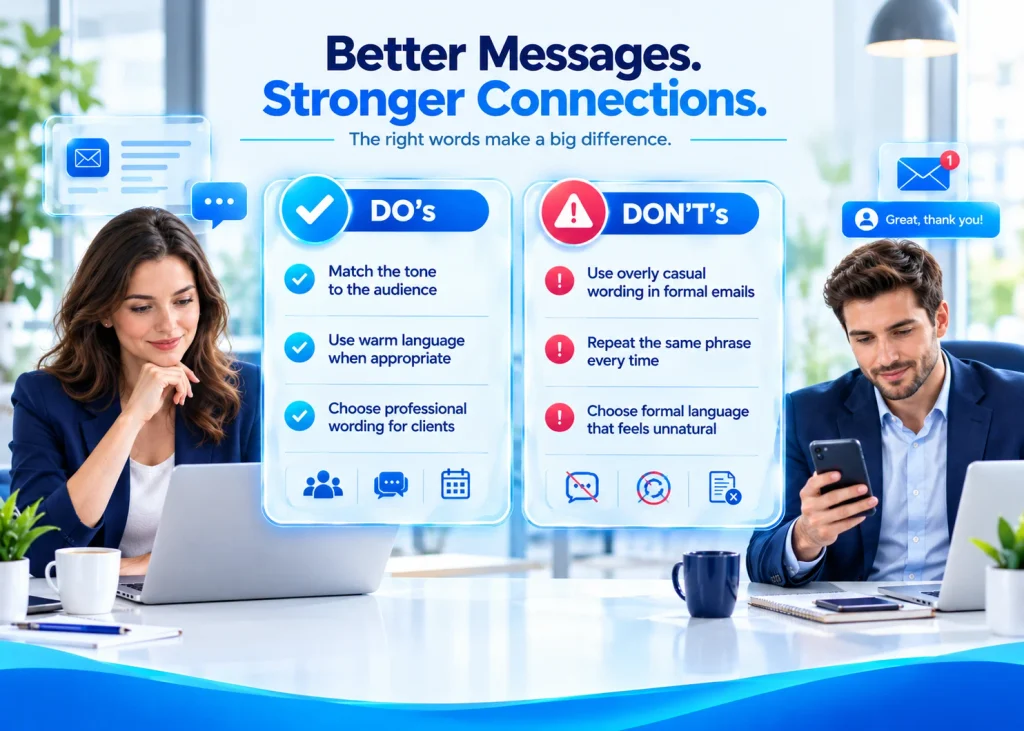
1. Using Casual Phrases in Professional Emails
Expressions such as “We can’t wait to see you” can sound too relaxed in highly formal business communication. Choose a polished alternative when writing to clients, executives, or professional contacts.
2. Choosing Overly Formal Language
Not every situation requires formal wording. A phrase such as “We anticipate seeing you soon” may feel stiff in a message to a close friend.
3. Repeating the Same Phrase
Using “we look forward to seeing you” in every invitation or email can make your writing feel repetitive. Vary your wording when the context allows it.
4. Forgetting the Context
Consider whether you are welcoming someone to an event, expecting a visit, or simply expressing excitement about meeting them. The purpose of the message should guide your choice.
5. Sounding Insincere
Very enthusiastic language can feel unnatural if the situation does not call for it. Pick wording that matches your genuine level of excitement.
Frequently Asked Questions
What is another way to say “we look forward to seeing you”?
You can say “we’re excited to see you,” “we hope to see you soon,” “we’re looking forward to your visit,” or “we’re happy to have you join us.” The best option depends on the situation. Professional messages usually benefit from polished wording, while personal messages can use warmer and more conversational expressions.
What is a professional way to say “we look forward to seeing you”?
“We’re looking forward to your visit” and “we’re looking forward to welcoming you” are strong professional choices. Both sound polite and positive without being too casual. They work well in client emails, appointment confirmations, business invitations, conferences, and other workplace situations.
What is a friendly way to say “we look forward to seeing you”?
For a friendly message, try “we can’t wait to see you,” “we hope to see you soon,” or “we’ll see you soon.” These expressions sound natural and personal. They work especially well when communicating with friends, relatives, classmates, or familiar coworkers.
Is “we can’t wait to see you” professional?
“We can’t wait to see you” can work in friendly professional communication, especially when the workplace has a relaxed culture. However, it may sound too casual for formal business correspondence. In those situations, “we’re excited to see you” or “we’re looking forward to your visit” may fit better.
Is “we’re excited to see you” grammatically correct?
Yes. “We’re excited to see you” is grammatically correct and commonly used in American English. The phrase uses “excited” to describe anticipation about a future meeting. It can appear in both professional and personal communication, depending on the relationship and overall tone.
Can I use “we look forward to seeing you” in an email?
Yes. “We look forward to seeing you” is a standard and natural phrase for emails. It works particularly well when the recipient has confirmed a meeting, appointment, visit, or event. You can also vary the wording when you want the closing to sound more personal or enthusiastic.
What is a warm way to say “we look forward to seeing you”?
“We’re excited to welcome you,” “we’re so glad we’ll see you,” and “we’re excited to see you” all create a warm tone. These alternatives are useful when you want to communicate genuine happiness rather than simply provide a polite closing.
What is the best alternative for an invitation?
For an invitation, “we’re looking forward to welcoming you” is a polished choice, while “we’re excited to see you” feels more energetic. For a casual gathering, “we can’t wait to see you” can sound more natural. Consider the event, audience, and level of formality before choosing your wording.
Conclusion
There are many natural ways to say “we look forward to seeing you,” and the right choice depends on your audience and situation. For professional communication, phrases such as “we’re looking forward to your visit” and “we’re looking forward to welcoming you” offer a polished tone.
For warmer messages, “we’re excited to see you” or “we’re happy to have you join us” can feel more personal. If you are writing to friends or family, casual options such as “we can’t wait to see you” and “we’ll see you soon” may sound more natural.
The key is to match your wording to the relationship, setting, and level of enthusiasm. Choosing the right tone for your audience can make an invitation or email feel more sincere, welcoming, and appropriate.

The Majestic Studio Editorial Team creates practical resources about synonyms, alternative phrases, vocabulary, and English usage. Our content is designed to help readers choose clearer, more natural words and communicate effectively in everyday, professional, and academic contexts.
Each article is researched, edited, and reviewed for clarity, context, usefulness, and language accuracy. We regularly update our content to keep examples and recommendations relevant.