

Another way to say “I told you so” includes phrases like “I knew this would happen,” “That’s what I warned you about,” and “See what I mean?” The best choice depends on your tone. Use softer phrases such as “That’s what I was saying” in friendly conversations and more direct wording when you need to emphasize a previous warning.
Key Takeaways
- “I told you so” can sound smug, so softer alternatives often work better.
- Choose your wording based on the relationship and situation.
- “That’s what I warned you about” works well when you gave a clear warning.
- “See what I mean?” sounds natural and conversational.
- Professional conversations usually benefit from neutral, solution-focused language.
“I told you so” is a familiar phrase people use when something happens exactly as they predicted. While the expression is common, it can sometimes sound smug, sarcastic, or dismissive.
Fortunately, there are many other ways to communicate the same idea without making the other person feel embarrassed. The right phrase can help you sound confident while keeping the conversation friendly and respectful.
What Does “Another Way to Say I Told You So” Mean?
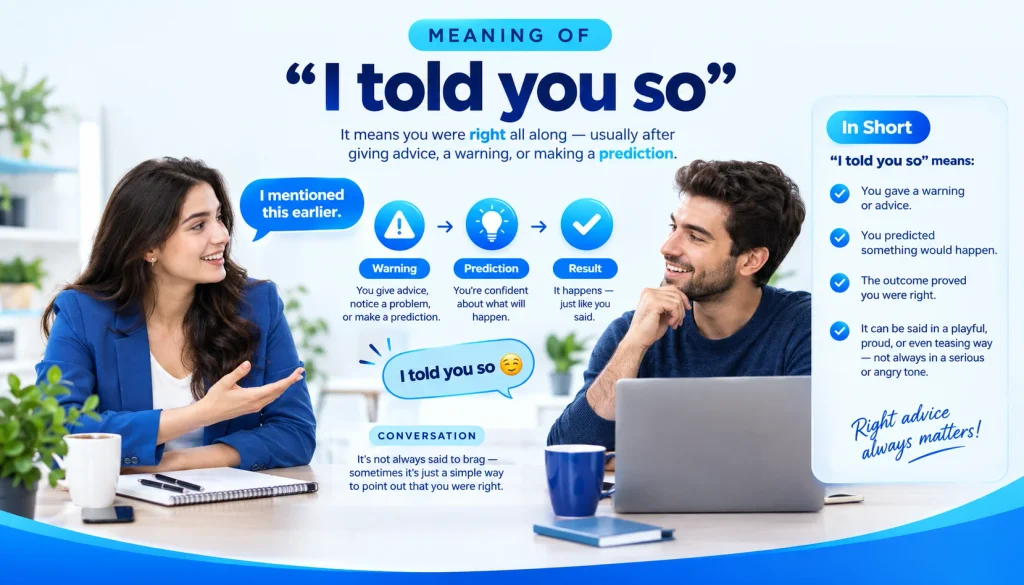
Looking for another way to say “I told you so” means finding a different expression that communicates, “I warned you about this,” “I expected this to happen,” or “This is what I was talking about.”
People commonly use these phrases after a prediction or warning turns out to be correct. They appear in casual conversations, friendships, family discussions, workplace communication, and even professional writing.
The best alternative depends on your goal. You may want to sound playful, supportive, confident, polite, or more direct.
Why Use Other Ways to Say “I Told You So”?
The phrase “I told you so” can easily make someone feel criticized. A different expression lets you make the same point while better matching the situation.
Other phrases can help you:
- Avoid sounding arrogant or dismissive.
- Make conversations feel more natural.
- Match your tone to the relationship.
- Communicate more effectively at work.
- Remind someone about a previous warning without creating tension.
- Add humor or warmth when the situation allows it.
10 Best Other Ways to Say “I Told You So”
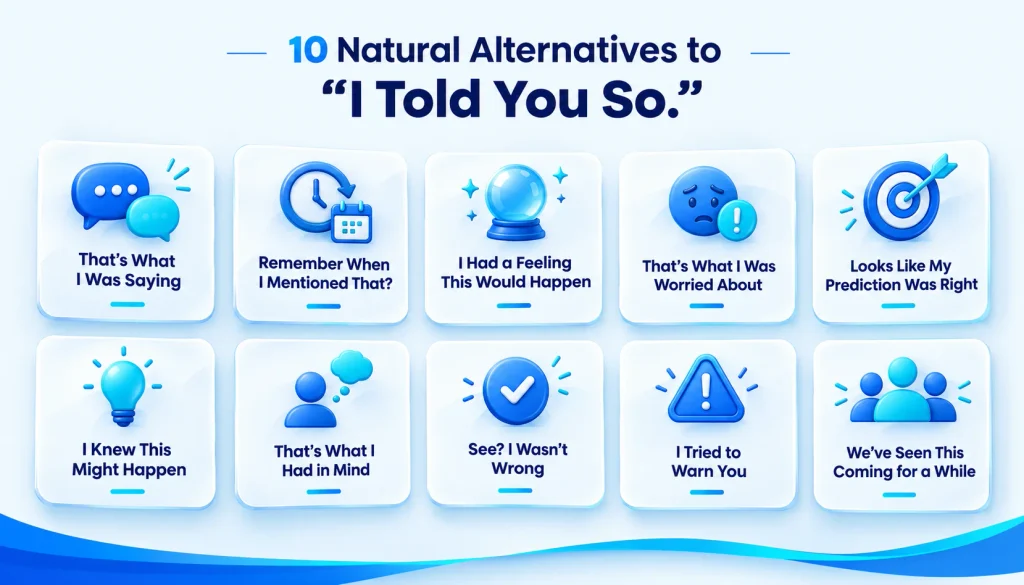
1. That’s What I Was Saying
Meaning
“That’s what I was saying” reminds someone that you previously expressed the same idea. It is softer than “I told you so” and focuses on the information rather than proving that you were right.
Best For
- Casual
- Friendly
- Warm
- Polite
Example 1
“That’s what I was saying when we talked about the project last week.”
Example 2
“See? That’s what I was saying about leaving a little earlier.”
Quick Tip
Use this when you want to remind someone of your earlier point without sounding like you are keeping score.
2. See What I Mean?
Meaning
“See what I mean?” invites the other person to recognize that your earlier point was valid. It sounds conversational and works especially well when the result is happening right in front of you.
Best For
- Casual
- Friendly
- Warm
Example 1
“See what I mean? The cheaper option ended up costing more.”
Example 2
“See what I mean? Taking the shortcut saved us a lot of time.”
Quick Tip
Keep your voice friendly because the phrase can sound sarcastic if delivered too sharply.
3. That’s What I Warned You About
Meaning
This phrase directly connects the current situation to a previous warning. It is more serious than some of the softer alternatives, but it clearly communicates that you had already identified the possible problem.
Best For
- Formal
- Professional
- Direct
- Polite
Example 1
“That’s what I warned you about when we discussed the deadline.”
Example 2
“That’s what I warned you about with the old equipment.”
Quick Tip
Use this when your earlier warning was important and you need to make the connection clear.
4. I Knew This Would Happen
Meaning
“I knew this would happen” shows that you expected the current result. Unlike “I told you so,” it emphasizes your prediction rather than the fact that the other person ignored your advice.
Best For
- Casual
- Friendly
- Warm
Example 1
“I knew this would happen once the weather started changing.”
Example 2
“I knew this would happen if we waited until the last minute.”
Quick Tip
This works well when you want to highlight your prediction without directly blaming someone.
5. That’s Exactly What I Expected
Meaning
“That’s exactly what I expected” communicates confidence about your earlier prediction. It sounds more measured and polished than “I told you so.”
Best For
- Professional
- Formal
- Polite
Example 1
“That’s exactly what I expected after reviewing the first set of results.”
Example 2
“That’s exactly what I expected would happen after the schedule changed.”
Quick Tip
This is a strong choice for professional conversations because it sounds factual rather than boastful.
6. Just Like I Thought
Meaning
“Just like I thought” tells someone that the outcome matched your earlier expectations. It is brief, natural, and commonly used in everyday American English.
Best For
- Casual
- Friendly
- Warm
Example 1
“Just like I thought, the store was packed on Saturday.”
Example 2
“Just like I thought, the first plan needed a few changes.”
Quick Tip
Use it casually when the goal is to acknowledge your prediction rather than criticize someone.
7. That’s What I Had in Mind
Meaning
“That’s what I had in mind” can connect the current result to an idea you previously expressed. It is less confrontational because it focuses on your expectations rather than someone else’s mistake.
Best For
- Professional
- Polite
- Formal
Example 1
“That’s what I had in mind when I suggested starting with the smaller project.”
Example 2
“That’s what I had in mind when I recommended keeping the design simple.”
Quick Tip
This phrase is useful when discussing plans, strategies, designs, or decisions at work.
8. I Had a Feeling This Would Happen
Meaning
This expression suggests that you suspected something would happen but did not necessarily claim complete certainty. It has a softer and more humble tone than “I told you so.”
Best For
- Casual
- Friendly
- Warm
Example 1
“I had a feeling this would happen when the temperatures dropped.”
Example 2
“I had a feeling this would happen after they changed the original schedule.”
Quick Tip
Choose this phrase when you want to sound less certain and avoid making the other person feel blamed.
9. That’s What I Was Concerned About
Meaning
“That’s what I was concerned about” shifts attention from being right to identifying a genuine problem. It works especially well when you previously raised an issue for practical reasons.
Best For
- Professional
- Formal
- Polite
Example 1
“That’s what I was concerned about when we discussed the tight deadline.”
Example 2
“That’s what I was concerned about with relying on only one supplier.”
Quick Tip
Use this at work when you want to discuss a problem constructively instead of emphasizing who predicted it.
10. Looks Like I Was Right
Meaning
“Looks like I was right” acknowledges that your earlier opinion turned out to be correct. It is direct but less blunt than “I told you so.”
Best For
- Casual
- Friendly
- Polite
Example 1
“Looks like I was right about the restaurant needing reservations.”
Example 2
“Looks like I was right to suggest checking the measurements twice.”
Quick Tip
Use this phrase sparingly when the other person may already feel frustrated about the outcome.
Comparison Table
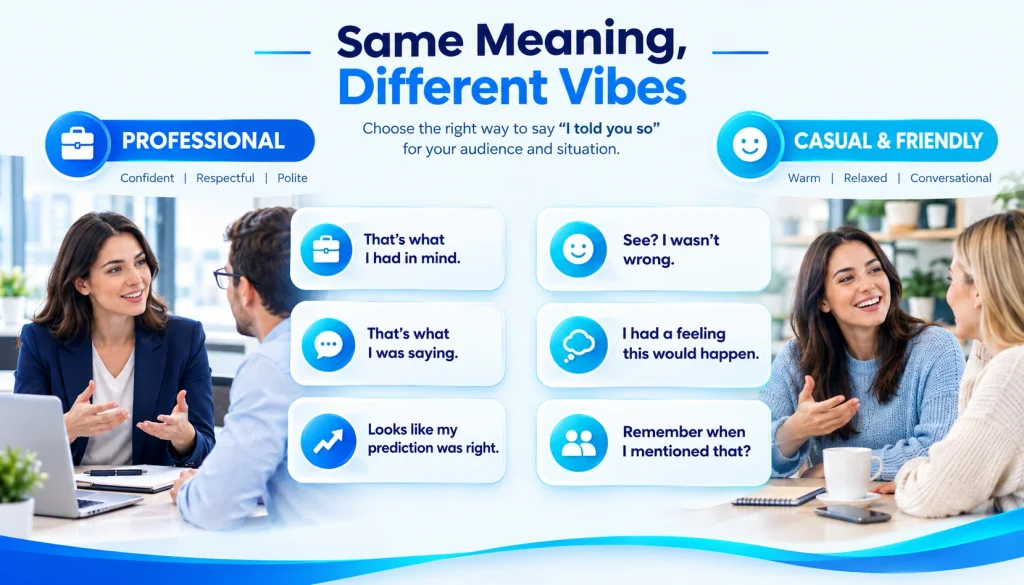
| Alternative | Best Used In | Tone |
|---|---|---|
| That’s What I Was Saying | Casual conversations | Friendly |
| See What I Mean? | Everyday conversations | Conversational |
| That’s What I Warned You About | Warnings and serious situations | Direct |
| I Knew This Would Happen | Casual situations | Confident |
| That’s Exactly What I Expected | Workplace discussions | Professional |
| Just Like I Thought | Informal conversations | Casual |
| That’s What I Had in Mind | Work and planning | Polite |
| I Had a Feeling This Would Happen | Friendly conversations | Humble |
| That’s What I Was Concerned About | Professional discussions | Concerned |
| Looks Like I Was Right | Casual conversations | Direct |
Common Mistakes
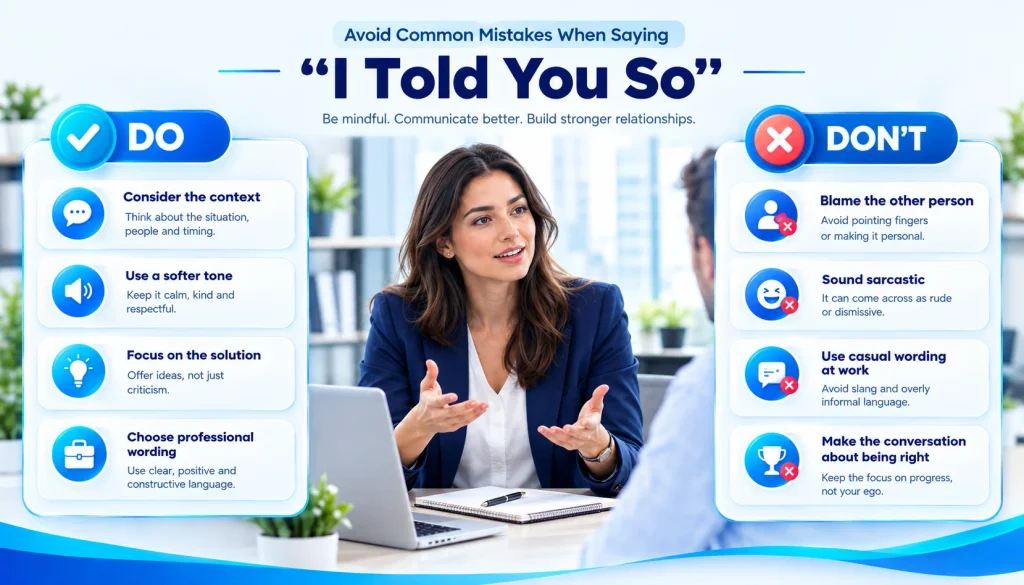
1. Using Casual Phrases in Professional Emails
Phrases such as “I told you so” or “See what I mean?” can sound confrontational in workplace communication. Choose neutral wording that focuses on the situation instead.
2. Choosing Overly Formal Language
Not every conversation requires polished business language. Saying “That’s exactly what I expected” to a close friend may sound unnecessarily serious.
3. Repeating the Same Phrase
Using the same expression every time can make your communication feel predictable. Keep several alternatives available so you can adjust your wording naturally.
4. Forgetting the Context
A phrase that works between close friends may not work with a manager, client, coworker, or customer. Always consider your relationship with the listener.
5. Sounding Insincere
Even a polite phrase can feel sarcastic if your tone suggests that you are enjoying someone else’s mistake. Focus on solving the problem rather than proving that you were correct.
Frequently Asked Questions

What is a polite way to say “I told you so”?
A polite option is “That’s what I was saying” or “That’s what I was concerned about.” Both phrases remind someone about your earlier point without putting too much emphasis on being right. In professional situations, “That’s exactly what I expected” can sound more neutral and respectful.
What is another way to say “I told you so” without being rude?
Try “See what I mean?”, “I had a feeling this would happen,” or “That’s what I was saying.” These expressions communicate that your earlier prediction or concern was accurate while reducing the judgmental tone that “I told you so” can sometimes create.
What is a professional way to say “I told you so”?
“That’s exactly what I expected” is a professional alternative. “That’s what I was concerned about” also works well when you previously identified a potential problem. Both phrases keep attention on the issue instead of making the conversation about proving who was right.
Is “I told you so” considered rude?
“I told you so” is not always rude, but it can sound smug or dismissive depending on the situation and tone. Among close friends, it may be playful. In a workplace or sensitive conversation, a softer phrase usually helps keep the discussion constructive.
What can I say instead of “See, I told you”?
You can say “That’s what I was saying,” “Looks like I was right,” or “Just like I thought.” If you want to sound especially gentle, “I had a feeling this would happen” avoids directly reminding the other person that they disagreed with you.
How do you say “I told you so” in a nice way?
A nice way to express the idea is “That’s what I was concerned about” or “I had a feeling this might happen.” These options recognize your earlier observation without making the other person feel embarrassed for making a different choice.
What is a funny way to say “I told you so”?
In a casual conversation, you could use “See what I mean?” or “Just like I thought!” A playful delivery can make the message feel lighthearted. However, humor depends on the relationship, so avoid joking if the other person is already upset about the outcome.
How can I avoid sounding arrogant when saying “I told you so”?
Focus on the situation instead of your own correctness. For example, “That’s what I was concerned about” keeps the conversation centered on the problem. You can also offer help or discuss what to do next rather than repeatedly pointing out that your prediction was correct.
Conclusion
There are many useful alternatives to “I told you so,” and the best expression depends on your audience, relationship, and purpose. For casual conversations, “See what I mean?” and “Just like I thought” sound natural and relaxed. If you want a warmer approach, “I had a feeling this would happen” can make your point without sounding judgmental.
For workplace conversations, “That’s exactly what I expected” and “That’s what I was concerned about” keep the focus on facts and solutions. When you need to refer to a previous warning, “That’s what I warned you about” is clear and direct.
The key is to communicate your point without making someone feel embarrassed. Choose tactful wording that fits the situation, and let the outcome speak for itself.