
Choosing another way to say “contact us” can make your website, business emails, customer support messages, and marketing materials sound more natural and inviting. The best phrase depends on your audience and goal. For example, “Get in Touch” feels friendly, while “Reach Out to Our Team” sounds professional and helpful.
Key Takeaways
- “Get in Touch” is a versatile choice for websites and business communication.
- “Reach Out to Us” sounds friendly, professional, and approachable.
- “Contact Our Team” works well for customer support and service pages.
- “Send Us a Message” is ideal for contact forms and online inquiries.
- Match your wording to your audience, brand voice, and desired action.
What Does “Another Way to Say Contact Us” Mean?
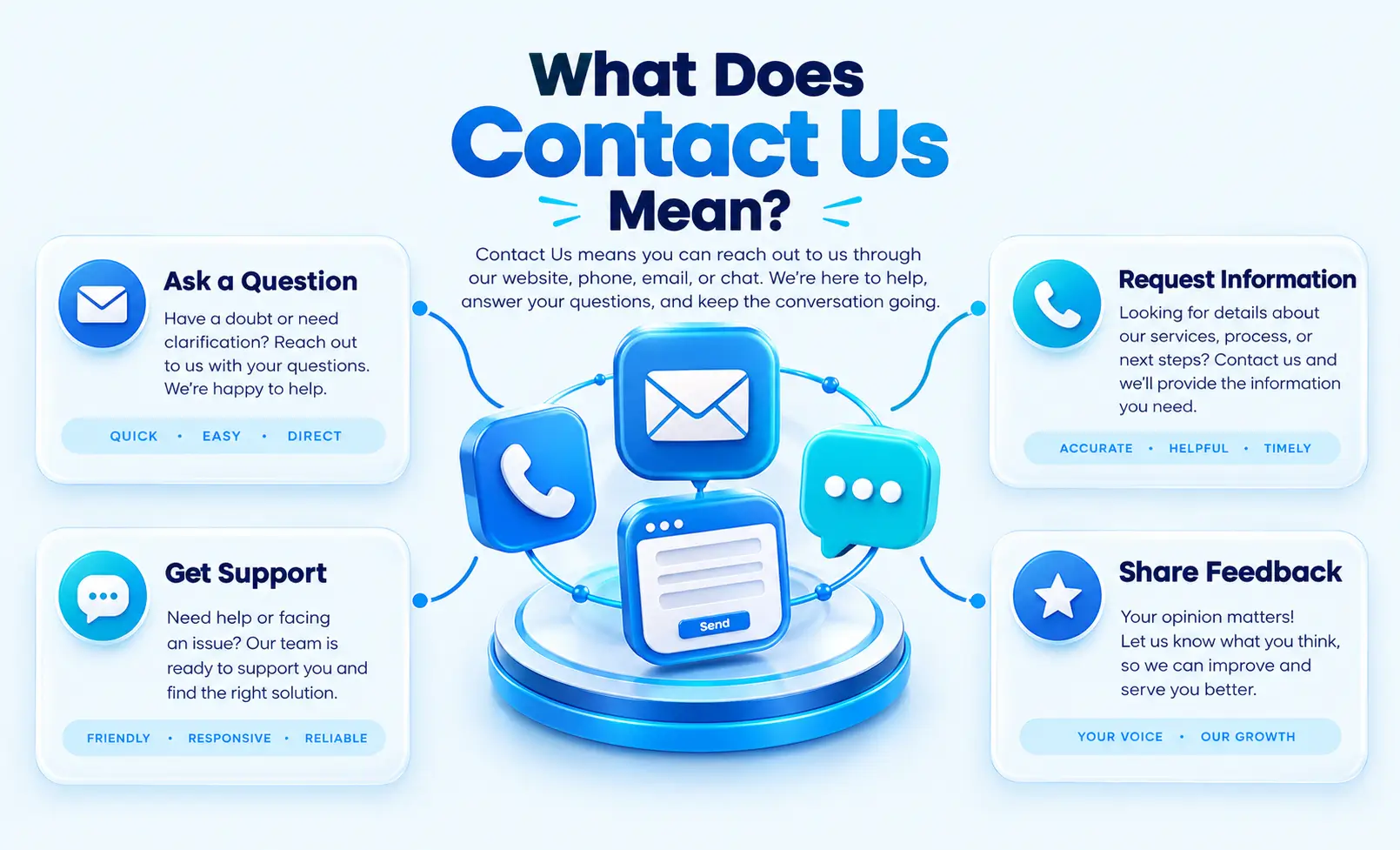
Looking for another way to say “contact us” means finding alternative phrases that encourage people to communicate with a business, organization, or individual. These expressions can invite customers to ask questions, request information, book a service, or share feedback.
You will often see them on website buttons, contact pages, email signatures, advertisements, and customer service pages. Although “Contact Us” is clear and familiar, a different phrase can make your message feel warmer, more specific, or more professional.
Why Use Other Ways to Say “Contact Us”?

Changing this phrase can improve the way visitors respond to your website or business message. A thoughtful call to action tells readers what to do while helping them feel comfortable taking the next step.
Consider using an alternative to:
- Avoid repetition: Keep website pages and marketing copy fresh.
- Sound more welcoming: Encourage visitors to start a conversation.
- Match your brand voice: Choose wording that feels professional, friendly, or formal.
- Make the next step clear: Tell users whether to call, email, or submit a form.
- Improve user experience: Help visitors understand how to get assistance.
For example, “Request a Consultation” works better when visitors need expert advice, while “Send Us a Message” suits a simple online contact form.
15 Best Other Ways to Say “Contact Us”
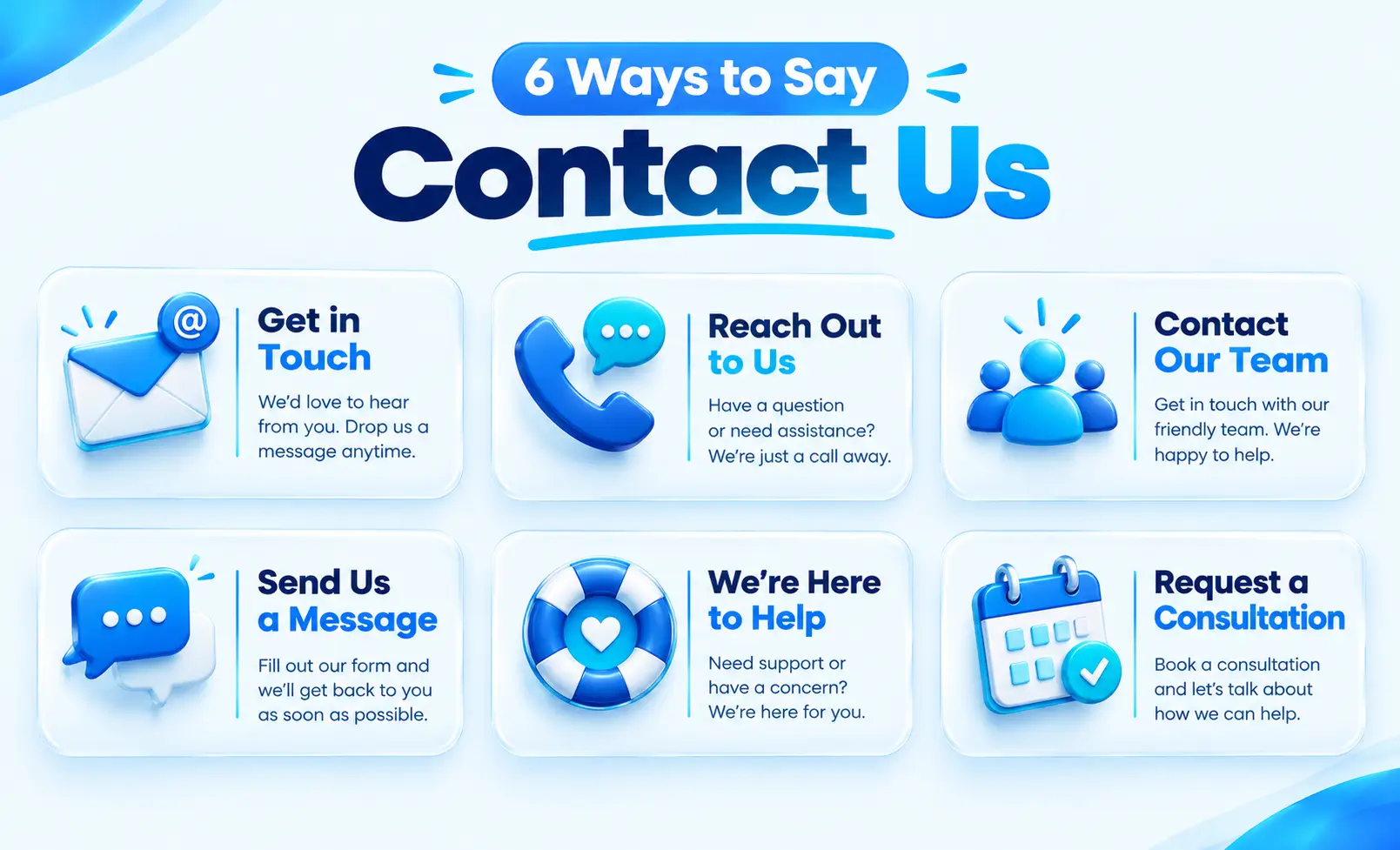
Here are 15 alternatives for website buttons, business communication, customer service, and professional emails.
1. Get in Touch
Meaning: This phrase invites someone to start a conversation with you or your business. It feels approachable without being too casual, making it a reliable replacement for “Contact Us.”
Best For: Friendly, Professional, Polite
Example 1: Get in touch with our team to learn more about our web design services.
Example 2: If you have questions about your order, get in touch with our support team.
Quick Tip: Use this phrase for general contact pages when you want a welcoming, versatile call to action.
2. Reach Out to Us
Meaning: “Reach Out to Us” encourages people to initiate communication. It sounds conversational while remaining appropriate for most professional settings.
Best For: Professional, Friendly, Warm
Example 1: Reach out to us if you need help choosing the right service plan.
Example 2: Please reach out to us with any questions about your upcoming appointment.
Quick Tip: This phrase works well in emails and service pages when you want to sound helpful rather than overly formal.
3. Contact Our Team
Meaning: This alternative directs visitors to a group of people who can answer questions or provide assistance. It makes your business sound organized and ready to help.
Best For: Professional, Formal, Polite
Example 1: Contact our team to discuss your company’s website requirements.
Example 2: For help with billing, contact our team during regular business hours.
Quick Tip: Choose this wording when customers need to speak with a department or a dedicated support team.
4. Send Us a Message
Meaning: This phrase asks visitors to communicate by writing a message, usually through an online form, email, or messaging tool. It clearly describes the action they should take.
Best For: Friendly, Casual, Polite
Example 1: Send us a message to receive a personalized project estimate.
Example 2: Have a suggestion for our next product update? Send us a message.
Quick Tip: Use it above contact forms or messaging links where written communication is the main option.
5. We’re Here to Help
Meaning: This expression reassures visitors that assistance is available. Instead of simply asking them to contact you, it focuses on their needs and makes your business feel supportive.
Best For: Warm, Friendly, Polite
Example 1: We’re here to help if you need assistance setting up your new account.
Example 2: Whatever your question, we’re here to help you find the right solution.
Quick Tip: Place this phrase on customer support pages, help centers, and service websites.
6. Talk to Our Team
Meaning: “Talk to Our Team” encourages visitors to have a direct conversation with your business. It suggests personal assistance and works especially well when customers can speak with a representative.
Best For: Professional, Friendly, Casual
Example 1: Talk to our team about creating a website that fits your business goals.
Example 2: Need advice before purchasing? Talk to our team for product recommendations.
Quick Tip: Use it when phone calls, live chat, or scheduled conversations are available.
7. Connect With Us
Meaning: This phrase invites people to establish communication with your business or organization. It can also suggest an ongoing relationship rather than a single question or request.
Best For: Professional, Friendly, Warm
Example 1: Connect with us to explore opportunities for working together.
Example 2: Follow our updates and connect with us to share your ideas.
Quick Tip: This is a good option for community-focused brands, networking pages, and business websites.
8. Reach Our Support Team
Meaning: This phrase tells visitors exactly who can help them. It is particularly useful when customers have technical problems, account questions, or concerns about an order.
Best For: Professional, Formal, Polite
Example 1: Reach our support team if you experience difficulties accessing your account.
Example 2: You can reach our support team for help tracking a delayed shipment.
Quick Tip: Use it on help pages and support portals rather than general marketing pages.
9. Drop Us a Line
Meaning: This informal expression means sending someone a short message or email. It creates a relaxed, personable tone and makes communication feel easy.
Best For: Casual, Friendly, Warm
Example 1: Drop us a line if you’d like to discuss your next creative project.
Example 2: Have an idea for a collaboration? Drop us a line and tell us about it.
Quick Tip: Reserve this expression for approachable brands, small businesses, and informal communication.
10. Ask Us Anything
Meaning: This phrase invites visitors to ask questions without worrying about whether their questions are too simple or unusual. It communicates openness and encourages people to seek clarification.
Best For: Friendly, Casual, Warm
Example 1: Ask us anything about our pricing, services, or project timelines.
Example 2: Not sure which plan suits your needs? Ask us anything before deciding.
Quick Tip: Use it when your team can answer a broad range of questions. Avoid it if your support scope is limited.
11. Request More Information
Meaning: This phrase encourages readers to ask for additional details about a product, service, or opportunity. It sounds purposeful and helps set expectations for the conversation.
Best For: Professional, Formal, Polite
Example 1: Request more information about our corporate training packages.
Example 2: Interested in our consulting services? Request more information about available options.
Quick Tip: This wording suits business-to-business websites, service inquiries, and informational brochures.
12. Speak With an Expert
Meaning: This expression invites visitors to discuss their needs with someone who has relevant knowledge or experience. It emphasizes expert guidance rather than general communication.
Best For: Professional, Formal, Polite
Example 1: Speak with an expert to find the right insurance coverage for your needs.
Example 2: Before choosing a treatment option, speak with an expert about your concerns.
Quick Tip: Use this phrase only when qualified or knowledgeable professionals are genuinely available.
13. Let’s Start a Conversation
Meaning: This phrase invites visitors to begin an open discussion. It feels collaborative and suggests that your business values the visitor’s ideas, questions, and goals.
Best For: Friendly, Warm, Professional
Example 1: Let’s start a conversation about how we can improve your online presence.
Example 2: Have a project in mind? Let’s start a conversation about your vision.
Quick Tip: This works particularly well for creative agencies, consultants, and partnership-focused businesses.
14. Submit Your Inquiry
Meaning: This phrase asks visitors to send a formal question or request, usually through an online form. It establishes a clear action and suits structured business communication.
Best For: Formal, Professional, Polite
Example 1: Submit your inquiry to receive details about our enterprise solutions.
Example 2: Please submit your inquiry using the form below so our admissions office can respond.
Quick Tip: Use it for detailed forms, corporate services, admissions, and formal requests.
15. Request a Consultation
Meaning: This phrase encourages visitors to arrange a conversation with a professional for personalized guidance. It signals a more specific next step than a general contact invitation.
Best For: Professional, Formal, Polite
Example 1: Request a consultation to discuss your website redesign goals.
Example 2: Schedule your next step by requesting a consultation with our financial planning team.
Quick Tip: Choose this call to action when the goal is to arrange a consultation, not simply answer a quick question.
Comparison Table: 15 Alternatives to “Contact Us”

| Alternative | Best Used In | Tone |
|---|---|---|
| Get in Touch | General contact pages | Friendly |
| Reach Out to Us | Business emails | Professional |
| Contact Our Team | Company websites | Formal |
| Send Us a Message | Contact forms | Friendly |
| We’re Here to Help | Support pages | Warm |
| Talk to Our Team | Live chat or sales | Conversational |
| Connect With Us | Networking pages | Welcoming |
| Reach Our Support Team | Help centers | Professional |
| Drop Us a Line | Small business websites | Casual |
| Ask Us Anything | FAQ and help pages | Friendly |
| Request More Information | Service pages | Formal |
| Speak With an Expert | Consultation services | Professional |
| Let’s Start a Conversation | Agency websites | Collaborative |
| Submit Your Inquiry | Formal request forms | Formal |
| Request a Consultation | Consulting websites | Professional |
Common Mistakes When Choosing an Alternative

- Using casual wording in formal settings: “Drop Us a Line” may not suit a legal, financial, or corporate website. Choose “Contact Our Team” instead.
- Choosing vague language: “Connect With Us” may not tell visitors what to do next. Add a clear link or specify the available communication channel.
- Using overly formal wording: “Submit Your Inquiry” can feel distant on a friendly neighborhood business website. Match your language to your audience.
- Ignoring the actual action: Don’t use “Request a Consultation” if visitors can only send a basic question. Make the button accurately describe the next step.
- Making promises you cannot keep: “We’re Here to Help” should lead to a real support option. Clearly display response times and available contact methods when relevant.
Frequently Asked Questions
1. What is the best alternative to “Contact Us”?
“Get in Touch” is one of the best alternatives because it sounds friendly, clear, and professional. It works on most business websites, contact pages, and email signatures. However, “Send Us a Message” is more suitable for contact forms, while “Contact Our Team” works well when visitors need assistance from a specific department.
2. What is a professional way to say “Contact Us”?
Professional alternatives include “Contact Our Team,” “Reach Out to Us,” “Request More Information,” and “Submit Your Inquiry.” Choose the phrase based on your purpose and audience. For corporate websites, formal service pages, and business-to-business communication, clear and direct wording usually works better than casual expressions.
3. What should I write instead of “Contact Us” on a website button?
Choose button text that describes the action visitors should take. “Get in Touch” works for a general contact page, “Send Us a Message” suits a contact form, and “Request a Consultation” is ideal for booking professional advice. Specific wording helps visitors understand what happens when they click.
4. Is “Get in Touch” more friendly than “Contact Us”?
Yes, “Get in Touch” often sounds warmer and more conversational than “Contact Us.” Both phrases are appropriate for professional websites, but the first can make a business feel more approachable. Use whichever better matches your brand voice and the expectations of your audience.
5. How can I say “Contact Us” in a formal email?
In a formal email, you can write “Please reach out to our team,” “Should you require further information, please contact us,” or “Please submit your inquiry for assistance.” Select wording that fits the level of formality. Keep the instruction direct and include the appropriate email address, phone number, or link.
6. What is a casual way to say “Contact Us”?
“Drop Us a Line,” “Send Us a Message,” and “Reach Out” are natural, casual alternatives. They work well for small businesses, creative agencies, and friendly brands. For the best results, choose wording that feels natural to your customers without making important instructions confusing.
7. What is the best call to action for a contact page?
The best call to action depends on what you want visitors to do. “Send Us a Message” works for written inquiries, “Talk to Our Team” encourages direct conversations, and “Request a Consultation” supports appointment-based services. Make sure the button leads directly to the action it promises.
8. Does changing “Contact Us” improve website conversions?
Changing your call-to-action wording may improve conversions if the new phrase is clearer, more relevant, or more appealing to visitors. However, no phrase guarantees better results. Test different button labels, monitor clicks and completed forms, and consider the page’s overall design, loading speed, and ease of use.
Conclusion
Finding another way to say “Contact Us” helps you create clearer, more engaging communication across your website, emails, and marketing materials. The right phrase depends on your audience, brand personality, and the action you want visitors to take.
For most websites, “Get in Touch” is a reliable all-purpose choice. If you want to sound more professional, consider “Contact Our Team” or “Request More Information.” For customer support, “We’re Here to Help” creates a welcoming impression, while “Send Us a Message” makes sense for online forms.
Remember that effective calls to action do more than fill space on a page. They tell visitors what to do next and make the process feel simple. Choose language that matches your service, keep your instructions clear, and make sure every button leads to a useful next step.

The Majestic Studio Editorial Team creates practical resources about synonyms, alternative phrases, vocabulary, and English usage. Our content is designed to help readers choose clearer, more natural words and communicate effectively in everyday, professional, and academic contexts.
Each article is researched, edited, and reviewed for clarity, context, usefulness, and language accuracy. We regularly update our content to keep examples and recommendations relevant.