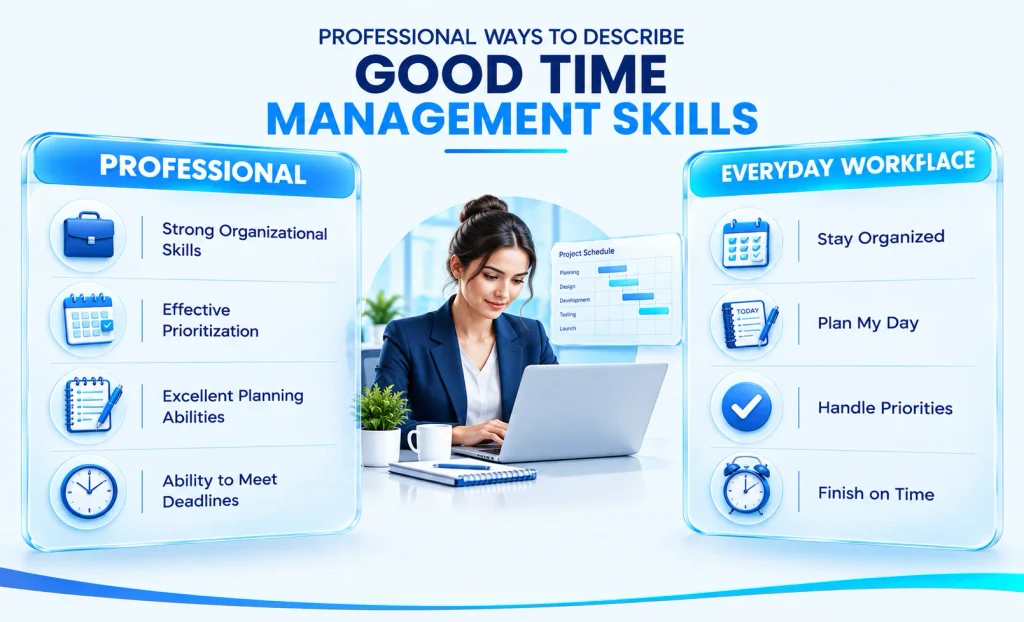
Another way to say good time management skills is strong organizational skills, effective time management, excellent planning abilities, or the ability to prioritize tasks. These phrases help describe someone who meets deadlines, manages responsibilities, and uses time wisely. The best alternative depends on the context, whether you are writing a resume, preparing for an interview, or communicating at work.
Key Takeaways
- Strong organizational skills is a versatile alternative for resumes and professional profiles.
- Effective prioritization highlights your ability to focus on important tasks first.
- Excellent planning abilities emphasizes preparation and scheduling.
- Deadline management works well when you want to show that you finish work on time.
- Choose phrases that reflect your actual strengths and fit the situation.
Good time management skills help people organize their work, meet deadlines, and balance competing responsibilities. However, repeating the same phrase in a resume, cover letter, or professional conversation can make your writing sound less specific.
Choosing a more precise expression helps you explain what you do well. Whether you plan projects, set priorities, organize schedules, or complete tasks efficiently, the right wording can make your skills easier to understand.
What Does “Good Time Management Skills” Mean?
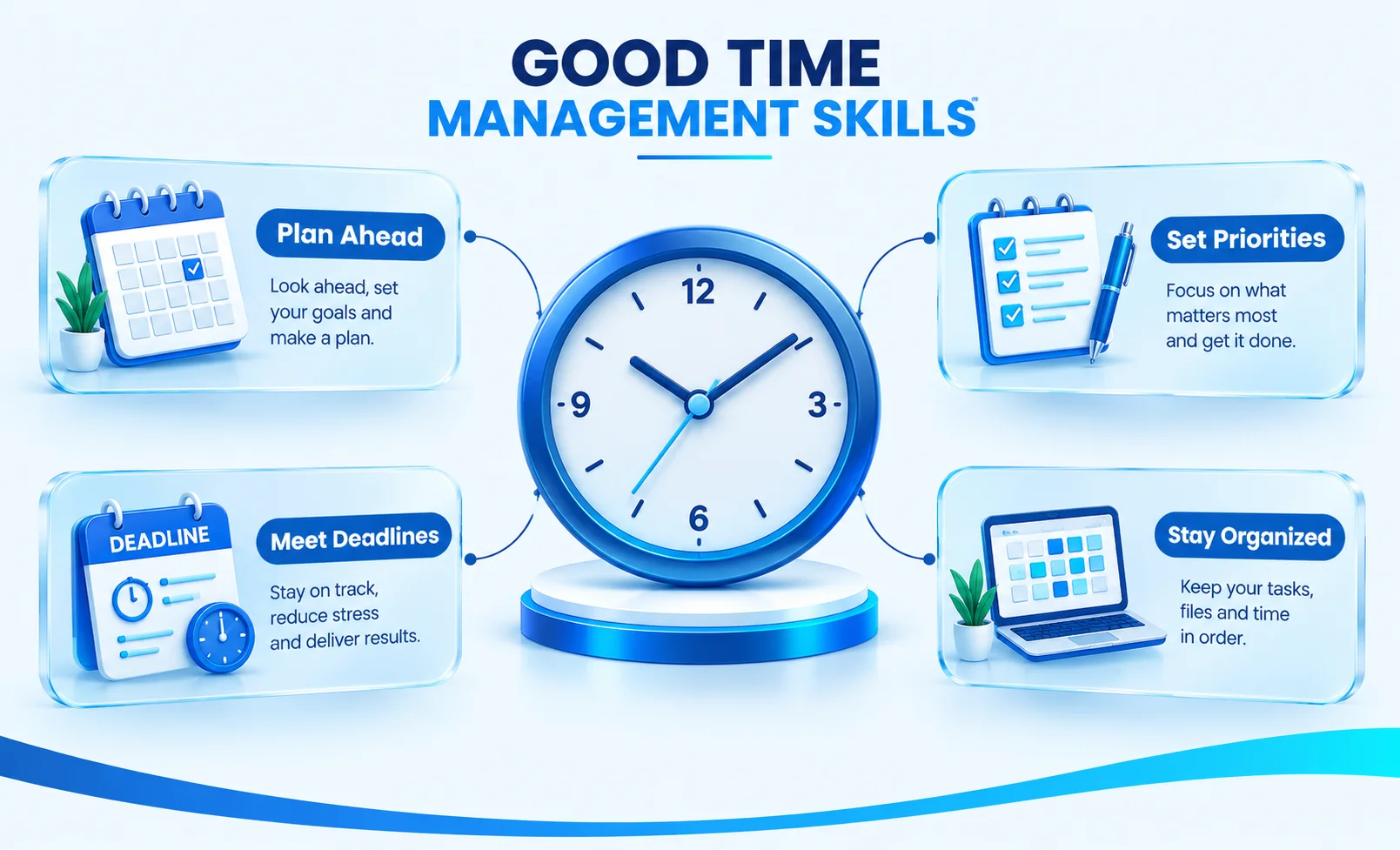
Good time management skills refer to the ability to plan activities, organize responsibilities, set priorities, and use available time effectively. People with these skills understand how to balance different tasks without losing sight of important deadlines.
This phrase commonly appears in resumes, job descriptions, performance reviews, interviews, and workplace conversations. Employers value time management because it supports productivity, reliability, and consistent work quality.
For example, an employee who plans weekly assignments, handles urgent requests, and submits projects on schedule demonstrates effective time management.
Why Use Other Ways to Say “Good Time Management Skills”?

Using alternative phrases helps you describe your abilities with greater accuracy. Instead of relying on a broad statement, you can highlight the specific habits that make you organized and dependable.
Here are some benefits of choosing different expressions:
- Avoid repetition: Keep resumes, cover letters, and professional profiles engaging.
- Sound more natural: Match your wording to everyday conversations or formal documents.
- Show specific strengths: Emphasize planning, organization, prioritization, or meeting deadlines.
- Improve professional communication: Use language that fits job applications and performance reviews.
- Make your experience clearer: Connect your skills to real workplace responsibilities.
The strongest phrase is not always the most impressive-sounding one. Choose wording that accurately reflects how you manage your time.
15 Best Other Ways to Say “Good Time Management Skills”
1. Strong Organizational Skills
Meaning
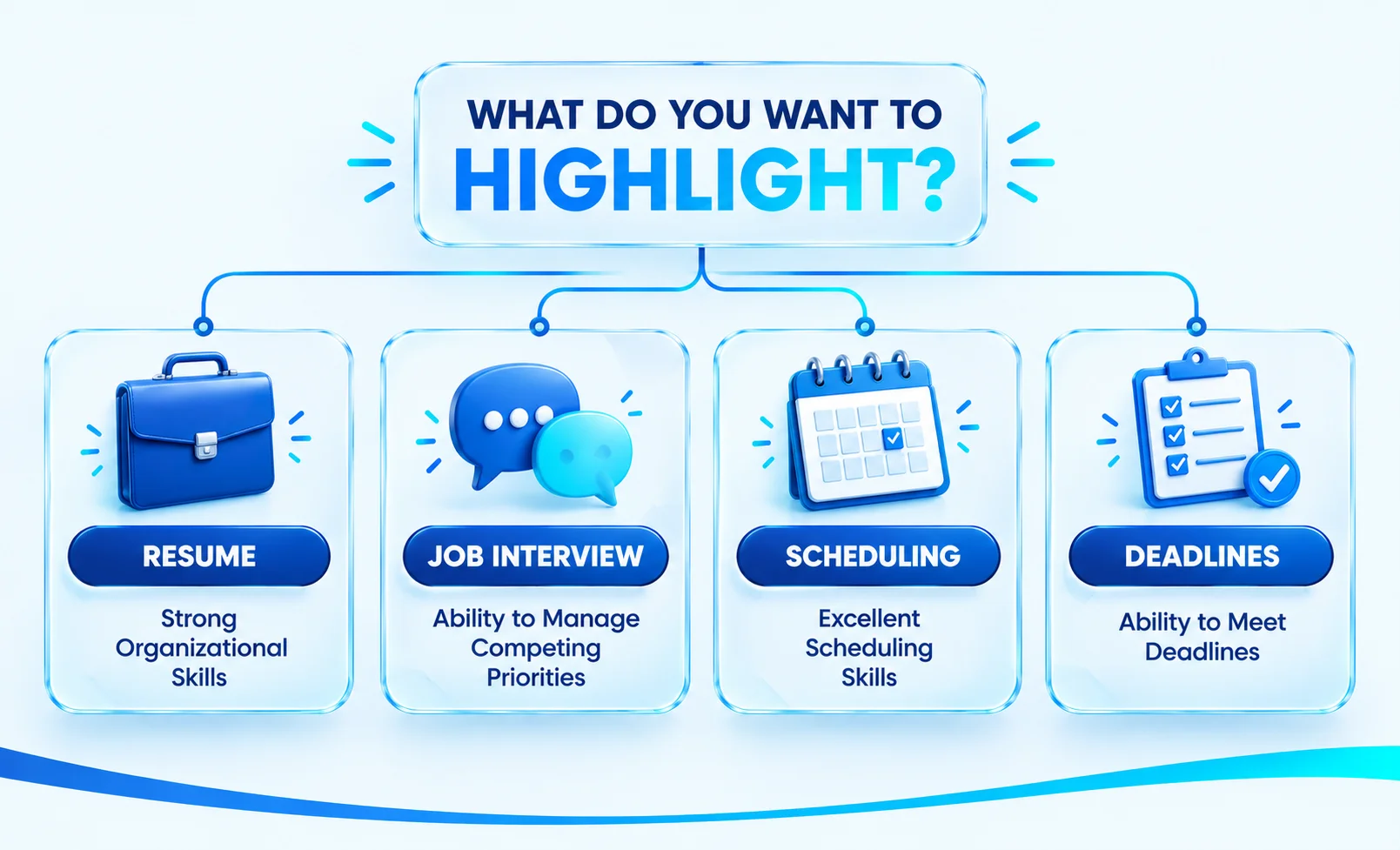
Strong organizational skills describe the ability to arrange tasks, information, schedules, and resources in a clear, useful way. This phrase often includes time management, but it also covers keeping projects and responsibilities organized.
Best For
Professional, Formal
Example 1
- My strong organizational skills help me manage several client projects without missing deadlines.
Example 2
- She uses her strong organizational skills to keep the department’s weekly activities on track.
Quick Tip
Use this phrase on a resume when your responsibilities involve coordinating multiple tasks or projects.
2. Effective Time Management
Meaning
Effective time management means using your available time wisely to complete tasks and achieve goals. It suggests that you understand how to plan your work, avoid unnecessary delays, and stay focused on results.
Best For
Professional, Formal
Example 1
- Effective time management allows me to complete website updates while maintaining high-quality design standards.
Example 2
- Our team’s effective time management helped us deliver the campaign before the launch date.
Quick Tip
This is a direct, professional alternative when you want to keep the original meaning clear.
3. Excellent Planning Abilities
Meaning
Excellent planning abilities highlight your talent for preparing ahead, setting goals, and deciding what needs to happen next. The phrase focuses on preparation rather than simply working quickly.
Best For
Professional, Formal
Example 1
- Her excellent planning abilities helped the team prepare for a busy product launch.
Example 2
- I rely on excellent planning abilities to organize weekly assignments and client meetings.
Quick Tip
Choose this phrase when planning schedules, projects, or workflows is a major part of your role.
4. Effective Prioritization
Meaning
Effective prioritization means identifying which tasks matter most and completing them in the right order. It shows that you can make sensible decisions when several responsibilities compete for your attention.
Best For
Professional, Formal
Example 1
- Effective prioritization helps me address urgent website issues before moving on to minor design changes.
Example 2
- The project manager demonstrated effective prioritization when the team faced several tight deadlines.
Quick Tip
Use this expression when you want to emphasize decision-making and the ability to focus on high-impact work.
5. Excellent Scheduling Skills
Meaning
Excellent scheduling skills refer to the ability to arrange tasks, appointments, and activities within a practical timeline. This phrase is especially useful when coordinating people, meetings, or project milestones.
Best For
Professional, Formal
Example 1
- My excellent scheduling skills help me coordinate client calls and development work throughout the week.
Example 2
- His excellent scheduling skills keep the training program organized and running smoothly.
Quick Tip
This phrase works best when your role involves calendars, appointments, deadlines, or coordinating other people’s time.
6. Strong Deadline Management
Meaning
Strong deadline management describes the ability to track due dates, plan work backward from important milestones, and complete assignments on time. It emphasizes reliability and follow-through.
Best For
Professional, Formal
Example 1
- Strong deadline management helps me deliver website projects according to agreed timelines.
Example 2
- The marketing team improved its deadline management by setting clear milestones for every campaign.
Quick Tip
Use this expression when punctual delivery is an important part of your job or professional achievements.
7. Efficient Work Planning
Meaning
Efficient work planning means organizing tasks in a way that reduces wasted effort and supports steady progress. It involves deciding what to do, when to do it, and which resources you need.
Best For
Professional, Formal
Example 1
- Efficient work planning allows our small team to handle multiple customer requests each day.
Example 2
- She improved the production process through efficient work planning and clearer task assignments.
Quick Tip
Choose this phrase when you want to show how preparation makes your work process more productive.
8. Ability to Meet Deadlines
Meaning
The ability to meet deadlines describes consistently finishing assignments by their required due dates. It communicates dependability without making broad claims about every aspect of time management.
Best For
Professional, Polite
Example 1
- I have a proven ability to meet deadlines while managing several design requests.
Example 2
- Her ability to meet deadlines makes her a reliable member of the editorial team.
Quick Tip
This phrase is particularly useful in resumes and cover letters because it describes a clear, job-related strength.
9. Task Management Skills
Meaning
Task management skills involve organizing assignments, tracking progress, and moving work from the planning stage to completion. They often include breaking large projects into smaller, manageable steps.
Best For
Professional, Formal
Example 1
- My task management skills help me track design revisions and development updates for each client.
Example 2
- Strong task management skills enabled the coordinator to monitor progress across several departments.
Quick Tip
Use this phrase when discussing project boards, task lists, work queues, or multiple ongoing assignments.
10. Productivity and Organization
Meaning
Productivity and organization describe the ability to work toward meaningful results while keeping responsibilities structured. The phrase combines getting work done with maintaining an orderly approach.
Best For
Professional, Formal
Example 1
- My focus on productivity and organization helps me maintain consistent progress on long-term projects.
Example 2
- The supervisor encouraged productivity and organization by introducing a clear weekly work plan.
Quick Tip
This phrase fits professional summaries when you want to communicate two related strengths without focusing only on schedules.
11. Ability to Manage Competing Priorities
Meaning
This expression describes the ability to handle several responsibilities that may need attention at the same time. It suggests that you can assess urgency, make decisions, and adjust your plans when circumstances change.
Best For
Professional, Formal
Example 1
- My ability to manage competing priorities helps me balance client feedback with scheduled development tasks.
Example 2
- The assistant showed an ability to manage competing priorities during a demanding conference week.
Quick Tip
Use this phrase when applying for roles that require flexibility, independent judgment, or multitasking.
12. Efficient Workflow Management
Meaning
Efficient workflow management means arranging the steps of a process so work moves forward with fewer delays and unnecessary interruptions. It focuses on how tasks connect, not just how quickly one task gets finished.
Best For
Professional, Formal
Example 1
- Efficient workflow management helps our design team move projects from initial concepts to final approval.
Example 2
- He improved workflow management by clarifying responsibilities and reducing repeated tasks.
Quick Tip
This phrase is ideal for project coordination, operations, design, and development roles where processes matter.
13. Disciplined Work Habits
Meaning
Disciplined work habits refer to consistent behaviors that help someone stay focused and follow through on responsibilities. These habits may include planning each day, limiting distractions, and completing important tasks before moving on.
Best For
Professional, Formal
Example 1
- My disciplined work habits help me stay consistent when working independently on client projects.
Example 2
- Her disciplined work habits allow her to make steady progress toward long-term goals.
Quick Tip
Choose this expression when you want to highlight personal responsibility and consistency rather than scheduling alone.
14. Ability to Work Efficiently
Meaning
The ability to work efficiently means completing tasks with a sensible use of time, energy, and resources. It emphasizes productive methods and good results rather than simply working at a fast pace.
Best For
Professional, Casual
Example 1
- My ability to work efficiently helps me handle routine updates without delaying larger projects.
Example 2
- The new process improved our ability to work efficiently during peak business hours.
Quick Tip
Pair this phrase with a real example of how you improved a process or completed work more effectively.
15. Strategic Time Planning
Meaning
Strategic time planning involves allocating time according to goals, priorities, and expected outcomes. Rather than filling every hour with tasks, you decide where your time will make the greatest difference.
Best For
Professional, Formal
Example 1
- Strategic time planning helps me reserve focused hours for complex design and development work.
Example 2
- The team used strategic time planning to balance immediate deliverables with long-term improvements.
Quick Tip
Use this expression for roles that involve long-term projects, resource planning, or decisions about how to allocate time.
Comparison Table
| Alternative | Best Used In | Tone |
|---|---|---|
| Strong organizational skills | Resumes and professional profiles | Professional |
| Effective time management | Interviews and performance reviews | Professional |
| Excellent planning abilities | Project coordination | Formal |
| Effective prioritization | Busy or deadline-driven roles | Professional |
| Excellent scheduling skills | Calendar and meeting coordination | Formal |
| Strong deadline management | Project delivery | Professional |
| Efficient work planning | Team workflows | Formal |
| Ability to meet deadlines | Resumes and cover letters | Professional |
| Task management skills | Project tracking | Professional |
| Productivity and organization | Professional summaries | Formal |
| Ability to manage competing priorities | Multitasking roles | Professional |
| Efficient workflow management | Operations and project management | Formal |
| Disciplined work habits | Independent work | Professional |
| Ability to work efficiently | General workplace communication | Professional |
| Strategic time planning | Long-term planning | Formal |
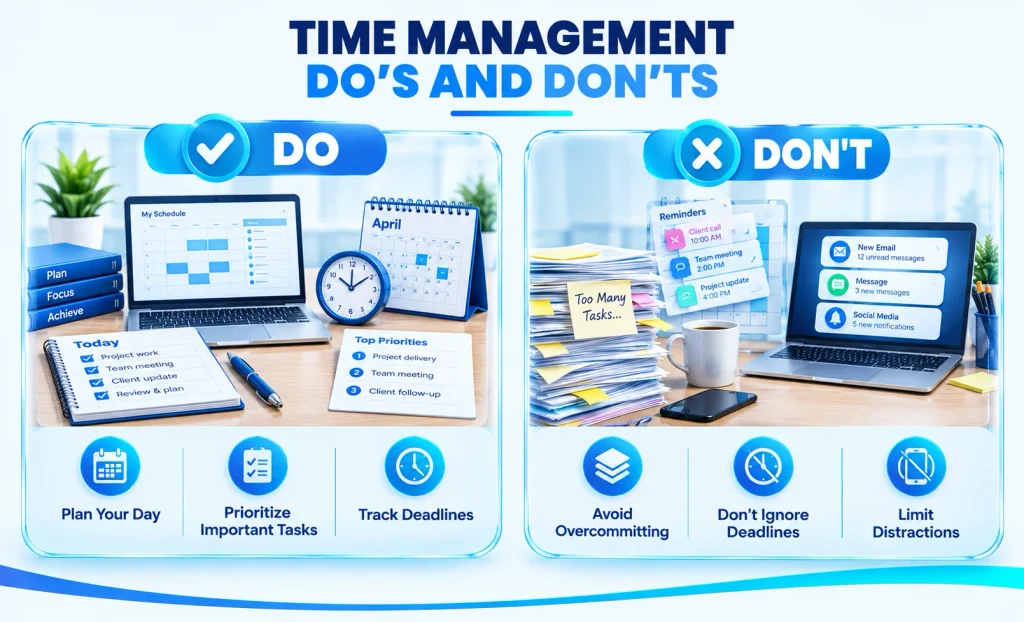
Common Mistakes
1. Using Casual Phrases in Professional Emails
Expressions such as “I’m good at getting stuff done” may sound too informal in a job application. Use a more precise phrase, such as “effective prioritization” or “the ability to meet deadlines.”
2. Choosing Overly Formal Language
Complex wording does not automatically make you sound more qualified. Choose a phrase that communicates your actual skill clearly, without adding unnecessary jargon.
3. Repeating the Same Phrase
Using “good time management skills” several times in a resume can make your writing feel repetitive. Vary your language where appropriate, but make sure each alternative reflects a distinct strength.
4. Forgetting the Context
Scheduling skills, task management, and deadline management are related, but they are not identical. Match the phrase to the responsibility you want to describe.
5. Making Claims Without Evidence
Calling yourself highly organized is more convincing when you provide an example. Explain how you coordinated several projects, improved a workflow, or delivered assignments on time.
Frequently Asked Questions
1. What is a professional way to say good time management skills?
“Strong organizational skills,” “effective prioritization,” and “excellent planning abilities” are professional alternatives. Choose the one that best matches your responsibilities. For example, effective prioritization highlights how you decide what to do first, while strong organizational skills suggests a broader ability to manage tasks, information, and schedules.
2. How do I describe time management skills on a resume?
Describe the skill using clear, job-related language and support it with evidence. You could write, “Managed multiple client projects while meeting agreed deadlines,” or “Prioritized daily assignments to maintain an efficient workflow.” Specific examples are often more convincing than simply listing time management as a skill.
3. What is another word for time management?
Depending on the context, alternatives include scheduling, planning, prioritization, task coordination, and workflow management. These expressions have slightly different meanings. Scheduling focuses on when work happens, prioritization determines which tasks matter most, and workflow management describes how work moves through a process.
4. What is a synonym for being organized and meeting deadlines?
“Strong organizational skills” and “reliable deadline management” are useful options. You can also say that you are “highly organized and consistently meet deadlines.” The last option is especially clear in interviews because it communicates both your organizational approach and your ability to deliver work on time.
5. How can I describe time management skills in a job interview?
Explain how you plan your work, set priorities, and respond when unexpected tasks arise. For example, you might say, “I review deadlines at the start of each week, break larger assignments into smaller steps, and adjust my priorities when urgent requests come in.” Add a real example to make your answer more credible.
6. Is time management the same as organizational skills?
They are related, but they are not exactly the same. Time management focuses on allocating time and completing work within deadlines. Organizational skills cover a broader range of abilities, including arranging information, maintaining systems, coordinating resources, and keeping responsibilities structured.
7. What is a good way to describe multitasking and time management together?
“Ability to manage competing priorities” is a strong choice because it emphasizes handling multiple responsibilities while making thoughtful decisions. You could also say, “Able to prioritize tasks and manage multiple projects within established deadlines.” This wording focuses on organization and results rather than simply claiming to multitask.
8. How do I show good time management without using the phrase itself?
Describe your actions and outcomes instead of naming the skill. For example, say, “Completed five client projects within the agreed timelines while managing ongoing support requests.” When possible, include accurate numbers, deadlines, or results to help employers understand how your approach benefits the team.
Conclusion
Choosing another way to say good time management skills helps you communicate your strengths with greater clarity. The best expression depends on what you want to emphasize and where you plan to use it.
For a resume, consider “strong organizational skills” or “the ability to meet deadlines.” If you want to highlight how you handle urgent work, choose “effective prioritization” or “the ability to manage competing priorities.” For roles that involve coordinating projects, “efficient workflow management” and “excellent planning abilities” may be more suitable.
Remember that clear examples make your claims stronger. Instead of simply describing yourself as organized, explain how you plan projects, balance responsibilities, or complete assignments on schedule. Use specific, honest language that reflects your experience, and your professional communication will sound more credible and confident.

The Majestic Studio Editorial Team creates practical resources about synonyms, alternative phrases, vocabulary, and English usage. Our content is designed to help readers choose clearer, more natural words and communicate effectively in everyday, professional, and academic contexts.
Each article is researched, edited, and reviewed for clarity, context, usefulness, and language accuracy. We regularly update our content to keep examples and recommendations relevant.