
Another way to say “long time no see” is “It’s been a while,” a natural and friendly phrase used when greeting someone you haven’t seen recently. Other alternatives include “It’s been ages,” “Great to see you again,” “How have you been?” and “We should catch up.” Choose a phrase that fits your relationship, setting, and tone.
Key Takeaways
- “It’s been a while” works in most everyday situations.
- “It’s been ages” adds excitement and warmth to a reunion.
- “Great to see you again” is friendly and suitable for professional greetings.
- “How have you been?” encourages the other person to share an update.
- “We should catch up” suggests reconnecting and spending more time together.
What Does “Another Way to Say Long Time No See” Mean?

“Long time no see” is an informal greeting used when you meet someone after a long period apart. It expresses recognition, surprise, or happiness at seeing a familiar person again.
People commonly use it with friends, relatives, former coworkers, classmates, and acquaintances. You might say it at a family gathering, during an unexpected encounter, or when reconnecting with someone online.
However, the phrase does not fit every situation. If you are greeting a client, contacting a former manager, or writing a professional email, a more polished alternative may sound better.
Why Use Other Ways to Say “Long Time No See”?

Choosing a different expression helps you communicate naturally and match the situation. The right words can make a reunion feel warmer, more professional, or more personal.
Here are a few reasons to use an alternative:
- Avoid repetition: Keep your greetings fresh when reconnecting with different people.
- Sound more natural: Choose wording that reflects how you normally speak.
- Match the situation: Use casual language with friends and polished language at work.
- Show genuine interest: Ask about someone’s life instead of focusing only on the time apart.
- Encourage reconnection: Suggest meeting up or continuing the conversation.
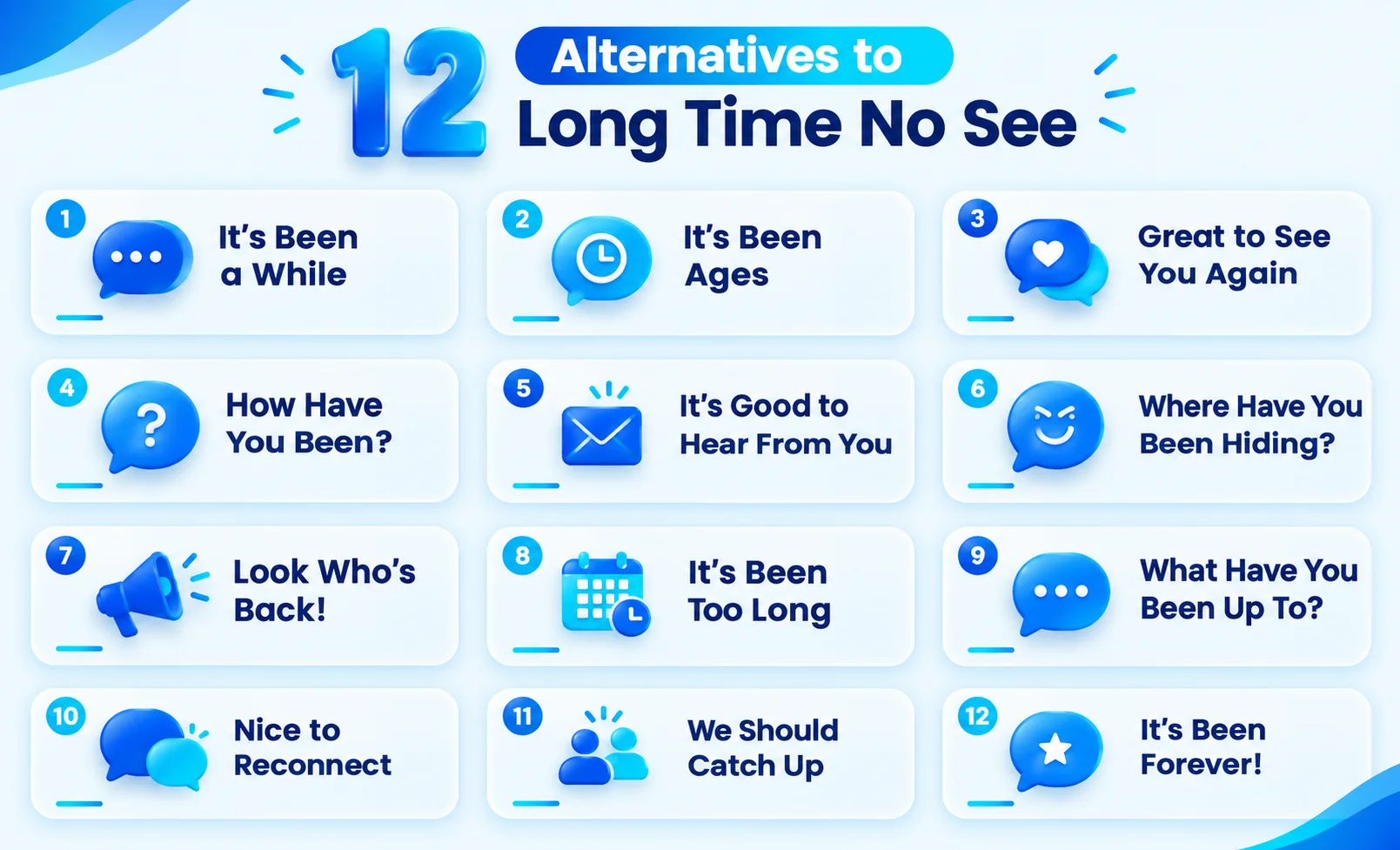
12 Best Other Ways to Say “Long Time No See”
1. It’s Been a While
Meaning
“It’s been a while” acknowledges that some time has passed since you last saw or spoke to someone. It sounds relaxed and friendly without being overly casual or emotional.
Best For
- Professional
- Casual
- Friendly
- Polite
Example 1
“It’s been a while, Sarah! How have things been going at your new job?”
Example 2
“Hey, Mark, it’s been a while since we grabbed lunch together.”
Quick Tip
Use this phrase when you want a versatile greeting that works with friends, acquaintances, and coworkers.
2. It’s Been Ages
Meaning
“It’s been ages” emphasizes that you feel a long time has passed. It often communicates excitement or surprise when you reconnect with someone you know well.
Best For
- Casual
- Friendly
- Warm
Example 1
“It’s been ages since our college days! I can’t believe we ran into each other here.”
Example 2
“Wow, it’s been ages! Are you still living in Austin?”
Quick Tip
Save this expression for relaxed conversations. It is often more expressive than a neutral greeting.
3. Great to See You Again
Meaning
This phrase focuses on the pleasure of seeing someone rather than the length of the separation. It sounds welcoming and sincere, making it a good choice for both social and workplace interactions.
Best For
- Professional
- Formal
- Friendly
- Warm
Example 1
“Great to see you again, Jennifer. I hope your conference went well.”
Example 2
“Great to see you again, David! We should get the whole group together soon.”
Quick Tip
Use this greeting when you want to sound positive without drawing attention to how long you’ve been apart.
4. How Have You Been?
Meaning
“How have you been?” invites someone to share what has happened in their life since your last conversation. It shows interest and gives the other person an easy way to continue the discussion.
Best For
- Professional
- Casual
- Friendly
- Polite
- Warm
Example 1
“Hi, Amanda! How have you been since you moved to Seattle?”
Example 2
“Hey, Chris, how have you been? I heard you started a new business.”
Quick Tip
Ask this question when you genuinely want an update. Be ready to listen rather than immediately changing the subject.
5. It’s Good to Hear From You
Meaning
This expression works especially well when someone contacts you after a long silence. It communicates appreciation for the message and helps restart a conversation without making the other person feel guilty for being away.
Best For
- Professional
- Friendly
- Warm
- Polite
Example 1
“It’s good to hear from you, Rachel! How is everything going with your family?”
Example 2
“Thanks for reaching out, Michael. It’s good to hear from you after all this time.”
Quick Tip
Use this phrase in emails, text messages, and phone calls when the other person initiates contact.
6. Where Have You Been Hiding?
Meaning
“Where have you been hiding?” is a playful way to greet someone who has been absent from your life. It suggests surprise at seeing them again, usually without expecting a literal answer.
Best For
- Casual
- Friendly
Example 1
“Look who finally showed up! Where have you been hiding, Jake?”
Example 2
“Where have you been hiding, Lisa? We haven’t seen you at book club in months.”
Quick Tip
Use this with people who understand your sense of humor. Avoid it when someone may have been dealing with personal difficulties.
7. Look Who’s Back!
Meaning
“Look who’s back!” expresses excitement or playful surprise when someone returns. It is especially useful in group settings where several people recognize the returning person.
Best For
- Casual
- Friendly
- Warm
Example 1
“Look who’s back! The office happy hour hasn’t been the same without you.”
Example 2
“Look who’s back in town! Are you staying through the weekend?”
Quick Tip
Deliver it with a smile to make the playful tone clear. In a serious setting, choose a calmer greeting.
8. It’s Been Too Long
Meaning
“It’s been too long” suggests that you wish you had seen someone sooner. It can communicate affection, regret, or a desire to spend more time together.
Best For
- Friendly
- Warm
- Polite
Example 1
“It’s been too long since we had a proper family dinner together.”
Example 2
“It’s been too long, Megan. Let’s plan a weekend hike before winter arrives.”
Quick Tip
Pair this phrase with a specific plan if you genuinely want to reconnect.
9. What Have You Been Up To?
Meaning
This casual question invites someone to talk about recent experiences, changes, or activities. It moves the conversation beyond a greeting and helps you learn what has been happening in their life.
Best For
- Casual
- Friendly
- Warm
Example 1
“Hey, Ben! What have you been up to since graduation?”
Example 2
“It’s been a few months, Nicole. What have you been up to lately?”
Quick Tip
Keep the question open-ended so the other person can share as much or as little as they want.
10. Nice to Reconnect
Meaning
“Nice to reconnect” acknowledges that you are restoring contact after time apart. It sounds thoughtful and polished, making it useful for professional relationships and personal connections that have faded.
Best For
- Professional
- Formal
- Polite
- Friendly
Example 1
“Nice to reconnect, Daniel. I’d love to hear how your consulting work has developed.”
Example 2
“It was nice to reconnect with you at the alumni event last weekend.”
Quick Tip
Use this phrase in business messages or networking conversations. For a casual text to a close friend, a warmer greeting may feel more natural.
11. We Should Catch Up
Meaning
“We should catch up” expresses interest in talking about what has happened since you last connected. It often suggests a longer conversation, phone call, coffee date, or casual meetup.
Best For
- Professional
- Casual
- Friendly
- Warm
Example 1
“We should catch up over coffee sometime. I’d love to hear about your trip to Italy.”
Example 2
“It’s been months since we talked about work. We should catch up next week.”
Quick Tip
Make your invitation more meaningful by suggesting a day, time, or activity instead of leaving the plan open-ended.
12. It’s Been Forever!
Meaning
“It’s been forever!” is an enthusiastic, informal way to say that you haven’t seen someone in what feels like a very long time. It is an exaggeration rather than a statement about the actual length of the separation.
Best For
- Casual
- Friendly
- Warm
Example 1
“It’s been forever! I can’t believe we both ended up at the same concert.”
Example 2
“Hey, Olivia! It’s been forever since our summer road trip. How are you?”
Quick Tip
Use this expression with friends and familiar acquaintances. Avoid it in formal emails or serious professional conversations.
Comparison Table
| Alternative | Best Used In | Tone |
|---|---|---|
| It’s Been a While | Everyday conversations, work | Neutral and friendly |
| It’s Been Ages | Conversations with friends | Excited and casual |
| Great to See You Again | Social and workplace greetings | Warm and welcoming |
| How Have You Been? | Personal and professional conversations | Interested and caring |
| It’s Good to Hear From You | Emails, calls, text messages | Appreciative |
| Where Have You Been Hiding? | Playful conversations with friends | Teasing and humorous |
| Look Who’s Back! | Group gatherings, reunions | Playful and enthusiastic |
| It’s Been Too Long | Close relationships, invitations | Affectionate |
| What Have You Been Up To? | Casual conversations | Curious and friendly |
| Nice to Reconnect | Networking, professional emails | Polished and courteous |
| We Should Catch Up | Social plans, networking | Inviting |
| It’s Been Forever! | Informal reunions | Enthusiastic |
Common Mistakes
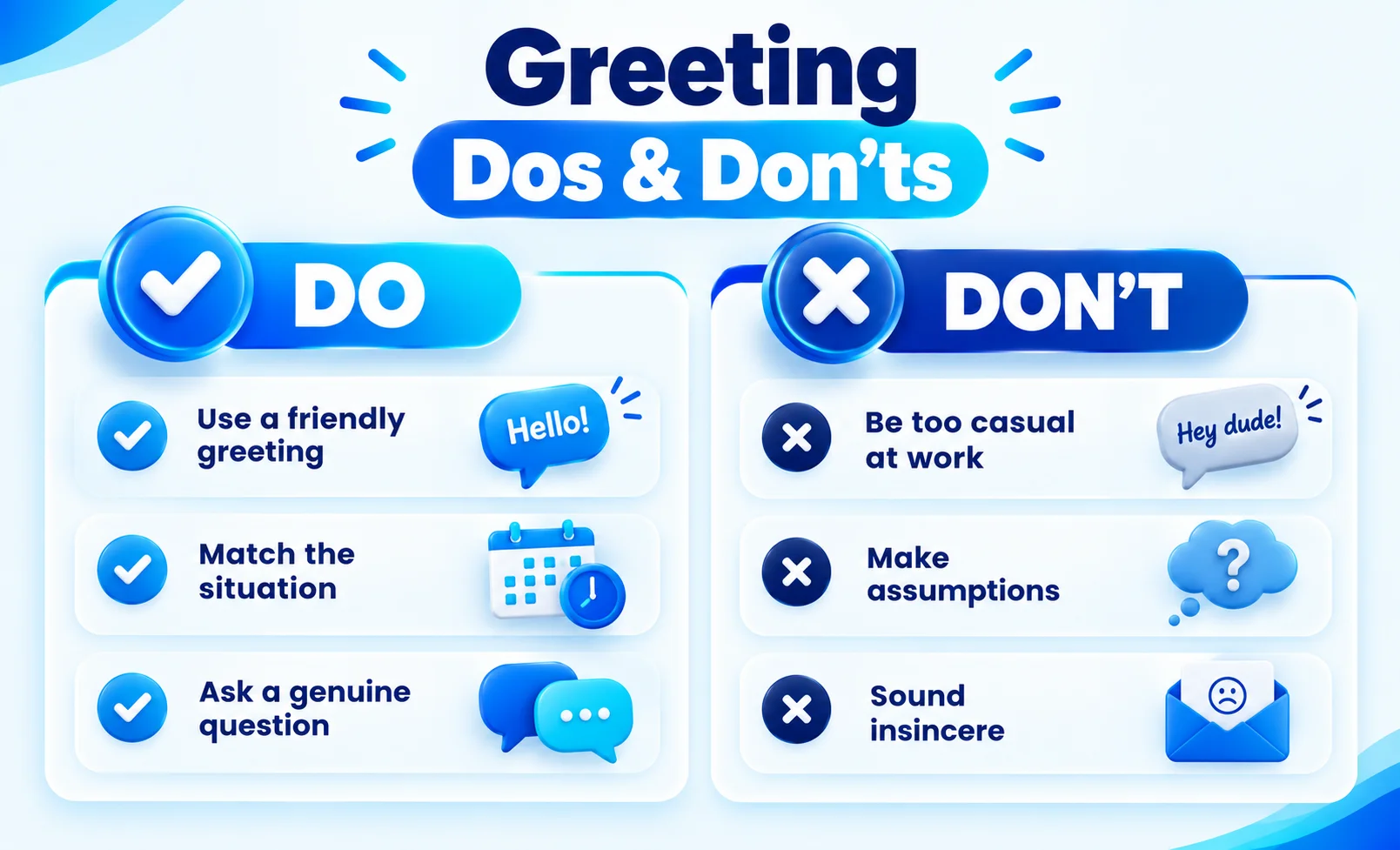
1. Using Casual Phrases in Professional Emails
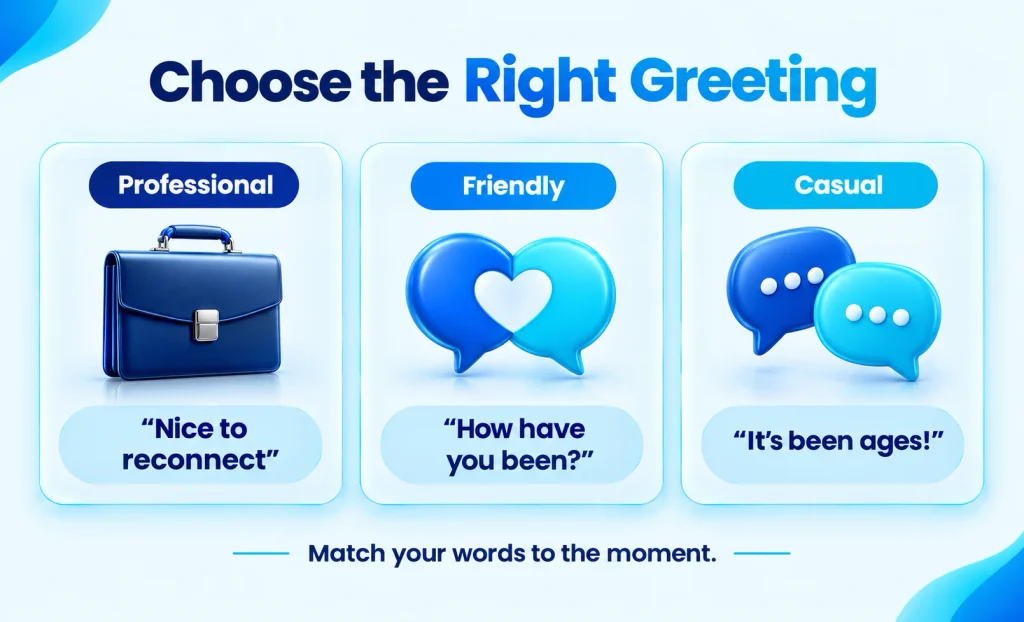
Expressions such as “Where have you been hiding?” may sound too familiar when addressing a client or senior colleague. Choose “It’s been a while” or “Nice to reconnect” for a more professional tone.
2. Choosing Overly Formal Language
A phrase such as “It is a pleasure to renew our acquaintance” can sound stiff in a text to a close friend. Match your words to the relationship instead of trying to sound impressive.
3. Repeating the Same Greeting
Using the same expression every time you reconnect can make your messages feel automatic. Vary your wording based on the person, setting, and reason for getting in touch.
4. Forgetting the Context
Some phrases focus on surprise, while others show interest or suggest future plans. Think about your goal before choosing an alternative so your greeting sends the right message.
5. Sounding Insincere
Saying “It’s been too long” without showing interest in reconnecting may feel empty. Follow up with a genuine question or a realistic invitation if you want to continue the relationship.
Frequently Asked Questions
1. What is the best alternative to “long time no see”?
“It’s been a while” is one of the best alternatives because it sounds natural in many situations. You can use it with friends, relatives, coworkers, and acquaintances. If you want to sound more enthusiastic, try “It’s been ages!” For a professional greeting, “Great to see you again” is another strong option.
2. What is a professional way to say “long time no see”?
Use “It’s been a while,” “Nice to reconnect,” or “It’s good to hear from you.” These expressions work well in workplace conversations, networking messages, and emails to former colleagues. For example, you could write, “It’s been a while since we last spoke. I hope things are going well on your end.”
3. How do you say “long time no see” in a text message?
For a casual text, try “Hey, stranger!”, “It’s been ages!” or “How have you been?” If you want to restart a conversation, you could write, “Hey! It’s been a while. What have you been up to?” Choose wording that sounds natural for your relationship and avoids putting pressure on the other person to respond.
4. Is “long time no see” grammatically correct?
Yes. “Long time no see” is an established informal English expression used as a greeting. Although its structure differs from standard formal sentence patterns, it is widely understood in American English. It works well in casual conversations, but a more polished alternative may be better in formal correspondence or professional introductions.
5. What is a friendly way to greet someone you haven’t seen in years?
Try “It’s been ages!”, “It’s been forever!” or “Great to see you again!” These expressions communicate excitement and make a reunion feel welcoming. You can also ask, “How have you been?” to invite the person to share updates about their family, work, interests, or other life changes.
6. How do you say “long time no see” without sounding awkward?
Keep your greeting simple and follow it with a genuine question. For example, say, “Hey, it’s been a while! How have you been?” You don’t need to explain why you haven’t spoken unless the situation calls for it. A relaxed tone and sincere interest usually make reconnecting feel more comfortable.
7. What can I say instead of “long time no see” in an email?
In an email, consider “It’s been a while since we last connected,” “It’s good to hear from you,” or “I hope you’ve been well.” For a business contact, you could write, “It’s been a while since our last conversation, and I wanted to check in.” The best choice depends on whether you’re replying or initiating contact.
8. What is a funny way to say “long time no see”?
“Where have you been hiding?”, “Look who’s back!” and “Hey, stranger!” can make a reunion more playful. These phrases work best when you already have a friendly relationship with the person. Consider their personality and circumstances before teasing them, especially if you don’t know why they’ve been out of touch.
Conclusion
Finding another way to say “long time no see” is simple when you consider the relationship and the message you want to convey. “It’s been a while” is a reliable choice for everyday conversations, while “It’s been ages” and “It’s been forever!” bring more excitement to casual reunions.
For professional settings, “Nice to reconnect” and “Great to see you again” sound polished without feeling stiff. If you want to show genuine interest, ask “How have you been?” or “What have you been up to?” When your goal is to rebuild a connection, “We should catch up” can help turn a greeting into a real conversation.
The most important thing is to sound sincere. Choose words that fit the situation, show interest in the other person, and make reconnecting feel natural. A thoughtful greeting can be the first step toward a stronger relationship.