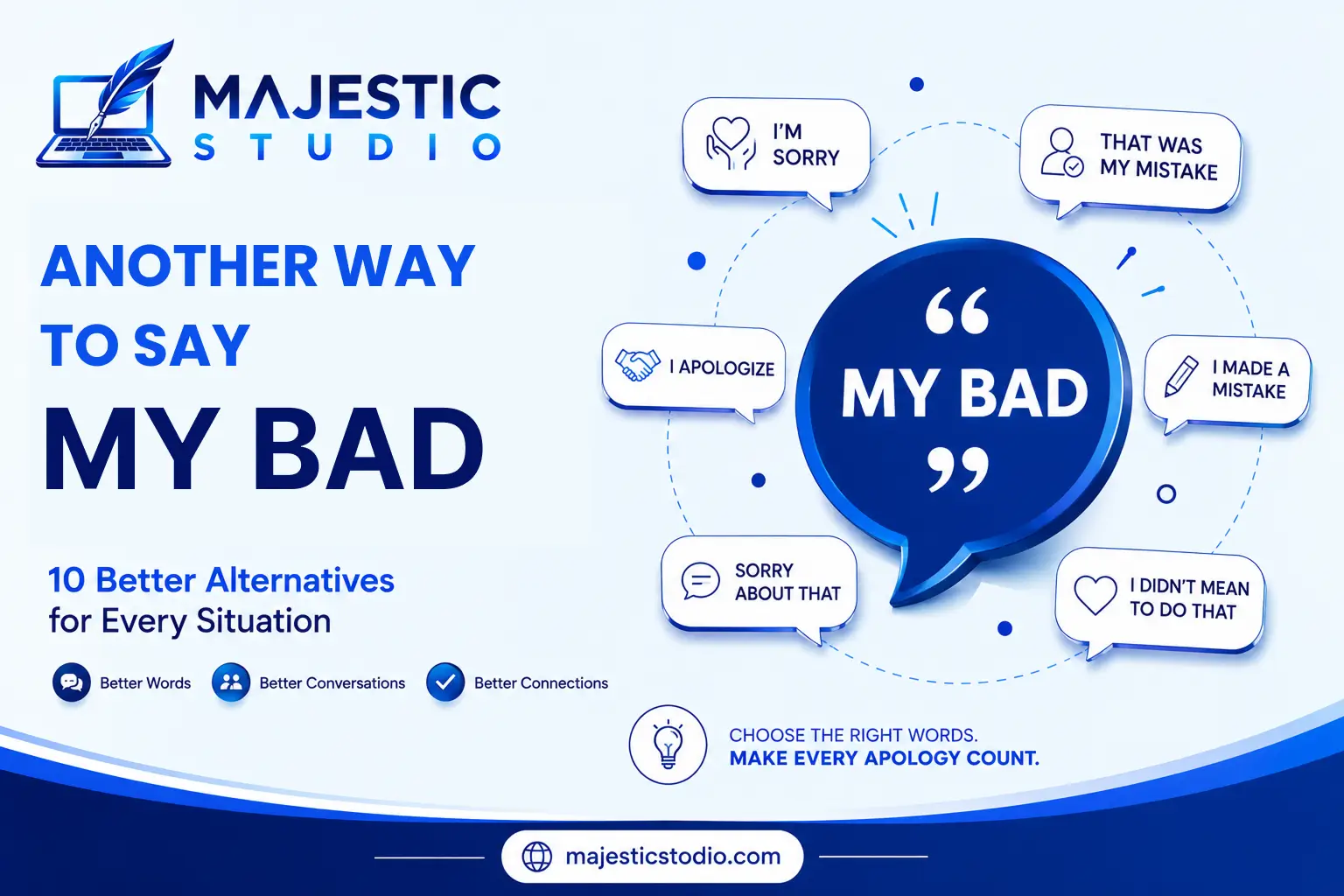
If you’re looking for another way to say “my bad,” you can use “my mistake,” “sorry about that,” “that’s on me,” or “I apologize.” The best choice depends on the situation. Casual phrases work well with friends, while “I apologize” or “I take responsibility” sounds more appropriate in professional or formal settings.
🔑Key Takeaways
- “My bad” is a casual way to admit a mistake or apologize.
- “My mistake” is a simple, natural alternative that works in many situations.
- “Sorry about that” sounds friendly and sincere in everyday conversations.
- “I apologize” is better for professional or formal communication.
- Choose your wording based on the seriousness of the mistake and your relationship with the other person.
What Does “Another Way to Say My Bad” Mean?
“My bad” is an informal American English expression used to admit that you made a mistake or caused a small problem. It usually means “I’m sorry,” “That was my mistake,” or “I take responsibility.”
People commonly say “my bad” after forgetting something, giving incorrect information, making a small error, or causing a minor inconvenience. For example, if you send the wrong file to a coworker, you might say, “My bad—I attached the old version.”
The expression is mostly used in casual conversations, texts, chats, and friendly workplaces. Because it is informal, it may not be the best choice when you need to give a serious apology or communicate with a customer, manager, or client.
Why Use Other Ways to Say “My Bad”?
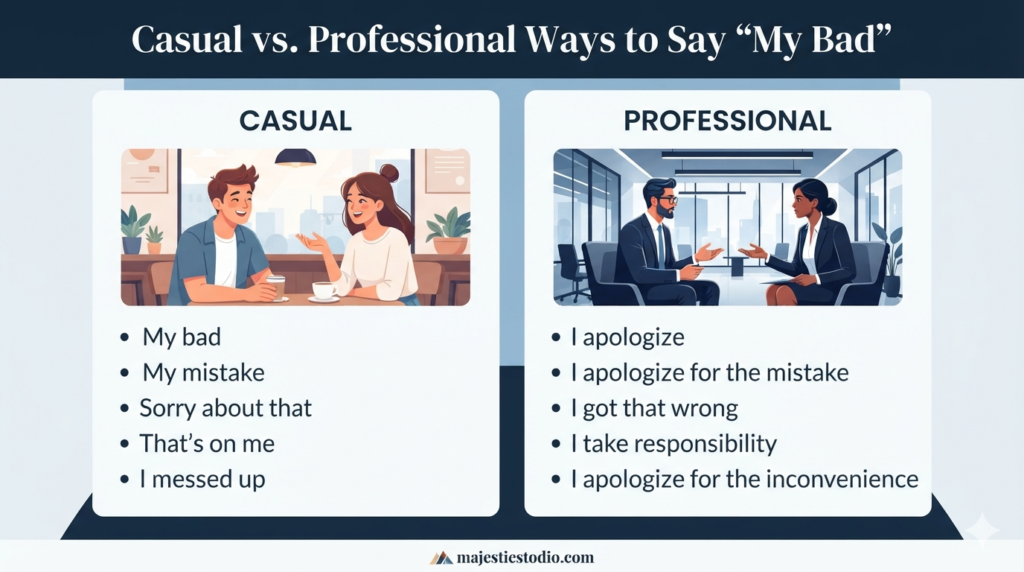
Although “my bad” is common and natural, changing your wording can help you communicate more clearly and appropriately.
Other expressions can help you:
- Sound more professional in workplace conversations.
- Make a serious apology feel more sincere.
- Match the tone of the situation.
- Avoid repeating the same phrase.
- Take responsibility without sounding too casual.
- Show more warmth, politeness, or respect.
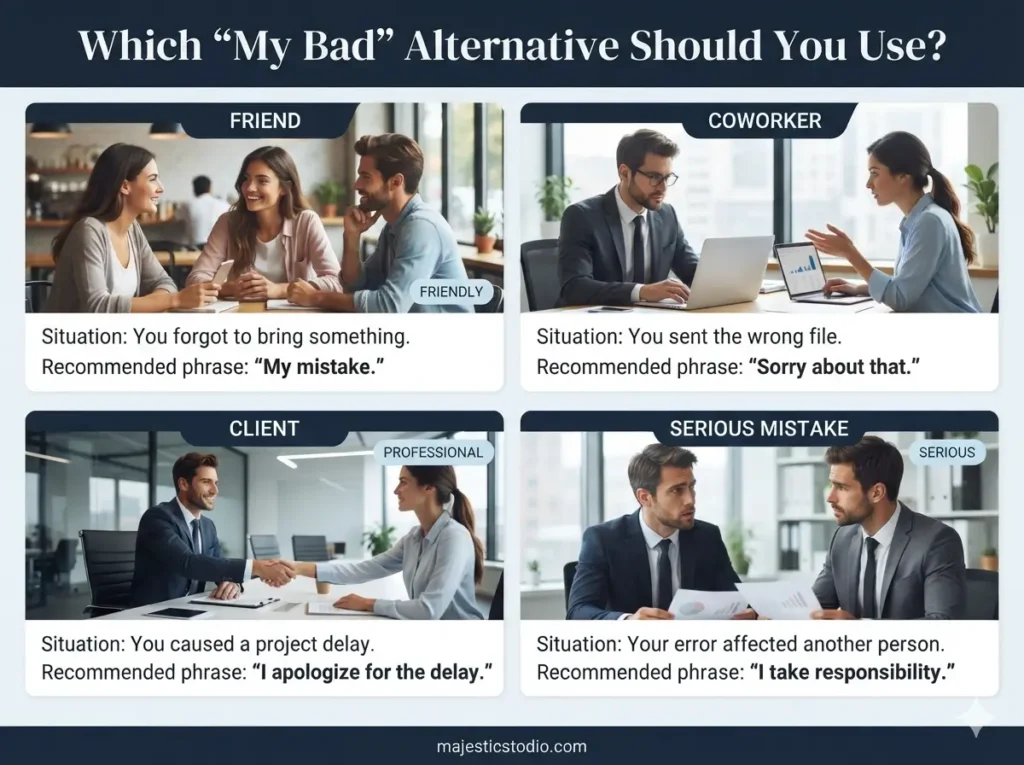
The right alternative depends on what happened, who you’re talking to, and how serious the mistake was.
10 Best Other Ways to Say “My Bad”
1. My Mistake
Meaning
“My mistake” is one of the closest alternatives to “my bad.” It clearly admits that you made an error without making the situation sound overly serious.
It works especially well when you want to accept responsibility quickly and naturally.
Best For
- Casual
- Friendly
- Professional
- Polite
Example 1
“Sorry, I sent you the wrong document. My mistake.”
Example 2
“My mistake—I thought the meeting started at 3 p.m.”
Quick Tip
Use “my mistake” when you want to acknowledge an error directly without giving a long explanation.
2. Sorry About That
Meaning
“Sorry about that” is a friendly and natural way to apologize for a small mistake or inconvenience. It sounds warmer than simply admitting that something was your fault.
Best For
- Casual
- Friendly
- Warm
- Polite
Example 1
“Sorry about that—I didn’t realize the link had expired.”
Example 2
“Sorry about that. I’ll send the corrected invoice right away.”
Quick Tip
This is a good everyday option when the mistake is minor and you want to keep the conversation relaxed.
3. That’s on Me
Meaning
“That’s on me” means you accept responsibility for what happened. It is informal but often sounds sincere because it clearly shows that you are not blaming someone else.
Best For
- Casual
- Friendly
- Warm
Example 1
“I should have checked the schedule first. That’s on me.”
Example 2
“I missed the deadline, and that’s on me. I’ll make sure it doesn’t happen again.”
Quick Tip
Use this phrase when you want to emphasize personal responsibility, especially in conversations with coworkers or friends.
4. I Apologize
Meaning
“I apologize” is a more formal way to say that you are sorry. It works well when your mistake has caused inconvenience or when the situation requires a respectful tone.
Best For
- Professional
- Formal
- Polite
Example 1
“I apologize for the confusion regarding the appointment time.”
Example 2
“I apologize for the delay in responding to your message.”
Quick Tip
Choose “I apologize” instead of “my bad” when speaking with customers, clients, managers, or other professional contacts.
5. I Got That Wrong
Meaning
“I got that wrong” directly acknowledges that the information, decision, or assumption you made was incorrect. It sounds honest without being overly formal.
Best For
- Casual
- Professional
- Friendly
- Polite
Example 1
“I got that wrong—the report is due on Thursday, not Wednesday.”
Example 2
“I got that wrong earlier. The store actually closes at 8 p.m.”
Quick Tip
This phrase is particularly useful when correcting incorrect information rather than apologizing for an action.
6. I Messed Up
Meaning
“I messed up” is an informal expression that means you made a mistake. It is stronger than “my bad” and can show that you recognize your error.
Best For
- Casual
- Friendly
- Warm
Example 1
“I messed up when I entered the address, so the package went to the wrong location.”
Example 2
“I messed up on the first draft, but I’ve fixed all the errors now.”
Quick Tip
Use this with people you know well. For serious professional situations, a more polished phrase is usually better.
7. Please Forgive Me
Meaning
“Please forgive me” is a more personal and emotional apology. It suggests that you recognize the impact of your actions and genuinely want the other person to accept your apology.
Best For
- Formal
- Warm
- Polite
Example 1
“I shouldn’t have spoken to you that way. Please forgive me.”
Example 2
“I regret missing such an important occasion. Please forgive me.”
Quick Tip
Save this phrase for situations where the mistake is meaningful or has affected someone’s feelings. It can sound too serious for a minor error.
8. I Take Responsibility
Meaning
“I take responsibility” is a strong statement that clearly accepts ownership of a mistake. It is more serious and professional than “my bad.”
Best For
- Professional
- Formal
- Polite
Example 1
“I take responsibility for the error in the final report.”
Quick Tip
Use this phrase when accountability matters, especially in workplace discussions or situations involving a significant mistake.
9. I Shouldn’t Have Done That
Meaning
“I shouldn’t have done that” admits that your action was wrong or inappropriate. It can sound sincere because it recognizes not only the mistake but also the better choice you should have made.
Best For
- Casual
- Friendly
- Warm
- Polite
Example 1
“I shouldn’t have shared that information without asking you first.”
Example 2
“I shouldn’t have canceled at the last minute. I’m sorry.”
Quick Tip
This works best when you want to acknowledge that your specific action—not just the result—was the problem.
10. I Owe You an Apology
Meaning
“I owe you an apology” is a thoughtful way to acknowledge that someone deserves a sincere apology from you. It often sounds more deliberate than simply saying “sorry.”
Best For
- Formal
- Professional
- Warm
- Polite
Example 1
“I owe you an apology for not listening to your concerns.”
Example 2
“I owe you an apology for the way I handled that conversation yesterday.”
Quick Tip
Use this when you want your apology to sound sincere and intentional, particularly after a mistake that affected another person.
Comparison Table
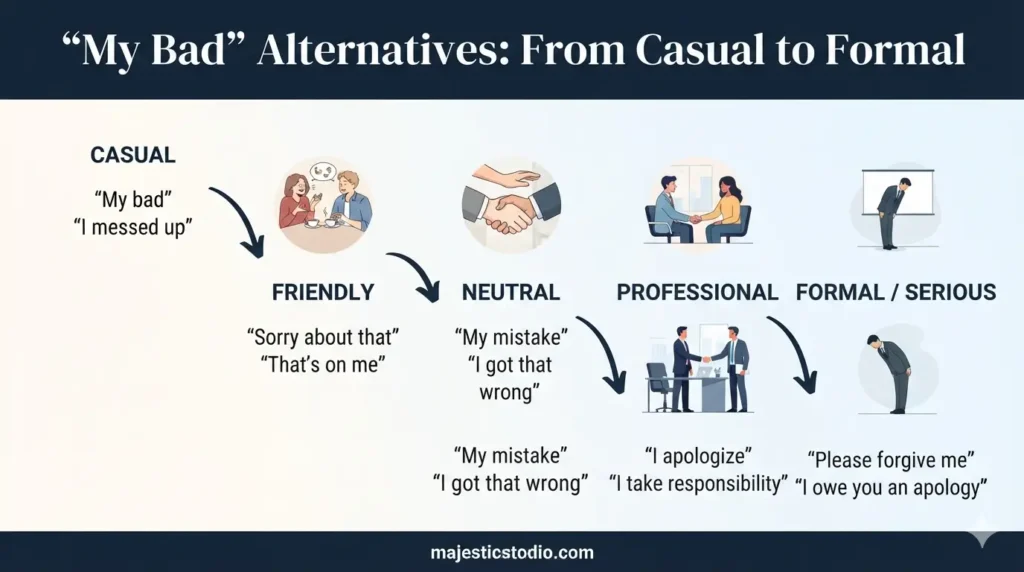
| Alternative | Best Used In | Tone |
| My mistake | Everyday conversations and work | Casual, direct |
| Sorry about that | Minor mistakes and inconveniences | Friendly, warm |
| That’s on me | Personal responsibility | Casual, sincere |
| I apologize | Professional and formal situations | Respectful, formal |
| I got that wrong | Correcting information or assumptions | Honest, neutral |
| I messed up | Conversations with friends or close coworkers | Casual, direct |
| Please forgive me | Meaningful personal apologies | Emotional, sincere |
| I take responsibility | Workplace or serious mistakes | Professional, accountable |
| I shouldn’t have done that | Acknowledging inappropriate actions | Sincere, reflective |
| I owe you an apology | More serious or thoughtful apologies | Respectful, sincere |
Common Mistakes
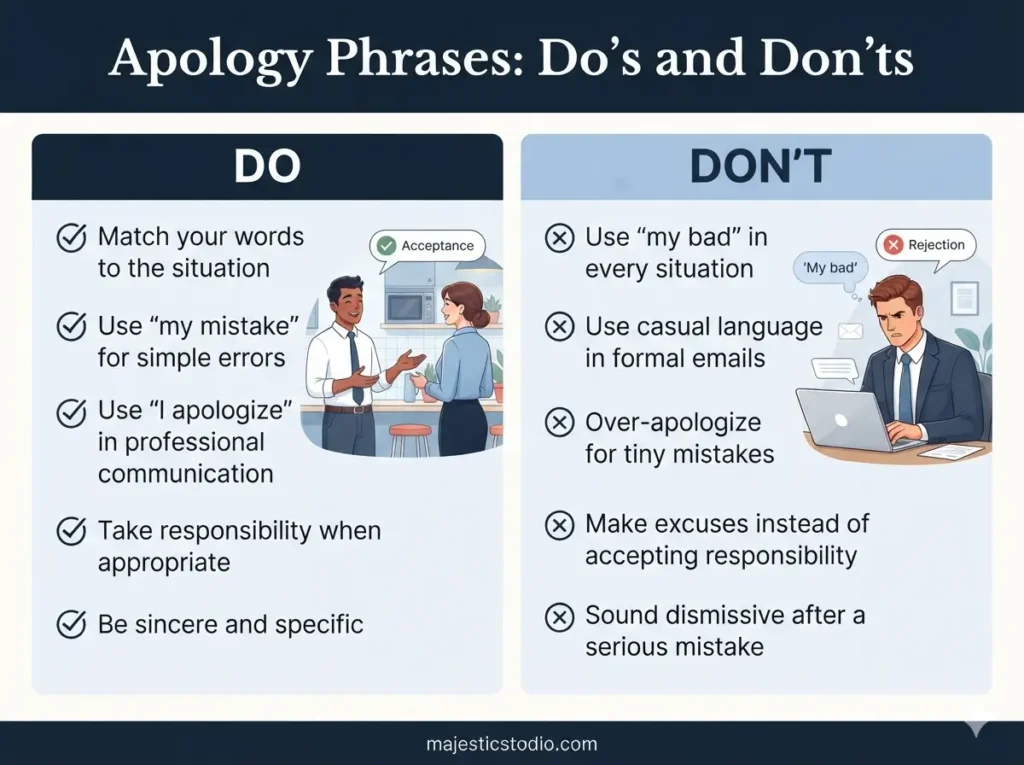
1. Using Casual Phrases in Professional Emails
“My bad” and “I messed up” can sound too informal in some business situations. When communicating with a client, manager, or customer, “I apologize” is usually a safer choice.
2. Choosing Overly Formal Language
The opposite problem can also happen. Saying “Please forgive me” after accidentally sending the wrong emoji may sound unnecessarily serious.
3. Repeating the Same Phrase
Using “my bad” every time you make a mistake can make your communication feel repetitive. Having several alternatives helps you choose wording that fits the situation.
4. Forgetting the Context
A phrase that works with a close friend may not work with your boss or a customer. Always consider your relationship with the person before choosing an apology.
5. Sounding Insincere
Simply saying “sorry” does not always solve the problem. If your mistake caused real inconvenience, briefly acknowledge what happened and explain how you plan to fix it.
Frequently Asked Questions
What is another way to say “my bad”?
Common alternatives include “my mistake,” “sorry about that,” “that’s on me,” “I got that wrong,” and “I apologize.” For casual situations, “my mistake” and “sorry about that” sound natural. For professional communication, “I apologize” or “I take responsibility” is usually more appropriate.
Is “my bad” a professional way to apologize?
“My bad” is generally considered informal, so it is not the best choice for formal emails, customer service messages, or serious workplace situations. With friends and close coworkers, however, it can sound completely natural when the mistake is minor.
What is a polite way to say “my bad”?
“Sorry about that” is a polite and friendly option for small mistakes. If you need a more professional expression, try “I apologize for the inconvenience” or “I apologize for the misunderstanding.” These phrases show responsibility while maintaining a respectful tone.
What is a professional way to say “my bad”?
“I apologize,” “I apologize for the mistake,” and “I take responsibility” are strong professional alternatives. You can also say, “I got that wrong” when correcting information. The best option depends on how serious the error was and whether someone experienced an inconvenience.
Can I say “my mistake” instead of “my bad”?
Yes. “My mistake” is one of the most natural replacements for “my bad.” It directly accepts responsibility and works in both casual conversations and many everyday workplace situations. It is especially useful when you want to acknowledge a small error without making a lengthy apology.
Is “that’s on me” the same as “my bad”?
They have a similar meaning, but “that’s on me” places more emphasis on accepting responsibility. Both are informal expressions. “That’s on me” can sound particularly sincere when you want to make it clear that you recognize the mistake was your responsibility.
What can I say instead of “my bad” in an email?
For a professional email, consider “I apologize,” “I apologize for the confusion,” “I apologize for the delay,” or “I take responsibility for the error.” These expressions sound more polished than “my bad” and help maintain a professional tone.
What is a stronger way to say “my bad”?
For a more serious apology, you can say “I take responsibility,” “I owe you an apology,” or “I shouldn’t have done that.” These expressions communicate more than a quick acknowledgment and can show that you understand the effect of your mistake.
Conclusion
“My bad” is a useful casual expression, but it is not the right choice for every situation. If you are talking with friends, “sorry about that,” “my mistake,” or “that’s on me” can sound natural and sincere.
For professional communication, “I apologize,” “I got that wrong,” or “I take responsibility” usually creates a better impression. When the situation is more personal or serious, “I owe you an apology” or “please forgive me” can communicate deeper sincerity.
The key is to match your words with the situation. A small mistake may only need a quick “my mistake,” while a serious error deserves a clear and thoughtful apology. Choose the phrase that reflects both the mistake and the respect you want to show the other person. An effective apology should acknowledge the mistake, take responsibility, and communicate genuine remorse.

The Majestic Studio Editorial Team creates practical resources about synonyms, alternative phrases, vocabulary, and English usage. Our content is designed to help readers choose clearer, more natural words and communicate effectively in everyday, professional, and academic contexts.
Each article is researched, edited, and reviewed for clarity, context, usefulness, and language accuracy. We regularly update our content to keep examples and recommendations relevant.