
Another way to say “how often” includes “how frequently,” “how regularly,” “at what intervals,” “how many times,” and “at what frequency.” The best choice depends on context. “How frequently” works well in professional writing, while “how regularly” sounds natural in everyday conversation.
Key Takeaways
- “How frequently” is the closest direct alternative to “how often.”
- “How regularly” works well for habits, routines, and repeated activities.
- “At what intervals” is useful when discussing scheduled or measurable events.
- “How many times” focuses on the number of occurrences.
- Choose your wording based on the audience, tone, and type of frequency you mean.
What Does “Another Way to Say How Often” Mean?
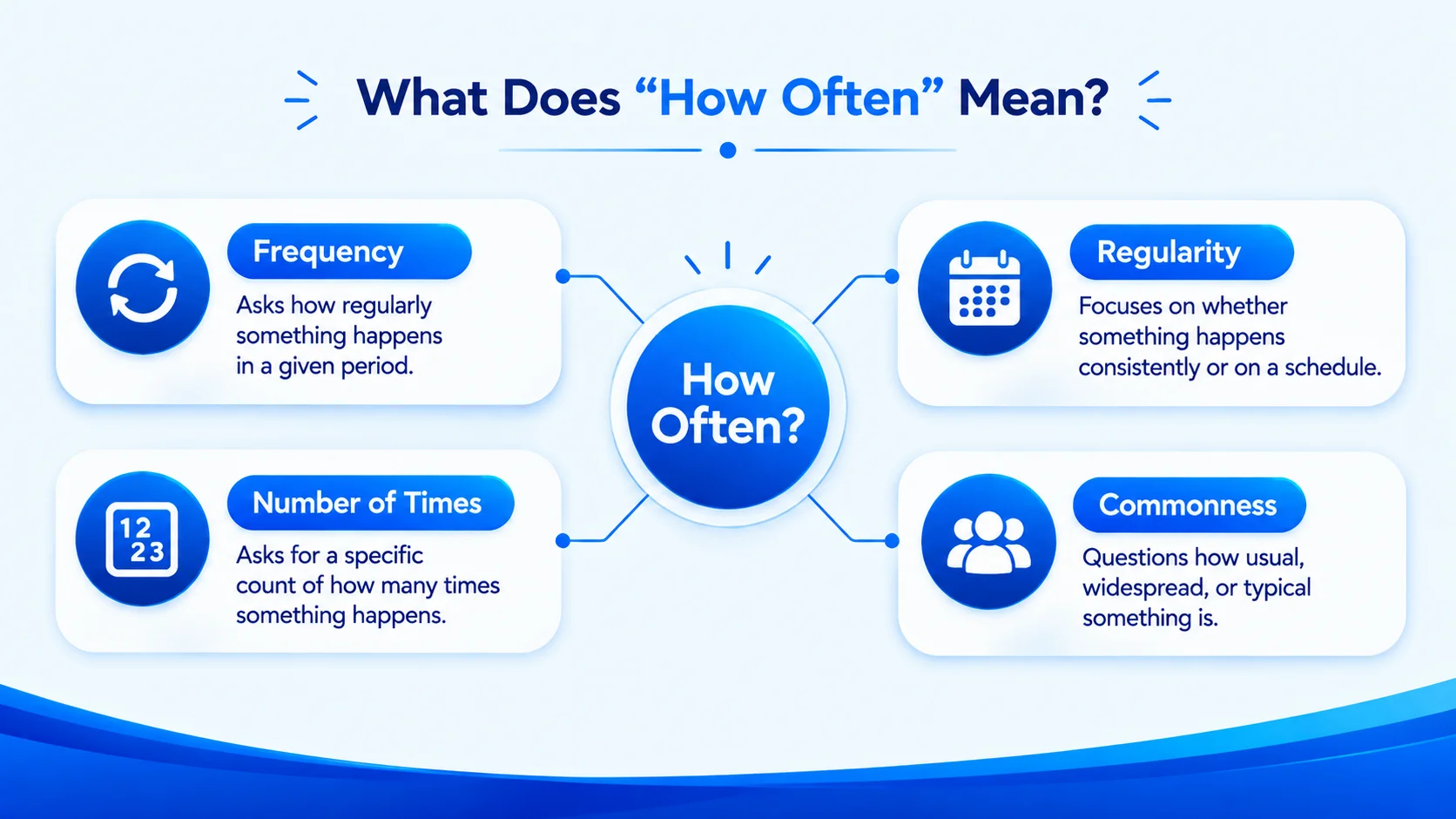
The phrase “how often” asks about the frequency of an action or event. For example, “How often do you exercise?” asks how regularly someone exercises.
People commonly use “how often” in conversations, emails, surveys, instructions, academic writing, and workplace communication. Looking for another way to say it can help you avoid repetition or choose wording that better fits a specific situation.
Depending on the context, you might ask “How frequently?”, “How regularly?”, or “At what intervals?” Each expression has a slightly different tone or focus.
Why Use Other Ways to Say “How Often”?
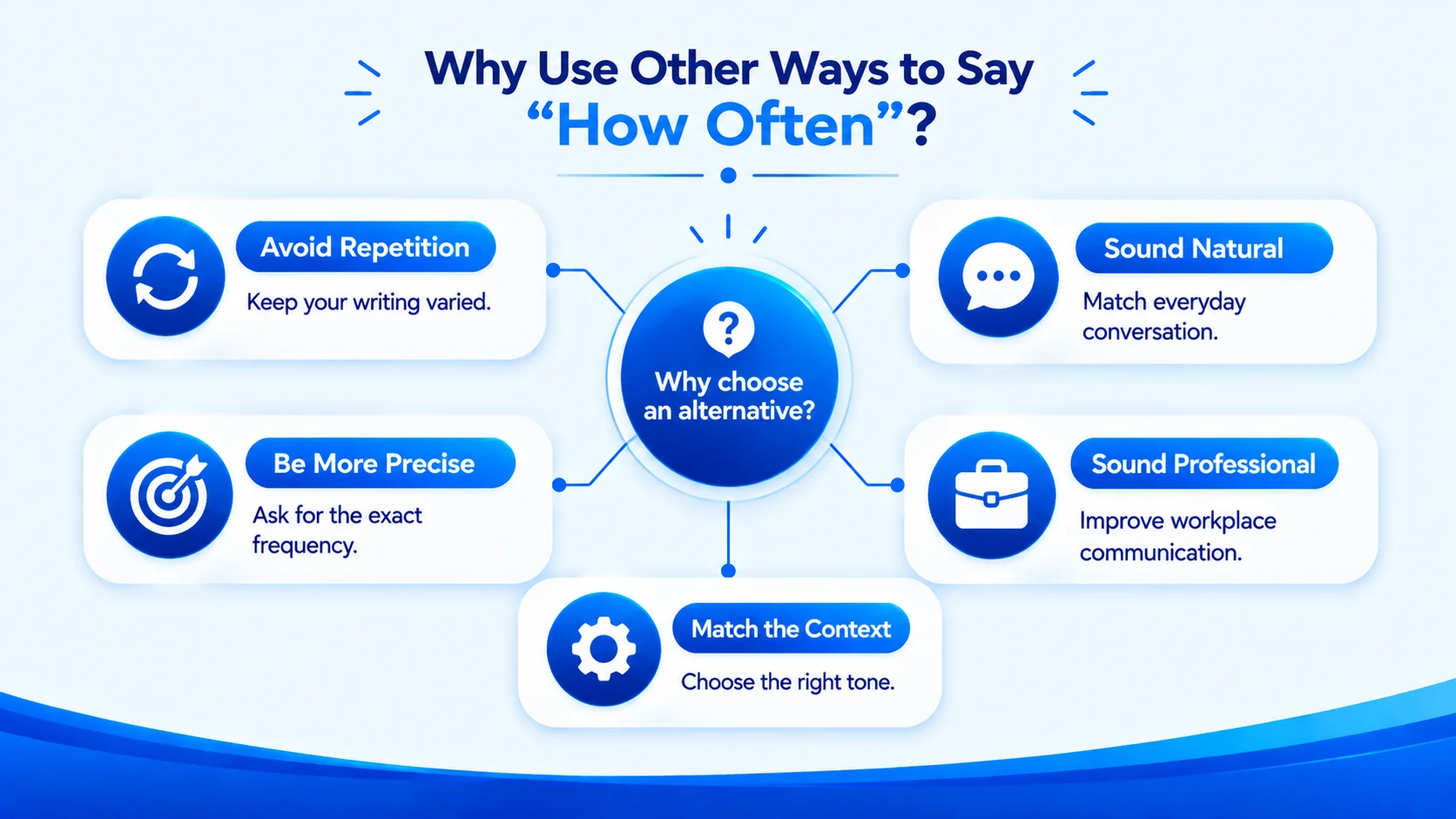
Using different expressions for “how often” can make your communication more precise and natural. While the original phrase is perfectly correct, another option may fit your audience or sentence better.
Other wording can help you:
- Avoid repeating the same phrase.
- Sound more professional in workplace writing.
- Make questions clearer and more specific.
- Match formal, casual, or academic contexts.
- Focus on frequency, intervals, or the number of occurrences.
- Make surveys and instructions easier to understand.
10 Best Other Ways to Say “How Often”
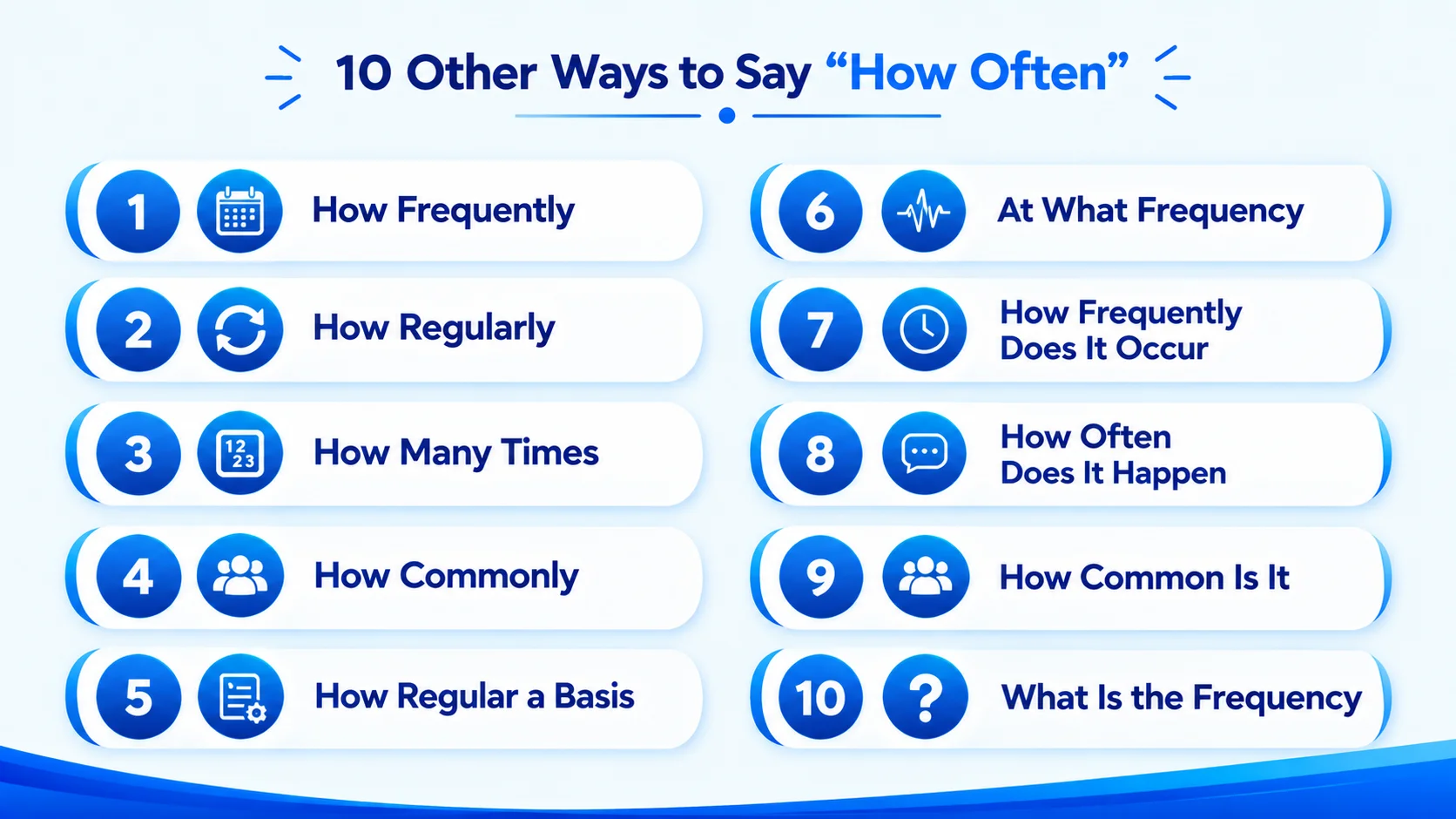
1. How Frequently
Meaning
“How frequently” is one of the closest alternatives to “how often.” It asks how many times something happens during a particular period and often sounds slightly more polished.
Best For
- Professional
- Formal
- Polite
Example 1
How frequently should employees update their passwords?
Example 2
How frequently does your team review its monthly performance data?
Quick Tip
Use “how frequently” when you want a professional alternative without changing the basic meaning of “how often.”
2. How Regularly
Meaning
“How regularly” asks about how consistently or routinely something happens. It works especially well when discussing habits, schedules, or repeated activities.
Best For
- Casual
- Friendly
- Professional
Example 1
How regularly do you check your email during the workday?
Example 2
How regularly does your daughter practice the piano?
Quick Tip
Choose this phrase when the activity is part of a routine or habit.
3. At What Frequency
Meaning
“At what frequency” focuses directly on the rate at which something occurs. It sounds more technical than everyday “how often,” so it is better suited to professional, scientific, or analytical contexts.
Best For
- Formal
- Professional
Example 1
At what frequency should the equipment receive routine maintenance?
Example 2
The researcher recorded at what frequency participants experienced the reported symptoms.
Quick Tip
Use this option when discussing measurable processes, procedures, research, or technical information.
4. At What Intervals
Meaning
“At what intervals” asks about the amount of time between repeated events. Unlike “how often,” it emphasizes the spacing between occurrences.
Best For
- Formal
- Professional
Example 1
At what intervals should the filters be replaced?
Example 2
The nurse explained at what intervals the medication should be administered.
Quick Tip
Use “at what intervals” when the timing between events matters more than the total number of occurrences.
5. How Many Times
Meaning
“How many times” asks for a specific count rather than simply asking about general frequency. It is useful when you expect an answer such as once, three times, or five times.
Best For
- Casual
- Friendly
- Polite
Example 1
How many times did you call the customer yesterday?
Example 2
How many times should I repeat this exercise?
Quick Tip
Use this phrase when you want a numerical answer rather than a general frequency such as “usually” or “occasionally.”
6. How Frequently Does It Occur?
Meaning
“How frequently does it occur?” is a more formal question that asks how regularly an event happens. It is especially useful when the event itself, rather than a person’s action, is the subject.
Best For
- Professional
- Formal
Example 1
How frequently does this error occur in the software?
Example 2
How frequently does the company receive complaints about delivery delays?
Quick Tip
This wording works well in reports, surveys, interviews, and analytical discussions.
7. How Regular Is It?
Meaning
“How regular is it?” asks whether something happens consistently or according to a predictable pattern. It can be more conversational than directly asking about frequency.
Best For
- Casual
- Friendly
- Polite
Example 1
How regular is your morning workout routine?
Example 2
How regular is the bus service in your neighborhood?
Quick Tip
Use this phrase when consistency or reliability is more important than an exact number.
8. At What Rate
Meaning
“At what rate” can sometimes replace “how often” when you are discussing the speed or frequency of a measurable process. However, it does not work in every situation because “rate” can also refer to speed, quantity, or change.
Best For
- Professional
- Formal
Example 1
At what rate are new customers joining the program?
Example 2
At what rate should the solution be applied to the surface?
Quick Tip
Use “at what rate” only when the context involves a measurable process or changing quantity.
9. How Many Occurrences
Meaning
“How many occurrences” focuses on the number of times an event appears or happens. It is considerably more formal than “how often” and is usually better for reports, data analysis, and technical writing.
Best For
- Formal
- Professional
Example 1
The report tracks how many occurrences of the error were recorded each month.
Example 2
We need to determine how many occurrences were linked to the same cause.
Quick Tip
Reserve this expression for situations involving records, data, reports, or documented events.
10. How Often Does It Happen?
Meaning
“How often does it happen?” is a natural conversational variation that keeps the meaning of “how often” while making the question feel more specific. It is useful when referring to an event or situation already being discussed.
Best For
- Casual
- Friendly
- Polite
Example 1
You mentioned that the app crashes sometimes. How often does it happen?
Example 2
Your dog seems nervous around strangers. How often does it happen?
Quick Tip
Use this version when the listener already knows what “it” refers to, so you do not need to repeat the full subject.
Comparison Table
| Alternative | Best Used In | Tone |
| How Frequently | Emails, workplace writing | Professional |
| How Regularly | Habits and routines | Natural |
| At What Frequency | Technical and analytical writing | Formal |
| At What Intervals | Schedules and procedures | Formal |
| How Many Times | Everyday questions | Casual |
| How Frequently Does It Occur? | Reports and research | Formal |
| How Regular Is It? | Habits and reliability | Casual |
| At What Rate | Measurable processes | Professional |
| How Many Occurrences | Data and reports | Formal |
| How Often Does It Happen? | Everyday conversation | Friendly |
Common Mistakes
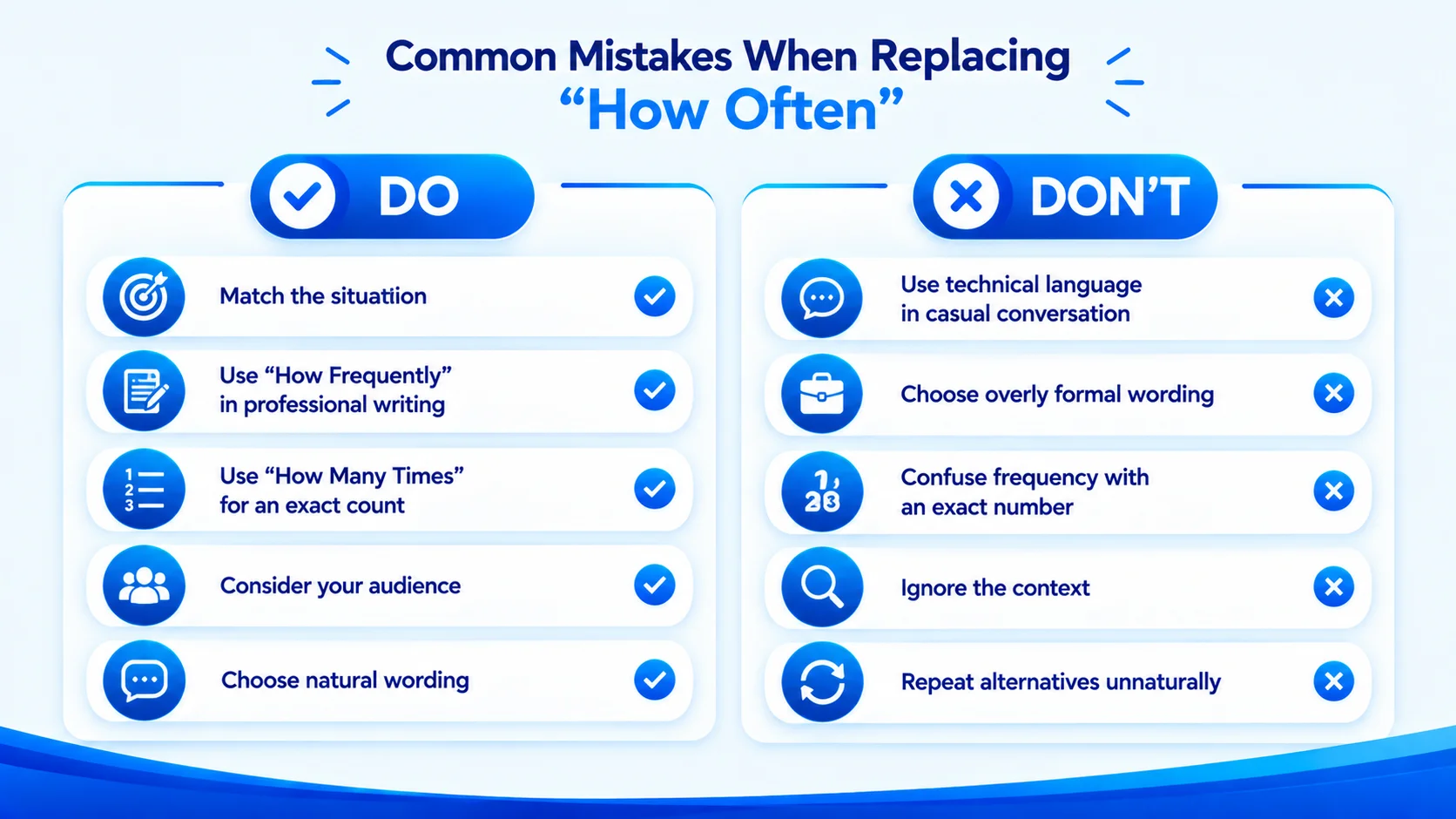
1. Using Technical Language in Casual Conversation
Phrases such as “at what frequency” may sound unnecessarily technical when talking with friends. In everyday conversation, “how often” or “how regularly” usually sounds more natural.
2. Confusing Frequency With a Specific Number
“How often” and “how many times” are related but not identical. “How often” can receive answers such as “every week,” while “how many times” normally expects a number.
3. Using “At What Intervals” for Every Situation
“At what intervals” specifically focuses on the time between events. It may sound awkward when you simply want to ask about someone’s general habits.
4. Ignoring the Audience
Professional writing may benefit from “how frequently,” while a casual conversation usually sounds better with “how often” or “how regularly.” Always consider who will read or hear your question.
5. Changing the Meaning Unnecessarily
Not every synonym is a perfect replacement. For example, “at what rate” can refer to speed or quantity, so replacing “how often” with it without checking the context can make your sentence unclear.
Frequently Asked Questions
1. What is the best alternative to “how often”?
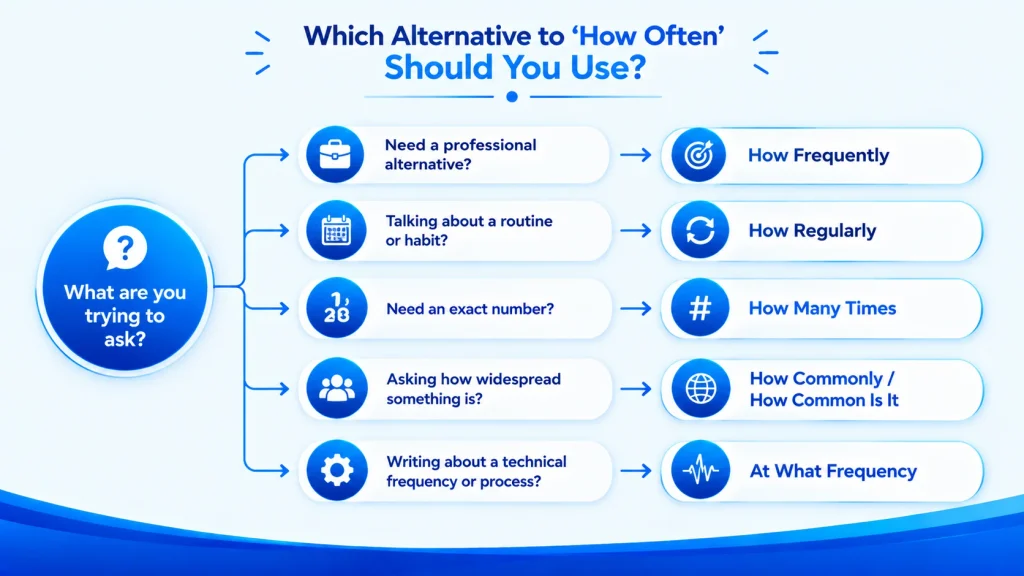
The best direct alternative is “how frequently.” It asks essentially the same question and works particularly well in professional or formal writing. For casual communication, “how regularly” is also natural. If you want a specific numerical answer, however, “how many times” may be more appropriate.
2. Is “how frequently” more formal than “how often”?
Yes. “How frequently” generally sounds slightly more formal or polished than “how often,” although both are grammatically correct. You may see “how frequently” in workplace emails, reports, surveys, and academic writing, while “how often” is extremely common in everyday American English.
3. Can I use “how regularly” instead of “how often”?
Yes, in many situations. “How regularly” is especially useful for habits, routines, and activities that happen repeatedly. For example, asking “How regularly do you exercise?” emphasizes consistency. However, “how often” is broader and can be used for almost any repeated event.
4. What is a professional way to say “how often”?
“How frequently” is usually the safest professional alternative. Depending on the context, you can also use “at what frequency” or “at what intervals.” The latter choices are more technical and work best when discussing procedures, schedules, measurements, or documented processes.
5. What is a casual way to say “how often”?
In casual American English, “how regularly” is a natural alternative. You can also say “how many times” when you want a specific number. In many everyday situations, though, “how often” remains the simplest and most natural choice.
6. Is “at what intervals” the same as “how often”?
They are closely related, but there is a small difference. “How often” asks about frequency, while “at what intervals” focuses on the amount of time separating repeated events. For example, a maintenance schedule might ask, “At what intervals should the machine be inspected?”
7. What is another way to ask “How often does it happen?”
You can say “How frequently does it occur?”, “How regularly does it happen?”, or simply “How often does it occur?” The most appropriate choice depends on tone. “How frequently does it occur?” sounds more formal, while “How regularly does it happen?” feels more conversational.
8. Should I use “how often” in professional emails?
Yes. There is nothing unprofessional about “how often.” It is clear, natural, and grammatically correct. If you want a slightly more polished tone, especially in reports or formal correspondence, “how frequently” can be a good alternative. Choose clarity over formality when both options work.
Conclusion
The key is to match the phrase to your context instead of replacing “how often” automatically. When in doubt, “how often” remains a perfectly natural choice in American English, and it is commonly used to ask about the frequency of something.
For schedules and procedures, “at what intervals” can be more precise because it focuses on the time between events. Technical or analytical writing may also benefit from “at what frequency” or “how many occurrences.”
The key is to match the phrase to your context instead of replacing “how often” automatically. When in doubt, “how often” remains a perfectly natural choice in American English.