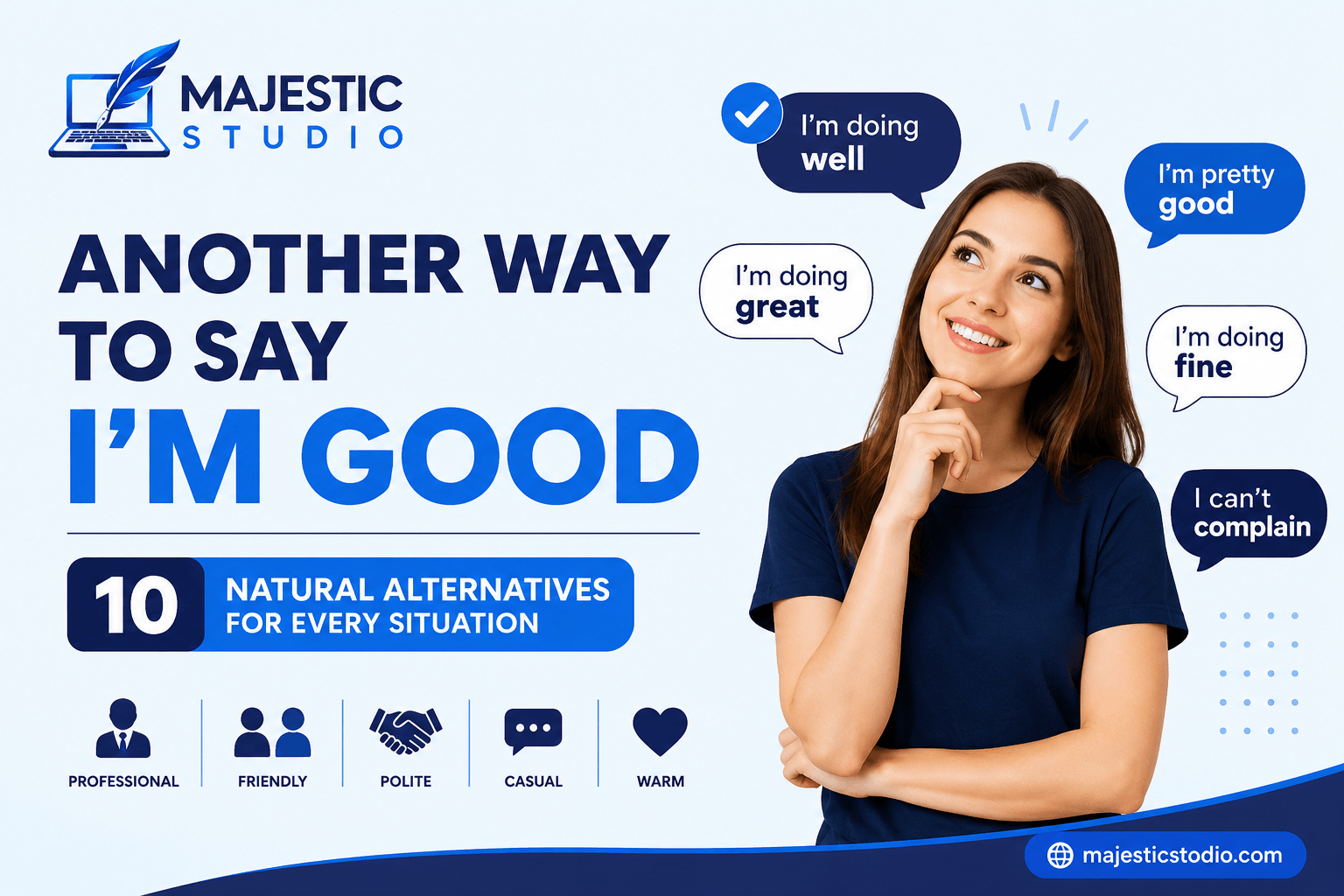
If you want another way to say “I’m good,” try “I’m doing well,” “I’m doing great,” “I’m pretty good,” or “I’m doing fine.” For casual conversations, “I’m doing great” sounds upbeat and friendly. In professional settings, “I’m doing well” is a polished and natural choice.
Key Takeaways
- “I’m doing well” is a safe choice for professional and everyday conversations.
- “I’m doing great” sounds positive, friendly, and enthusiastic.
- “I’m pretty good” works well when you want a relaxed, casual tone.
- “I’m doing fine” is useful when you want to sound calm and neutral.
- The best alternative depends on your relationship with the listener and the situation.
When someone asks, “How are you?” or “How’s it going?”, saying “I’m good” is simple and natural. However, you may want a different expression when you want to sound warmer, more enthusiastic, more professional, or simply less repetitive.
Fortunately, American English offers plenty of natural alternatives. The right phrase can help you communicate your mood more clearly while keeping the conversation comfortable and genuine.
What Does “Another Way to Say I’m Good” Mean?
“Another way to say I’m good” refers to different expressions you can use instead of the common phrase “I’m good.” People typically use these alternatives when answering questions such as “How are you?” “How have you been?” or “How’s everything going?”
The best option depends on the situation. For example, “I’m doing well” fits professional conversations, while “I’m doing great!” feels more upbeat and conversational.
You can also choose an alternative based on how you actually feel. If things are only okay, saying “I’m doing fine” may sound more honest than saying “I’m fantastic.”
Why Use Other Ways to Say “I’m Good”?
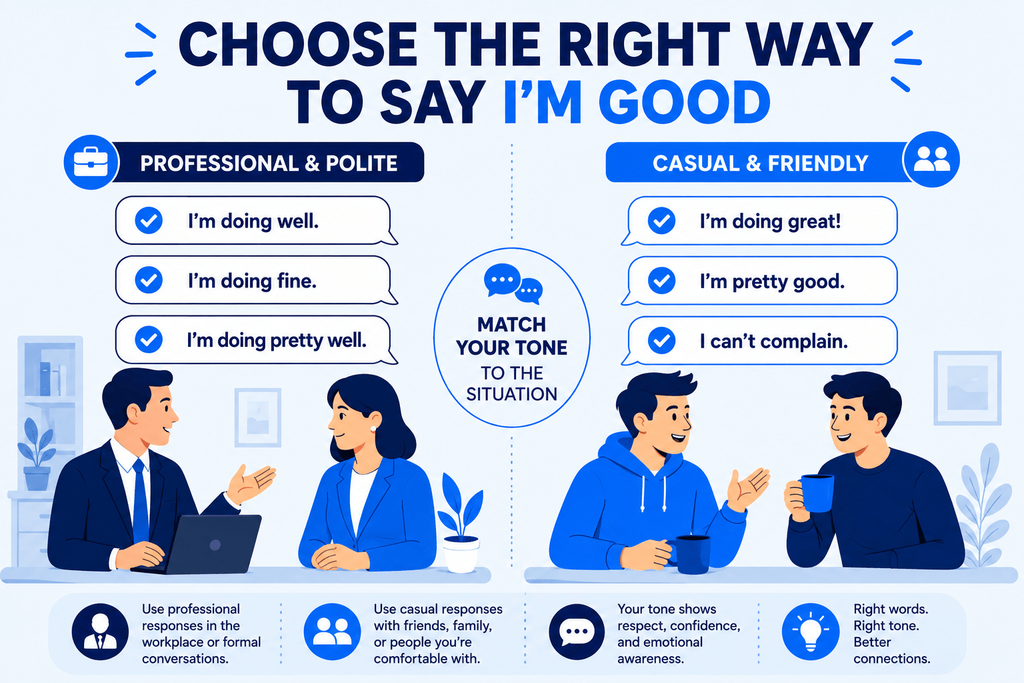
Using different expressions can make your conversations sound more natural and precise. It also lets you match your wording to the person you are speaking with.
Other benefits include:
- Avoiding repetition in everyday conversations.
- Showing more personality and emotion.
- Sounding polished in professional situations.
- Making friendly conversations feel warmer.
- Giving a more accurate description of how you feel.
- Choosing language that fits the level of formality.
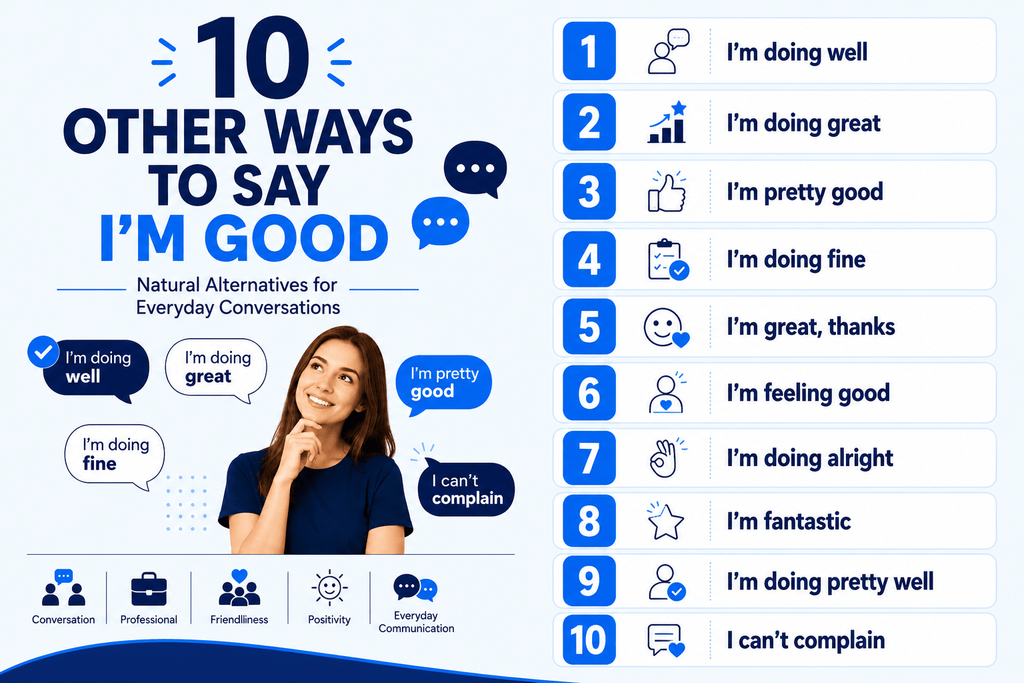
10 Best Other Ways to Say “I’m Good”
1. I’m Doing Well
Meaning
“I’m doing well” means that things are going positively or satisfactorily. It is one of the safest alternatives to “I’m good” because it works in both everyday and professional conversations.
Best For
- Professional
- Formal
- Polite
- Friendly
Example 1
“I’m doing well, thanks for asking. How have you been?”
Example 2
“I’m doing well at my new job and enjoying the experience so far.”
Quick Tip
Use “I’m doing well” when you want a polished answer that does not sound overly formal.
2. I’m Doing Great
Meaning
“I’m doing great” expresses a stronger sense of happiness or satisfaction. It sounds positive without being too formal, making it especially useful in friendly conversations.
Best For
- Casual
- Friendly
- Warm
Example 1
“I’m doing great! I finally finished that project I told you about.”
Example 2
“Thanks for checking in. I’m doing great and enjoying the summer.”
Quick Tip
Choose this phrase when you genuinely feel upbeat and want your answer to sound enthusiastic.
3. I’m Pretty Good
Meaning
“I’m pretty good” is a relaxed way to say that things are going well. The word “pretty” softens the statement, so it often sounds more modest than “I’m doing great.”
Best For
- Casual
- Friendly
Example 1
“I’m pretty good. I’ve just been busy with work lately.”
Example 2
“I’m pretty good, actually. Things have been much calmer this week.”
Quick Tip
Use this expression with friends, coworkers, or acquaintances when you want a natural, low-key response.
4. I’m Doing Fine
Meaning
“I’m doing fine” suggests that you are okay or that things are satisfactory. It has a calm, neutral quality and does not necessarily suggest strong excitement.
Best For
- Casual
- Polite
- Professional
Example 1
“I’m doing fine, thanks. How is everything with you?”
Example 2
“I’m doing fine after a busy week and looking forward to the weekend.”
Quick Tip
Use “I’m doing fine” when you want to give a straightforward answer without sounding overly enthusiastic.
5. I’m Great, Thanks
Meaning
“I’m great, thanks” is a friendly and positive response to a question about your well-being. Adding “thanks” makes the answer sound appreciative and conversational.
Best For
- Friendly
- Casual
- Warm
- Polite
Example 1
“I’m great, thanks! It’s nice to see you again.”
Example 2
“I’m great, thanks for asking. How are things on your end?”
Quick Tip
This is especially useful when someone has taken the time to ask how you are.
6. I’m Feeling Good
Meaning
“I’m feeling good” focuses more on your current mood or state than your overall circumstances. It works well when you want to emphasize that you feel positive at the moment.
Best For
- Casual
- Friendly
- Warm
Example 1
“I’m feeling good today, so I think I’ll go for a long walk.”
Example 2
“After getting some rest, I’m feeling good again.”
Quick Tip
Use this phrase when you are talking about how you feel right now rather than giving a general update about your life.
7. I’m Doing Alright
Meaning
“I’m doing alright” means that you are okay or managing reasonably well. It can sound understated, so it is useful when you do not want to make your situation sound better than it is.
Best For
- Casual
- Friendly
- Polite
Example 1
“I’m doing alright, just trying to catch up on a few things.”
Example 2
“I’m doing alright these days, and I’m taking things one step at a time.”
Quick Tip
This phrase is a good choice when things are okay but not necessarily excellent.
8. I’m Fantastic
Meaning
“I’m fantastic” communicates a very high level of happiness or satisfaction. It is energetic and expressive, so it usually works better in upbeat conversations than serious or formal ones.
Best For
- Casual
- Friendly
- Warm
Example 1
“I’m fantastic! I just got back from an amazing vacation.”
Example 2
“I’m feeling fantastic after finally getting a full night of sleep.”
Quick Tip
Because it is strongly positive, save this phrase for moments when you genuinely feel especially good.
9. I’m Pretty Well
Meaning
“I’m pretty well” is sometimes used informally to describe being in a generally good state. However, in American English, “I’m doing pretty well” is more natural and idiomatic.
Best For
- Casual
- Friendly
- Polite
Example 1
“I’m doing pretty well, especially now that my schedule has settled down.”
Example 2
“Overall, I’m doing pretty well and enjoying the new routine.”
Quick Tip
For natural American English, prefer “I’m doing pretty well” rather than using “I’m pretty well” by itself.
10. I Can’t Complain
Meaning
“I can’t complain” is a common conversational expression meaning that things are reasonably good. It often sounds modest because the speaker acknowledges that life may not be perfect.
Best For
- Casual
- Friendly
- Polite
Example 1
“I can’t complain. Work has been busy, but everything is going smoothly.”
Example 2
“I can’t complain—I’ve had a relaxing weekend and plenty of time with my family.”
Quick Tip
Use this phrase when you want a friendly, understated response rather than an enthusiastic one.
Comparison Table
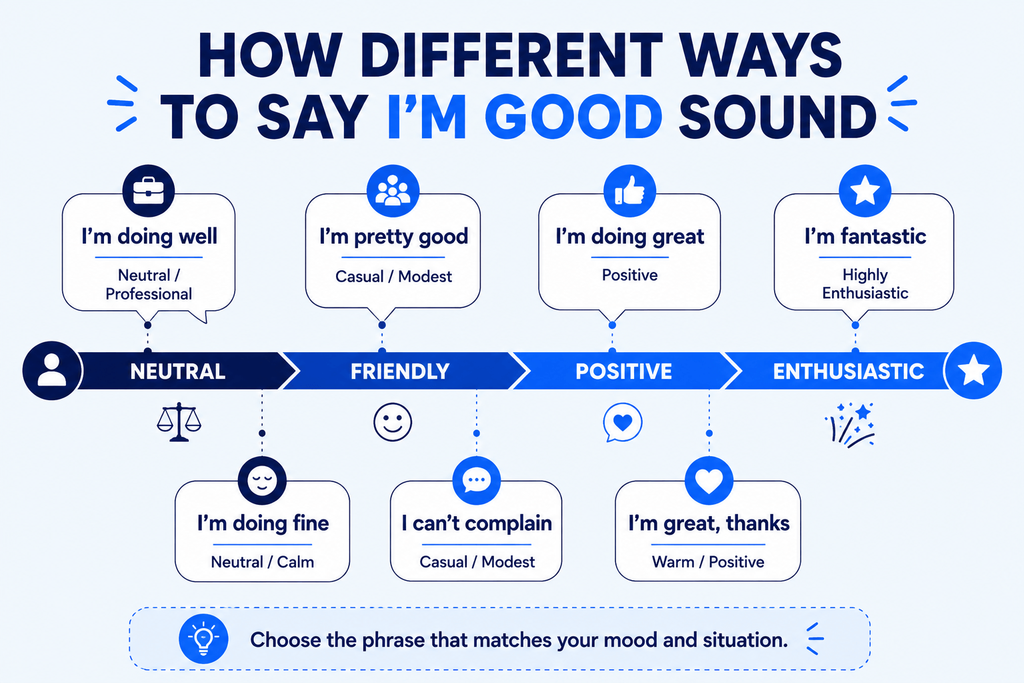
| Alternative | Best Used In | Tone |
| I’m Doing Well | Work and everyday conversations | Polished, neutral |
| I’m Doing Great | Friendly conversations | Positive, upbeat |
| I’m Pretty Good | Casual conversations | Relaxed, modest |
| I’m Doing Fine | Everyday and professional settings | Calm, neutral |
| I’m Great, Thanks | Friendly interactions | Warm, positive |
| I’m Feeling Good | Casual conversations | Positive, personal |
| I’m Doing Alright | Informal conversations | Understated, neutral |
| I’m Fantastic | Casual, enthusiastic conversations | Energetic, cheerful |
| I’m Doing Pretty Well | Everyday conversations | Friendly, positive |
| I Can’t Complain | Casual conversations | Relaxed, modest |
Common Mistakes
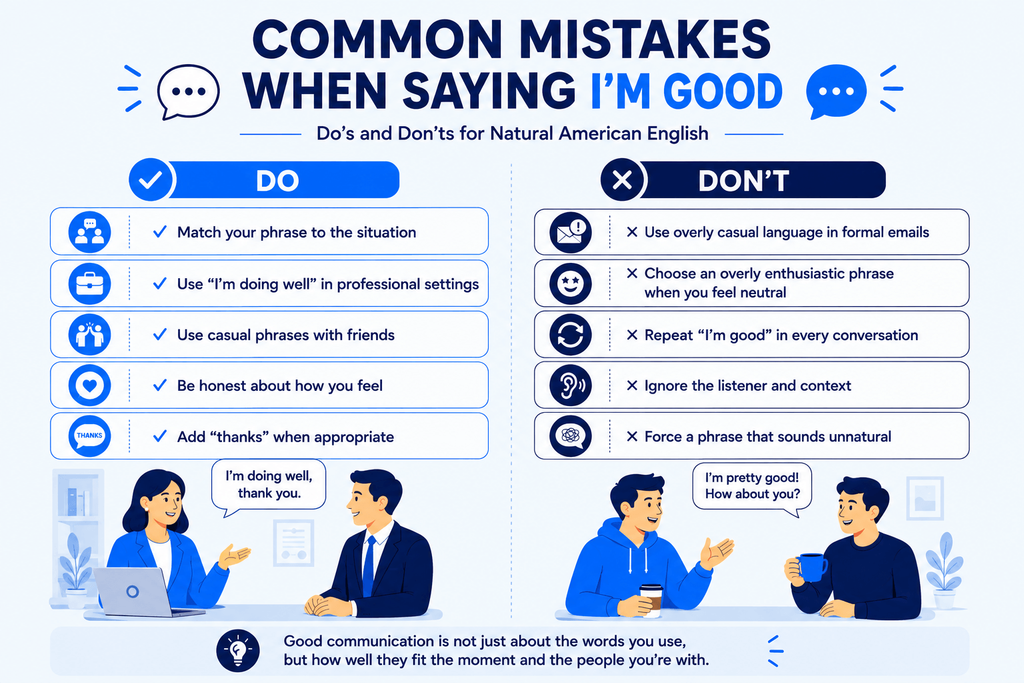
- Using casual phrases in professional emails.
Expressions such as “I’m fantastic” or “I can’t complain” may feel too conversational in some workplace situations. “I’m doing well” is usually safer. - Choosing overly formal language.
A simple question such as “How are you?” usually does not require a complicated response. Natural, familiar wording often sounds better. - Repeating the same phrase in every conversation.
Saying “I’m good” every time can become repetitive. Varying your response makes everyday communication more natural. - Forgetting the context.
A phrase that works with a close friend may not work equally well with a manager, client, or new acquaintance. - Sounding insincere.
Avoid saying “I’m fantastic!” when your tone clearly suggests otherwise. Choose a phrase that honestly reflects your mood.
Frequently Asked Questions
What is a professional way to say “I’m good”?
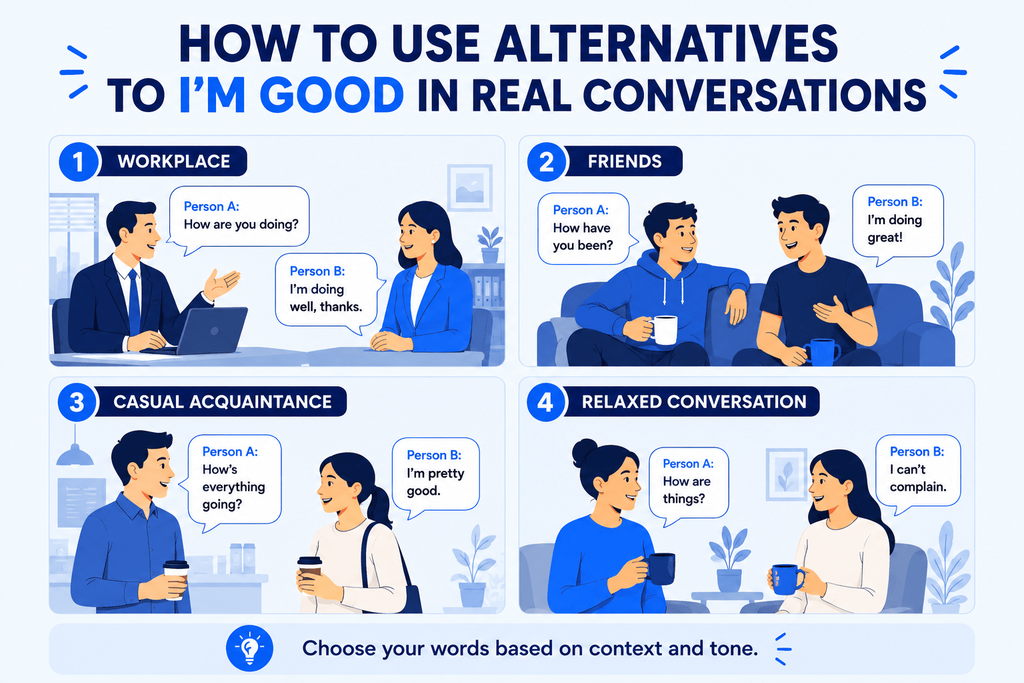
“I’m doing well” is one of the best professional alternatives to “I’m good.” It sounds natural, polite, and confident without being overly formal. You can use it when speaking with a manager, client, coworker, interviewer, or professional contact.
What is a casual way to say “I’m good”?
For casual conversations, try “I’m doing great,” “I’m pretty good,” or “I’m doing alright.” These phrases work naturally with friends, family members, acquaintances, and coworkers you know well. Your choice can also show how positive or neutral you feel.
Is “I’m doing well” better than “I’m doing good”?
In standard American English, “I’m doing well” is generally preferred when describing how you are doing. “Well” functions as an adverb describing the verb “doing.” However, “I’m doing good” is common in casual speech and can also mean that you are doing good deeds.
How can I say “I’m good” without sounding rude?
Try adding a friendly phrase such as “I’m doing well, thanks,” “I’m doing great, thank you,” or “I’m pretty good. How about you?” A short follow-up question makes your response feel more engaged and helps keep the conversation going.
What is a warm way to say “I’m good”?
“I’m great, thanks!” and “I’m doing really well” are warm alternatives. You can make the response even friendlier by acknowledging the other person, such as “I’m doing great, thanks for asking. How have you been?”
What can I say instead of “I’m good” in a text?
In a text message, natural options include “I’m doing good,” “I’m pretty good,” “I’m doing great,” or “I’m doing alright.” The best choice depends on your usual texting style and your relationship with the person. Keep it simple unless the conversation calls for more detail.
What is a humble way to say “I’m good”?
“I can’t complain” and “I’m doing pretty well” both sound modest. They communicate that things are going reasonably well without making your situation sound perfect. These expressions are especially common in relaxed conversations with friends, coworkers, and acquaintances.
How do I respond to “How are you?” without saying “I’m good”?
You can answer with “I’m doing well,” “I’m doing great,” “I’m pretty good,” “I’m doing fine,” or “I can’t complain.” If you want to keep the conversation moving, add “How about you?” This makes your response sound more natural and considerate.
Conclusion
There are many natural alternatives to “I’m good,” and the best choice depends on the situation, your relationship with the listener, and how you actually feel. For more context, see the “I’m good” definition in the Cambridge Dictionary. “I’m doing well” is the most versatile option and works especially well in professional settings.
For a more cheerful response, “I’m doing great” or “I’m great, thanks” works well. If you want a relaxed and modest tone, try “I’m pretty good,” “I’m doing alright,” or “I can’t complain.”
The key is to choose language that sounds genuine rather than forcing a phrase that does not match the moment. A simple, honest response will usually sound more natural than an overly polished one. When in doubt, “I’m doing well, thanks. How about you?” is a reliable choice for almost any everyday conversation.

Sajid Ali is a web developer and digital publisher with experience in website development, WordPress, content publishing, and digital projects. He is interested in creating useful, well-structured online resources that make information easier to discover and understand.
At Majestic Studio, Sajid focuses on website development, content publishing, SEO-focused site structure, and maintaining a clear and user-friendly reading experience. He works with a practical, research-driven approach and continuously improves content and website usability based on reader needs and search behavior.