
Another way to say “I’m here for you” includes “I’m here if you need me,” “You can count on me,” “I’ve got your back,” and “I’m here to support you.” The best phrase depends on the situation, relationship, and tone. Use warm wording for emotional support and more direct language for practical help.
Key Takeaways
- “I’m here for you” shows emotional support, care, and availability.
- “I’m here if you need me” is a gentle and flexible alternative.
- “You can count on me” emphasizes reliability and trust.
- “I’ve got your back” works well in friendly and casual situations.
- Choose your wording based on the relationship, situation, and level of support you want to express.
What Does “I’m Here for You” Mean?
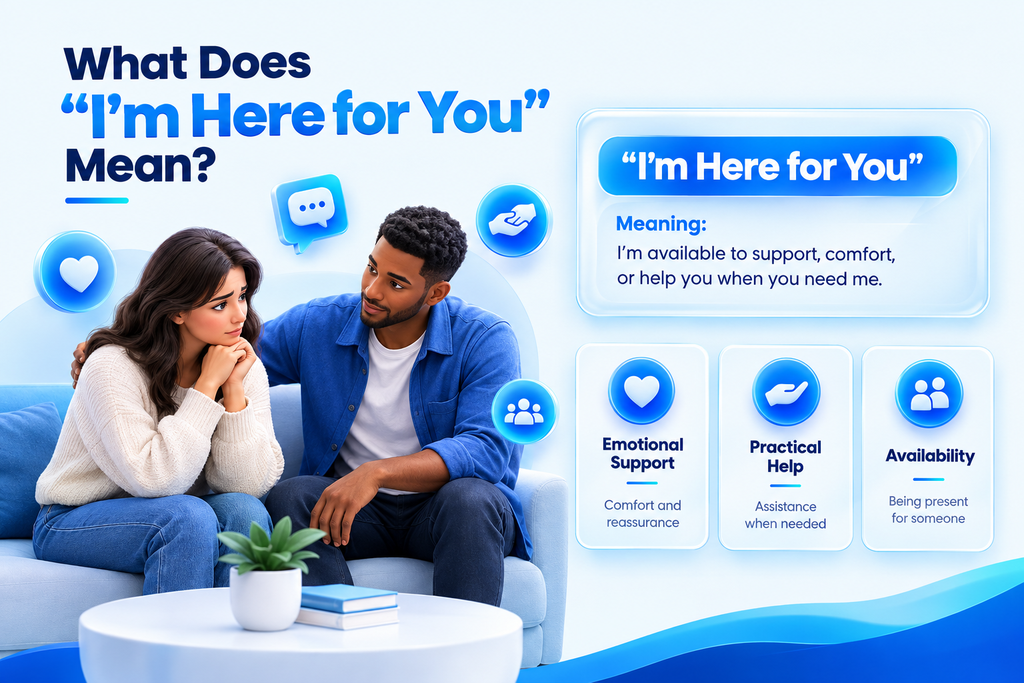
“I’m here for you” means that you are available to support someone when they need help, encouragement, comfort, or companionship. It can communicate emotional care as well as a willingness to take practical action.
People commonly use this phrase when someone is dealing with stress, sadness, uncertainty, disappointment, or a difficult situation. You might say it to a friend, family member, partner, coworker, or anyone who needs reassurance.
The phrase is warm and supportive, but repeating it too often can make your communication feel predictable. Choosing a more specific alternative can make your message sound more personal and sincere.
Why Use Other Ways to Say “I’m Here for You”?
Different situations call for different levels of warmth, formality, and emotional support. An alternative can help you communicate exactly what you mean instead of relying on the same phrase every time.
Using different expressions can help you:
- Avoid repeating the same supportive phrase.
- Sound more natural and personal.
- Match your wording to the relationship.
- Communicate practical or emotional support more clearly.
- Make professional messages sound appropriate.
- Express reassurance without sounding overly familiar.
10 Best Other Ways to Say “I’m Here for You”
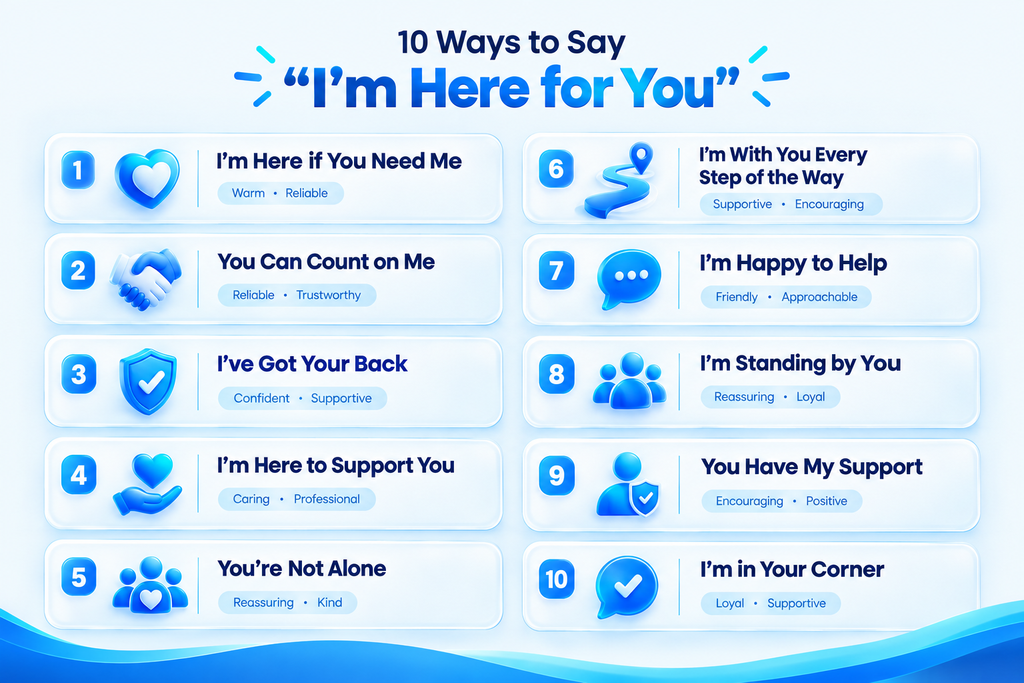
1. I’m Here if You Need Me
Meaning
“I’m here if you need me” lets someone know that you are available without putting pressure on them to ask for help. It gives the other person space while making your support clear.
Best For
- Friendly
- Warm
- Polite
- Casual
Example 1
“Take whatever time you need, and I’m here if you need me.”
Example 2
“If things become overwhelming, I’m here if you need me.”
Quick Tip
Use this phrase when you want to offer support while respecting someone’s personal space.
2. You Can Count on Me
Meaning
“You can count on me” emphasizes reliability and trust. It tells someone that you intend to follow through when they need assistance or support.
Best For
- Friendly
- Warm
- Professional
- Polite
Example 1
“If you need someone to help with the move, you can count on me.”
Example 2
“No matter what happens with the project, you can count on me to help.”
Quick Tip
Choose this phrase when you want to emphasize dependability rather than only emotional comfort.
3. I’ve Got Your Back
Meaning
“I’ve got your back” is an informal way to reassure someone that you will support or protect them. It often creates a sense of loyalty and teamwork.
Best For
- Casual
- Friendly
- Warm
Example 1
“Don’t worry about presenting alone—I’ve got your back.”
Example 2
“If anyone gives you trouble during the event, I’ve got your back.”
Quick Tip
Keep this expression for friends, teammates, or relaxed workplace conversations where informal language fits.
4. I’m Here to Support You
Meaning
“I’m here to support you” is a direct and sincere expression of availability. It can refer to emotional encouragement, practical assistance, or both.
Best For
- Professional
- Formal
- Warm
- Polite
Example 1
“Whatever decision you make, I’m here to support you.”
Example 2
“As you adjust to your new role, I’m here to support you.”
Quick Tip
This is a strong choice when you want supportive language that still sounds appropriate in professional settings.
5. You’re Not Alone
Meaning
“You’re not alone” reassures someone that they do not have to face a difficult experience without support. It focuses more on emotional connection than practical assistance.
Best For
- Warm
- Friendly
- Polite
Example 1
“You’re not alone in dealing with this, and you don’t have to figure it out by yourself.”
Example 2
“Remember that you’re not alone while you work through everything.”
Quick Tip
Use this phrase when someone needs emotional reassurance rather than a specific offer of help.
6. I’m With You Every Step of the Way
Meaning
“I’m with you every step of the way” communicates strong, ongoing support. It suggests that you are willing to remain supportive throughout a process or challenging period.
Best For
- Warm
- Friendly
- Formal
- Polite
Example 1
“Starting over can be difficult, but I’m with you every step of the way.”
Example 2
“As you work toward your goal, I’m with you every step of the way.”
Quick Tip
Use this phrase when you want to emphasize continued support rather than a one-time offer.
7. I’m Happy to Help
Meaning
“I’m happy to help” offers practical assistance in a positive and approachable way. It works well when someone needs a task completed, advice, or guidance.
Best For
- Professional
- Friendly
- Polite
- Casual
Example 1
“If you need help reviewing the proposal, I’m happy to help.”
Example 2
“Let me know if you want another set of eyes on the application. I’m happy to help.”
Quick Tip
Use this alternative when your support involves doing something specific for the other person.
8. I’m Standing by You
Meaning
“I’m standing by you” communicates loyalty and continued support, especially during a difficult situation. It can sound more serious and emotionally strong than a simple offer of help.
Best For
- Formal
- Warm
- Polite
Example 1
“Whatever challenges come next, I’m standing by you.”
Example 2
“Even when the situation feels uncertain, know that I’m standing by you.”
Quick Tip
This phrase works best for serious or emotionally meaningful situations where loyalty is important.
9. You Have My Support
Meaning
“You have my support” clearly tells someone that you approve of, encourage, or stand behind them. It has a more measured tone than many personal expressions.
Best For
- Professional
- Formal
- Polite
- Warm
Example 1
“You have my support as you take on this new responsibility.”
Example 2
“Whatever direction you choose, you have my support.”
Quick Tip
Choose this phrase when you want to express encouragement without sounding overly emotional or casual.
10. I’m in Your Corner
Meaning
“I’m in your corner” is a friendly expression that means you support someone and want them to succeed. It creates a sense of loyalty and encouragement.
Best For
- Casual
- Friendly
- Warm
Example 1
“Whatever happens at the interview, remember that I’m in your corner.”
Example 2
“You’re taking a big step, but I’m in your corner the whole way.”
Quick Tip
Use this expression with people you know well because it has a personal and conversational feel.
Comparison Table
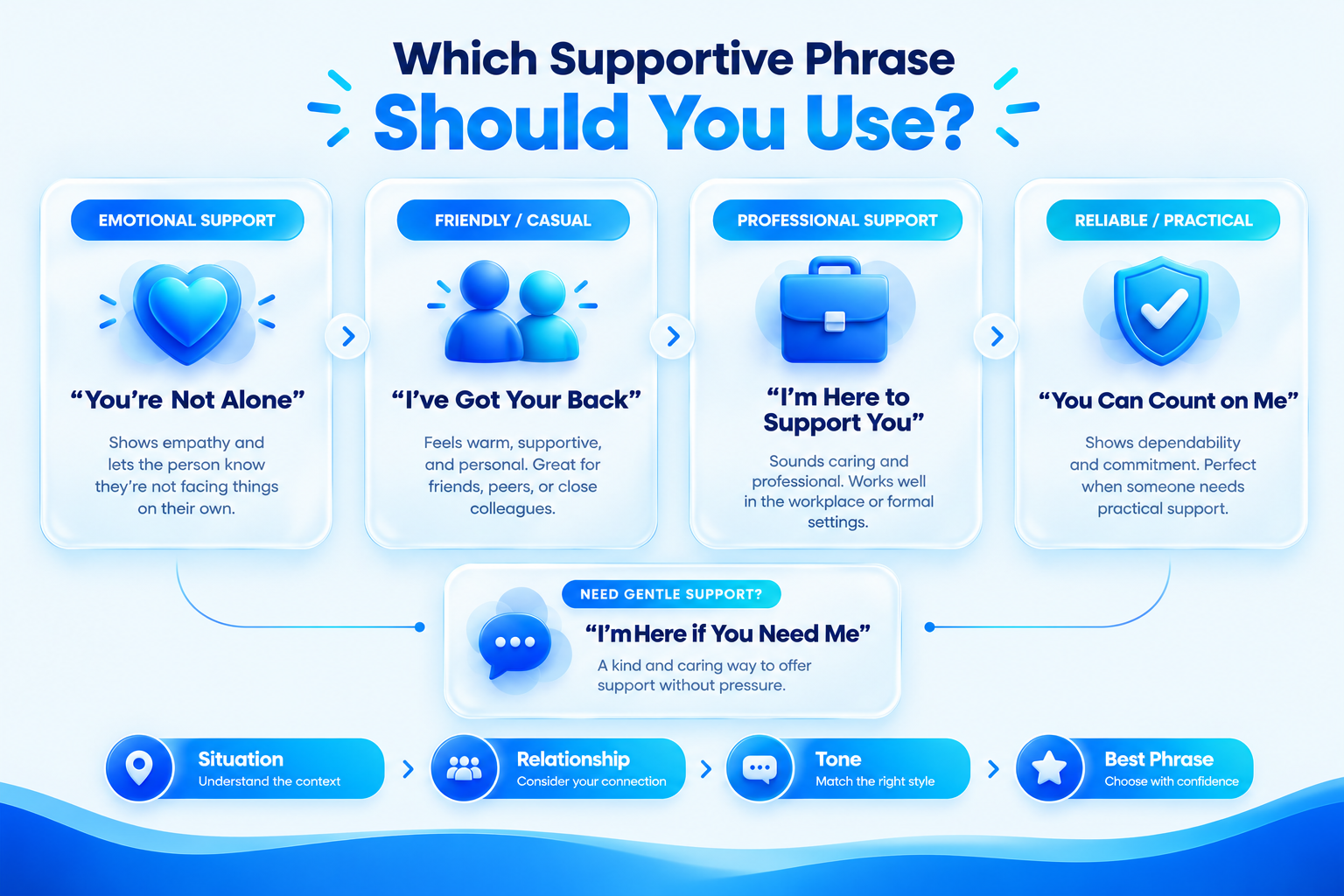
| Alternative | Best Used In | Tone |
| I’m Here if You Need Me | Personal conversations | Warm, gentle |
| You Can Count on Me | Personal or workplace situations | Reliable, supportive |
| I’ve Got Your Back | Friends and casual teamwork | Casual, loyal |
| I’m Here to Support You | Professional or personal situations | Warm, professional |
| You’re Not Alone | Emotional situations | Reassuring, caring |
| I’m With You Every Step of the Way | Long-term support | Warm, encouraging |
| I’m Happy to Help | Practical assistance | Friendly, helpful |
| I’m Standing by You | Serious personal situations | Strong, loyal |
| You Have My Support | Professional or formal settings | Polite, supportive |
| I’m in Your Corner | Friends and close relationships | Friendly, encouraging |
Common Mistakes When Replacing “I’m Here for You”
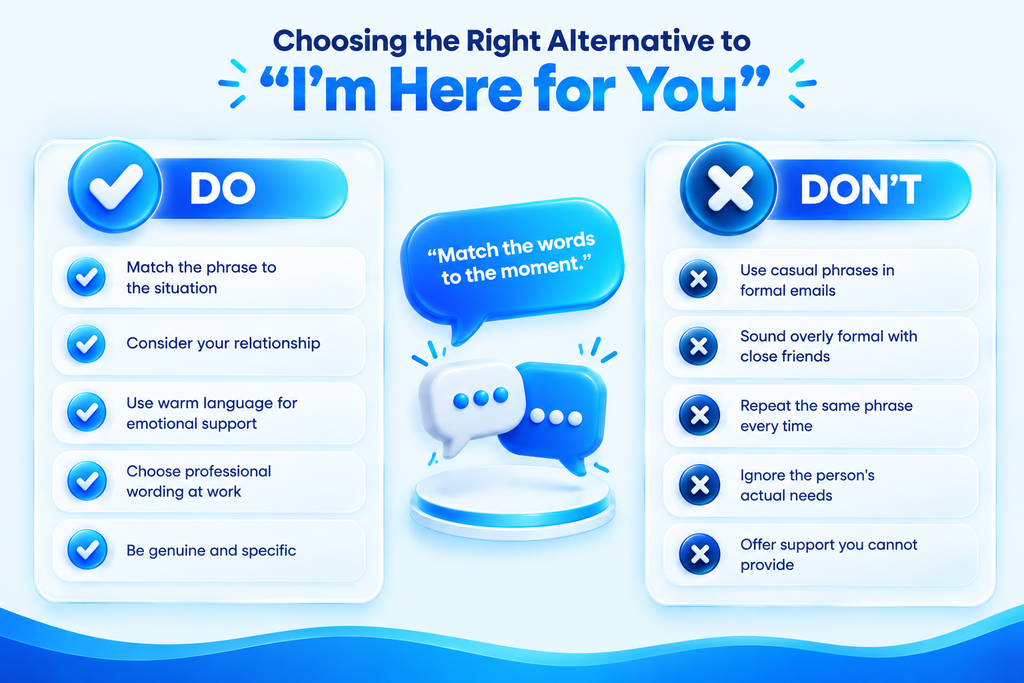
1. Using Casual Phrases in Professional Emails
Expressions such as “I’ve got your back” may sound too informal in a formal workplace message. Consider “I’m here to support you” or “You have my support” instead.
2. Choosing Overly Formal Language
A phrase can be grammatically correct but still feel unnatural. For example, very formal wording may create distance when a close friend simply needs reassurance.
3. Repeating the Same Alternative
Replacing “I’m here for you” with one phrase every time does not solve the repetition problem. Rotate your wording based on what you actually want to communicate.
4. Forgetting the Context
Emotional support and practical help are not always the same. “You’re not alone” provides reassurance, while “I’m happy to help” more clearly offers action.
5. Sounding Insincere
Supportive language works best when it matches your actions. If you tell someone they can count on you, make sure you are genuinely willing to follow through.
Frequently Asked Questions
What is another way to say “I’m here for you”?
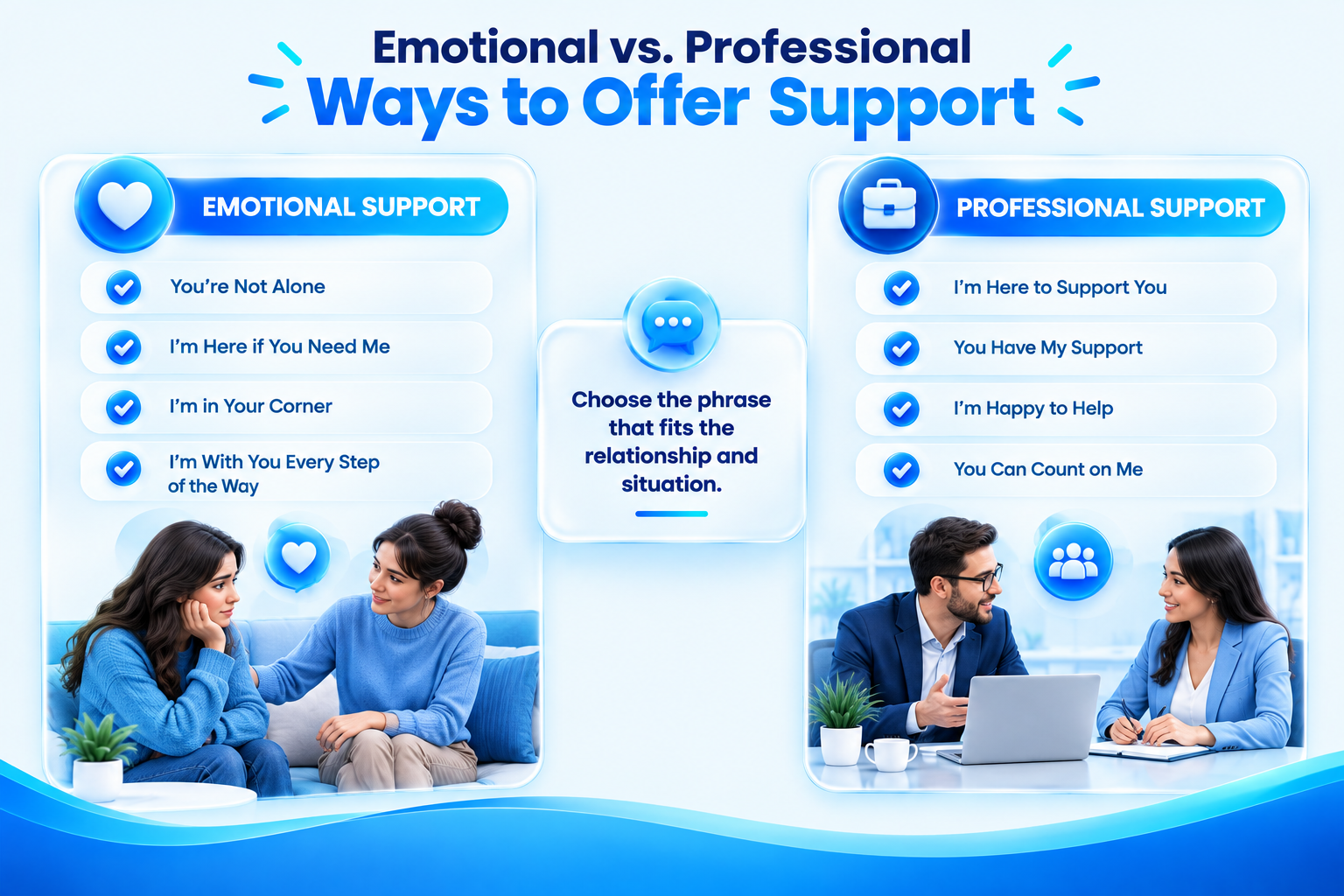
Some alternatives include “I’m here if you need me,” “You can count on me,” “I’m here to support you,” “You’re not alone,” and “I’ve got your back.” The best option depends on whether you want to communicate emotional comfort, practical help, loyalty, or professional support.
How do you say “I’m here for you” professionally?
For a professional setting, try “I’m here to support you,” “You have my support,” or “I’m happy to help.” These expressions communicate availability without sounding overly personal or informal, making them useful for emails, workplace conversations, mentoring, and professional relationships.
What is a comforting way to say “I’m here for you”?
“You’re not alone” is a comforting alternative because it directly reassures someone that they do not have to face a difficult situation by themselves. “I’m here if you need me” is another gentle option when you want to offer support without creating pressure.
What is a casual way to say “I’m here for you”?
“I’ve got your back” and “I’m in your corner” are natural casual alternatives. Both communicate loyalty and encouragement while sounding conversational. They work especially well with friends, teammates, siblings, and people you know well.
How do you tell someone you will support them?
You can say “You can count on me,” “I’m here to support you,” or “I’m with you every step of the way.” Each phrase expresses a willingness to remain supportive, but the best choice depends on how close you are to the person and what kind of support they need.
Is “I’ve got your back” the same as “I’m here for you”?
They have similar meanings, but they are not identical. “I’ve got your back” is more casual and often suggests loyalty, protection, or practical support. “I’m here for you” is broader and can express emotional support, companionship, or willingness to help.
What can I say instead of “I’m here for you” in a text?
For a text message, you could say “I’m here if you need me,” “You can count on me,” “You’re not alone,” or “I’m in your corner.” Choose the wording based on the person’s situation and your relationship with them.
How can I sound sincere when offering support?
Be specific about how you can help instead of relying only on a general statement. For example, saying “Call me tonight if you want to talk” gives the person a clear way to accept your support and makes the message feel more genuine.
Conclusion
“I’m here for you” is a simple way to communicate care, availability, and support, but different situations may call for different wording. For gentle emotional support, “I’m here if you need me” or “You’re not alone” can feel reassuring. When you want to emphasize reliability, “You can count on me” works well.
For professional communication, “I’m here to support you,” “I’m happy to help,” and “You have my support” provide a more polished tone. Meanwhile, “I’ve got your back” and “I’m in your corner” are better suited to casual relationships.
The key is to choose language that matches both the situation and your relationship with the person. The most meaningful support is clear, appropriate, and backed by genuine action.

Sajid Ali is a web developer and digital publisher with experience in website development, WordPress, content publishing, and digital projects. He is interested in creating useful, well-structured online resources that make information easier to discover and understand.
At Majestic Studio, Sajid focuses on website development, content publishing, SEO-focused site structure, and maintaining a clear and user-friendly reading experience. He works with a practical, research-driven approach and continuously improves content and website usability based on reader needs and search behavior.