

Another way to say “spread the word” includes share the news, get the word out, tell others, pass it along, and let people know. The best choice depends on your audience and tone. For professional communication, “share the information” works well, while “get the word out” sounds more casual and conversational.
Key Takeaways
- “Spread the word” means telling other people about something important, useful, or exciting.
- “Share the news” is a natural choice for friendly and everyday communication.
- “Get the word out” works well when you want to encourage wider awareness.
- “Share the information” is more professional and appropriate for workplace messages.
- The right alternative depends on your audience, purpose, and desired tone.
What Does “Another Way to Say Spread the Word” Mean?
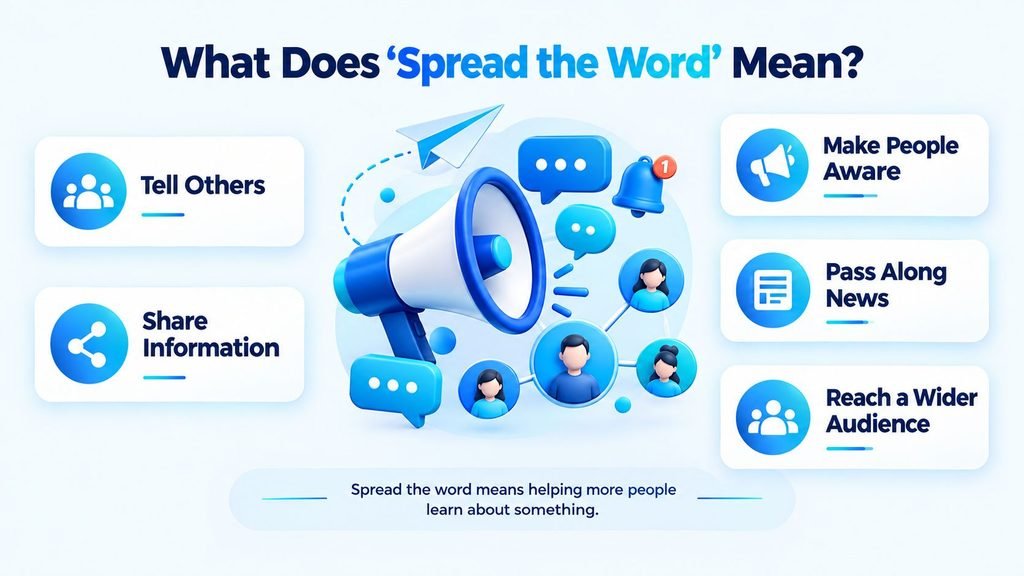
“Spread the word” means to tell other people about something so that more people become aware of it. You might use it when promoting an event, sharing an announcement, recommending a service, or asking people to tell their friends.
For example, a community group might say, “Please spread the word about Saturday’s fundraiser.” The phrase is common because it is short, friendly, and easy to understand.
However, repeating “spread the word” can make your writing sound predictable. Choosing a similar phrase can make your message more natural while helping you match the situation.
Why Use Other Ways to Say “Spread the Word”?
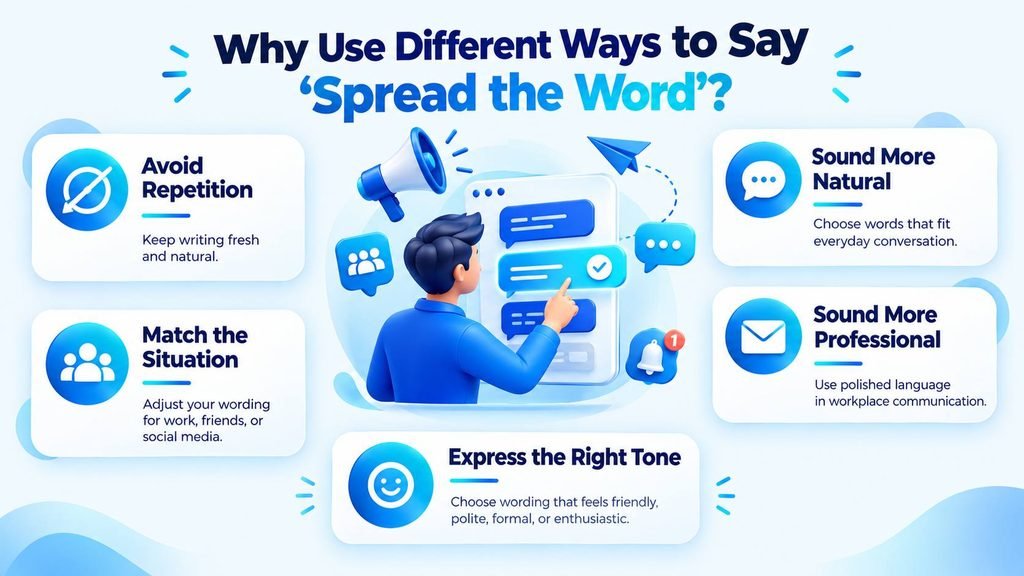
Using different expressions gives you more control over your writing and helps you communicate with the right tone.
- Avoid repetition: Keep emails, posts, and articles from sounding repetitive.
- Sound more natural: Choose wording that fits everyday American English.
- Match the situation: Some phrases work better in professional settings than others.
- Improve professional communication: A more precise phrase can make workplace messages clearer.
- Show the right emotion: Friendly wording can make an announcement feel more personal and inviting.
10 Best Other Ways to Say “Spread the Word”
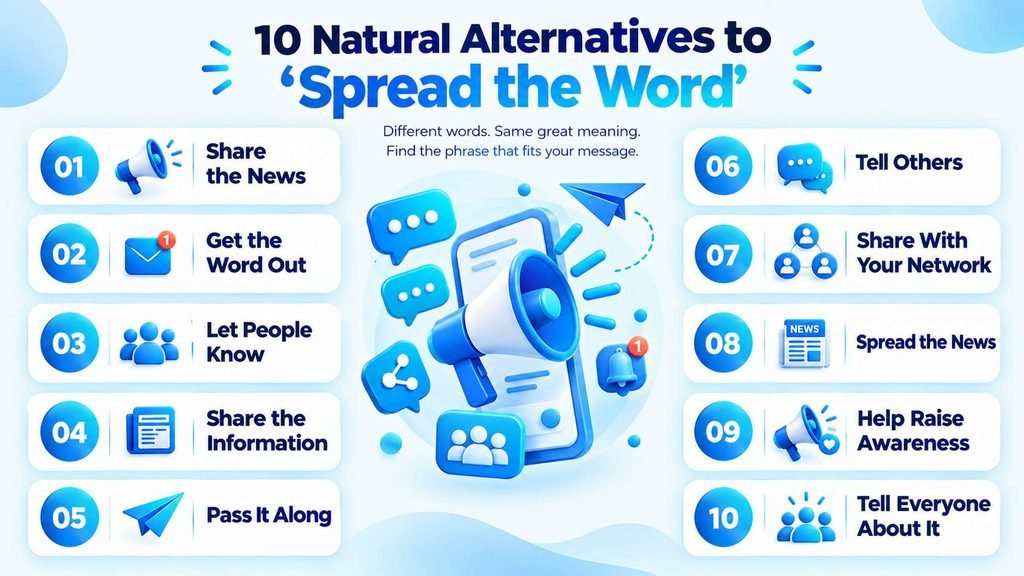
1. Share the News
Meaning
“Share the news” means to tell other people about a recent event, announcement, update, or piece of information. It sounds natural and positive without being overly formal.
Best For
- Friendly
- Casual
- Warm
- Polite
Example 1
“Please share the news with your friends who may want to attend the event.”
Example 2
“We’re excited about the new program, so feel free to share the news.”
Quick Tip
Use this phrase when you are sharing news or an announcement, especially with friends, customers, or a community.
2. Get the Word Out
Meaning
“Get the word out” is one of the closest alternatives to “spread the word.” It means making sure as many relevant people as possible hear about something.
Best For
- Casual
- Friendly
- Warm
Example 1
“We need to get the word out about the neighborhood cleanup.”
Example 2
“Can you help us get the word out before registration closes?”
Quick Tip
This is an excellent choice when you want to encourage people to help promote something.
3. Let People Know
Meaning
“Let people know” is a simple and flexible way to say that information should be communicated to others. It works in both casual conversations and many workplace situations.
Best For
- Casual
- Friendly
- Polite
- Professional
Example 1
“Please let people know that the office will close early on Friday.”
Example 2
“If you hear of anyone interested, let people know about the available spots.”
Quick Tip
Choose this phrase when clarity matters more than making your message sound promotional.
4. Share the Information
Meaning
“Share the information” has a more professional tone than “spread the word.” It focuses on communicating useful facts rather than promoting something.
Best For
- Professional
- Formal
- Polite
Example 1
“Please share the information with your team before the meeting.”
Example 2
“We encourage managers to share the information with employees who may be affected.”
Quick Tip
Use this option in business emails, workplace notices, reports, and official communications.
5. Pass It Along
Meaning
“Pass it along” means to give information to another person so they can learn about it too. It sounds relaxed and conversational.
Best For
- Casual
- Friendly
- Warm
Example 1
“If you know someone looking for a summer job, please pass it along.”
Example 2
“I thought this announcement might help your neighbors, so please pass it along.”
Quick Tip
This phrase works especially well when you are sharing something useful rather than making a formal announcement.
6. Tell Others
Meaning
“Tell others” is a straightforward expression that simply asks someone to communicate information to additional people. It is clear and direct.
Best For
- Professional
- Casual
- Friendly
- Polite
Example 1
“Please tell others about the updated parking rules.”
Example 2
“If you found the workshop helpful, tell others who might benefit from it.”
Quick Tip
Use it when you want a direct expression without sounding overly promotional.
7. Share With Your Network
Meaning
“Share with your network” encourages someone to distribute information among their professional, social, or online contacts. It is particularly useful for digital communication.
Best For
- Professional
- Friendly
- Polite
Example 1
“We’d appreciate it if you could share the announcement with your network.”
Example 2
“Please share this opportunity with your network if you know qualified candidates.”
Quick Tip
This phrase fits LinkedIn posts, professional announcements, recruiting campaigns, and business promotions.
8. Spread the News
Meaning
“Spread the news” is similar to “spread the word,” but it specifically emphasizes news or an announcement. It has a friendly and energetic feel.
Best For
- Casual
- Friendly
- Warm
Example 1
“Help us spread the news about the grand opening next month.”
Example 2
“She couldn’t wait to spread the news about her new job.”
Quick Tip
Use this alternative when the information is genuinely newsworthy, such as an achievement, launch, opening, or announcement.
9. Help Raise Awareness
Meaning
“Help raise awareness” focuses on making more people understand or recognize an issue, cause, service, or campaign. It sounds more purposeful than “spread the word.”
Best For
- Professional
- Formal
- Polite
Example 1
“Our campaign aims to help raise awareness about food insecurity.”
Example 2
“You can help raise awareness by sharing reliable information with your community.”
Quick Tip
This phrase is especially effective for nonprofit campaigns, public education, social causes, and health or community initiatives.
10. Tell Everyone About It
Meaning
“Tell everyone about it” is an enthusiastic way to encourage people to share something with a broad audience. It sounds personal and energetic.
Best For
- Casual
- Friendly
- Warm
Example 1
“If you enjoyed the new restaurant, tell everyone about it.”
Example 2
“We’re launching our new service next week, so tell everyone about it!”
Quick Tip
Save this phrase for informal conversations, social posts, recommendations, and enthusiastic promotions.
Comparison Table
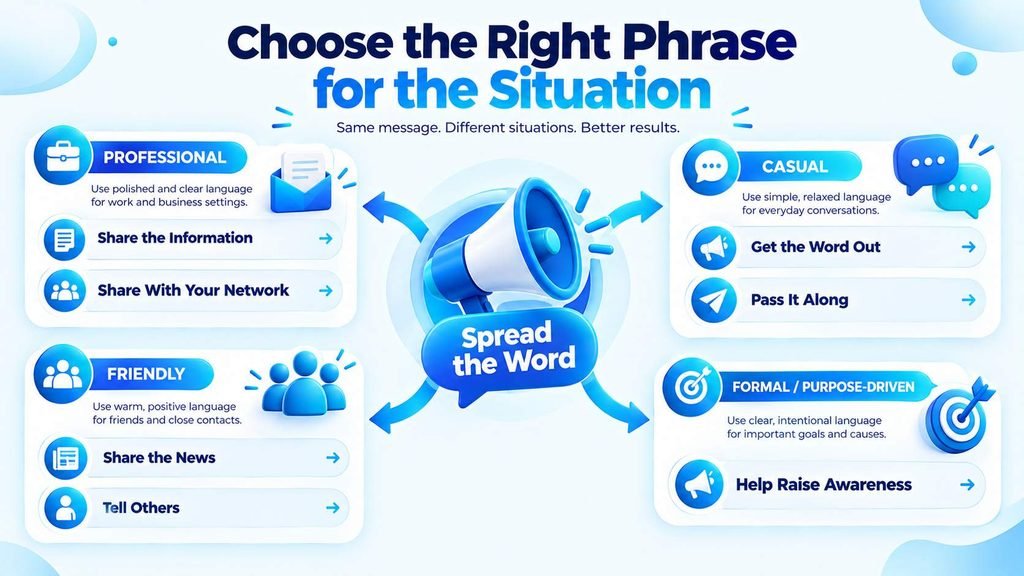
| Alternative | Best Used In | Tone |
| Share the News | Announcements, everyday messages | Friendly |
| Get the Word Out | Promotions, events, campaigns | Casual |
| Let People Know | General communication | Neutral |
| Share the Information | Workplace emails, notices | Professional |
| Pass It Along | Personal recommendations | Casual |
| Tell Others | Direct requests | Neutral |
| Share With Your Network | Social and professional platforms | Professional |
| Spread the News | Exciting announcements | Warm |
| Help Raise Awareness | Causes and campaigns | Formal |
| Tell Everyone About It | Informal promotion | Enthusiastic |
Common Mistakes
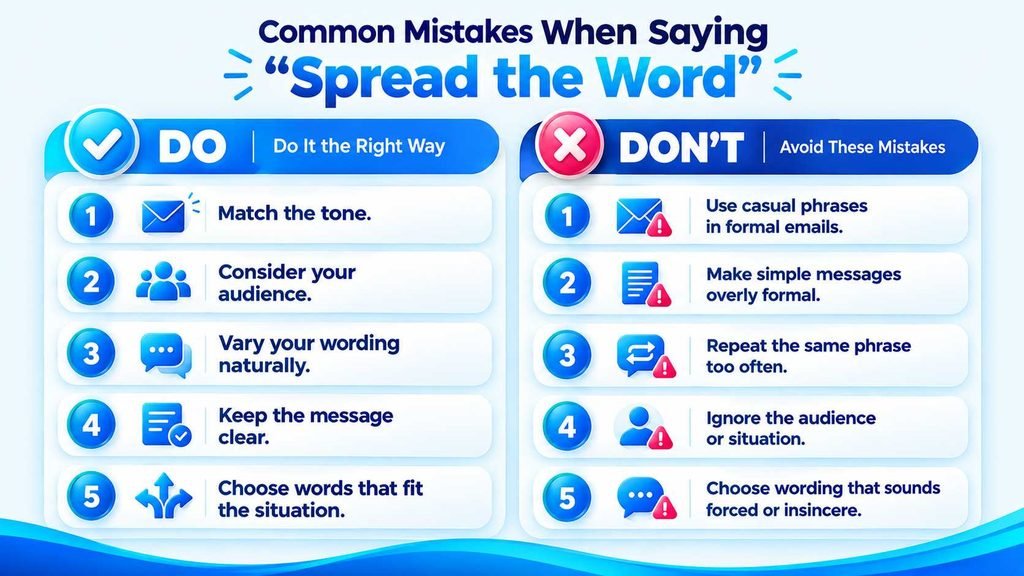
1. Using Casual Phrases in Professional Emails
Expressions such as “get the word out” can sound too conversational for certain business messages. In formal communication, “share the information” or “share the announcement” may be a better fit.
2. Choosing Overly Formal Language
Not every message needs formal wording. Using “help raise awareness” for a simple invitation between friends may sound unnecessarily serious.
3. Repeating the Same Phrase
Using “spread the word” several times in one article, email, or social post can become repetitive. Replace it with a phrase that adds variety without changing the intended meaning.
4. Forgetting Context
Not every alternative has exactly the same meaning. “Spread the news” refers specifically to news, while “raise awareness” usually suggests a broader issue, cause, or public message.
5. Sounding Insincere
Avoid choosing complicated language just to sound professional. The strongest phrase is usually the one that communicates your message clearly and naturally.
Frequently Asked Questions
What is another way to say “spread the word”?
Some common alternatives include share the news, get the word out, let people know, share the information, pass it along, and tell others. The best choice depends on context. For a casual message, “get the word out” sounds natural, while “share the information” is better suited to professional communication.
What is a professional way to say “spread the word”?
A professional alternative is “share the information” or “share the announcement.” For example, you could write, “Please share the information with your team.” These options sound clear and respectful without being too informal or promotional.
What is a casual way to say “spread the word”?
“Get the word out,” “pass it along,” and “tell everyone about it” are natural casual alternatives. They work well in conversations, social media posts, community messages, and friendly requests where a relaxed tone is appropriate.
Is “get the word out” the same as “spread the word”?
Yes, the two phrases have nearly the same meaning. Both encourage people to communicate information to others. However, “get the word out” can sound slightly more action-oriented, especially when you are asking people to help promote an event, product, campaign, or announcement.
How do you say “spread the word” in an email?
The best wording depends on the email’s purpose. In a professional email, try “Please share this information with your team” or “We would appreciate your help sharing the announcement.” For a casual email, “Please pass this along” is a natural option.
What is another way to say “spread the word” on social media?
For social media, you can say “share the news,” “help us get the word out,” “share this with your network,” or “tell your friends.” The best option depends on your audience. “Share with your network” works particularly well for professional platforms.
What is a polite way to ask someone to spread the word?
You can say, “We’d appreciate it if you could share this with others who may be interested.” Another friendly option is, “Please feel free to pass this along to anyone who might find it useful.” Both sound respectful rather than demanding.
Can “spread the word” be used in formal writing?
Yes, but it is somewhat conversational. In formal writing, alternatives such as “share the information,” “distribute the announcement,” or “help raise awareness” may sound more appropriate. Choose based on your audience and whether you are writing an email, report, announcement, or marketing message.
Conclusion
There are many natural ways to say “spread the word,” and the best choice depends on your audience and purpose. “Share the news” works well for friendly announcements, while “get the word out” is a strong choice when encouraging people to promote something. For professional communication, “share the information” or “share with your network” can sound more polished.
If your message involves a public issue or campaign, “help raise awareness” gives the sentence a more purposeful tone. For casual situations, “pass it along” and “tell everyone about it” feel more personal.
The key is not simply to replace words but to choose an expression that fits the situation. When your wording matches the audience and message, your communication becomes clearer, more natural, and more effective.

Editorial contributors help develop practical English-language resources covering vocabulary, expressions, synonyms, and writing. Contributions focus on clear explanations, useful examples, and context so readers can understand not only what a phrase means, but when and how to use it naturally.