

Another way to say “same here” includes “me too,” “I feel the same way,” “likewise,” “same for me,” and “I agree.” The best choice depends on context. “Me too” works well in casual conversation, while “likewise” and “I feel the same way” can sound more polished or sincere.
Key Takeaways
- “Same here” means that you share someone’s feeling, opinion, experience, or situation.
- “Me too” is the most natural casual alternative in everyday American English.
- “Likewise” works well when you want a concise, polite, or professional response.
- “I feel the same way” adds warmth and clearly expresses shared feelings.
- Always choose an alternative based on the relationship, setting, and tone.
What Does “Another Way to Say Same Here” Mean?

“Same here” is a common conversational phrase that means “I feel the same way,” “I have the same experience,” or “I agree.” For example, if someone says, “I’m exhausted after that meeting,” you might reply, “Same here.”
People often search for another way to say “same here” because they want to avoid repetition or find wording that better fits a specific situation. The phrase is common in texts, chats, casual conversations, social media, and friendly workplace exchanges.
Depending on the context, you may want to sound casual, professional, warm, polite, or more emotionally expressive.
Why Use Other Ways to Say “Same Here”?
Using different expressions can make your communication sound more natural and precise. The right phrase can also help you show agreement without sounding repetitive.
- Avoid repetition: Keep conversations fresh.
- Sound more natural: Choose language that fits the situation.
- Match the setting: Use casual or professional wording when appropriate.
- Express emotion: Show empathy, enthusiasm, or shared feelings.
- Communicate clearly: Make it obvious whether you agree, relate, or share an experience.
10 Best Other Ways to Say “Same Here”

1. Me Too
Meaning
“Me too” is one of the most common ways to say that you share someone’s feeling, opinion, or experience. It sounds natural and relaxed in everyday American English.
Best For
- Casual
- Friendly
- Warm
Example 1
“I can’t wait for the concert.”
“Me too!”
Example 2
“I’m really looking forward to the long weekend.”
“Me too. I definitely need a break.”
Quick Tip
Use “me too” when talking with friends, family, coworkers you know well, or people in informal settings.
2. I Feel the Same Way
Meaning
“I feel the same way” clearly shows that your emotional response matches the other person’s. It is especially useful when someone shares a personal feeling or opinion.
Best For
- Friendly
- Warm
- Polite
Example 1
“I’m nervous about starting my new job.”
“I feel the same way.”
Example 2
“I think we should spend more time with the family.”
“I feel the same way about that.”
Quick Tip
Choose this phrase when you want to sound more thoughtful or sincere than a simple “me too.”
3. Likewise
Meaning
“Likewise” means that the same statement applies to you. It is concise and slightly more polished than “same here,” making it useful in both casual and professional conversations.
Best For
- Professional
- Formal
- Polite
Example 1
“It was a pleasure working with you.”
“Likewise.”
Example 2
“I hope you have a wonderful evening.”
“Likewise, thank you.”
Quick Tip
“Likewise” works especially well when responding to a positive statement, greeting, compliment, or good wish.
4. I Agree
Meaning
“I agree” directly communicates that you share someone’s opinion or judgment. Unlike “same here,” it focuses on agreement rather than simply sharing an experience.
Best For
- Professional
- Formal
- Polite
Example 1
“This project needs a clearer deadline.”
“I agree. A firm date would help the team.”
Example 2
“I think we should review the proposal one more time.”
“I agree with you.”
Quick Tip
Use “I agree” when you are responding to an idea, opinion, recommendation, or argument rather than an emotion.
5. I’m With You on That
Meaning
“I’m with you on that” is an informal way to show agreement and support. It has a friendly, conversational feel and can make your response sound encouraging.
Best For
- Casual
- Friendly
- Warm
Example 1
“I think we should order pizza tonight.”
“I’m with you on that.”
Example 2
“This movie deserves more attention.”
“I’m with you on that.”
Quick Tip
Use this phrase when you want to emphasize that you support someone’s view, not merely that you share their experience.
6. I Feel That Too
Meaning
“I feel that too” shows that you share another person’s emotional reaction. It can sound personal and empathetic, particularly during more meaningful conversations.
Best For
- Friendly
- Warm
- Polite
Example 1
“I’m going to miss everyone after graduation.”
“I feel that too.”
Example 2
“Sometimes I wish we had more time to slow down.”
“I feel that too.”
Quick Tip
This phrase fits emotional conversations better than practical discussions or formal business communication.
7. Same for Me
Meaning
“Same for me” communicates that the same situation, preference, or condition applies to you. It is straightforward and slightly more explicit than “same here.”
Best For
- Casual
- Friendly
- Polite
Example 1
“I’ll be working from home tomorrow.”
“Same for me.”
Example 2
“I chose the morning appointment.”
“Same for me.”
Quick Tip
Use “same for me” when you are talking about plans, choices, schedules, or circumstances that match another person’s.
8. I Can Relate
Meaning
“I can relate” means that you understand someone’s experience because you have experienced something similar. It emphasizes connection and understanding rather than simple agreement.
Best For
- Casual
- Friendly
- Warm
Example 1
“I always get nervous before speaking in front of a crowd.”
“I can relate.”
Example 2
“I had trouble adjusting to my first apartment.”
“I can relate. It took me months to get used to it.”
Quick Tip
Use “I can relate” when someone describes an experience you have personally understood or gone through.
9. That Goes for Me Too
Meaning
“That goes for me too” means that the same statement, condition, or opinion applies to you. It is conversational but slightly more complete than “me too.”
Best For
- Casual
- Friendly
- Warm
Example 1
“If anyone wants dessert, I’m ordering cheesecake.”
“That goes for me too.”
Example 2
“You can call me if you need help this weekend.”
“That goes for me too.”
Quick Tip
This phrase works well when the other person’s statement includes an action, offer, preference, or condition that also applies to you.
10. I’m in the Same Boat
Meaning
“I’m in the same boat” is an idiom that means you are dealing with the same situation or problem as someone else. It often creates a sense of shared experience.
Best For
- Casual
- Friendly
- Warm
Example 1
“I’m trying to save money this month.”
“I’m in the same boat.”
Example 2
“I haven’t figured out how to use the new software yet.”
“I’m in the same boat.”
Quick Tip
Use this expression for shared circumstances or challenges, rather than simple agreement with an opinion.
Comparison Table

| Alternative | Best Used In | Tone |
|---|---|---|
| Me too | Everyday conversations | Casual |
| I feel the same way | Personal conversations | Warm |
| Likewise | Professional or polite exchanges | Polished |
| I agree | Discussions and opinions | Direct |
| I’m with you on that | Informal discussions | Friendly |
| I feel that too | Emotional conversations | Warm |
| Same for me | Plans and situations | Casual |
| I can relate | Shared experiences | Empathetic |
| That goes for me too | Shared choices or actions | Friendly |
| I’m in the same boat | Shared problems or circumstances | Casual |
Common Mistakes
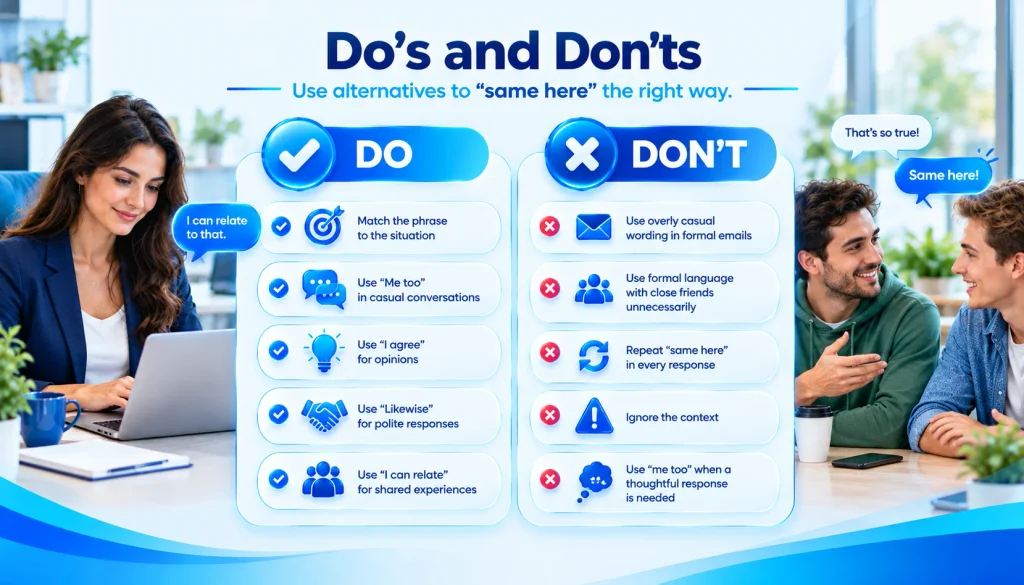
1. Using Casual Phrases in Professional Emails
Expressions such as “I’m in the same boat” or “I’m with you on that” may sound too informal in some business settings. Choose “I agree,” “likewise,” or a more specific response when professionalism matters.
2. Choosing Overly Formal Language
“Likewise” is useful, but using it in every casual conversation can sound stiff. With close friends, “me too” will usually feel more natural.
3. Repeating the Same Phrase
Using “same here” several times in one conversation can make your responses feel automatic. Vary your wording when the context allows it.
4. Forgetting the Context
Not every alternative means exactly the same thing. “I agree” expresses agreement, while “I can relate” emphasizes a shared experience.
5. Sounding Insincere
A quick “me too” can sometimes feel dismissive when someone is sharing something serious. In emotional conversations, “I feel the same way” or “I can relate” may show more attention and empathy.
Frequently Asked Questions
What is the most common way to say “same here”?
“Me too” is probably the most natural everyday alternative to “same here” in American English. It works when you share someone’s feeling, preference, or experience. For example, if someone says, “I love this restaurant,” you can simply respond, “Me too.”
Is “likewise” another way to say “same here”?
Yes. “Likewise” communicates that the same sentiment or condition applies to you. It is often more polished than “same here” and works well after greetings, compliments, good wishes, and polite statements. For example, “It was great meeting you” can receive the response, “Likewise.”
What is a professional way to say “same here”?
“I agree,” “likewise,” or “I feel the same way” can work in professional settings, depending on the context. “I agree” is particularly useful when responding to a business opinion or recommendation, while “likewise” fits polite exchanges and shared sentiments.
Can I say “me too” in a professional email?
Yes, but context matters. “Me too” is acceptable in friendly workplace communication, especially when your relationship with the recipient is informal. In formal emails, a more specific response such as “I agree” or “I feel the same way” may sound more polished.
What is another way to say “same here” in a text?
“Me too” is usually the easiest choice in a text message. Other casual options include “same for me,” “I can relate,” and “I’m with you on that.” The best option depends on whether you are sharing a feeling, agreeing with an opinion, or describing a similar experience.
What is a polite way to say “same here”?
“Likewise” is a concise and polite option. “I feel the same way” can also sound respectful and sincere, especially when someone expresses an opinion or feeling. Both options are more polished than slang or highly casual expressions.
Is “I can relate” the same as “same here”?
Not exactly. “I can relate” usually means that you understand someone’s experience because you have experienced something similar. “Same here” is broader and can indicate that you share a feeling, opinion, preference, or situation.
What should I say instead of “same here” when I agree?
“I agree” is the clearest choice when you specifically agree with someone’s opinion or statement. Other options include “I’m with you on that” for a casual conversation and “I feel the same way” when the agreement involves a personal feeling.
Conclusion

There are many natural ways to say “same here,” and the best choice depends on what you are trying to communicate. “Me too” is ideal for everyday conversations, while “likewise” offers a more polished response. If you want to show emotional understanding, “I feel the same way” or “I can relate” may work better.
For opinions, “I agree” makes your meaning clear. When you share a situation or challenge, expressions such as “same for me” and “I’m in the same boat” can sound more precise.
The key is to match your wording to the situation, relationship, and tone. Instead of automatically repeating “same here,” choose the phrase that most accurately reflects whether you agree, relate, share a feeling, or have the same experience.