
If you’re looking for another way to say “apples to apples,” you can use phrases such as “fair comparison,” “like-for-like comparison,” “compare on equal terms,” “direct comparison,” or “side-by-side comparison.” The best choice depends on whether you’re writing professionally, speaking casually, or discussing products, prices, or performance.
Key Takeaways
- “Apples to apples” means comparing similar things using the same standards.
- Like-for-like comparison is the closest professional alternative.
- Fair comparison works well in everyday and business conversations.
- Compare on equal terms emphasizes fairness and consistent criteria.
- Choose the phrase based on your audience, context, and level of formality.
What Does “Another Way to Say Apples to Apples” Mean?
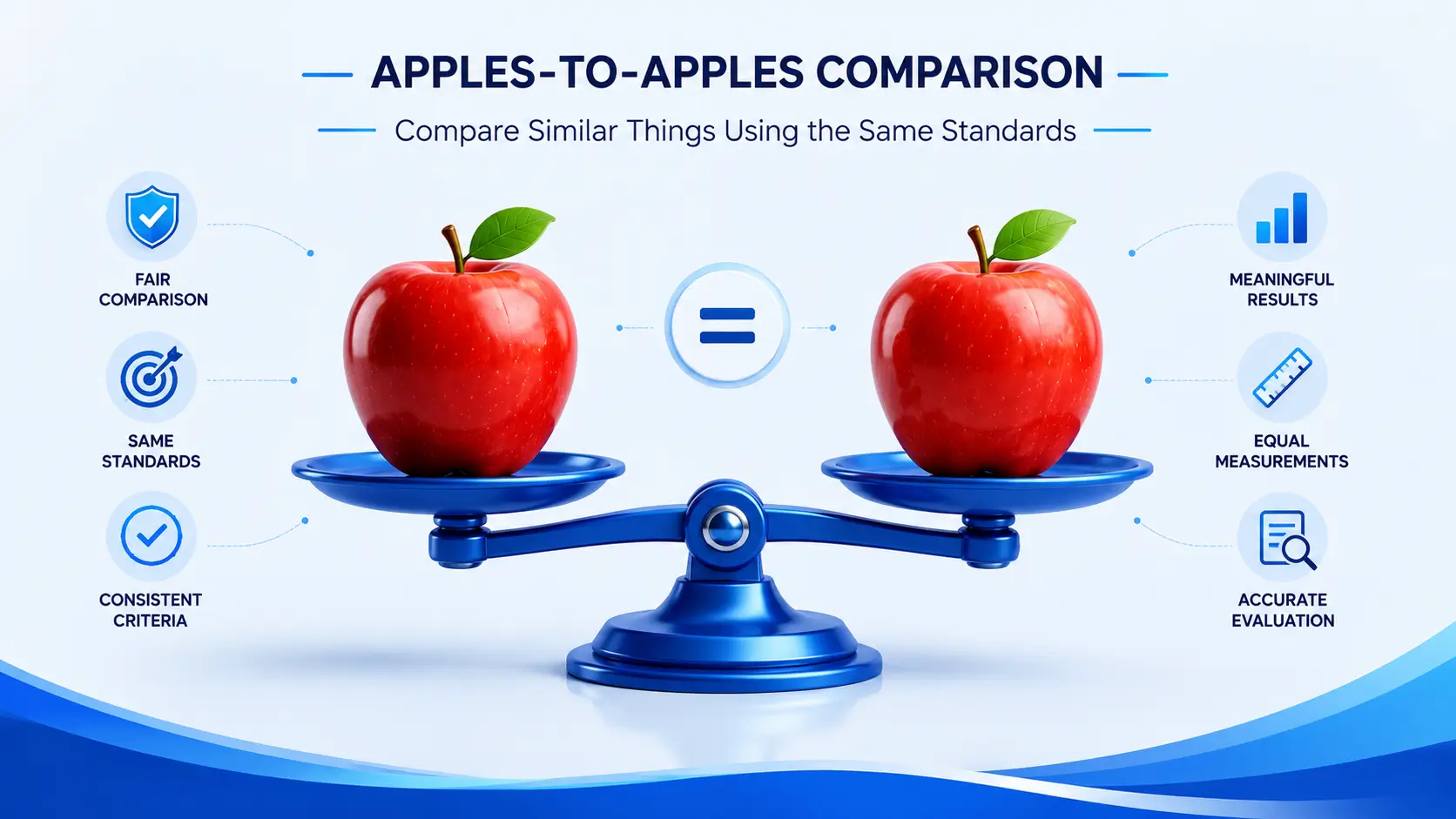
“Apples to apples” means making a fair comparison between two things that are similar or measured using the same criteria. For example, comparing two smartphones based on battery life, storage, and price is an apples-to-apples comparison.
People often use this expression in business, shopping, education, finance, and everyday conversations. It helps make clear that two options should be evaluated under comparable conditions rather than against unrelated standards.
If you want to avoid the idiom or make your writing sound more professional, phrases such as “like-for-like comparison” and “fair comparison” are strong alternatives.
Why Use Other Ways to Say “Apples to Apples”?
Using a different phrase can make your writing clearer and better suited to your audience. While “apples to apples” is familiar and conversational, some situations call for more precise or formal wording.
You may want another expression to:
- Avoid repeating the same phrase.
- Sound more professional in business writing.
- Make your meaning clearer for international readers.
- Explain the idea without using an idiom.
- Match the tone of an academic or formal document.
- Emphasize fairness, consistency, or equal standards.
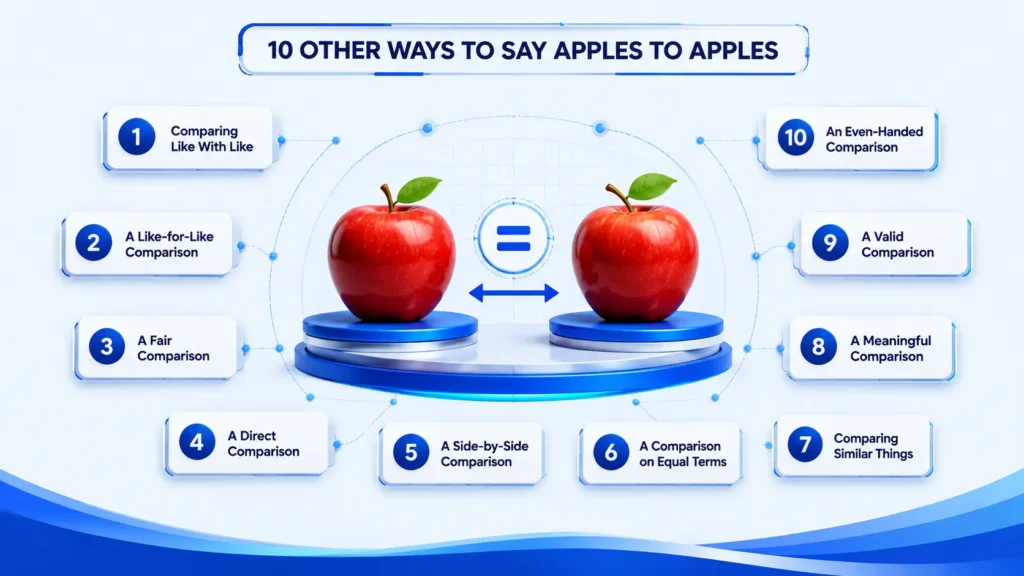
10 Best Other Ways to Say “Apples to Apples”
1. Like-for-Like Comparison
Meaning
“Like-for-like comparison” is one of the closest alternatives to “apples to apples.” It means comparing two similar products, services, options, or situations using comparable features and standards.
Best For
- Professional
- Formal
- Business
Example 1
We need a like-for-like comparison before deciding which software provider offers the better value.
Example 2
The report provides a like-for-like comparison of operating costs across all three locations.
Quick Tip
Use this phrase when you want a polished business expression that clearly communicates a fair comparison.
2. Fair Comparison
Meaning
“Fair comparison” focuses on evaluating two or more things without giving one side an unfair advantage. It works especially well when the items being compared are similar but may have different strengths.
Best For
- Professional
- Casual
- Friendly
- Formal
Example 1
To make a fair comparison, look at both the monthly fee and the features included.
Example 2
It would be difficult to make a fair comparison without considering the different sizes of the two companies.
Quick Tip
Choose this phrase when fairness is more important than technical precision.
3. Compare on Equal Terms
Meaning
“Compare on equal terms” means judging different options according to the same conditions or standards. It is useful when differences in circumstances could otherwise make the comparison misleading.
Best For
- Professional
- Formal
Example 1
The candidates should be compared on equal terms during the final selection process.
Example 2
We adjusted the figures so investors could compare the companies on equal terms.
Quick Tip
This phrase is especially effective in reports, presentations, and business discussions.
4. Side-by-Side Comparison
Meaning
A “side-by-side comparison” means examining two or more things together so their similarities and differences are easy to see. It is common when comparing products, services, plans, or features.
Best For
- Professional
- Casual
- Friendly
Example 1
We created a side-by-side comparison of the two insurance plans.
Example 2
A side-by-side comparison makes it easier to see which laptop has the better display.
Quick Tip
Use this phrase when readers can benefit from seeing several options directly next to each other.
5. Direct Comparison
Meaning
“Direct comparison” means evaluating two things directly against each other. It is simple, flexible, and works in both spoken and written English.
Best For
- Professional
- Formal
- Casual
Example 1
A direct comparison shows that both cameras offer similar image quality.
Example 2
We need a direct comparison of the two proposals before making a final decision.
Quick Tip
This is a safe choice when you want a concise alternative that fits almost any context.
6. Comparable Comparison
Meaning
A “comparable comparison” refers to evaluating things that are sufficiently similar to be measured against each other. However, in polished writing, “comparison of comparable options” is often more natural.
Best For
- Professional
- Formal
Example 1
The analysis focuses on a comparison of comparable properties in the same area.
Example 2
Using a comparison of comparable plans gives customers a clearer picture of their options.
Quick Tip
For formal writing, pair “comparison” with “comparable options,” “comparable products,” or another specific noun.
7. Equal-Footing Comparison
Meaning
“Equal-footing comparison” emphasizes that each option is being judged under the same conditions. It highlights balance and prevents unrelated factors from influencing the result.
Best For
- Professional
- Formal
Example 1
The committee requested an equal-footing comparison before approving the proposals.
Example 2
An equal-footing comparison should account for the same costs, benefits, and limitations.
Quick Tip
Use this phrase when fairness and consistency are central to the discussion.
8. Compare Like With Like
Meaning
“Compare like with like” means comparing similar things rather than placing unrelated items against each other. It is a natural expression and is closely related to “apples to apples.”
Best For
- Professional
- Casual
- Friendly
Example 1
When reviewing service plans, it helps to compare like with like.
Example 2
Make sure you’re comparing like with like before choosing the cheaper option.
Quick Tip
This is a particularly natural choice when explaining the concept in conversation.
9. Consistent Comparison
Meaning
“Consistent comparison” highlights the use of the same criteria throughout an evaluation. It is useful when comparing multiple choices in a report, study, or decision-making process.
Best For
- Professional
- Formal
Example 1
The updated report uses a consistent comparison method for every department.
Example 2
A consistent comparison helps management identify which locations are performing best.
Quick Tip
Use this option when the comparison involves a defined set of rules, measurements, or criteria.
10. On a Level Playing Field
Meaning
“On a level playing field” means that people, products, or organizations are being evaluated under fair and similar conditions. Unlike “apples to apples,” it can also describe competition between people or groups.
Best For
- Casual
- Friendly
- Professional
Example 1
The new rules give smaller businesses a chance to compete on a level playing field.
Example 2
We need the same information from every vendor to put everyone on a level playing field.
Quick Tip
Choose this expression when the comparison involves fairness between competitors or participants.
Comparison Table

| Alternative | Best Used In | Tone |
| Like-for-like comparison | Business, reports, professional writing | Professional |
| Fair comparison | Everyday and business communication | Neutral |
| Compare on equal terms | Reports, analysis, formal writing | Formal |
| Side-by-side comparison | Products, services, reviews | Neutral |
| Direct comparison | General writing and conversation | Neutral |
| Comparison of comparable options | Research and formal analysis | Formal |
| Equal-footing comparison | Business and decision-making | Professional |
| Compare like with like | Everyday and professional communication | Natural |
| Consistent comparison | Reports, data, evaluations | Professional |
| On a level playing field | Competition and fairness | Conversational |
Common Mistakes
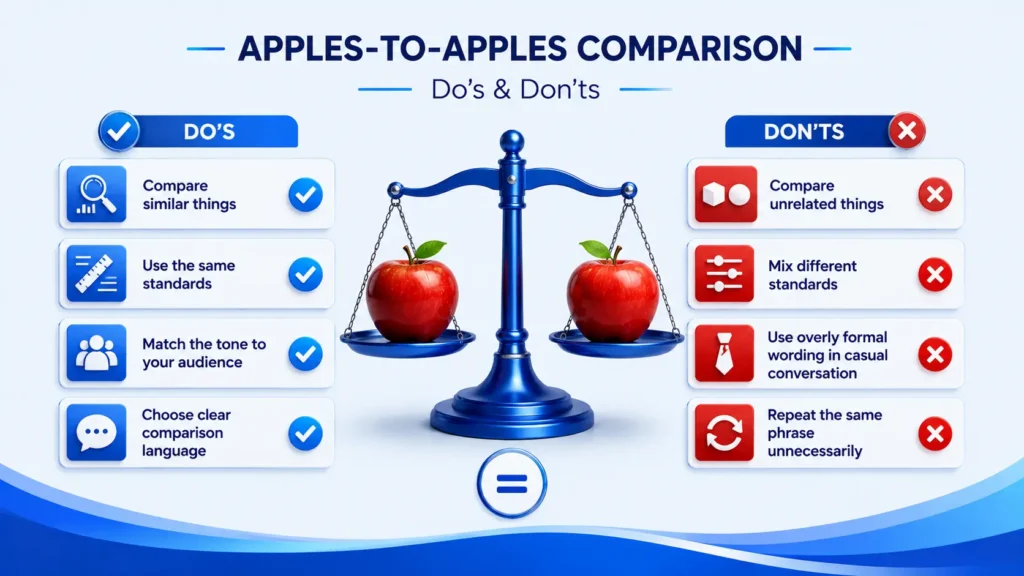
1. Using Casual Phrases in Formal Writing
Expressions such as “apples to apples” can sound conversational in a formal report. “Like-for-like comparison” or “compare on equal terms” may fit better.
2. Comparing Unrelated Things
The phrase only makes sense when the things being compared have meaningful similarities. Comparing completely different products or situations may produce a misleading conclusion.
3. Choosing Overly Formal Language
Not every situation needs corporate-sounding language. In a casual conversation, “compare like with like” or “fair comparison” may sound more natural.
4. Forgetting the Comparison Criteria
A fair comparison requires consistent standards. If one product is judged by price while another is judged by quality, the result may not be meaningful.
5. Repeating the Same Expression
Using “apples to apples” several times can make your writing repetitive. Rotate between natural alternatives such as “fair comparison,” “direct comparison,” and “side-by-side comparison” when appropriate.
Frequently Asked Questions
What is another way to say “apples to apples”?
The closest alternatives include “like-for-like comparison,” “fair comparison,” “compare like with like,” and “compare on equal terms.” “Like-for-like comparison” is usually the strongest choice for professional and business writing because it clearly communicates that similar things are being evaluated using comparable standards.
What is the most professional way to say “apples to apples”?
“Like-for-like comparison” is one of the most professional alternatives. You can also say “compare on equal terms” when you want to emphasize fairness and consistent conditions. Both expressions work well in business reports, presentations, proposals, and analytical writing.
Is “like-for-like” the same as “apples to apples”?
Yes, the two expressions have very similar meanings. Both describe comparing similar things using relevant and consistent criteria. “Like-for-like” tends to sound more professional and is particularly common in business, finance, retail, and analytical contexts.
How do you use “apples to apples” in a sentence?
You can use it when two similar options are being evaluated under the same standards. For example: “We need an apples-to-apples comparison of the two proposals before choosing a vendor.” The expression is common in everyday American English and professional conversations.
What is the opposite of an apples-to-apples comparison?
The opposite is often called an “apples-to-oranges comparison.” This describes comparing things that are too different to be fairly evaluated using the same criteria. For example, comparing the price of a basic service with a premium service without considering their different features could create an apples-to-oranges comparison.
Is “fair comparison” a good alternative to “apples to apples”?
Yes. “Fair comparison” is simple, natural, and easy for almost any audience to understand. It focuses on fairness rather than the specific idea of comparing similar items. It works well in conversations, emails, articles, reports, and other forms of everyday communication.
Can I use “apples to apples” in a business email?
Yes, especially if your workplace uses conversational language. However, if the email is highly formal or written for clients, executives, or external stakeholders, “like-for-like comparison” or “compare on equal terms” may sound more polished.
What is the best phrase for comparing products?
“Side-by-side comparison” is excellent for product reviews, shopping guides, and sales content. If you want to emphasize that the products are being evaluated using the same standards, “like-for-like comparison” is a better choice.
Conclusion
Knowing another way to say “apples to apples” can help you make your writing clearer, more precise, and better suited to your audience. The best alternative depends on what you want to emphasize.
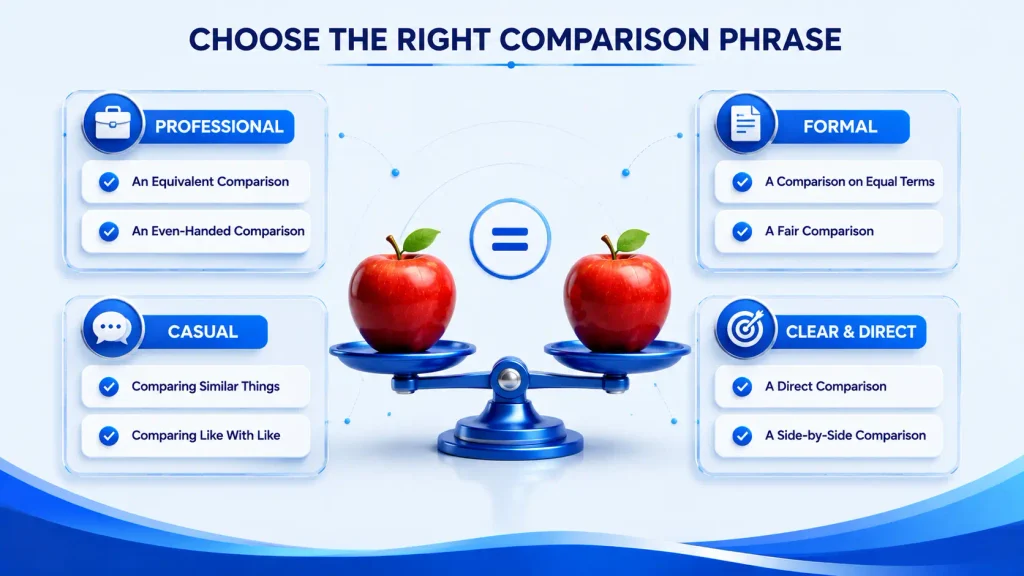
For professional writing, “like-for-like comparison” is one of the strongest choices. If fairness is the main point, use “fair comparison” or “compare on equal terms.” For product reviews, “side-by-side comparison” is natural and easy to understand. In everyday conversation, “compare like with like” works well.
The key is to compare similar things using consistent and meaningful criteria. When you choose the right phrase for the situation, your message becomes easier to understand and more credible.

The Majestic Studio Editorial Team creates practical resources about synonyms, alternative phrases, vocabulary, and English usage. Our content is designed to help readers choose clearer, more natural words and communicate effectively in everyday, professional, and academic contexts.
Each article is researched, edited, and reviewed for clarity, context, usefulness, and language accuracy. We regularly update our content to keep examples and recommendations relevant.