

Another way to say bad words includes swear words, curse words, profanity, offensive language, vulgar language, inappropriate language, and strong language. The best choice depends on context. “Profanity” sounds neutral and formal, while “swear words” and “curse words” are more common in everyday American English.
Key Takeaways
- “Bad words” is a casual phrase for profanity, offensive, vulgar, or inappropriate language.
- Swear words and curse words are natural choices in everyday conversation.
- Profanity works especially well in formal, educational, and professional writing.
- Offensive language is useful when the main concern is that words may hurt or insult someone.
- Always consider your audience, setting, and purpose before choosing an alternative.
What Does “Another Way to Say Bad Words” Mean?
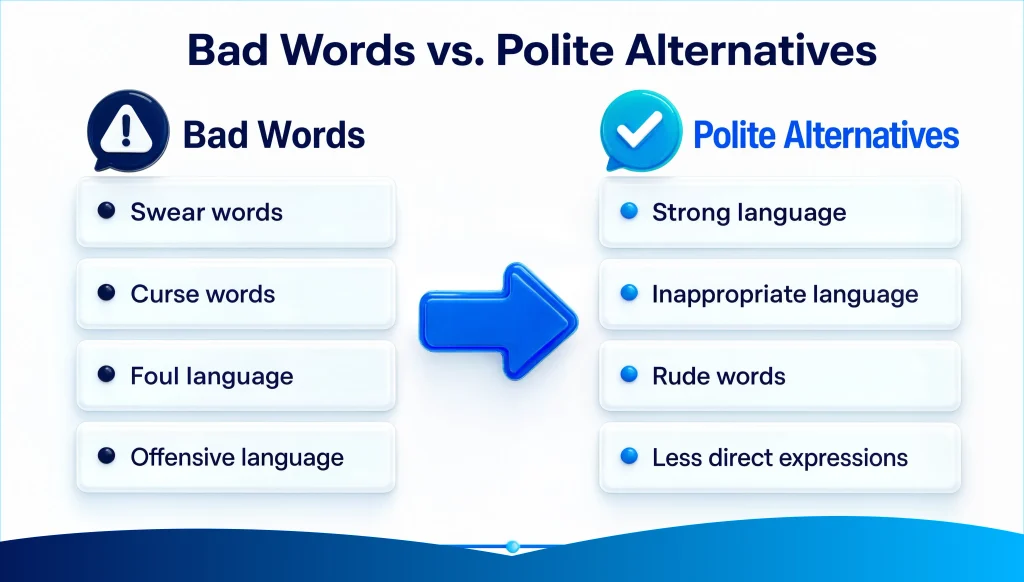
The phrase “another way to say bad words” refers to alternative expressions for language that may be considered rude, offensive, vulgar, inappropriate, or socially unacceptable. People often search for these alternatives when they want to describe profanity without repeating specific offensive words.
“Bad words” is common in casual American English, especially when speaking with children or in informal conversations. In more professional or academic settings, terms such as profanity, offensive language, vulgar language, or inappropriate language are usually more precise.
Why Use Other Ways to Say “Bad Words”?
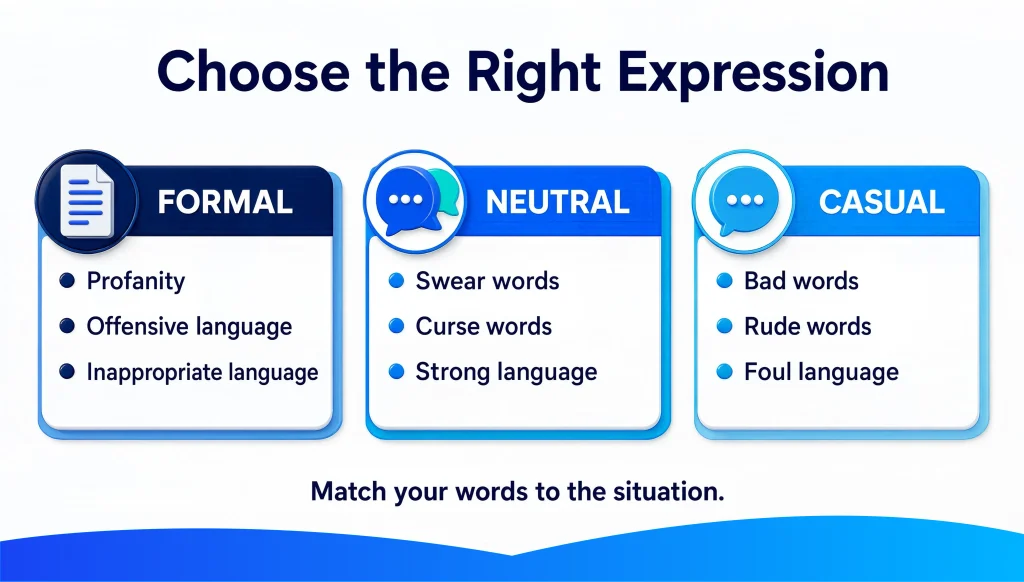
Using a different expression can make your writing clearer and better suited to the situation. The right term can also help you discuss sensitive language without sounding overly casual.
- Avoid repetition: Use different wording when discussing profanity several times.
- Sound more natural: Choose expressions that fit everyday American English.
- Match the situation: Formal writing often requires more neutral terminology.
- Improve professional communication: Precise wording works better in reports, policies, and workplace discussions.
- Express the right meaning: Some terms describe profanity, while others emphasize offensiveness or vulgarity.
10 Best Other Ways to Say “Bad Words”
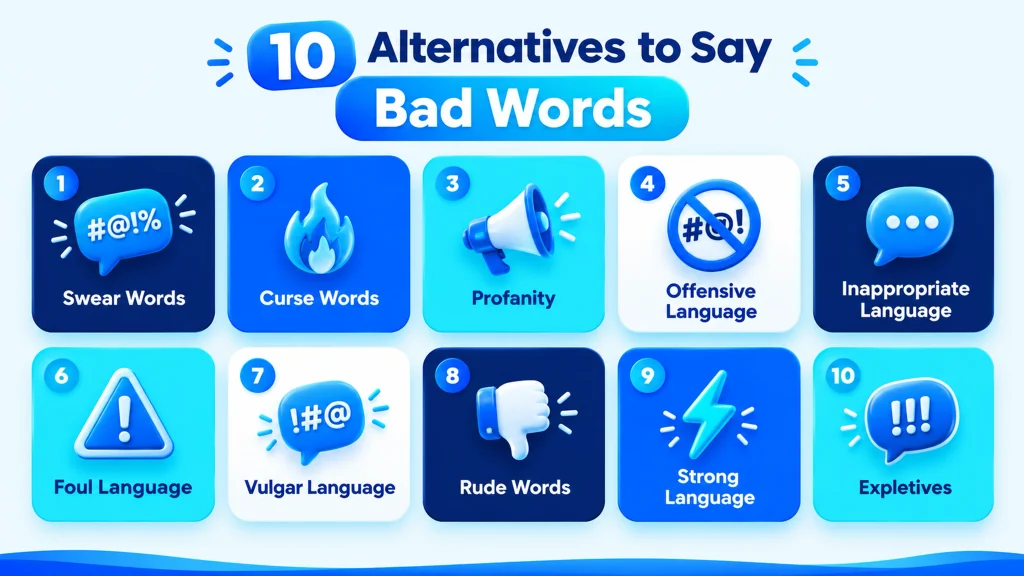
1. Swear Words
Meaning
Swear words is one of the most common alternatives to “bad words” in everyday American English. It generally refers to words or expressions considered rude, offensive, or inappropriate in certain situations.
Best For
- Casual
- Friendly
- Everyday conversation
Example 1
“Please avoid using swear words around the younger children.”
Example 2
“The movie contains several swear words that some viewers may find offensive.”
Quick Tip
Use “swear words” when you want a familiar, straightforward phrase that most people will understand immediately.
2. Curse Words
Meaning
Curse words is another common term for offensive or profane language. It can also refer to words traditionally associated with cursing or expressing strong anger.
Best For
- Casual
- Friendly
- Everyday conversation
Example 1
“My parents taught me not to use curse words when I was upset.”
Example 2
“The character uses curse words throughout the scene.”
Quick Tip
“Curse words” is especially natural when talking about language in movies, television, books, or casual conversations.
3. Profanity
Meani ng
Profanity is a more neutral and formal term for language that is considered offensive, disrespectful, or socially inappropriate. It is widely used in journalism, education, workplace policies, and discussions about language.
Best For
- Professional
- Formal
- Polite
Example 1
“The company’s employee handbook prohibits profanity in the workplace.”
Example 2
“The article discusses how profanity has changed in American popular culture.”
Quick Tip
Choose “profanity” when you need a professional or objective way to discuss bad language.
4. Offensive Language
Meaning
Offensive language focuses on the effect words can have on other people. It can include profanity, insults, slurs, or other expressions that may be disrespectful or hurtful.
Best For
- Professional
- Formal
- Polite
Example 1
“The school has a policy against offensive language during class.”
Example 2
“Employees should report offensive language that creates a hostile work environment.”
Quick Tip
Use this phrase when the important issue is that the language may offend, insult, or upset someone.
5. Vulgar Language
Meaning
Vulgar language describes words or expressions that are considered crude, indecent, or lacking social refinement. It often refers to language that people avoid in polite or formal settings.
Best For
- Formal
- Professional
- Polite
Example 1
“The teacher asked the students to avoid vulgar language during the presentation.”
Example 2
“The review mentions that the comedy relies heavily on vulgar language.”
Quick Tip
“Vulgar language” works well when you want to emphasize that certain expressions are crude rather than simply offensive.
6. Inappropriate Language
Meaning
Inappropriate language is a broad and polite expression for words that do not fit a particular setting, audience, or situation. It does not necessarily mean the words are offensive everywhere.
Best For
- Professional
- Formal
- Polite
Example 1
“The manager reminded everyone to avoid inappropriate language during customer calls.”
Example 2
“Some of the student’s comments were considered inappropriate language for the classroom.”
Quick Tip
Use this phrase when context matters and you want to avoid directly labeling specific words as offensive.
7. Strong Language
Meaning
Strong language is a softer way to refer to profanity or emotionally intense expressions. It is often used in movie ratings, book reviews, entertainment descriptions, and polite conversations.
Best For
- Formal
- Polite
- Friendly
Example 1
“The film contains strong language and may not be suitable for young children.”
Example 2
“The novel uses strong language to show the character’s frustration.”
Quick Tip
“Strong language” is a good choice when you want to mention profanity without using a harsh or judgmental description.
8. Foul Language
Meaning
Foul language is an informal expression for rude, offensive, or profane speech. It often describes someone who regularly uses inappropriate words.
Best For
- Casual
- Friendly
- Polite
Example 1
“The coach asked the players to stop using foul language on the field.”
Example 2
“His foul language made the conversation uncomfortable for everyone.”
Quick Tip
Use “foul language” in casual writing or conversation, but choose “profanity” for more formal contexts.
9. Obscene Language
Meaning
Obscene language refers to expressions considered extremely offensive, indecent, or unacceptable by social or legal standards in certain contexts. The term is stronger and more specific than simply saying “bad words.”
Best For
- Formal
- Professional
- Polite
Example 1
“The website’s rules prohibit obscene language in public comments.”
Example 2
“The editor removed several examples of obscene language from the article.”
Quick Tip
Use “obscene language” carefully because it can suggest a stronger level of offensiveness than ordinary profanity.
10. Rude Language
Meaning
Rude language is a broad, easy-to-understand phrase for words or expressions that show poor manners or disrespect. It can include profanity but may also describe insults or unnecessarily harsh comments.
Best For
- Casual
- Friendly
- Polite
Example 1
“Please don’t use rude language when speaking to customer service staff.”
Example 2
“The parent explained why rude language can hurt other people’s feelings.”
Quick Tip
Choose “rude language” when you want to focus on manners and respect rather than profanity itself.
Comparison Table
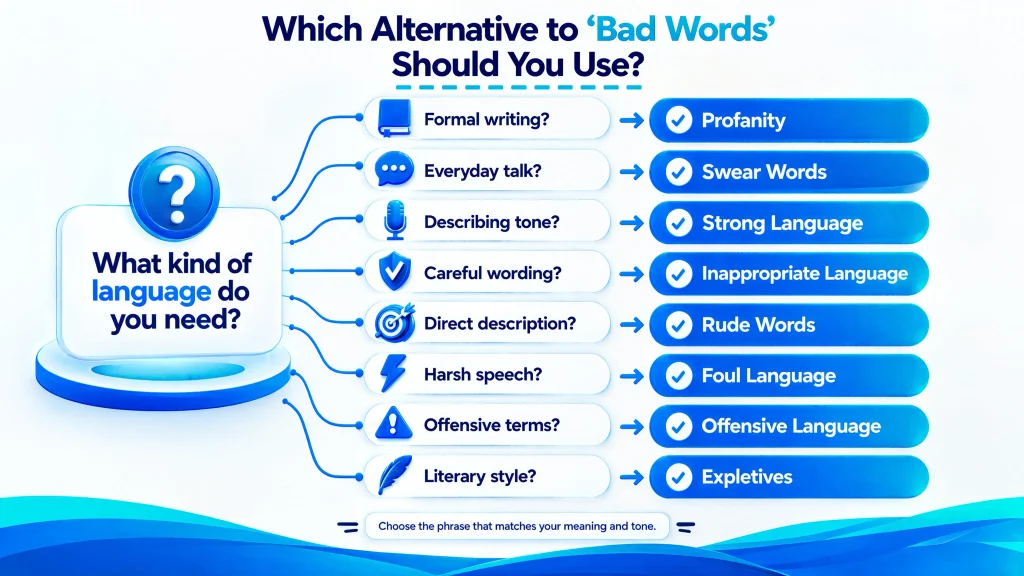
| Alternative | Best Used In | Tone |
| Swear words | Everyday conversation | Casual |
| Curse words | Casual conversations, entertainment | Casual |
| Profanity | Workplace, education, formal writing | Neutral |
| Offensive language | Policies, professional discussions | Formal |
| Vulgar language | Reviews, formal discussions | Formal |
| Inappropriate language | Schools, workplaces, polite discussions | Polite |
| Strong language | Movies, books, reviews | Neutral |
| Foul language | Everyday conversation | Casual |
| Obscene language | Formal or serious contexts | Strong |
| Rude language | Everyday discussions about manners | Polite |
Common Mistakes
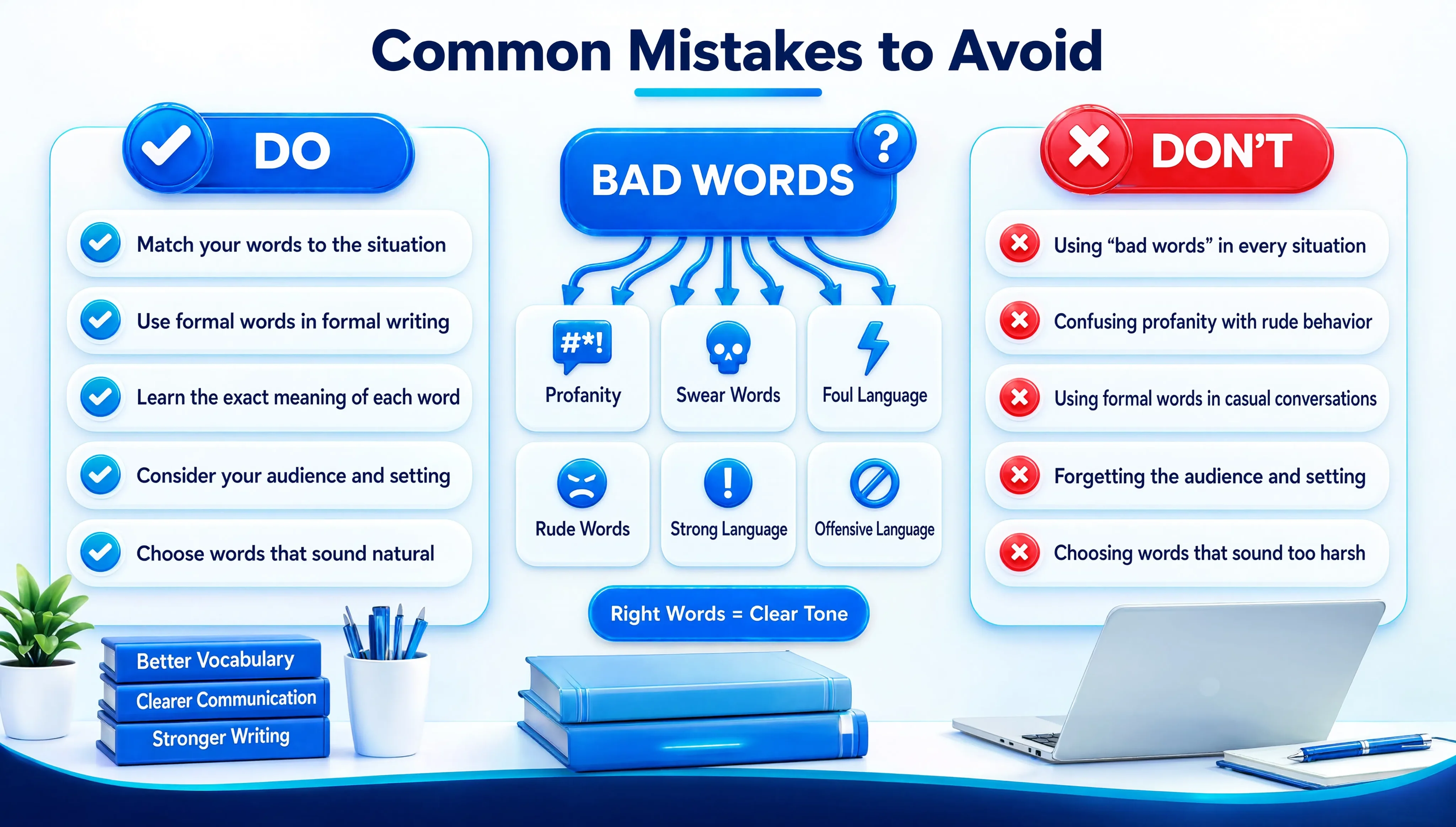
1. Using Casual Phrases in Professional Writing
Words such as “bad words” or “swear words” may sound too informal in a report, policy, or business document. “Profanity” or “offensive language” is usually a better fit.
2. Choosing an Overly Formal Expression
The opposite problem can also make writing sound unnatural. Saying “obscene language” during a casual conversation may sound unnecessarily serious.
3. Treating Every Term as Identical
These expressions have slightly different meanings. Profanity focuses on profane language, while offensive language can include insults or other harmful expressions.
4. Forgetting the Audience
A phrase that works for adults may not be the best choice when speaking with children. Consider the listener before selecting your wording.
5. Sounding Judgmental
Calling someone’s speech “obscene” or “vulgar” can sound stronger than intended. If you simply need a neutral description, “strong language” or “inappropriate language” may work better.
Frequently Asked Questions
What is another word for bad words?
Common alternatives include swear words, curse words, profanity, offensive language, vulgar language, inappropriate language, strong language, foul language, obscene language, and rude language. The best choice depends on context. “Profanity” is generally more formal, while “swear words” and “curse words” are more natural in everyday American English.
What is a polite way to say bad words?
A polite way to refer to bad words is “inappropriate language,” “strong language,” or “offensive language.” These phrases allow you to discuss profanity without sounding overly harsh or judgmental. “Strong language” is particularly useful when talking about movies, television shows, books, or other entertainment.
What is a professional word for bad words?
Profanity is one of the best professional alternatives to “bad words.” Depending on the situation, offensive language and inappropriate language can also work well. These terms are commonly suited to workplace policies, school rules, reports, articles, and other formal communication.
Are swear words and curse words the same?
In everyday American English, swear words and curse words are usually used to mean the same thing: offensive or inappropriate words. However, “curse” can sometimes have an additional meaning related to wishing harm or invoking a supernatural curse, depending on the context.
What is a nicer way to say swear words?
You can use “strong language,” “inappropriate language,” or “offensive language” instead of “swear words.” These expressions sound softer and more neutral. For example, a movie review might say that a film “contains strong language” rather than directly referring to its swear words.
What is the difference between profanity and vulgar language?
Profanity generally refers to language considered offensive, especially language involving religious or socially taboo expressions. Vulgar language is broader and emphasizes crude, indecent, or socially unacceptable speech. The two terms can overlap, but they are not always interchangeable.
What is another way to say bad language?
Another way to say bad language is profanity, swear words, curse words, foul language, vulgar language, offensive language, or strong language. “Bad language” is common in everyday speech, while “profanity” is more precise for formal and professional writing.
How should I describe bad words in a school or workplace policy?
For a school or workplace policy, “profanity,” “offensive language,” or “inappropriate language” are usually the clearest choices. These terms sound objective and professional. They also allow the policy to address a wider range of inappropriate speech without relying on informal wording such as “bad words.”
Conclusion
There are many useful alternatives to “bad words,” and the best one depends on your audience and purpose. For everyday conversation, swear words and curse words sound natural and familiar. For professional or educational writing, profanity, offensive language, and inappropriate language provide a more neutral tone.
If you want a softer expression, strong language can mention profanity without sounding judgmental. Meanwhile, vulgar language, foul language, and obscene language can communicate stronger or more specific meanings.
The key is to choose wording that accurately reflects the situation. Instead of automatically replacing “bad words” with the most formal option, consider whether you are describing profanity, rudeness, offensiveness, or language that simply does not fit the setting.