

Another way to say “pick your brain” is “get your perspective,” “ask for your advice,” or “learn from your experience.” In professional settings, phrases like “I’d value your input” and “Could I get your thoughts on this?” sound polite and respectful. Choose a phrase that fits your relationship, purpose, and the time you’re asking someone to share.
Key Takeaways
- “Pick your brain” means asking someone to share their knowledge, experience, or ideas.
- “Get your perspective” and “I’d value your input” work well in professional settings.
- “Ask for your advice” is a clear choice when you need guidance or a recommendation.
- Casual phrases such as “get your take” work best with people you know.
- Respect the other person’s time by explaining your question and asking when they’re available.
What Does “Pick Your Brain” Mean?

“Pick your brain” is an informal American English expression that means asking someone to share their knowledge, experience, ideas, or opinions. People often use it when they want advice from someone with useful skills or firsthand experience.
For example, a new employee might ask a senior coworker to discuss a project, or a business owner might contact an experienced marketer for ideas. The phrase is common in workplace conversations, networking messages, mentorship requests, and friendly discussions.
Although it usually sounds friendly, the expression can sometimes feel vague. Someone may wonder how much time the conversation will take or what kind of help you expect. A more specific phrase can make your request clearer and more considerate.
Why Use Other Ways to Say “Pick Your Brain”?

Choosing a different expression helps you communicate your purpose and respect the other person’s time. It also allows you to match your language to the situation.
Here are a few benefits:
- Avoid repetition: Use varied language in emails, meetings, and conversations.
- Sound more professional: Choose wording that suits a client, manager, or industry expert.
- Make your request clear: Explain whether you need advice, feedback, ideas, or a quick answer.
- Build stronger relationships: Show that you value the other person’s knowledge.
- Respect their schedule: Make it easy for them to accept, decline, or suggest another time.
12 Best Other Ways to Say “Pick Your Brain”

1. Get Your Perspective
Meaning
“Get your perspective” means asking someone how they view a situation or problem. It invites them to share their opinion without suggesting that you expect them to solve everything.
Best For: Professional, Polite, Friendly
Example 1: I’d love to get your perspective on our new customer onboarding process.
Example 2: Could we schedule a short call so I can get your perspective on the proposal?
Quick Tip: Use this phrase when you want an experienced person’s viewpoint rather than a definite answer.
2. Ask for Your Advice
Meaning
“Ask for your advice” is a direct way to request guidance or a recommendation. It works when someone has experience that could help you make a decision.
Best For: Professional, Formal, Polite
Example 1: I’d like to ask for your advice before I accept the job offer.
Example 2: May I ask for your advice on handling this client concern?
Quick Tip: Briefly explain the decision you’re facing so the person knows what kind of advice you need.
3. Get Your Thoughts
Meaning
“Get your thoughts” means asking someone what they think about an idea, plan, or situation. It feels conversational while remaining suitable for many workplace interactions.
Best For: Professional, Friendly, Polite
Example 1: When you have a moment, I’d love to get your thoughts on these homepage designs.
Example 2: Could I get your thoughts on the agenda before I send it to the team?
Quick Tip: This phrase works especially well when sharing a document, draft, or proposal for review.
4. Learn From Your Experience
Meaning
“Learn from your experience” emphasizes the knowledge someone has gained through past work or personal experiences. It shows respect for what they have learned and makes your reason for reaching out clear.
Best For: Professional, Formal, Warm
Example 1: As I prepare to manage my first large project, I’d appreciate the chance to learn from your experience.
Example 2: Your years in sales would make it valuable for me to learn from your experience with difficult negotiations.
Quick Tip: Mention the specific experience you admire to make your request feel genuine.
5. Get Your Input
Meaning
“Get your input” means inviting someone to contribute ideas, suggestions, or feedback. It is common in workplaces where people collaborate on decisions or improve a project together.
Best For: Professional, Formal, Polite
Example 1: Before we finalize the campaign, I’d like to get your input on the messaging.
Example 2: We’re reviewing the hiring process and would welcome your input on the proposed changes.
Quick Tip: Use this phrase when the other person’s contribution may influence the final decision.
6. Pick Your Thoughts on This
Meaning
“Pick your thoughts on this” is not a natural standard expression in American English. If you mean asking someone for an opinion, say “get your thoughts on this” instead. The corrected version sounds clear and natural in everyday and workplace communication.
Best For: Casual, Friendly
Example 1: Can I get your thoughts on this new pricing idea before I share it with the team?
Example 2: I’d love to get your thoughts on the photos I selected for the website.
Quick Tip: Avoid “pick your thoughts on this.” Use “get your thoughts on this” or “hear your thoughts on this” instead.
7. Tap Into Your Expertise
Meaning
“Tap into your expertise” means drawing on someone’s specialized knowledge to understand a topic or solve a problem. It recognizes that the person has skills or experience that may be useful to your work.
Best For: Professional, Formal, Warm
Example 1: We’d like to tap into your expertise in accessibility before launching the new website.
Example 2: Could our team tap into your expertise on international market research?
Quick Tip: Reserve this phrase for situations where the person has relevant knowledge; otherwise, it can sound overly grand.
8. Get Your Take
Meaning
“Get your take” is a relaxed way to ask for someone’s opinion or interpretation. It is common in American conversations and works well when you want an honest reaction rather than formal feedback.
Best For: Casual, Friendly
Example 1: I’d like to get your take on the latest changes to the project timeline.
Example 2: Before I book the venue, can I get your take on the two options?
Quick Tip: Use it with coworkers, friends, or familiar contacts rather than in a highly formal introduction.
9. Seek Your Guidance
Meaning
“Seek your guidance” communicates that you want direction from someone whose judgment you respect. It sounds more formal than “ask for your advice” and can suit mentorship or career-related requests.
Best For: Formal, Professional, Polite
Example 1: I’m exploring a career change and would be grateful for an opportunity to seek your guidance.
Example 2: Our department hopes to seek your guidance as we develop the training plan.
Quick Tip: Pair this phrase with a focused question to avoid making the request feel too broad.
10. Run Something by You
Meaning
“To run something by you” means presenting an idea or decision to someone to hear their reaction. It usually suggests a brief conversation, making it useful for everyday collaboration.
Best For: Casual, Professional, Friendly
Example 1: Could I run a possible change to the project schedule by you this afternoon?
Example 2: I have an idea for the newsletter layout that I’d like to run by you.
Quick Tip: This phrase works best when you already have a proposal or idea to discuss.
11. Pick Your Knowledge
Meaning
“Pick your knowledge” is not a common or natural English expression. If you want to learn from what someone knows, say “draw on your knowledge” or “learn from your expertise.” These alternatives communicate the intended meaning without awkward wording.
Best For: Professional, Formal
Example 1: I’d appreciate the chance to draw on your knowledge of the local market.
Example 2: Our new team members can learn from your expertise in quality assurance.
Quick Tip: Avoid “pick your knowledge” in professional writing; choose “draw on your knowledge” instead.
12. Ask You a Few Questions
Meaning
“Ask you a few questions” is a straightforward way to request someone’s time and knowledge. It makes your intention clear and can feel less demanding than asking to “pick their brain,” especially when you explain the topic beforehand.
Best For: Professional, Polite, Friendly
Example 1: Would you have 10 minutes this week for me to ask you a few questions about your design workflow?
Example 2: I’m researching graduate programs and hoped I could ask you a few questions about your experience.
Quick Tip: Estimate the time needed and mention your topic so the person can decide whether they are available.
Comparison Table
| Alternative | Best Used In | Tone |
|---|---|---|
| Get your perspective | Discussions and decisions | Professional, thoughtful |
| Ask for your advice | Guidance and recommendations | Respectful, direct |
| Get your thoughts | Drafts and ideas | Conversational, polite |
| Learn from your experience | Mentorship and career discussions | Appreciative, warm |
| Get your input | Team projects and collaboration | Professional, inclusive |
| Get your thoughts on this | Informal feedback requests | Casual, friendly |
| Tap into your expertise | Specialized work questions | Professional, respectful |
| Get your take | Everyday discussions | Relaxed, conversational |
| Seek your guidance | Mentorship and formal requests | Formal, respectful |
| Run something by you | Reviewing an idea | Casual, collaborative |
| Draw on your knowledge | Research and problem-solving | Professional, formal |
| Ask you a few questions | Interviews and short conversations | Clear, considerate |
Common Mistakes
1. Using Casual Language in Formal Emails
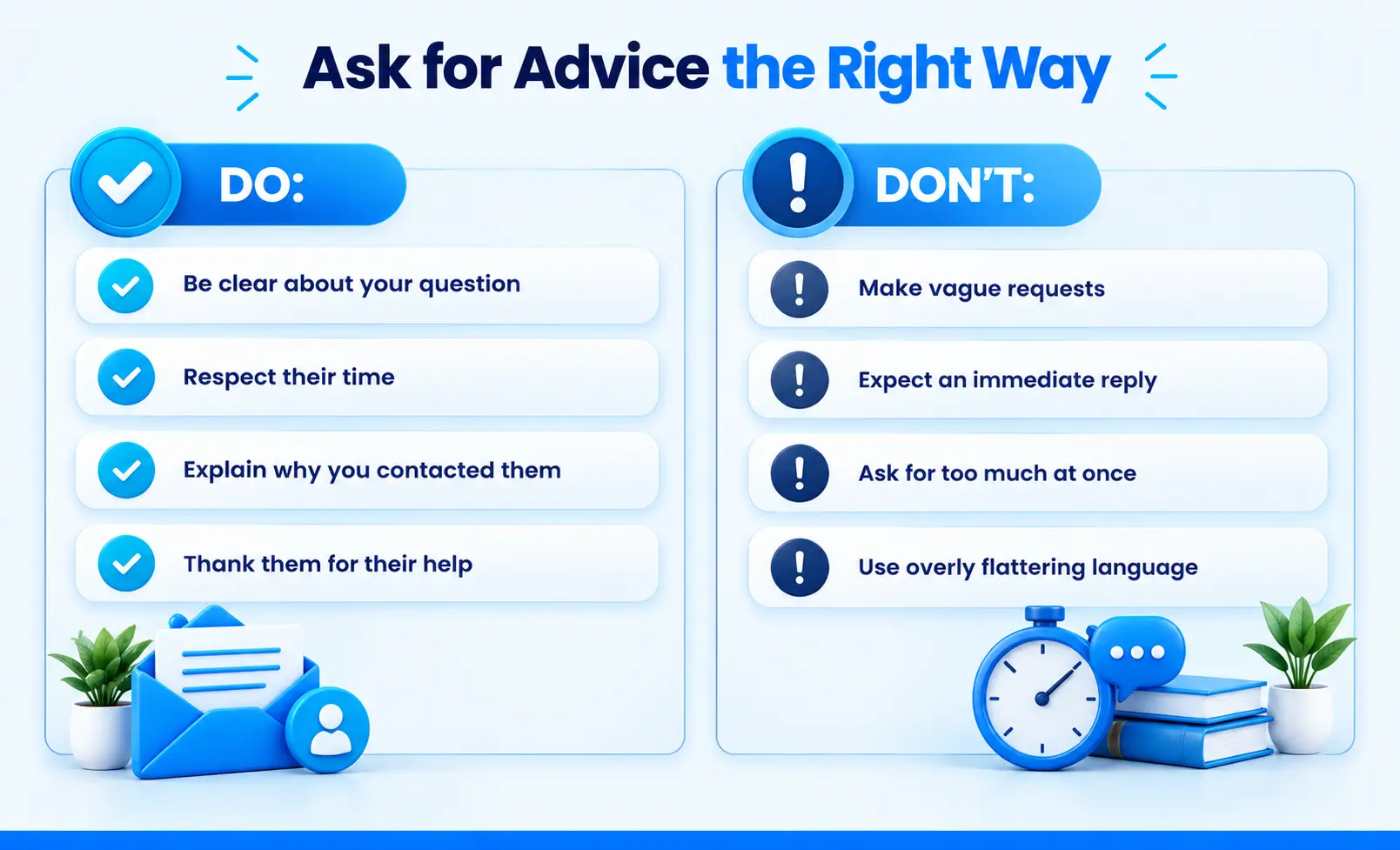
“Pick your brain” can sound too informal when contacting a senior executive, potential client, or unfamiliar professional. Choose “I’d value your perspective” or “I’d appreciate your advice” to establish a respectful tone.
2. Making the Request Too Vague
Asking to discuss a topic without explaining your goal leaves the other person guessing. Mention your question, project, or decision so they can judge whether they are the right person to help.
3. Choosing Overly Formal Language
Formal phrases are not always better. Saying “I humbly seek your esteemed guidance” in a casual message can sound stiff or insincere. Use simple language that fits your relationship.
4. Forgetting to Respect Their Time
A broad request may sound like an invitation to an open-ended conversation. Ask for 10 or 15 minutes, offer a few possible times, or let the person suggest a convenient option.
5. Sounding Insincere or Expecting Free Work
Do not flatter someone only because you want something from them. Explain why their experience is relevant, ask a focused question, and thank them for any help they can offer.
Frequently Asked Questions
1. What is another way to say “pick your brain”?
You can say “get your perspective,” “ask for your advice,” “get your thoughts,” or “learn from your experience.” The best choice depends on your goal. Use “get your perspective” for an opinion, “ask for your advice” for guidance, and “learn from your experience” when you want to understand lessons someone has gained over time.
2. What is a professional way to say “pick your brain”?
“I’d value your input” and “I’d appreciate your perspective” are strong professional alternatives. They show respect without sounding demanding. For example, you could write, “I’d value your input on our proposed marketing strategy. Would you have 15 minutes to discuss it next week?” This approach states your purpose and gives the other person a clear time frame.
3. How do you politely ask someone to pick their brain over email?

Start with a friendly greeting, explain why you’re contacting them, and ask for a short conversation. For example, “Hi Jordan, I admire your experience in product design and would appreciate your perspective on a career question. Would you be available for a brief 15-minute call sometime next week?” Make it easy for them to decline or suggest another time.
4. Is “pick your brain” professional?
Yes, it can be appropriate in many workplaces, especially when speaking with coworkers or people you know. However, it is informal and may sound vague in a first email to a senior leader or potential client. In those situations, “get your perspective” or “ask for your advice” usually communicates your intention more clearly.
5. Is “pick your brain” rude?
The phrase is not inherently rude, but the way you use it matters. Someone may feel that you expect free advice or a long conversation without considering their schedule. Explain what you need, keep the request focused, and ask whether they have time. A polite, specific request is less likely to create that impression.
6. What is a casual alternative to “pick your brain”?
“Get your take,” “hear your thoughts,” and “run something by you” are natural casual alternatives. You might say, “Can I get your take on this new idea?” when speaking with a friend or familiar coworker. These expressions work best when you want a quick reaction rather than a formal meeting or detailed consultation.
7. How do you ask an expert for advice without sounding demanding?
Show why you chose that person, state your question clearly, and respect their availability. You could write, “Your experience with small-business marketing would be helpful as I plan my first campaign. If you have time, I’d appreciate your advice on choosing a target audience.” This approach acknowledges their expertise while leaving the decision to respond entirely up to them.
8. What should you say instead of “pick your brain” on LinkedIn?
On LinkedIn, use “I’d appreciate your perspective,” “I’d love to learn from your experience,” or “I’d value your advice.” Keep your message brief and explain the connection between their experience and your question. If you want a call, suggest a short conversation and a flexible time frame rather than assuming they can meet.
Conclusion
Finding another way to say “pick your brain” helps you communicate with greater clarity and confidence. Although the original expression is common in American English, a more specific phrase can better match your purpose and relationship with the person you’re contacting.
For professional emails, “I’d value your input” and “I’d appreciate your perspective” are respectful choices. If you need a recommendation, “ask for your advice” makes your goal clear. For casual conversations, “get your take” or “run something by you” sounds natural and friendly.
Remember that the best phrase is not always the most formal one. It is the one that explains what you need while respecting the other person’s time. Whenever possible, share your topic, ask a focused question, and suggest a short conversation. A thoughtful request makes it easier for someone to understand how they can help—and to respond comfortably.

The Majestic Studio Editorial Team creates practical resources about synonyms, alternative phrases, vocabulary, and English usage. Our content is designed to help readers choose clearer, more natural words and communicate effectively in everyday, professional, and academic contexts.
Each article is researched, edited, and reviewed for clarity, context, usefulness, and language accuracy. We regularly update our content to keep examples and recommendations relevant.