

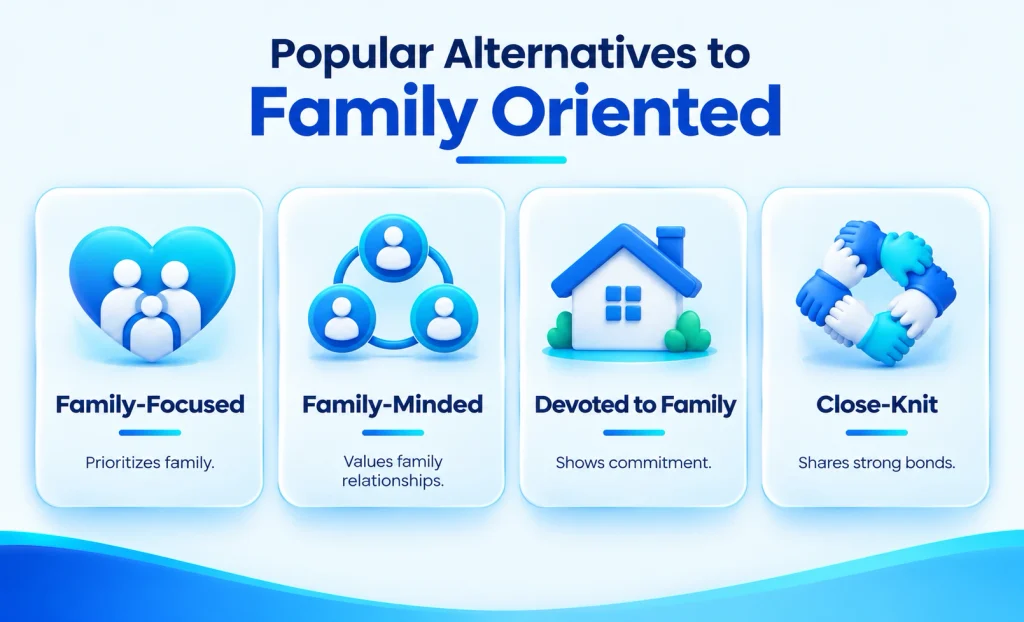
Another way to say family oriented is family-focused, family-minded, family-centered, or devoted to family. These phrases describe someone who values family relationships, makes time for loved ones, and considers family an important part of life. The best alternative depends on the context, whether you are writing a dating profile, describing someone’s personality, or creating a professional bio.
Key Takeaways
- Family-focused is a natural, versatile alternative for everyday conversations and personal descriptions.
- Family-minded emphasizes values and attitudes toward family life.
- Devoted to family highlights love, commitment, and responsibility.
- Family-centered works well when family plays a central role in someone’s decisions.
- Choose your wording based on the audience, tone, and specific quality you want to express.
What Does “Family Oriented” Mean?

The phrase family oriented describes someone who values family relationships and makes loved ones an important part of their life. A family-oriented person may prioritize spending time with relatives, supporting children, caring for parents, and maintaining close family connections.
People commonly use this expression in dating profiles, personal biographies, job introductions, and conversations about values. It can also describe activities, communities, or businesses that welcome and support families.
For example, someone might say, “I’m family oriented because I enjoy Sunday dinners with my parents and siblings.” The phrase communicates that family relationships matter to that person, although it does not mean everyone must follow the same family structure or lifestyle.
Why Use Other Ways to Say “Family Oriented”?

Although family oriented is clear and familiar, using different expressions can help you communicate more naturally. The right alternative can make a personal description warmer, more specific, or better suited to a professional setting.
Consider using another phrase to:
- Avoid repetition: Keep your writing fresh when describing family values more than once.
- Sound more natural: Use conversational wording in texts, profiles, and introductions.
- Show your specific values: Emphasize loyalty, caregiving, togetherness, or commitment.
- Match the situation: Choose wording that fits a dating profile, workplace bio, or family introduction.
- Express warmth: Communicate affection and appreciation without relying on a broad label.
15 Best Other Ways to Say “Family Oriented”
1. Family-Focused
Meaning: Family-focused describes someone who gives family relationships considerable attention and importance. It is a flexible expression that works in both personal and professional contexts.
Best For: Professional, Friendly, Formal
Example 1: Our company offers flexible schedules for employees who are family-focused.
Example 2: I’m a family-focused person who enjoys spending weekends with my children.
Quick Tip: Use this phrase when you want a direct, modern alternative that sounds natural in a biography or introduction.
2. Family-Minded
Meaning: Family-minded describes someone whose attitudes and decisions reflect strong family values. It suggests that the person considers the needs and well-being of loved ones when making choices.
Best For: Casual, Friendly, Warm
Example 1: He’s family-minded and always checks in on his parents.
Example 2: I’m looking for a family-minded partner who shares my long-term goals.
Quick Tip: This expression works especially well when discussing personality, relationships, or compatibility.
3. Family-Centered
Meaning: Family-centered means that family life occupies a central place in someone’s priorities. It often suggests that important decisions, traditions, and activities revolve around maintaining strong family connections.
Best For: Formal, Professional, Warm
Example 1: They created a family-centered routine that gives everyone time to connect.
Example 2: Her family-centered approach helps relatives feel included in important decisions.
Quick Tip: Choose this phrase when family is a central part of someone’s lifestyle rather than simply one of several interests.
4. Devoted to Family
Meaning: Someone devoted to family shows strong commitment, care, and affection toward loved ones. This expression emphasizes dedication and the effort a person makes to maintain meaningful relationships.
Best For: Warm, Friendly, Formal
Example 1: She is devoted to her family and makes time for every important milestone.
Example 2: His friends admire how devoted he is to his children.
Quick Tip: Use this wording when you want to highlight commitment rather than just general family preferences.
5. Family Comes First
Meaning: This expression means that family is a top priority in someone’s life. It communicates a strong preference for protecting family time and supporting loved ones when responsibilities compete.
Best For: Casual, Warm, Friendly
Example 1: For me, family comes first, especially when someone needs support.
Example 2: He lives by the belief that family comes first, even during busy seasons at work.
Quick Tip: This phrase is personal and emphatic, so use it when you genuinely want to express a clear priority.
6. Close-Knit
Meaning: Close-knit describes a family or group whose members share strong bonds and support one another. When describing a person, it often refers to someone who maintains close relationships with relatives.
Best For: Friendly, Warm, Casual
Example 1: I grew up in a close-knit family where everyone helped each other.
Example 2: She comes from a close-knit family that gathers for every holiday.
Quick Tip: This phrase works best when emphasizing strong relationships and togetherness, not simply someone’s interest in family life.
7. Family-First
Meaning: Family-first describes a person who places family needs and relationships high on their list of priorities. It is a concise expression often used in personal introductions, social media bios, and informal conversations.
Best For: Casual, Friendly, Warm
Example 1: I’m a family-first person who enjoys cooking dinner for everyone at home.
Example 2: His family-first attitude shapes how he manages his time.
Quick Tip: Use it in short bios or informal descriptions where concise wording matters.
8. Committed to Family Life
Meaning: This phrase describes someone who actively invests time and effort in building a satisfying family life. It can refer to parenting, maintaining a household, supporting relatives, or nurturing long-term relationships.
Best For: Formal, Professional, Warm
Example 1: She is committed to family life while continuing to grow in her career.
Example 2: We want a partner who is committed to family life and shared responsibilities.
Quick Tip: This is a useful choice when discussing long-term goals, serious relationships, or personal values.
9. Values Family Time
Meaning: Someone who values family time considers shared moments with loved ones important. The phrase focuses on spending time together rather than making assumptions about someone’s entire lifestyle.
Best For: Friendly, Casual, Professional
Example 1: I value family time, so I keep Sunday afternoons free whenever possible.
Example 2: Our manager values family time and encourages employees to maintain healthy boundaries.
Quick Tip: Choose this phrase when you want to describe a specific habit or priority instead of using a broad personality label.
10. Caring and Supportive
Meaning: Caring and supportive describes someone who shows concern for loved ones and offers help when needed. Although it is not limited to family relationships, it can communicate the qualities that often make someone family oriented.
Best For: Warm, Friendly, Professional
Example 1: She’s caring and supportive, especially when her younger siblings need advice.
Example 2: I’m hoping to build a relationship with someone caring and supportive.
Quick Tip: Use this alternative when the person’s actions and emotional support matter more than traditional family roles.
11. Dedicated to Loved Ones
Meaning: Dedicated to loved ones highlights a person’s commitment to the people who matter most to them. The expression can include relatives, a partner, children, or chosen family.
Best For: Warm, Formal, Friendly
Example 1: He is dedicated to his loved ones and always makes time to listen.
Example 2: Her dedication to loved ones is clear in the way she offers help without being asked.
Quick Tip: This phrase is especially useful when you want inclusive wording that does not assume a particular family structure.
12. Values Strong Family Bonds
Meaning: This expression describes someone who appreciates trust, affection, and lasting connections among family members. It emphasizes the importance of relationships rather than the amount of time someone spends at home.
Best For: Formal, Warm, Professional
Example 1: Our family values strong family bonds and makes an effort to stay connected.
Example 2: He values strong family bonds and encourages his children to maintain relationships with their grandparents.
Quick Tip: Use this wording in essays, personal statements, or descriptions of family values.
13. Nurturing
Meaning: A nurturing person helps others feel cared for, encouraged, and supported. The word can describe a family-oriented personality, particularly when someone naturally creates a supportive home environment.
Best For: Warm, Friendly, Professional
Example 1: She has a nurturing personality and makes everyone feel welcome at home.
Example 2: His nurturing nature helps his children feel safe sharing their concerns.
Quick Tip: Choose this word when describing someone’s caring personality, but remember that it does not automatically mean the person prioritizes family above everything else.
14. Relationship-Oriented
Meaning: Relationship-oriented describes someone who values meaningful connections and puts effort into maintaining them. These relationships may include family, friends, romantic partners, and colleagues.
Best For: Professional, Formal, Friendly
Example 1: She is relationship-oriented and works hard to maintain trust with her relatives.
Example 2: We are looking for a relationship-oriented partner who appreciates honest communication.
Quick Tip: This alternative is broader than family oriented, so specify family when you want to make that meaning clear.
15. Rooted in Family Values
Meaning: Rooted in family values describes someone whose beliefs and choices are strongly influenced by the principles they learned or developed within their family. Those principles might include respect, responsibility, loyalty, or caring for others.
Best For: Formal, Warm, Professional
Example 1: His approach to parenting is rooted in family values and mutual respect.
Example 2: She is rooted in family values but welcomes new ideas and different perspectives.
Quick Tip: Use this expression when you want to emphasize guiding principles rather than simply describing a preference for family activities.

Comparison Table: 15 Alternatives to “Family Oriented”
| Alternative | Best Used In | Tone |
|---|---|---|
| Family-focused | Bios and everyday descriptions | Neutral |
| Family-minded | Dating profiles and conversations | Friendly |
| Family-centered | Personal and professional writing | Formal |
| Devoted to family | Personal descriptions | Warm |
| Family comes first | Conversations and social posts | Emphatic |
| Close-knit | Describing family relationships | Warm |
| Family-first | Short bios and introductions | Casual |
| Committed to family life | Long-term goals and relationships | Sincere |
| Values family time | Everyday conversations and workplace bios | Natural |
| Caring and supportive | Personality descriptions | Warm |
| Dedicated to loved ones | Personal statements | Heartfelt |
| Values strong family bonds | Essays and personal profiles | Thoughtful |
| Nurturing | Personality and parenting descriptions | Caring |
| Relationship-oriented | Professional and personal bios | Neutral |
| Rooted in family values | Personal statements and introductions | Reflective |
Common Mistakes When Using Alternatives to “Family Oriented”

Choosing the right phrase helps you describe your values clearly. Avoid these five common mistakes to make your writing more natural and meaningful.
1. Using Casual Phrases in Formal Writing
Expressions such as family comes first can sound too personal or emphatic in some professional documents. For a workplace bio or formal introduction, consider family-focused or values family relationships instead.
2. Choosing Overly Formal Language
Phrases such as committed to family life may sound stiff in a casual text or dating profile. In everyday conversations, family-minded or I value family time usually feels more natural.
3. Repeating the Same Phrase
Using family oriented several times in one paragraph can make your writing sound repetitive. Vary your wording with expressions such as devoted to family, caring and supportive, or values strong family bonds when they accurately describe the person.
4. Ignoring the Context
Not every alternative means exactly the same thing. For example, close-knit describes strong connections between people, while nurturing focuses on caring behavior. Choose a phrase that communicates the specific quality you want readers to understand.
5. Making Claims That Sound Insincere
Calling yourself devoted to family means more when your description reflects your actual priorities. Instead of listing several flattering labels, include a meaningful detail, such as enjoying regular family dinners or helping relatives when they need support.
Frequently Asked Questions
1. What is another word for family oriented?
Some useful alternatives are family-focused, family-minded, family-centered, and family-first. Other options include devoted to family, caring and supportive, and committed to family life. The best choice depends on what you want to emphasize, such as family values, emotional support, shared activities, or long-term commitment.
2. What is a more professional way to say family oriented?
Family-focused and values family relationships are professional, natural alternatives. You could write, “She values family relationships and believes in maintaining a healthy work-life balance.” These expressions communicate personal priorities without sounding overly casual or suggesting that family responsibilities affect someone’s professional ability.
3. How do you describe a family-oriented person?
You can describe a family-oriented person as caring, supportive, devoted to loved ones, or committed to maintaining strong family relationships. For a more specific description, mention observable habits, such as making time for relatives, supporting children, or maintaining meaningful family traditions.
4. What is another way to say family oriented on a dating profile?
Family-minded, looking for a meaningful relationship, and family is important to me are natural options for a dating profile. For example, “I’m family-minded, enjoy spending time with loved ones, and hope to build a lasting relationship.” This wording communicates your values without sounding too formal.
5. Is family-oriented the same as family-focused?
The two expressions are very similar. Both describe someone who gives family relationships significant importance. However, family-focused can sound more direct and modern, while family-oriented is a familiar general description. Neither phrase automatically tells you how someone handles family responsibilities or relationships in practice.
6. What is a positive word for someone who loves their family?
Devoted, caring, nurturing, and supportive are positive words for someone who loves their family. Each highlights a slightly different quality. For example, devoted emphasizes commitment, while nurturing describes someone who helps others feel cared for and encouraged.
7. How can I say family comes first without using that exact phrase?
You could say, “My loved ones are a top priority,” “I make time for the people I care about,” or “Family relationships are central to my life.” These alternatives express the same general idea while allowing you to choose a tone that feels more personal, thoughtful, or professional.
8. Can family oriented describe someone without children?
Yes. Being family oriented does not require having children or being married. Someone may value relationships with parents, siblings, cousins, grandparents, a partner, or chosen family. The phrase describes the importance a person places on family connections, not a specific household structure or stage of life.
Conclusion
Finding another way to say family oriented can help you describe personal values more clearly and naturally. Whether you’re writing a dating profile, updating a professional bio, or talking about someone you admire, the best expression depends on the message you want to communicate.
Choose family-focused for a versatile, everyday alternative, family-minded for conversations about personality and compatibility, or devoted to family when you want to emphasize commitment. If strong relationships are your main point, close-knit or values strong family bonds may be more precise. Meanwhile, caring and supportive works well when you want to highlight someone’s actions and personality.
Remember that these expressions have slightly different meanings, so consider your audience and context before choosing one. The best alternative is the one that accurately reflects how someone values, supports, and connects with the people who matter to them.

The Majestic Studio Editorial Team creates practical resources about synonyms, alternative phrases, vocabulary, and English usage. Our content is designed to help readers choose clearer, more natural words and communicate effectively in everyday, professional, and academic contexts.
Each article is researched, edited, and reviewed for clarity, context, usefulness, and language accuracy. We regularly update our content to keep examples and recommendations relevant.