

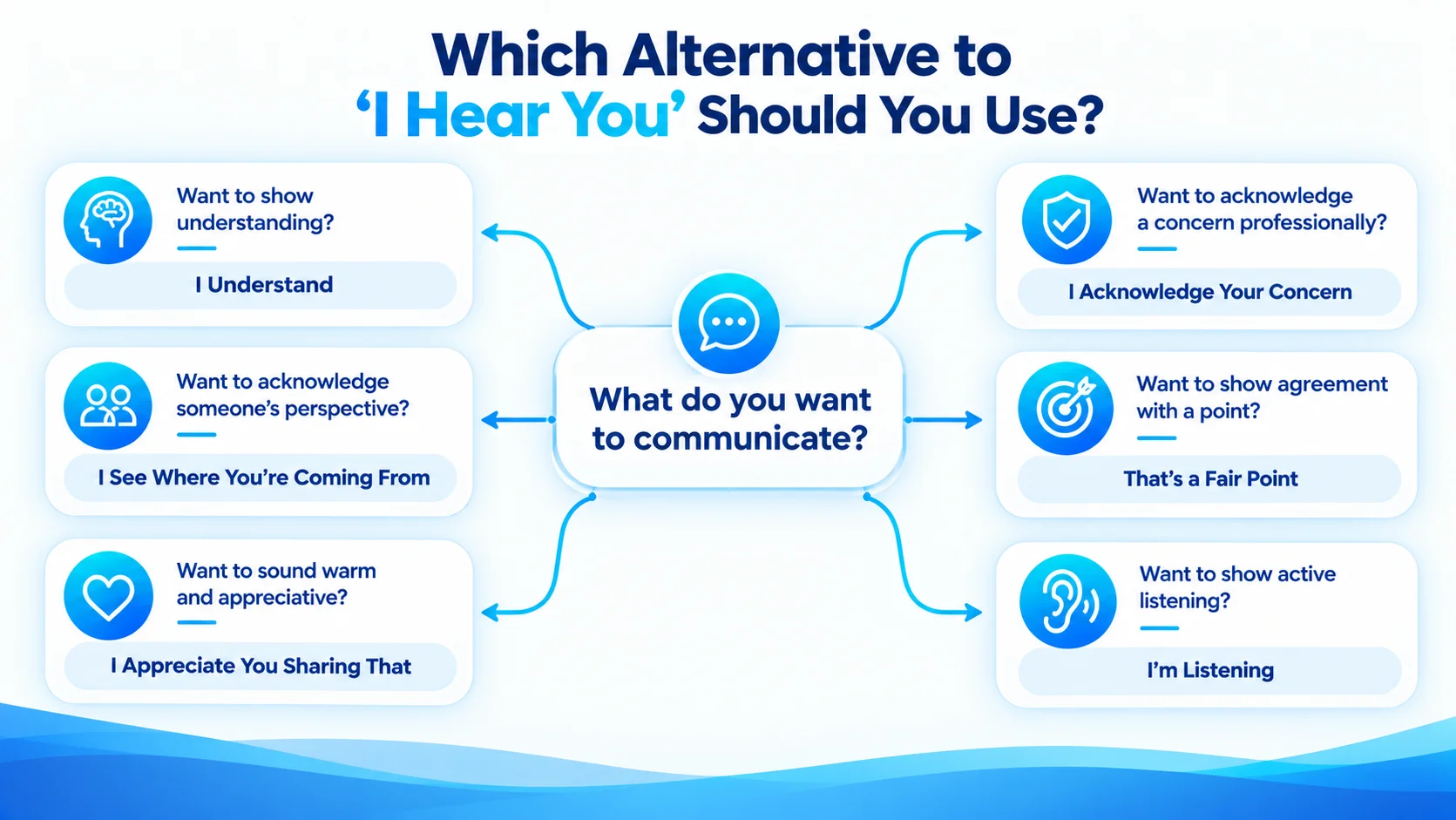
Another way to say “I hear you” includes “I understand,” “I see what you mean,” “That makes sense,” “I’m listening,” and “I see where you’re coming from.” The best choice depends on your purpose. Some phrases show empathy, while others acknowledge a point without necessarily meaning you agree with it.
Key Takeaways
- “I hear you” can show understanding, acknowledgment, empathy, or attention.
- Use “I understand” when you want a clear, neutral response.
- Use “I see where you’re coming from” to acknowledge someone’s perspective.
- Choose “I appreciate you sharing that” when you want to sound warm and respectful.
- In professional conversations, make your response specific instead of relying on a generic acknowledgment.
What Does “Another Way to Say I Hear You” Mean?
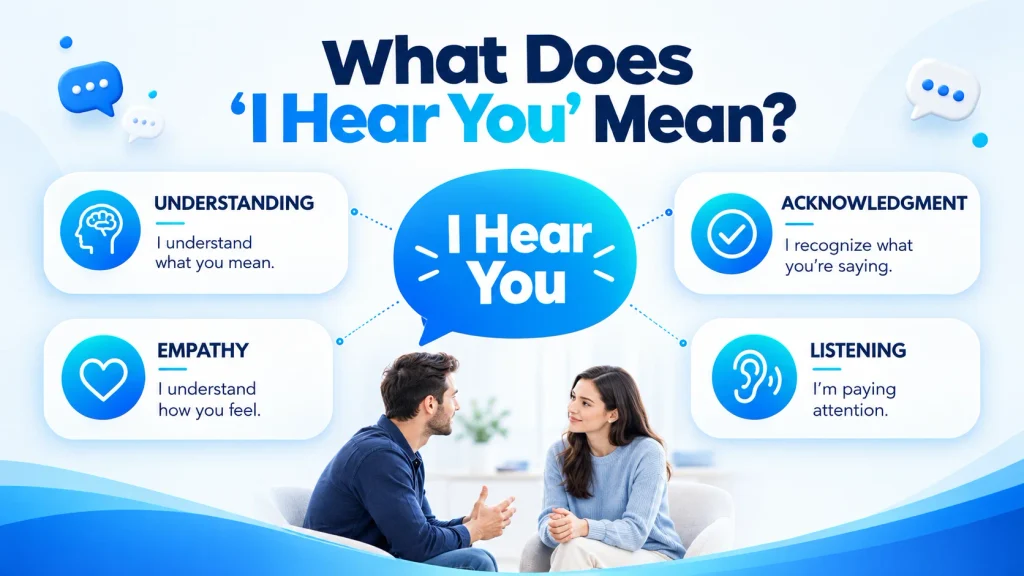
“I hear you” is commonly used to show that you are listening to someone and understand or recognize what they are saying. It can acknowledge a person’s feelings, concern, opinion, or point of view without necessarily meaning that you agree with them.
For example, someone might say, “I hear you, but we still need to meet the deadline.” Here, the speaker recognizes the concern but does not agree to change the deadline.
The phrase is common in everyday conversations, workplace discussions, customer service, and emotionally difficult situations. Because its meaning depends heavily on context and tone, choosing a more specific alternative can make your response clearer.
Why Use Other Ways to Say “I Hear You”?
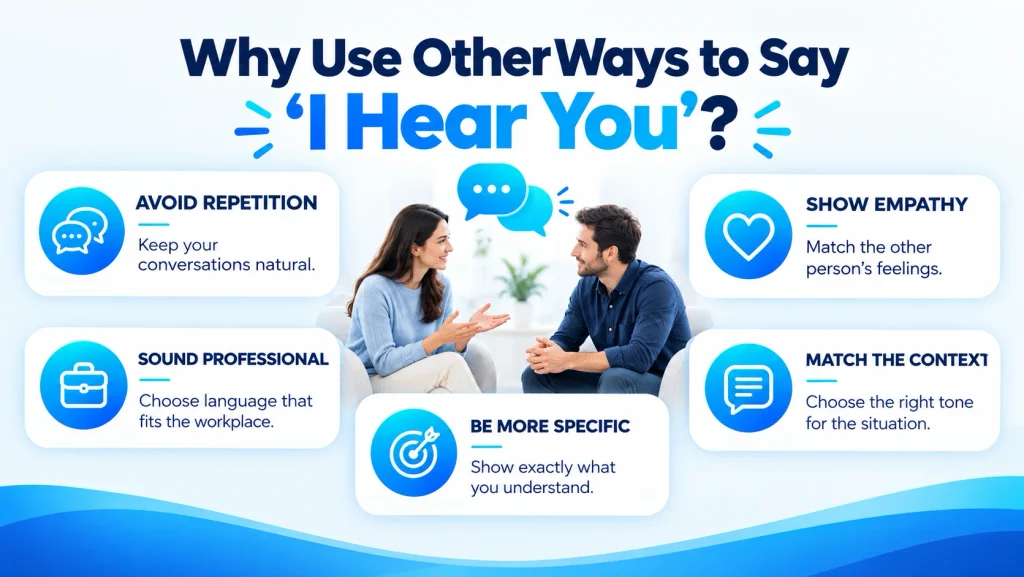
Different situations call for different kinds of acknowledgment. A friend may need empathy, while a coworker may need a professional response that clearly recognizes their point.
Using alternatives can help you:
- Avoid repetition when you use “I hear you” frequently.
- Sound more natural in everyday conversations.
- Show empathy when someone is discussing a difficult experience.
- Improve professional communication by making your response more specific.
- Avoid confusion between understanding someone and agreeing with them.
A useful rule is to choose a phrase based on what you actually want to communicate. Effective acknowledgment works best when your response shows that you understood the other person’s specific point rather than simply repeating a stock phrase.
10 Best Other Ways to Say “I Hear You”
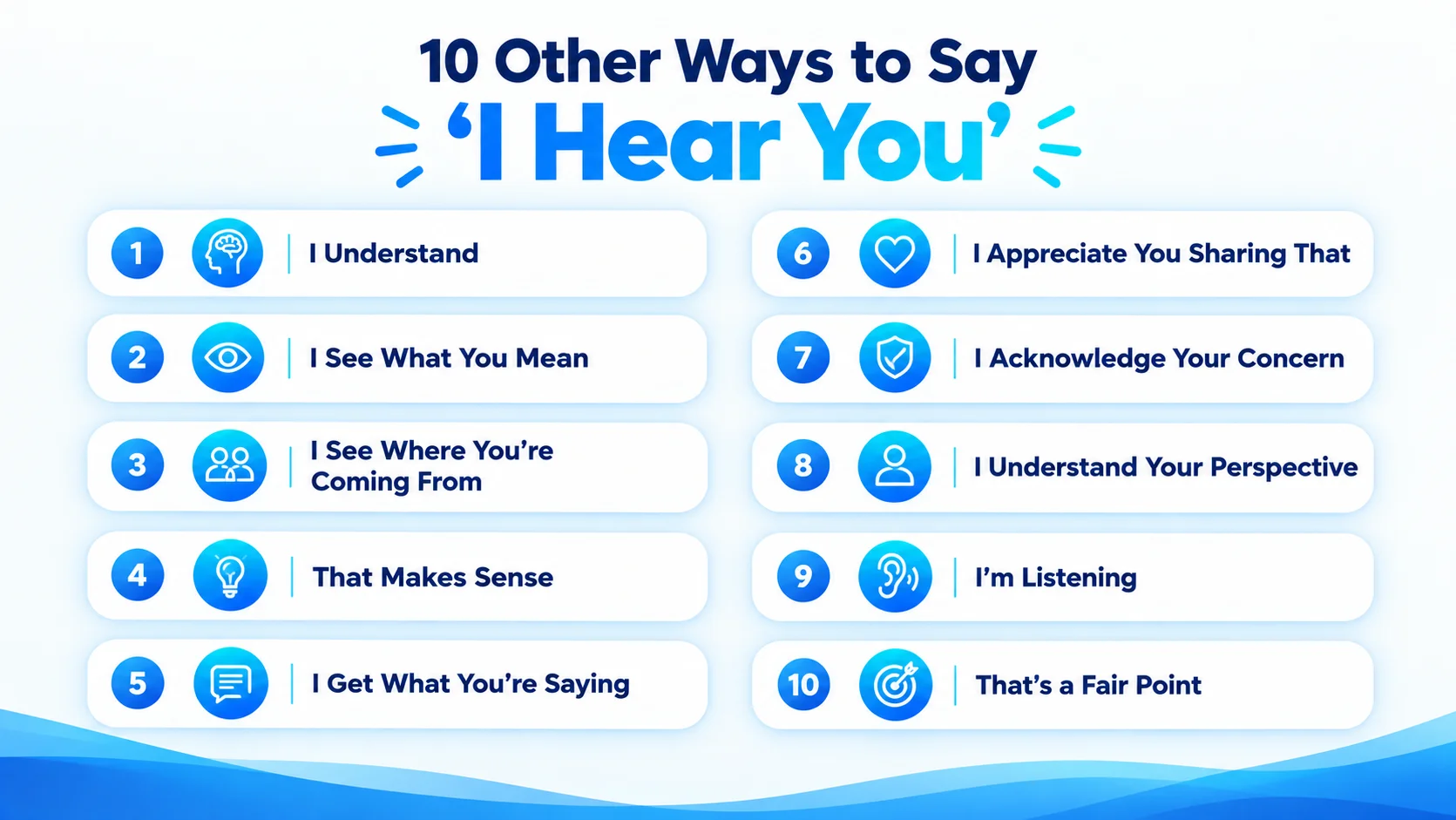
1. I Understand
Meaning
“I understand” is a simple and versatile way to acknowledge what someone has said. It can refer to their explanation, concern, feelings, or position, depending on the surrounding conversation.
Best For
- Professional
- Formal
- Polite
- Warm
Example 1
“I understand your concern about the revised project timeline.”
Example 2
“I understand why you decided to take some time away.”
Quick Tip
Use “I understand” when you want to sound calm and clear. Add a specific detail when the topic is important so your response feels genuine rather than automatic.
2. I See What You Mean
Meaning
“I see what you mean” tells someone that their explanation has become clear to you. It works especially well when a person has explained an idea, opinion, or reason that you did not understand at first.
Best For
- Professional
- Casual
- Friendly
- Polite
Example 1
“I see what you mean about simplifying the checkout process.”
Example 2
“Now I see what you mean about the instructions being confusing.”
Quick Tip
This phrase is useful when someone has just clarified their point. It does not automatically mean that you agree with them.
3. I See Where You’re Coming From
Meaning
“I see where you’re coming from” recognizes another person’s perspective or reasoning. It is especially helpful during disagreements because you can acknowledge their position without claiming that you share it.
Best For
- Friendly
- Warm
- Polite
- Professional
Example 1
“I see where you’re coming from, but I think we need more time to review the proposal.”
Example 2
“I see where you’re coming from after hearing what happened with the previous vendor.”
Quick Tip
Choose this phrase when the main goal is to validate someone’s perspective rather than declare agreement.
4. That Makes Sense
Meaning
“That makes sense” indicates that you understand why something seems logical or reasonable. It is natural in both casual conversations and many workplace situations.
Best For
- Professional
- Casual
- Friendly
- Polite
Example 1
“That makes sense. We should check the numbers before making a final decision.”
Example 2
“That makes sense after everything you explained about the move.”
Quick Tip
Use this phrase when you genuinely understand the reasoning. If you disagree with the conclusion, consider a more neutral response such as “I see what you mean.”
5. I Get What You’re Saying
Meaning
“I get what you’re saying” is a conversational way to tell someone that you understand their message or point. It sounds more relaxed than “I understand your position.”
Best For
- Casual
- Friendly
- Warm
Example 1
“I get what you’re saying about needing more flexibility at work.”
Example 2
“Okay, I get what you’re saying now. The issue is the timing, not the budget.”
Quick Tip
This phrase works well with friends, family, and familiar coworkers. For formal emails, choose a more professional alternative.
6. I Appreciate You Sharing That
Meaning
“I appreciate you sharing that” focuses on gratitude as well as acknowledgment. It is useful when someone tells you something personal, difficult, or important.
Best For
- Professional
- Warm
- Polite
- Friendly
Example 1
“I appreciate you sharing that concern during the meeting.”
Example 2
“I appreciate you sharing how the situation affected you.”
Quick Tip
Use this phrase when someone has made an effort to explain their experience or concern. It sounds warmer than a basic acknowledgment.
7. I Acknowledge Your Concern
Meaning
“I acknowledge your concern” is a more formal way to recognize that someone has raised an issue. It does not necessarily mean that you agree or can provide the solution they want.
Best For
- Professional
- Formal
- Polite
Example 1
“I acknowledge your concern about the additional delivery costs.”
Example 2
“We acknowledge your concern and will review the issue with our operations team.”
Quick Tip
This phrase fits formal workplace communication, but it can sound stiff in personal conversations.
8. I Understand Your Perspective
Meaning
“I understand your perspective” directly recognizes another person’s point of view. It is useful when discussing different opinions, decisions, or disagreements.
Best For
- Professional
- Formal
- Polite
- Warm
Example 1
“I understand your perspective, especially given the limited information available at the time.”
Example 2
“I understand your perspective on why the policy should be reviewed.”
Quick Tip
Use this when you want to show respect for someone’s position without suggesting that you completely agree.
9. I’m Listening
Meaning
“I’m listening” tells someone that you are giving them your attention. It can be especially reassuring when a person needs to explain something important or emotional.
Best For
- Casual
- Friendly
- Warm
- Polite
Example 1
“Take your time. I’m listening.”
Example 2
“Go ahead and tell me what happened. I’m listening.”
Quick Tip
This phrase works best when someone needs space to speak. Pair it with attentive behavior so your words match your actions.
10. That’s a Fair Point
Meaning
“That’s a fair point” recognizes that someone has made a reasonable argument or observation. It can soften disagreement while showing that you have considered what they said.
Best For
- Professional
- Polite
- Friendly
- Formal
Example 1
“That’s a fair point. We should consider the long-term maintenance costs.”
Example 2
“That’s a fair point about making the instructions easier for new customers.”
Quick Tip
Use this when you want to validate a specific argument. It is often better than “I hear you” when the conversation is focused on ideas rather than emotions.
Comparison Table
| Alternative | Best Used In | Tone |
| I Understand | General and professional conversations | Neutral, supportive |
| I See What You Mean | Explanations and discussions | Natural, understanding |
| I See Where You’re Coming From | Disagreements and personal viewpoints | Empathetic, respectful |
| That Makes Sense | Ideas, explanations, and decisions | Friendly, positive |
| I Get What You’re Saying | Casual conversations | Casual, conversational |
| I Appreciate You Sharing That | Personal or sensitive discussions | Warm, respectful |
| I Acknowledge Your Concern | Formal workplace communication | Formal, professional |
| I Understand Your Perspective | Workplace discussions and disagreements | Professional, respectful |
| I’m Listening | Emotional or important conversations | Warm, attentive |
| That’s a Fair Point | Opinions, debates, and meetings | Neutral, respectful |
Common Mistakes
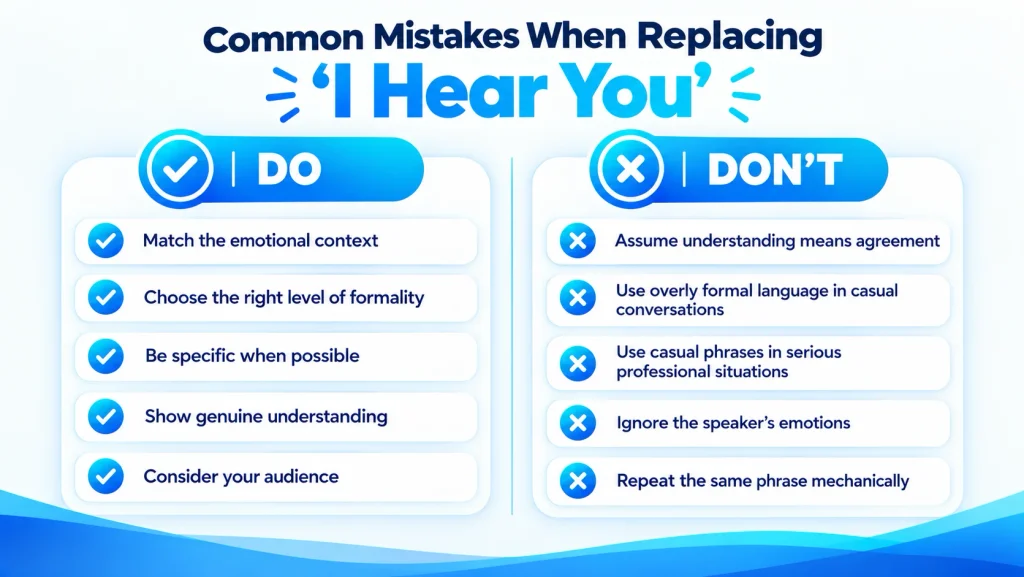
1. Using a Casual Phrase in a Formal Email
Expressions such as “I get what you’re saying” can sound too relaxed in a formal business message. Use “I understand your perspective” or “I acknowledge your concern” when a more professional tone is appropriate.
2. Assuming Understanding Means Agreement
“I hear you” and many of its alternatives can acknowledge a person’s position without agreeing with it. Be precise if you want to communicate agreement, disagreement, or simple understanding.
3. Choosing Overly Formal Language
The opposite problem can also make communication awkward. Saying “I acknowledge your concern” to a close friend may sound distant when “I understand” would feel much more natural.
4. Forgetting the Emotional Context
A person discussing grief, stress, or frustration may need empathy rather than a purely logical response. In these moments, “I appreciate you sharing that” or “I’m listening” may feel more supportive.
5. Sounding Insincere
No phrase can replace genuine attention. If you say “I understand” without responding to what the person actually said, the response may feel automatic or dismissive. Specific acknowledgment is usually stronger.
Frequently Asked Questions
1. What is another way to say “I hear you” professionally?
Professional alternatives include “I understand your perspective,” “I acknowledge your concern,” “I appreciate you sharing that,” and “That’s a fair point.” The best choice depends on whether you are acknowledging a concern, recognizing an opinion, or responding to feedback. In workplace conversations, a specific response usually sounds more sincere than a generic acknowledgment.
2. Does “I hear you” mean “I agree with you”?
No. “I hear you” usually means that you recognize or understand what someone is saying, not necessarily that you agree with it. For example, you can say, “I hear you, but we need to follow the current policy.” If you agree, say so directly with a phrase such as “I agree” or “That’s a fair point.”
3. What is a more empathetic way to say “I hear you”?
For emotional conversations, try “I appreciate you sharing that,” “I’m listening,” or “I see where you’re coming from.” These phrases give more attention to the person’s experience instead of simply confirming that you heard their words. Your tone and follow-up response also matter when you are trying to communicate genuine empathy.
4. What can I say instead of “I hear you” in a text?
For a casual text, “I get what you’re saying,” “I see what you mean,” or “That makes sense” can sound natural. If someone is sharing something difficult, “I’m listening” or “I appreciate you telling me” may feel more supportive. Choose the phrase based on whether you want to acknowledge, reassure, or understand.
5. Is “I understand your perspective” a good alternative to “I hear you”?
Yes. “I understand your perspective” is especially useful in professional discussions or disagreements. It recognizes someone’s point of view without automatically suggesting agreement. This makes it a strong choice for meetings, negotiations, feedback conversations, and situations where you want to remain respectful while keeping your own position clear.
6. What is a casual way to say “I hear you”?
Casual options include “I get what you’re saying,” “I see what you mean,” and “That makes sense.” These expressions fit conversations with friends, family, and familiar coworkers. “I get what you’re saying” is particularly conversational, while “That makes sense” works well when you understand the person’s reasoning.
7. How can I say “I hear you” without sounding dismissive?
Make your response specific. Instead of simply saying “I hear you,” briefly restate the person’s main concern or point. For example, “I understand that the short timeline is your biggest concern.” This shows that you actually followed the conversation rather than using acknowledgment as a way to end it.
8. What is the best alternative to “I hear you” in customer service?
“I appreciate you sharing that,” “I understand your concern,” or “I can see why that would be frustrating” can work well in customer service. The response should acknowledge the customer’s specific issue and, when possible, move toward a solution. Customer-service guidance commonly treats acknowledgment as one part of a larger helpful response.
Conclusion
“I hear you” is a useful phrase, but the best alternative depends on what you want to communicate. Use “I understand” for a clear, neutral acknowledgment, “I see where you’re coming from” for someone’s perspective, or “That makes sense” when you understand their reasoning. For professional situations, “I understand your perspective,” “I acknowledge your concern,” and “That’s a fair point” can sound more precise. When someone is sharing something personal, “I appreciate you sharing that” or “I’m listening” can feel warmer and more supportive.
The key is not to replace “I hear you” just for variety. Choose language that accurately reflects whether you understand, empathize, agree, or simply want to give someone your full attention. Understanding another person’s feelings and perspective is closely connected to empathy.

Editorial contributors help develop practical English-language resources covering vocabulary, expressions, synonyms, and writing. Contributions focus on clear explanations, useful examples, and context so readers can understand not only what a phrase means, but when and how to use it naturally.