
Looking for another way to say “I look forward”? Try phrases such as “I’m looking forward to,” “I’m excited about,” “I anticipate,” “I can’t wait,” or “I’m eager to.” The best choice depends on your tone and situation, from professional emails and formal letters to friendly conversations and personal messages.
Key Takeaways
- “I’m looking forward to” is natural, polite, and widely used.
- “I anticipate” works well in formal and professional writing.
- “I’m excited about” sounds warm and enthusiastic.
- “I can’t wait” is best for casual and friendly situations.
- Choose your phrase based on your relationship, audience, and level of excitement.
“I look forward” is a common phrase used to show that you expect or feel positive about something happening in the future. However, repeating the same expression can make emails, messages, and other writing sound predictable.
Fortunately, there are many natural alternatives to “I look forward.” The right phrase can help you sound more professional, friendly, enthusiastic, or sincere depending on the situation.
What Does “Another Way to Say I Look Forward” Mean?
The phrase “another way to say I look forward” refers to different expressions that communicate anticipation, excitement, or positive expectations about a future event.
For example, instead of writing, “I look forward to hearing from you,” you could say, “I’m eager to hear from you” or “I hope to hear from you soon.”
People commonly use these expressions in professional emails, business communication, invitations, personal messages, thank-you notes, and everyday conversations.
Why Use Other Ways to Say “I Look Forward”?
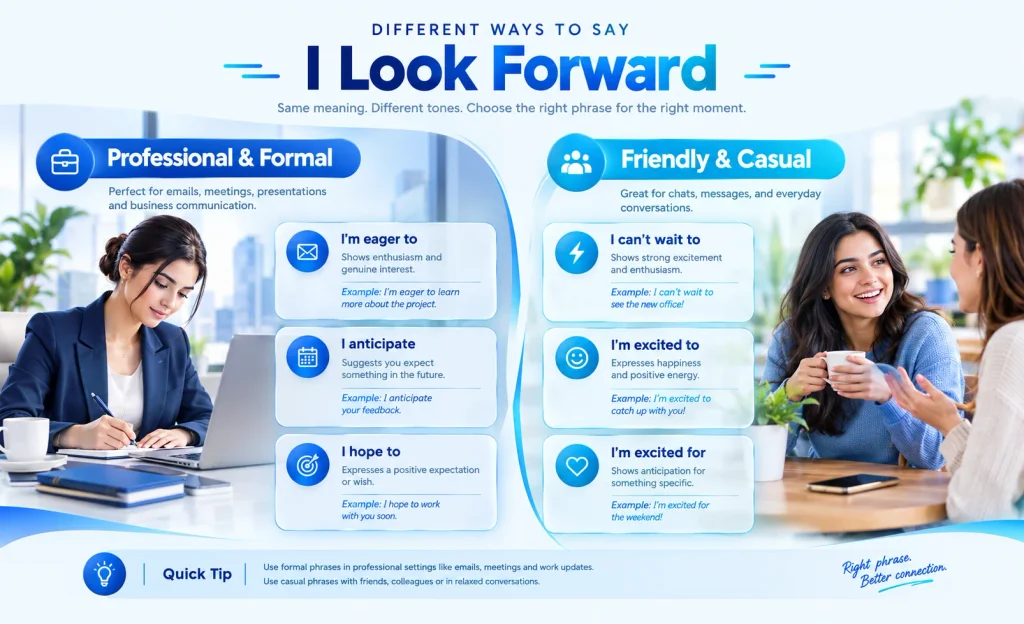
Using alternatives to “I look forward” can make your communication more natural and appropriate for the situation.
Here are some reasons to choose a different expression:
- Avoid repetition: Keep your writing fresh when you use the phrase often.
- Sound more natural: Some alternatives fit casual conversations better.
- Match the situation: Professional emails may require a more polished expression.
- Show enthusiasm: Certain phrases communicate stronger excitement.
- Express warmth: Friendly alternatives can make personal messages feel more sincere.
- Improve your writing: Using varied language makes your communication more engaging.
12 Best Other Ways to Say “I Look Forward”

1. I’m Looking Forward to
Meaning
“I’m looking forward to” is one of the most natural alternatives to “I look forward.” It shows that you feel positive about something expected to happen in the future.
It works in both professional and personal communication, making it a reliable choice in many situations.
Best For
- Professional
- Friendly
- Warm
- Polite
Example 1
I’m looking forward to meeting with you next week to discuss the project.
Example 2
I’m looking forward to spending time with everyone at the family gathering.
Quick Tip
Use “looking forward to” + a noun or -ing verb, such as “looking forward to meeting,” not “looking forward to meet.”
2. I’m Eager to
Meaning
“I’m eager to” expresses strong interest and enthusiasm about doing something in the future. It sounds positive without being overly casual.
This phrase works especially well when you want to show motivation or genuine interest.
Best For
- Professional
- Formal
- Friendly
- Warm
Example 1
I’m eager to learn more about the position and discuss how I can contribute.
Example 2
We’re eager to welcome you to our new office.
Quick Tip
Choose “I’m eager to” when you want to emphasize enthusiasm rather than simply anticipation.
3. I’m Excited About
Meaning
“I’m excited about” communicates enthusiasm and positive anticipation. It is warmer and more energetic than the traditional “I look forward to.”
It is particularly natural when you genuinely feel excited about an event, opportunity, or experience.
Best For
- Casual
- Friendly
- Warm
- Professional
Example 1
I’m excited about the opportunity to work with your team.
Example 2
We’re excited about seeing the new venue this weekend.
Quick Tip
Use this phrase when you want your message to sound enthusiastic and personable.
4. I Anticipate
Meaning
“I anticipate” is a more formal way to express that you expect something to happen. It is common in business, academic, legal, and formal writing.
Unlike “I’m excited about,” it focuses more on expectation than emotion.
Best For
- Formal
- Professional
Example 1
I anticipate receiving your response by the end of the week.
Example 2
We anticipate a successful outcome from the upcoming negotiations.
Quick Tip
Use “I anticipate” when you want a polished, professional tone rather than a warm or casual one.
5. I Can’t Wait to
Meaning
“I can’t wait to” expresses strong excitement about something that will happen soon. It is informal, energetic, and very common in everyday American English.
The phrase usually sounds warmer and more enthusiastic than “I look forward to.”
Best For
- Casual
- Friendly
- Warm
Example 1
I can’t wait to see everyone at the concert tonight.
Example 2
I can’t wait to hear what you think about the new restaurant.
Quick Tip
Avoid this phrase in highly formal business correspondence because it can sound too casual.
6. I’m Excited to
Meaning
“I’m excited to” directly communicates enthusiasm about an upcoming action or event. It sounds natural and conversational while still working in many professional settings.
It is especially useful when you want to make your message sound positive and energetic.
Best For
- Professional
- Friendly
- Warm
- Casual
Example 1
I’m excited to join the team and begin working on the new campaign.
Example 2
I’m excited to share the final design with you tomorrow.
Quick Tip
Use “I’m excited to” before a verb, such as “I’m excited to meet” or “I’m excited to begin.”
7. I Hope to
Meaning
“I hope to” expresses a positive expectation without sounding overly enthusiastic. It can be useful when the future event is possible but not completely certain.
The phrase also gives your writing a polite and approachable tone.
Best For
- Professional
- Polite
- Friendly
- Warm
Example 1
I hope to hear from you after you have reviewed the proposal.
Example 2
I hope to see you at the community event on Saturday.
Quick Tip
Choose this phrase when you want to sound positive while avoiding a strong assumption that something will definitely happen.
8. I’m Anticipating
Meaning
“I’m anticipating” communicates that you are expecting something to happen and are thinking positively about it. It can sound slightly more formal than everyday expressions.
It works well when discussing upcoming plans, results, events, or developments.
Best For
- Professional
- Formal
- Polite
Example 1
I’m anticipating a productive conversation during our meeting tomorrow.
Example 2
I’m anticipating several exciting changes over the next few months.
Quick Tip
Use this expression when the focus is on expected developments rather than personal excitement.
9. I’m Excited for
Meaning
“I’m excited for” is a common conversational expression used to show enthusiasm about an upcoming event or experience. It is especially popular in everyday American English.
It gives your message a friendly and upbeat feeling.
Best For
- Casual
- Friendly
- Warm
Example 1
I’m excited for your graduation next month!
Example 2
I’m excited for our weekend trip to the coast.
Quick Tip
Use “excited for” naturally in casual communication, but choose “excited about” or “eager to” when a more polished tone is needed.
10. I’m Hopeful About
Meaning
“I’m hopeful about” expresses optimism about a future outcome. It is useful when you want to communicate positive expectations without sounding overly certain.
The phrase works well when the result depends on circumstances that are not fully under your control.
Best For
- Professional
- Polite
- Warm
Example 1
I’m hopeful about the possibility of working together in the future.
Example 2
We’re hopeful about reaching an agreement that benefits everyone.
Quick Tip
Use this phrase when optimism is more appropriate than strong excitement or certainty.
11. I’m Anticipating the Opportunity to
Meaning
“I’m anticipating the opportunity to” is a formal expression that highlights positive expectations about a future opportunity. It is especially suitable for professional correspondence.
It can make a message sound thoughtful and polished when discussing meetings, collaborations, or career opportunities.
Best For
- Formal
- Professional
- Polite
Example 1
I’m anticipating the opportunity to discuss your company’s goals in greater detail.
Example 2
We’re anticipating the opportunity to collaborate with your organization.
Quick Tip
This phrase is best reserved for formal situations because it can sound unnecessarily elaborate in casual conversation.
12. I’m Glad We’ll Be
Meaning
“I’m glad we’ll be” expresses positive feelings about a planned future activity or interaction. It sounds warm and personal without relying on the standard “look forward” wording.
It works particularly well when the future event is already confirmed.
Best For
- Friendly
- Warm
- Casual
- Polite
Example 1
I’m glad we’ll be working together on this exciting project.
Example 2
I’m glad we’ll be able to catch up during your visit.
Quick Tip
Use this phrase when you want to emphasize happiness about a confirmed future event rather than anticipation alone.
Comparison Table

| Alternative | Best Used In | Tone |
|---|---|---|
| I’m Looking Forward to | Professional, personal | Polite, natural |
| I’m Eager to | Professional, formal | Enthusiastic, polished |
| I’m Excited About | Personal, professional | Warm, enthusiastic |
| I Anticipate | Business, formal writing | Formal, confident |
| I Can’t Wait to | Casual conversations | Excited, informal |
| I’m Excited to | Professional, casual | Positive, energetic |
| I Hope to | Emails, personal messages | Polite, gentle |
| I’m Anticipating | Professional communication | Formal, expectant |
| I’m Excited for | Casual conversations | Friendly, enthusiastic |
| I’m Hopeful About | Professional, personal | Optimistic, warm |
| I’m Anticipating the Opportunity to | Formal business writing | Professional, formal |
| I’m Glad We’ll Be | Personal communication | Warm, friendly |
Common Mistakes
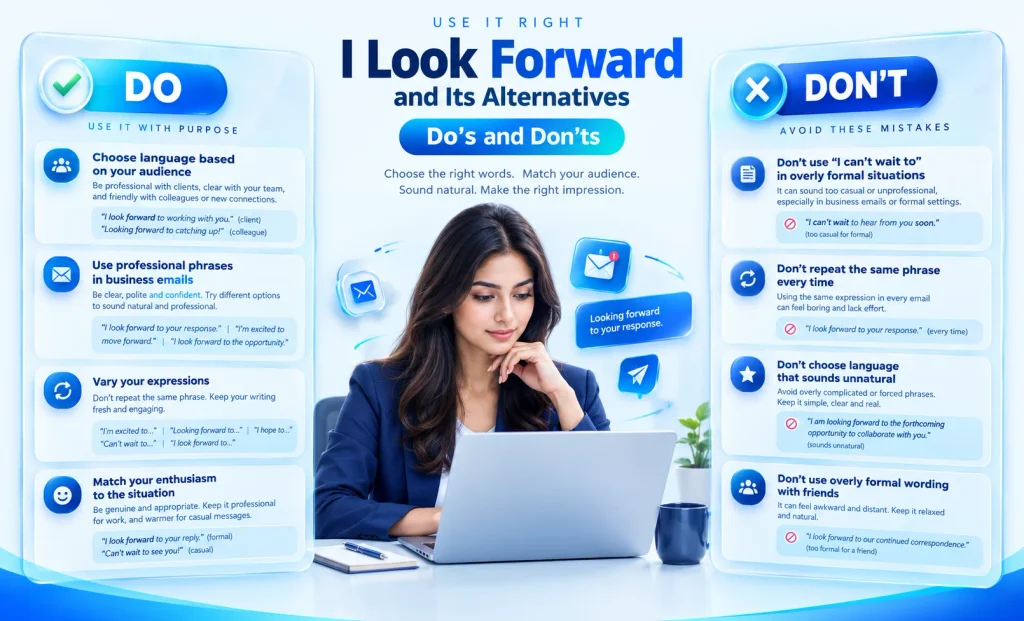
1. Using Casual Phrases in Professional Emails
Expressions such as “I can’t wait to” may sound too informal for a formal business email. Choose “I’m eager to” or “I anticipate” when a more professional tone is appropriate.
2. Choosing Overly Formal Language
Not every message needs sophisticated wording. Using “I’m anticipating the opportunity to” with a close friend can sound unnatural when “I’m excited to” would be clearer.
3. Repeating the Same Phrase
Using “I look forward to” in every email can make your writing feel repetitive. Vary your wording when the context allows it.
4. Forgetting the Context
A phrase that works well in a friendly message may not fit a job application or business letter. Always consider your audience before choosing an alternative.
5. Sounding Insincere
Avoid using enthusiastic phrases when you do not actually want to express strong excitement. “I hope to” or “I anticipate” may communicate your meaning more accurately.
Frequently Asked Questions

What is another way to say “I look forward to”?
Common alternatives include “I’m looking forward to,” “I’m eager to,” “I’m excited to,” “I anticipate,” “I hope to,” and “I can’t wait to.” The best option depends on the situation. For professional communication, “I’m eager to” and “I anticipate” work well, while “I can’t wait to” is better for casual conversations.
What is a professional way to say “I look forward”?
“I’m eager to,” “I anticipate,” and “I hope to” are professional alternatives. For example, instead of saying “I look forward to hearing from you,” you could write, “I’m eager to hear your thoughts.” These options can make professional emails sound polished while still communicating positive expectations.
What can I say instead of “I look forward to hearing from you”?
You can say “I’m eager to hear from you,” “I hope to hear from you soon,” or “I’d appreciate your response.” “I’m eager to hear from you” sounds enthusiastic, while “I hope to hear from you soon” is softer and more neutral.
Is “I’m excited to” better than “I look forward to”?
Neither phrase is always better. “I’m excited to” expresses stronger enthusiasm, while “I look forward to” is more neutral and widely appropriate. In a professional email, both can work, but “I look forward to” may sound more traditional and formal.
Is “I can’t wait to” professional?
“I can’t wait to” can be appropriate in friendly workplace conversations, but it may sound too casual in formal business emails, applications, or official letters. If you need a more polished option, consider “I’m eager to,” “I’m excited to,” or “I anticipate.”
How do I say “I look forward to working with you” differently?
You could say “I’m excited to work with you,” “I’m eager to collaborate with you,” or “I’m pleased about the opportunity to work together.” For a professional setting, “I’m eager to collaborate with you” is a strong choice because it communicates enthusiasm while maintaining a polished tone.
What is a friendly way to say “I look forward to seeing you”?
Friendly alternatives include “I’m excited to see you,” “I can’t wait to see you,” “I’m really looking forward to seeing you,” and “I’m glad we’ll get to see each other.” The best option depends on how warm or enthusiastic you want the message to sound.
Can I use “I anticipate” instead of “I look forward to”?
Yes. “I anticipate” can replace “I look forward to” when you want to communicate an expectation about a future event. However, it sounds more formal and focuses on expectation rather than personal excitement, so it may not be the best choice for casual messages.
Conclusion
There are many natural ways to say “I look forward,” and the best choice depends on your audience, relationship, and purpose. For professional communication, phrases such as “I’m eager to,” “I anticipate,” and “I hope to” can sound polished and appropriate.
For friendly or personal messages, “I’m excited to,” “I’m excited for,” and “I can’t wait to” add more warmth and enthusiasm. If you want a safe, versatile option, “I’m looking forward to” remains one of the most natural choices.
The key is to choose language that matches the situation instead of simply replacing one phrase with another. A thoughtful alternative can make your message clearer, more genuine, and more engaging.

The Majestic Studio Editorial Team creates practical resources about synonyms, alternative phrases, vocabulary, and English usage. Our content is designed to help readers choose clearer, more natural words and communicate effectively in everyday, professional, and academic contexts.
Each article is researched, edited, and reviewed for clarity, context, usefulness, and language accuracy. We regularly update our content to keep examples and recommendations relevant.