

If you need another way to say “just wanted to let you know,” you can use phrases such as “I wanted to inform you,” “I wanted to let you know,” “I thought you should know,” “I wanted to give you a quick update,” or “I’m reaching out to let you know.” The best choice depends on your audience, tone, and situation.
Key Takeaways
- “Just wanted to let you know” is friendly and common but can sound repetitive.
- Professional emails often benefit from more direct wording.
- “I wanted to inform you” works well for formal communication.
- “I thought you should know” sounds natural and conversational.
- The right alternative depends on the relationship, purpose, and level of formality.
What Does “Another Way to Say Just Wanted to Let You Know” Mean?
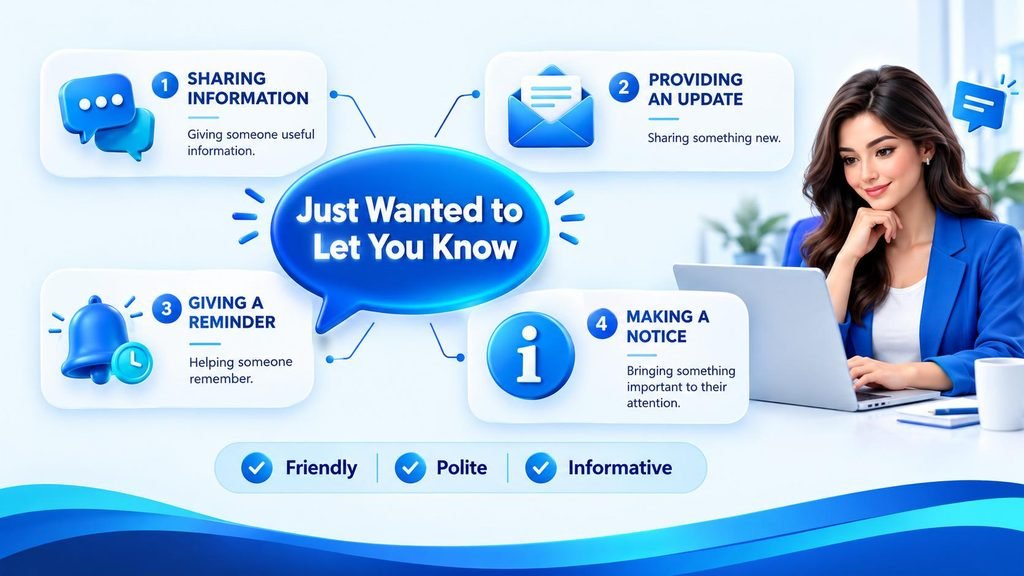
The phrase “just wanted to let you know” is commonly used when someone wants to share information, provide an update, give a reminder, or mention something important without sounding too demanding.
For example, you might write, “I just wanted to let you know that the meeting has been moved to Friday.” The phrase makes the message sound friendly and less forceful.
People often search for another way to say just wanted to let you know because the expression can become repetitive, especially in emails and workplace messages. A different phrase can make your writing sound clearer, more professional, or better suited to the situation.
You will commonly see these alternatives in professional emails, workplace communication, customer messages, school communication, personal texts, announcements, and follow-up messages.
Why Use Other Ways to Say “Just Wanted to Let You Know”?
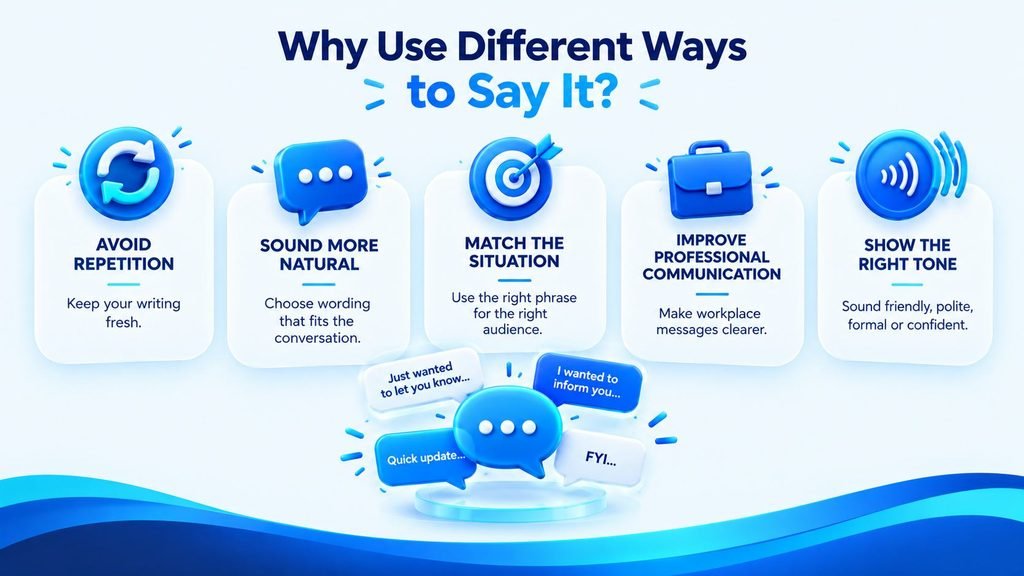
Using different expressions can make your communication more precise and natural. You do not always need to replace the original phrase, but choosing a better option can improve the message when context matters.
Here are a few reasons to use an alternative:
- Avoid repetition: Prevent the same phrase from appearing throughout your emails.
- Sound more natural: Some situations call for simpler, more direct wording.
- Match the situation: A formal email may need different language than a text message.
- Improve professional communication: Clear wording can make workplace messages more polished.
- Show the right tone: You can sound friendly, respectful, informative, or formal depending on your choice.
10 Best Other Ways to Say “Just Wanted to Let You Know”
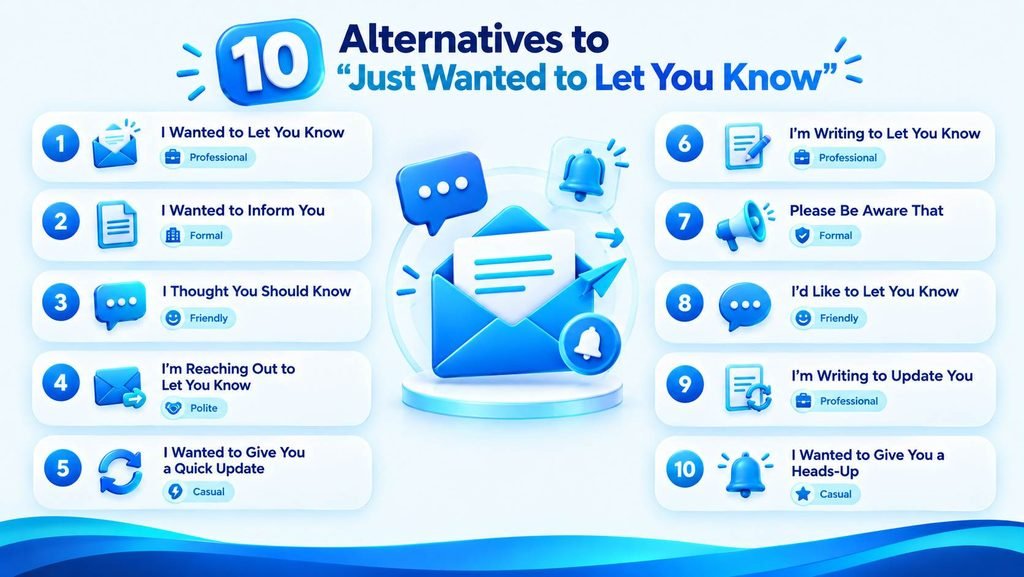
1. I Wanted to Let You Know
Meaning
“I wanted to let you know” is one of the closest and most natural alternatives to the original phrase. It keeps the friendly meaning while removing the word “just,” making the sentence slightly more direct.
Best For
- Professional
- Friendly
- Polite
- Casual
Example 1
I wanted to let you know that your appointment has been confirmed for Tuesday.
Example 2
I wanted to let you know that the documents are ready for pickup.
Quick Tip
Use this when you want a safe, natural option that works in almost any everyday situation.
2. I Wanted to Inform You
Meaning
“I wanted to inform you” has a more formal and professional tone. It clearly tells the reader that you are providing important information.
Best For
- Professional
- Formal
- Polite
Example 1
I wanted to inform you that your application has been approved.
Example 2
I wanted to inform you about the change to our office schedule.
Quick Tip
Use this phrase for business emails, official notices, and situations where a professional tone matters.
3. I Thought You Should Know
Meaning
“I thought you should know” sounds conversational and personal. It suggests that you are sharing information because you believe the other person will find it useful or important.
Best For
- Casual
- Friendly
- Warm
- Polite
Example 1
I thought you should know that Sarah will be joining us for dinner tonight.
Example 2
I thought you should know that the store is closing earlier than usual today.
Quick Tip
This works especially well when you want to explain why you are sharing the information.
4. I’m Reaching Out to Let You Know
Meaning
“I’m reaching out to let you know” is commonly used when contacting someone by email or message. It signals that the purpose of your communication is to share an update or information.
Best For
- Professional
- Polite
- Friendly
Example 1
I’m reaching out to let you know that we received your request.
Example 2
I’m reaching out to let you know about an upcoming change to your account.
Quick Tip
Use this for customer service, business correspondence, and professional follow-ups.
5. I Wanted to Give You a Quick Update
Meaning
This phrase tells the reader that you have a brief piece of new information to share. It sounds natural without being overly formal.
Best For
- Professional
- Friendly
- Casual
Example 1
I wanted to give you a quick update on the website redesign.
Example 2
I wanted to give you a quick update: the package should arrive tomorrow.
Quick Tip
Choose this when your message is specifically about progress, changes, or recent developments.
6. I’m Writing to Let You Know
Meaning
“I’m writing to let you know” directly explains why you are contacting someone. It has a polished tone and works particularly well in written communication.
Best For
- Professional
- Formal
- Polite
Example 1
I’m writing to let you know that your membership will renew next month.
Example 2
I’m writing to let you know about the changes to our return policy.
Quick Tip
This is a strong choice for formal emails, business letters, and official communication.
7. Please Be Aware That
Meaning
“Please be aware that” draws attention to information the reader needs to know. It sounds more direct than “just wanted to let you know” and is useful when the information requires attention.
Best For
- Professional
- Formal
- Polite
Example 1
Please be aware that the building will be closed on Monday.
Example 2
Please be aware that late submissions may not be accepted.
Quick Tip
Use it for policies, deadlines, rules, notices, and other information that readers should not overlook.
8. I’d Like to Let You Know
Meaning
“I’d like to let you know” is polite and slightly more formal than the original expression. It works when you want to sound respectful while keeping the message warm.
Best For
- Professional
- Formal
- Warm
- Polite
Example 1
I’d like to let you know that your order has shipped.
Example 2
I’d like to let you know that we appreciate your continued support.
Quick Tip
Use this when you want your message to sound courteous without becoming overly formal.
9. I’m Writing to Update You
Meaning
“I’m writing to update you” is a concise way to introduce new information. It works particularly well when the recipient already knows about the topic.
Best For
- Professional
- Formal
- Polite
Example 1
I’m writing to update you on the status of your request.
Example 2
I’m writing to update you regarding the changes we discussed last week.
Quick Tip
Use this when you are following up on something that has already been discussed.
10. I Wanted to Give You a Heads-Up
Meaning
“I wanted to give you a heads-up” is an informal American English expression meaning that you want to warn or inform someone about something in advance. It sounds friendly and relaxed.
Best For
- Casual
- Friendly
- Warm
Example 1
I wanted to give you a heads-up that traffic may be heavy tomorrow morning.
Example 2
I wanted to give you a heads-up before the construction starts next week.
Quick Tip
Avoid this expression in highly formal business correspondence because “heads-up” is distinctly conversational.
Comparison Table
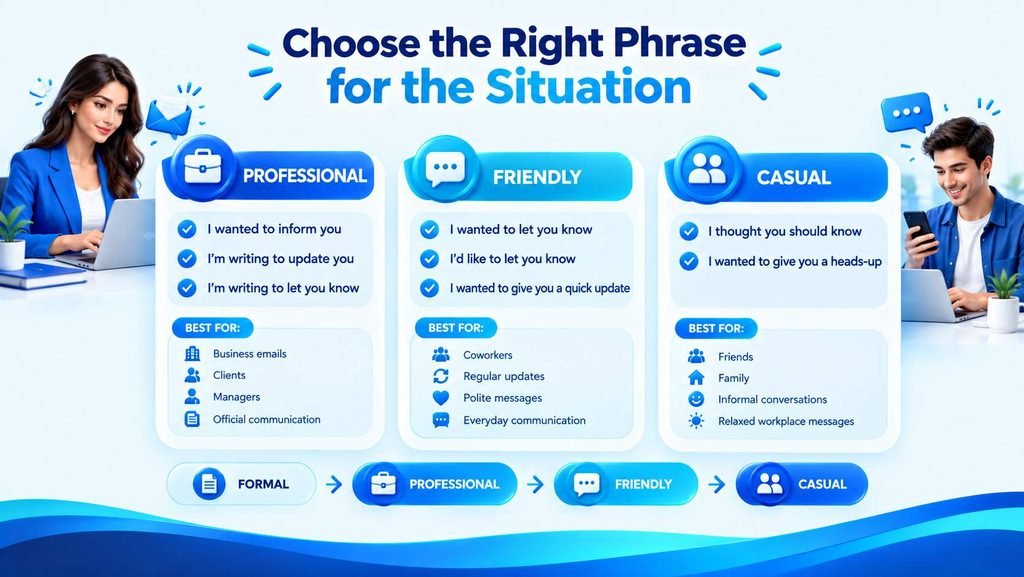
| Alternative | Best Used In | Tone |
| I Wanted to Let You Know | Everyday communication | Friendly, Polite |
| I Wanted to Inform You | Business and official messages | Formal, Professional |
| I Thought You Should Know | Personal and conversational messages | Warm, Casual |
| I’m Reaching Out to Let You Know | Professional emails | Polite, Professional |
| I Wanted to Give You a Quick Update | Updates and follow-ups | Friendly, Professional |
| I’m Writing to Let You Know | Formal written communication | Formal, Polite |
| Please Be Aware That | Notices and important information | Direct, Formal |
| I’d Like to Let You Know | Courteous communication | Warm, Professional |
| I’m Writing to Update You | Follow-up emails | Professional, Formal |
| I Wanted to Give You a Heads-Up | Informal warnings or advance notice | Casual, Friendly |
Common Mistakes
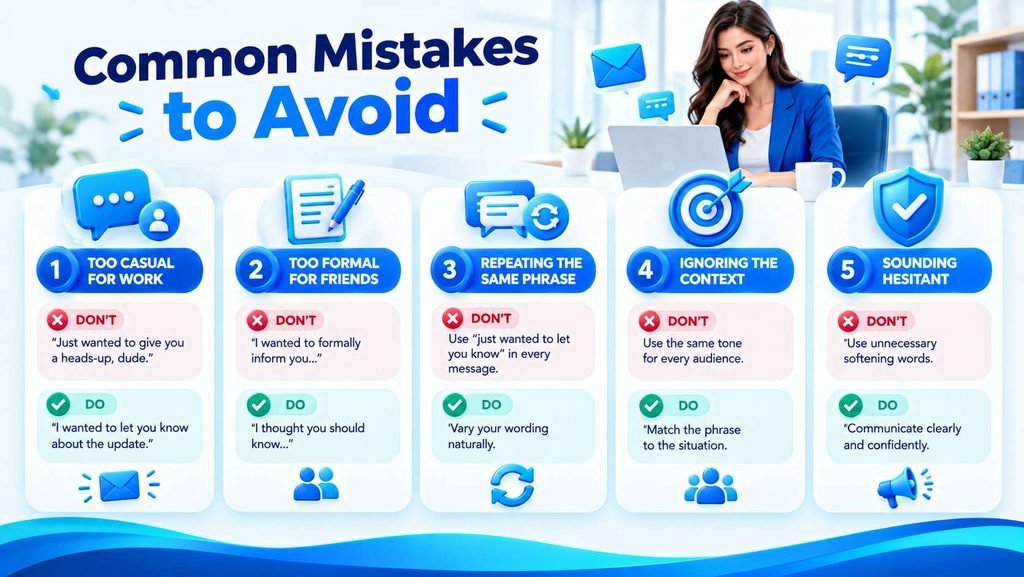
1. Using Casual Phrases in Professional Emails
Expressions such as “I wanted to give you a heads-up” may sound too relaxed in a formal business email. Choose a more professional alternative when writing to clients, managers, or officials.
2. Choosing Overly Formal Language
Not every message needs formal wording. Using “I wanted to inform you” in a casual text to a friend can sound stiff and unnatural.
3. Repeating the Same Phrase
Using “just wanted to let you know” in every email can make your writing feel repetitive. Rotate your wording based on the purpose of each message.
4. Forgetting the Context
The best alternative depends on what you are communicating. An update, warning, announcement, and personal message may each require a different expression.
5. Sounding Insincere
Adding unnecessary softening words can make a simple message seem hesitant. When the information is clear, choose direct language that sounds confident and genuine.
Frequently Asked Questions
What is a professional way to say “just wanted to let you know”?
A professional alternative is “I wanted to inform you” or “I’m writing to let you know.” Both clearly introduce information without sounding overly casual. For routine workplace updates, “I wanted to give you a quick update” can also sound natural and professional.
What is a polite way to say “just wanted to let you know”?
“I wanted to let you know” is already polite, but “I’d like to let you know” adds a slightly more courteous tone. It works well when you want to share information respectfully without making the sentence sound too formal or distant.
How do you say “just wanted to let you know” in an email?
For an email, you can write “I wanted to let you know,” “I’m reaching out to let you know,” or “I’m writing to update you.” Your choice should depend on whether the email is a routine update, a formal notice, or a follow-up.
Is “just wanted to let you know” professional?
Yes. “Just wanted to let you know” is common in professional communication, especially in friendly workplace emails. However, the word “just” can sometimes make the message sound less direct. Removing it often creates a cleaner sentence: “I wanted to let you know.”
What can I say instead of “just wanted to let you know” in a formal email?
For a formal email, consider “I wanted to inform you,” “I’m writing to let you know,” or “Please be aware that.” These expressions sound more polished and are useful for official updates, business notices, policy changes, and important announcements.
What is a casual way to say “just wanted to let you know”?
For casual communication, you can say “I thought you should know” or “I wanted to give you a heads-up.” Both sound natural in conversations with friends, coworkers you know well, or family members.
Is “I wanted to let you know” better than “I just wanted to let you know”?
Often, yes. “I wanted to let you know” is more direct while still sounding friendly and polite. The word “just” can soften the statement, but it is usually unnecessary unless you intentionally want a more tentative or gentle tone.
What is the best alternative for workplace communication?
“I wanted to give you a quick update” is an excellent choice for routine workplace communication. For more formal situations, “I wanted to inform you” works better. If you are simply sharing useful information with a colleague, “I wanted to let you know” is usually the most natural option.
Conclusion
Finding another way to say “just wanted to let you know” can make your communication clearer, more natural, and better suited to the situation. The original phrase is perfectly acceptable, but you have several alternatives when you want to vary your wording or adjust your tone.
For professional messages, “I wanted to inform you,” “I’m writing to let you know,” and “I’m writing to update you” are strong choices. For friendly communication, “I thought you should know” or “I wanted to give you a heads-up” feels more natural. When you simply want a polished everyday option, “I wanted to let you know” is hard to beat.
The key is to consider your audience, purpose, and level of formality before choosing a phrase. The best wording is the one that communicates your message clearly while sounding natural for the situation.

Sajid Ali is a web developer and digital publisher with experience in website development, WordPress, content publishing, and digital projects. He is interested in creating useful, well-structured online resources that make information easier to discover and understand.
At Majestic Studio, Sajid focuses on website development, content publishing, SEO-focused site structure, and maintaining a clear and user-friendly reading experience. He works with a practical, research-driven approach and continuously improves content and website usability based on reader needs and search behavior.