
Another way to say limited-time offer includes phrases such as special offer, exclusive offer, limited-time deal, promotional offer, short-term promotion, and time-sensitive offer. The best choice depends on your audience and tone. For professional marketing, “special offer” sounds natural, while “limited-time deal” feels more direct and conversational.
Key Takeaways
- “Limited-time offer” tells customers that a promotion is available for a set period.
- Special offer is a flexible alternative that works in most marketing situations.
- Exclusive offer emphasizes access or uniqueness rather than a deadline.
- Time-sensitive offer creates urgency without sounding overly sales-focused.
- Choose wording based on your audience, channel, brand voice, and actual offer terms.
What Does “Another Way to Say Limited-Time Offer” Mean?
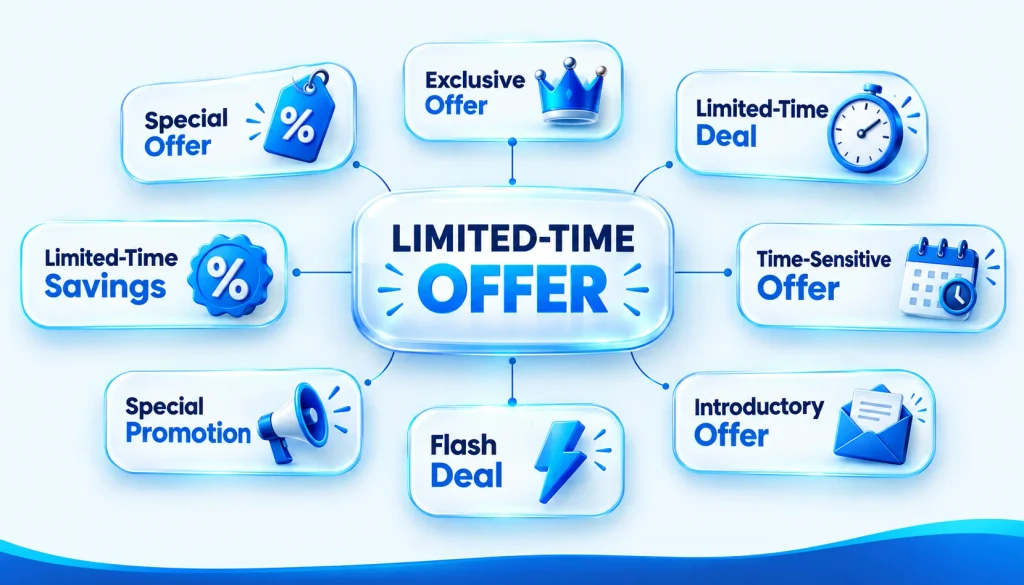
The phrase “another way to say limited-time offer” refers to alternative expressions for describing a promotion, discount, deal, or incentive that is available for a specific period.
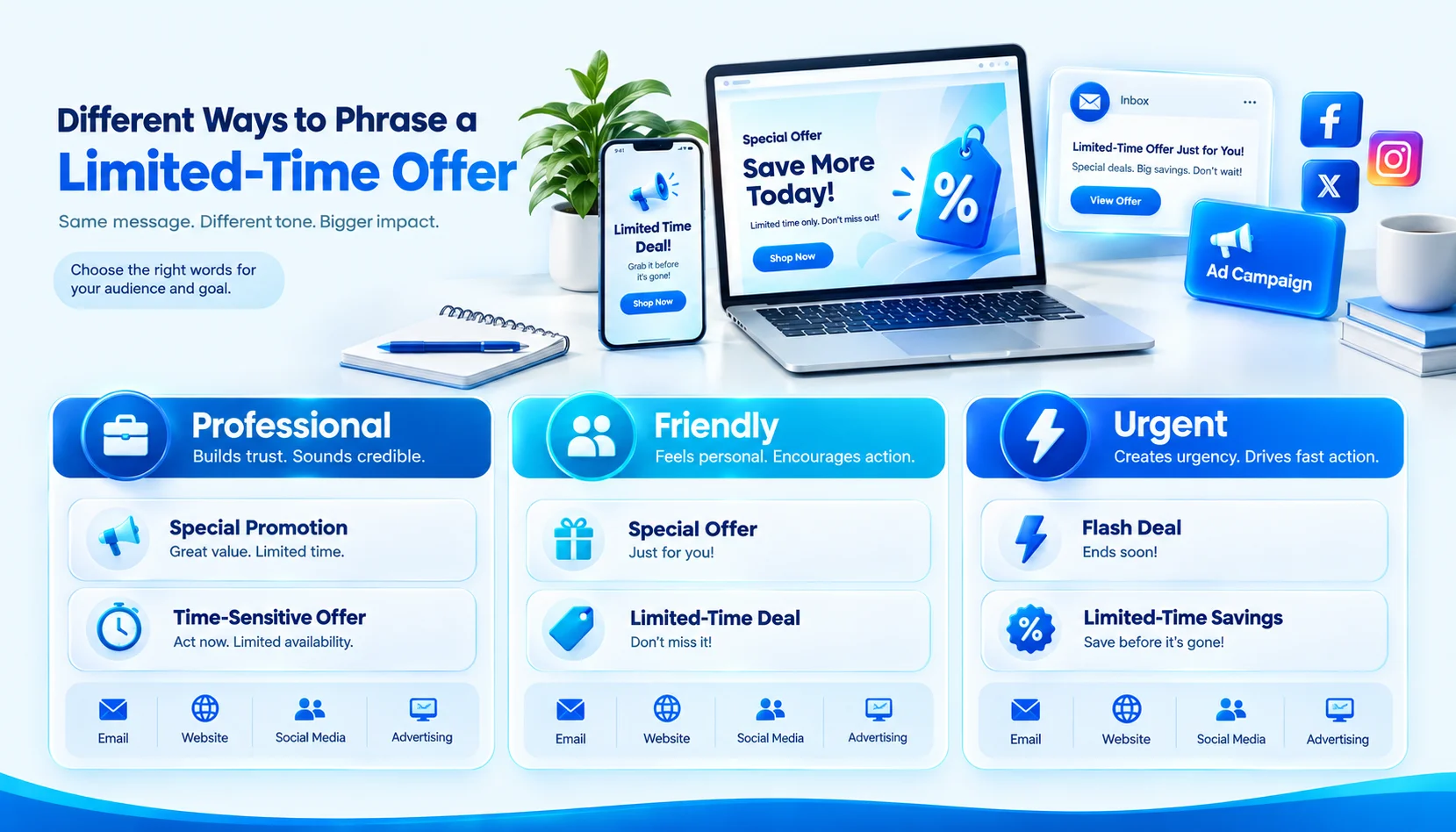
Businesses commonly use these phrases in emails, advertisements, product pages, social media posts, text messages, and sales campaigns. Different wording can make an offer sound more professional, friendly, urgent, exclusive, or conversational.
For example, a retailer might use “special offer” in an email, while an online store could use “limited-time deal” on a product page. The underlying message stays similar, but the tone changes.
Why Use Other Ways to Say “Limited-Time Offer”?
Using alternative phrases can make marketing copy more natural and engaging. It also helps you avoid repeating the same wording across emails, ads, landing pages, and promotional materials.
Other benefits include:
- Avoiding repetitive marketing language.
- Matching the tone to your audience.
- Creating urgency without sounding pushy.
- Making promotional messages easier to understand.
- Highlighting exclusivity, savings, or timing.
- Giving different campaigns a fresh feel.
The key is to choose a phrase that accurately describes the promotion. For example, “exclusive offer” suggests special access, while “limited-time deal” focuses more clearly on the deadline.
10 Best Other Ways to Say “Limited-Time Offer”
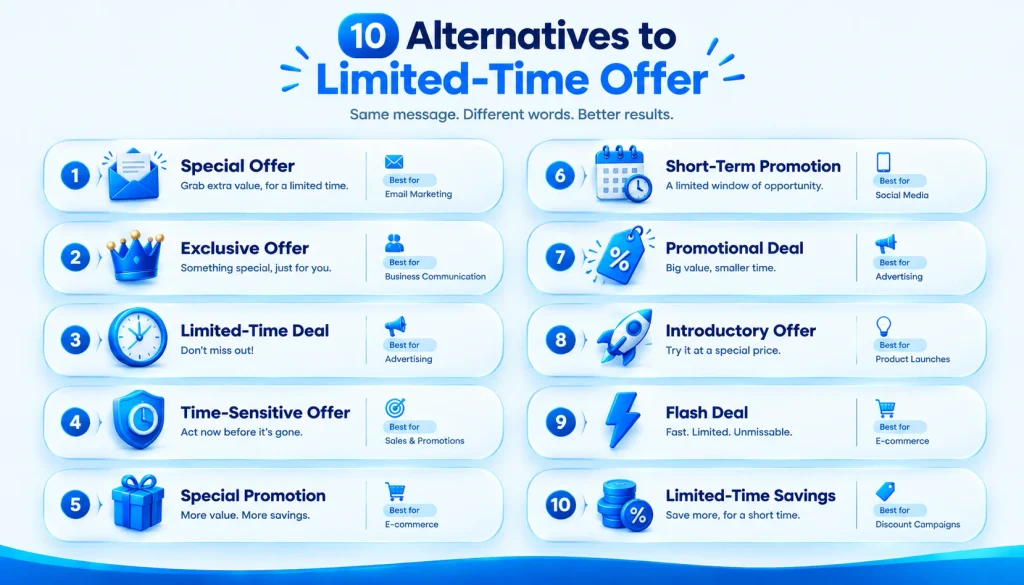
1. Special Offer
Meaning
“Special offer” is one of the most versatile alternatives to “limited-time offer.” It tells customers that they can receive a particular benefit, discount, or promotion without placing heavy emphasis on the deadline.
Best For
- Professional
- Friendly
- Casual
- Warm
Example 1
Enjoy our special offer and save 20% on your next order.
Example 2
As a thank-you to our customers, we’re sharing a special offer this weekend.
Quick Tip
Use “special offer” when you want promotional language that feels natural without creating strong urgency.
2. Exclusive Offer
Meaning
“Exclusive offer” suggests that the promotion is available to a particular group or provides something customers cannot normally access. It focuses more on exclusivity than on how much time remains.
Best For
- Professional
- Formal
- Friendly
Example 1
Members can access an exclusive offer on select products this month.
Example 2
We’re giving our newsletter subscribers an exclusive offer before the public launch.
Quick Tip
Use this phrase when the promotion is genuinely restricted to certain customers, members, or subscribers.
3. Limited-Time Deal
Meaning
“Limited-time deal” is a direct and conversational alternative. It clearly communicates that customers have a short window to take advantage of a price reduction or special purchase opportunity.
Best For
- Casual
- Friendly
- Professional
Example 1
Grab this limited-time deal before the weekend ends.
Example 2
Our limited-time deal includes free shipping on orders over $50.
Quick Tip
Choose this phrase for retail, e-commerce, and social media copy where a straightforward sales message works well.
4. Time-Sensitive Offer
Meaning
“Time-sensitive offer” emphasizes the importance of acting within a certain period. It sounds slightly more businesslike than “limited-time deal.”
Best For
- Professional
- Formal
Example 1
Please take advantage of this time-sensitive offer before Friday at midnight.
Example 2
This time-sensitive offer is available to qualified customers through the end of the month.
Quick Tip
Use this wording when the deadline is important and you want to communicate urgency in a professional way.
5. Special Promotion
Meaning
“Special promotion” describes a temporary marketing campaign, discount, bonus, or customer incentive. It works especially well when the promotion includes more than a simple price reduction.
Best For
- Professional
- Formal
- Friendly
Example 1
Our special promotion includes a complimentary accessory with every qualifying purchase.
Example 2
Take advantage of our special promotion throughout the holiday weekend.
Quick Tip
Use “special promotion” when the campaign includes bundles, gifts, bonuses, or other incentives.
6. Short-Term Promotion
Meaning
“Short-term promotion” highlights the temporary nature of a campaign. It has a practical, business-focused tone and works well when discussing marketing plans or promotional periods.
Best For
- Professional
- Formal
Example 1
The company launched a short-term promotion to introduce its new service.
Example 2
Customers can receive a reduced introductory price during the short-term promotion.
Quick Tip
This phrase fits business communication better than casual advertising copy because it sounds structured and precise.
7. Promotional Deal
Meaning
“Promotional deal” refers to a special price, package, or incentive offered as part of a marketing campaign. It does not automatically imply a strict deadline, so add one when timing matters.
Best For
- Casual
- Friendly
- Professional
Example 1
Check out our promotional deal on annual memberships.
Example 2
This promotional deal gives new customers a free month of service.
Quick Tip
Use a specific deadline alongside this phrase if customers need to know exactly when the deal ends.
8. Introductory Offer
Meaning
“Introductory offer” is commonly used when a business provides a special price or benefit to encourage people to try a new product or service. It emphasizes the launch period rather than urgency alone.
Best For
- Professional
- Formal
- Friendly
Example 1
New subscribers can take advantage of our introductory offer for their first three months.
Example 2
Try our new meal plan with an introductory offer available to first-time customers.
Quick Tip
Choose this phrase when the promotion is tied to a product launch, new service, or first-time customer experience.
9. Flash Deal
Meaning
“Flash deal” suggests a promotion that lasts for a very short period. It creates a strong sense of urgency and is especially common in online retail and e-commerce.
Best For
- Casual
- Friendly
Example 1
Our flash deal starts at noon and ends at midnight.
Example 2
Don’t miss today’s flash deal on selected home essentials.
Quick Tip
Use “flash deal” only when the promotion is genuinely brief; otherwise, the phrase can create misleading expectations.
10. Limited-Time Savings
Meaning
“Limited-time savings” focuses attention on the financial benefit rather than simply calling the promotion an offer. It works particularly well when advertising discounts or reduced prices.
Best For
- Professional
- Friendly
- Warm
Example 1
Enjoy limited-time savings of up to 30% on selected items.
Example 2
Take advantage of limited-time savings when you upgrade your membership this week.
Quick Tip
Use this phrase when the main reason customers should act is the amount they can save.
Comparison Table
| Alternative | Best Used In | Tone |
|---|---|---|
| Special Offer | Emails, websites, general marketing | Friendly, flexible |
| Exclusive Offer | Memberships, subscriber campaigns | Professional, appealing |
| Limited-Time Deal | Retail, e-commerce, social media | Casual, direct |
| Time-Sensitive Offer | Business emails, formal promotions | Professional, urgent |
| Special Promotion | Campaigns, advertisements | Professional, friendly |
| Short-Term Promotion | Business and marketing communication | Formal, practical |
| Promotional Deal | Retail, websites, advertisements | Casual, approachable |
| Introductory Offer | New products and services | Professional, welcoming |
| Flash Deal | E-commerce, social media | Casual, urgent |
| Limited-Time Savings | Discount campaigns | Friendly, benefit-focused |
Common Mistakes
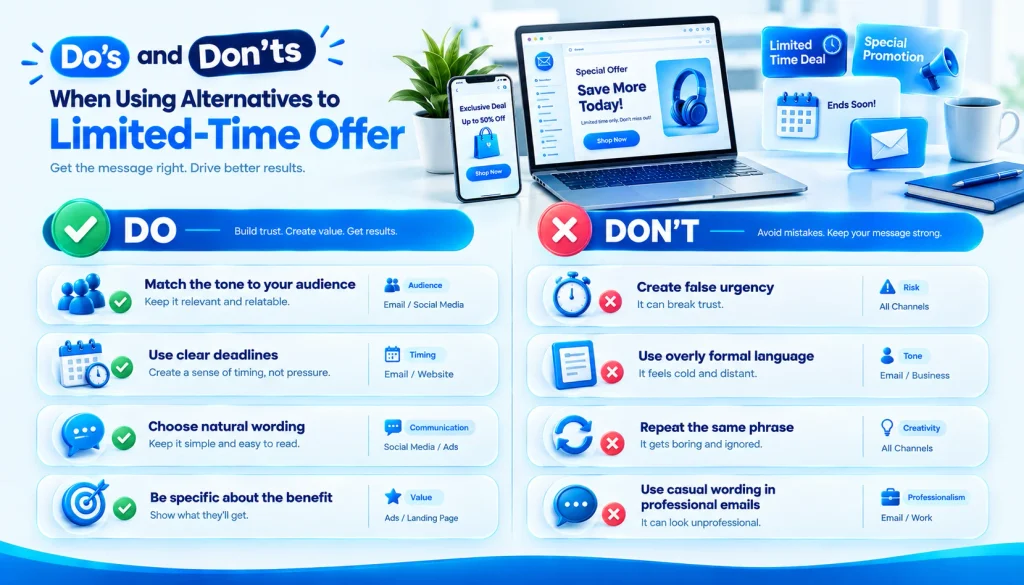
- Using casual phrases in professional emails
Terms such as “flash deal” may sound too informal for a corporate audience. Consider “special offer” or “promotional offer” instead. - Choosing overly formal language
A phrase like “short-term promotional initiative” may sound stiff in consumer advertising. Clear, everyday language is usually easier to understand. - Repeating the same phrase
Using “limited-time offer” in every headline, email, and button can make your copy feel repetitive. Rotate related phrases when they accurately describe the promotion. - Forgetting context
Not every alternative means exactly the same thing. “Exclusive offer” implies restricted access, while “introductory offer” usually relates to a new product or service. - Creating false urgency
Avoid suggesting that an offer ends soon if it does not. Your promotional wording should match the actual terms and expiration date.
Frequently Asked Questions
What is another word for limited-time offer?
Common alternatives include special offer, exclusive offer, limited-time deal, special promotion, time-sensitive offer, and flash deal. The right choice depends on the message. “Special offer” is broad and flexible, while “flash deal” suggests a much shorter promotional window.
What is a professional way to say limited-time offer?
“Special offer,” “time-sensitive offer,” and “special promotion” can work well in professional communication. “Time-sensitive offer” places more emphasis on the deadline, while “special offer” sounds neutral and approachable. Always make sure the wording accurately reflects the actual terms of the promotion.
What is a catchy way to say limited-time offer?
For consumer marketing, phrases such as “flash deal,” “limited-time deal,” and “limited-time savings” can sound more energetic. Your choice should match the brand’s voice and the actual length of the promotion.
How do you say limited-time offer without sounding salesy?
Use softer phrases such as “special offer,” “exclusive opportunity,” or “limited-time savings.” You can also explain the customer benefit instead of relying heavily on urgency. Clear information about the price, benefit, and deadline often sounds more trustworthy than exaggerated sales language.
Is “special offer” the same as “limited-time offer”?
Not always. “Special offer” describes a promotional benefit but does not necessarily indicate that it expires soon. “Limited-time offer” specifically communicates that the promotion is available for a defined period, so use the latter when the deadline matters.
What can I say instead of “limited-time deal”?
Depending on your context, you can use “special offer,” “promotional deal,” “special promotion,” “limited-time savings,” or “flash deal.” Choose “flash deal” for a very short promotion and “special offer” when you want a broader, less urgent expression.
How do you create urgency without saying limited-time offer?
Mention the specific deadline or availability period. For example, “Available through Sunday” gives customers useful timing information without using a standard sales phrase. You can also focus on a concrete benefit, such as a discount or free bonus.
Which phrase is best for an email subject line?
“Special Offer,” “Exclusive Offer,” and “Limited-Time Deal” can all work, depending on the email’s audience and purpose. “Exclusive Offer” fits segmented campaigns, while “Special Offer” is more general. Keep the subject line accurate and make the customer benefit clear when possible.
Conclusion

There are many effective ways to say limited-time offer, but the best phrase depends on what you want customers to notice. “Special offer” is flexible and works across many marketing channels, while “exclusive offer” emphasizes access. For stronger urgency, “limited-time deal,” “time-sensitive offer,” or “flash deal” may fit better.
Context matters just as much as tone. A new service may need an “introductory offer,” while a discount campaign could benefit from “limited-time savings.” Most importantly, choose language that accurately describes the promotion and its deadline.
A strong promotional phrase should help readers understand the benefit without creating unnecessary pressure. When the wording matches the offer, your marketing copy becomes clearer, more credible, and easier for customers to act on.