

If you’re looking for another way to say “get it together,” you can use phrases such as pull yourself together, get organized, get your act together, get back on track, or regain your focus. The best choice depends on whether you want to sound supportive, casual, professional, firm, or encouraging.
Key Takeaways
- “Get it together” usually means becoming more organized, focused, calm, or responsible.
- Pull yourself together is a common alternative when someone needs to regain emotional control.
- Get organized works well when the issue involves planning, tasks, or responsibilities.
- Get back on track sounds supportive and encouraging.
- Regain your focus is a polished choice for professional or academic situations.
- Always consider your tone before using a phrase that could sound critical.
“Get it together” is a common American English expression used when someone needs to become more organized, focused, calm, or responsible. However, the phrase can sometimes sound blunt or judgmental.
Fortunately, there are many alternatives that communicate the same basic idea with different levels of warmth and firmness. Choosing the right expression can help you sound more supportive, professional, or natural.
What Does “Get It Together” Mean?

“Get it together” means to regain control of a situation, organize your thoughts or responsibilities, or start behaving in a more focused and effective way.
For example, a friend might say, “You’ve had a rough week, but you need to get it together before the presentation.” Depending on the situation, the expression can be encouraging, firm, or slightly critical.
People commonly use it when someone is struggling with organization, concentration, emotions, work, school, or personal responsibilities.
Because the phrase is informal, it may not always fit professional or sensitive situations. A softer alternative can communicate the same message without sounding harsh.
Why Use Other Ways to Say “Get It Together”?

Using different expressions gives you more control over your tone and helps you match your words to the situation.
You may want an alternative to:
- Avoid sounding rude or judgmental.
- Make your message more supportive.
- Communicate clearly in professional settings.
- Show encouragement rather than criticism.
- Avoid repeating the same expression.
- Choose wording that fits the person’s situation.
For example, “pull yourself together” can sound firm, while “get back on track” feels more encouraging. “Regain your focus” is better suited to professional or academic communication.
12 Best Other Ways to Say “Get It Together”

1. Pull Yourself Together
Meaning
“Pull yourself together” means to regain emotional control and start thinking or acting calmly. It is often used when someone is upset, overwhelmed, nervous, or distracted.
Best For
- Casual
- Friendly
- Firm
Example 1
Take a deep breath and pull yourself together before you walk into the interview.
Example 2
She was upset after the argument, but she pulled herself together and finished her presentation.
Quick Tip
Use this phrase carefully because it can sound harsh when someone is dealing with serious emotional distress.
2. Get Your Act Together
Meaning
“Get your act together” means to become more organized, responsible, or prepared. It often suggests that someone needs to make a noticeable improvement.
Best For
- Casual
- Friendly
- Firm
Example 1
You need to get your act together if you want to meet the project deadline.
Example 2
He finally got his act together and started managing his schedule properly.
Quick Tip
This is a direct phrase, so avoid using it with someone who may interpret criticism personally.
3. Get Organized
Meaning
“Get organized” focuses on creating order and managing responsibilities more effectively. It works especially well when someone has too many tasks, deadlines, or belongings to manage.
Best For
- Professional
- Casual
- Polite
Example 1
I need to get organized before the new semester starts.
Example 2
Let’s get organized so we can finish the event preparations on time.
Quick Tip
Choose this alternative when the main problem is organization rather than emotions.
4. Get Back on Track
Meaning
“Get back on track” means to return to a productive, successful, or planned course after experiencing a setback. It has a positive and encouraging tone.
Best For
- Professional
- Friendly
- Warm
- Polite
Example 1
After missing a few workouts, I’m ready to get back on track.
Example 2
The team had a difficult week, but we’re taking steps to get back on track.
Quick Tip
This is one of the safest alternatives when you want to encourage someone without sounding judgmental.
5. Regain Your Focus
Meaning
“Regain your focus” means to concentrate again after becoming distracted or overwhelmed. It sounds more polished than “get it together.”
Best For
- Professional
- Formal
- Polite
Example 1
Take a short break and regain your focus before continuing the report.
Example 2
The team needs to regain its focus before the next stage of the project.
Quick Tip
Use this phrase when concentration is the main issue.
6. Get Back in Control
Meaning
“Get back in control” means to manage a situation effectively again. It can refer to work, personal responsibilities, time, or a difficult circumstance.
Best For
- Professional
- Formal
- Casual
Example 1
I created a new schedule to get back in control of my workload.
Example 2
Once she understood the problem, she knew how to get back in control.
Quick Tip
This phrase works best when someone feels that a situation has become difficult to manage.
7. Pull Things Together
Meaning
“Pull things together” means to organize different tasks, ideas, or resources so they work as a whole. It can also mean making a final effort to complete something successfully.
Best For
- Professional
- Casual
- Friendly
Example 1
We have two days left to pull things together for the conference.
Example 2
He pulled the presentation together just before the client meeting.
Quick Tip
Use this phrase when several separate pieces need to be organized into one finished result.
8. Shape Up
Meaning
“Shape up” means to improve your behavior, performance, or effort. It is usually more forceful than supportive and can imply that someone has not been meeting expectations.
Best For
- Casual
- Firm
Example 1
The players need to shape up if they want to win the next game.
Example 2
He was told to shape up after repeatedly missing important deadlines.
Quick Tip
Because it can sound demanding, use “shape up” with caution in professional or sensitive conversations.
9. Get Things Under Control
Meaning
“Get things under control” means to manage a difficult, confusing, or busy situation more effectively. It focuses on restoring order rather than criticizing a person.
Best For
- Professional
- Formal
- Polite
Example 1
We’re working overtime to get things under control before the launch.
Example 2
Once I cleared my inbox, I felt like I had things under control again.
Quick Tip
This is a strong professional alternative when you are talking about a situation rather than someone’s personal behavior.
10. Sort Yourself Out
Meaning
“Sort yourself out” means to deal with your problems, responsibilities, or behavior and become more organized. It is common in informal English and can sound blunt.
Best For
- Casual
- Firm
Example 1
Take the weekend to sort yourself out before making any major decisions.
Example 2
He knows he needs to sort himself out before taking on another commitment.
Quick Tip
This expression is informal and may sound confrontational, so avoid it in formal workplace communication.
11. Get Your Priorities Straight
Meaning
“Get your priorities straight” means to decide what matters most and give those things the appropriate attention. It is useful when someone is focusing on less important things.
Best For
- Professional
- Formal
- Firm
Example 1
You need to get your priorities straight before taking on another major project.
Example 2
She got her priorities straight and started spending more time on her most important goals.
Quick Tip
Use this when the problem involves poor decision-making or misplaced attention.
12. Regroup and Refocus
Meaning
“Regroup and refocus” means to pause, assess what is happening, and concentrate again on the most important goals. It has a constructive and professional tone.
Best For
- Professional
- Formal
- Warm
- Polite
Example 1
Let’s take a day to regroup and refocus before deciding how to proceed.
Example 2
After the unexpected setback, the team regrouped and refocused on the main objective.
Quick Tip
This is an excellent choice when you want to encourage improvement without blaming anyone.
Comparison Table
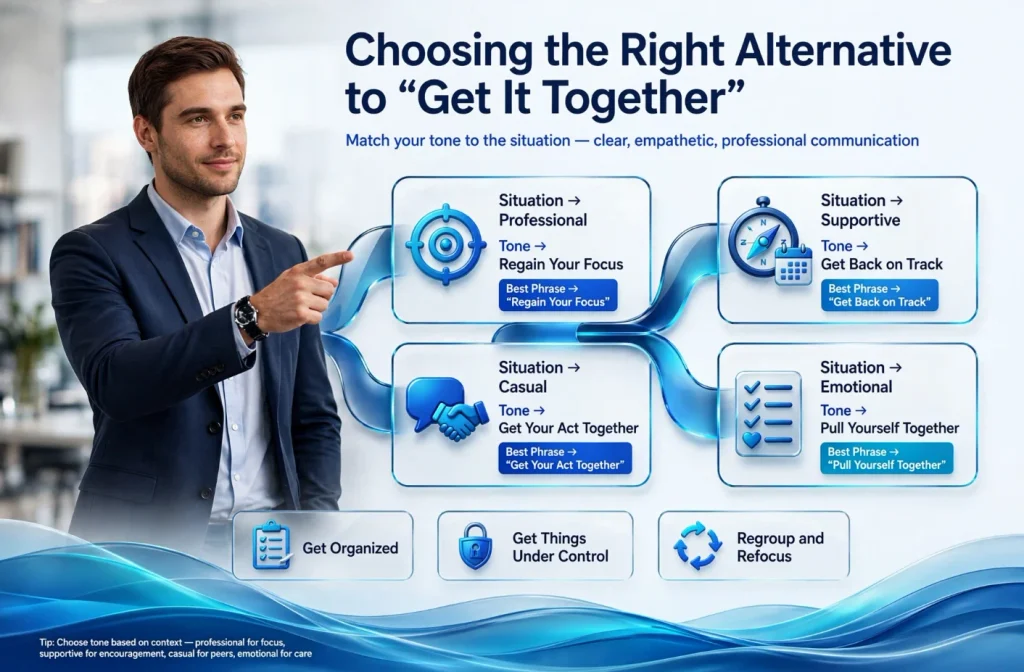
| Alternative | Best Used In | Tone |
|---|---|---|
| Pull yourself together | Personal situations | Firm, direct |
| Get your act together | Casual conversations | Direct, firm |
| Get organized | Work, school, planning | Practical, polite |
| Get back on track | Personal and professional | Encouraging |
| Regain your focus | Work and academic settings | Professional |
| Get back in control | Personal and work situations | Confident |
| Pull things together | Projects and tasks | Practical |
| Shape up | Informal correction | Firm |
| Get things under control | Work and difficult situations | Professional |
| Sort yourself out | Informal conversations | Blunt |
| Get your priorities straight | Decisions and responsibilities | Firm, direct |
| Regroup and refocus | Professional situations | Positive, polished |
Common Mistakes
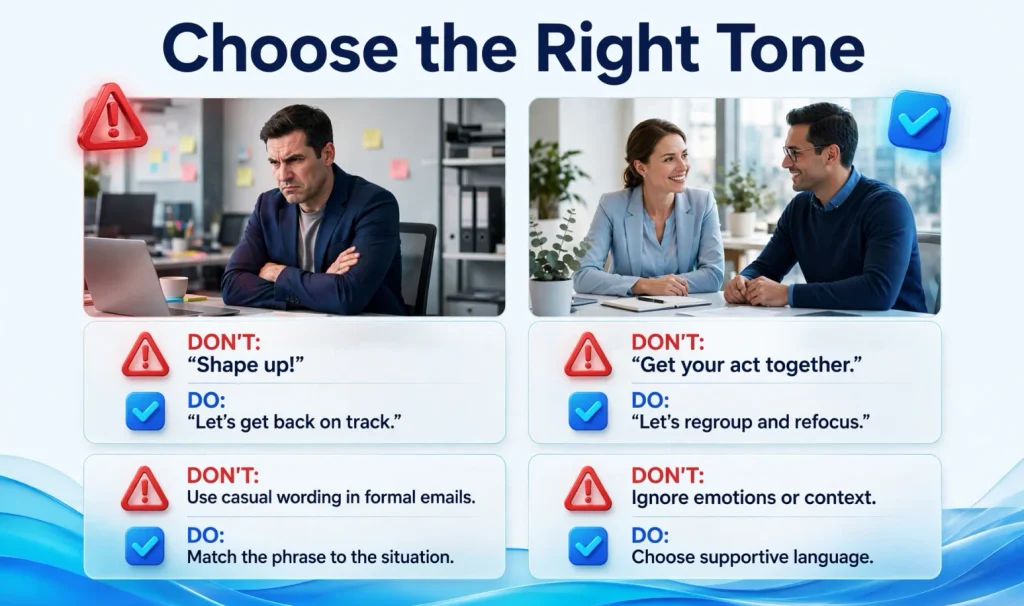
1. Using Casual Phrases in Professional Emails
Expressions such as “shape up” or “sort yourself out” can sound too blunt at work. Choose “regain your focus” or “get things under control” instead.
2. Choosing Overly Formal Language
Not every conversation requires polished business language. Saying “regroup and refocus” to a close friend may sound unnatural when “get back on track” would feel more conversational.
3. Repeating the Same Phrase
Using “get it together” repeatedly can make your writing sound repetitive. Vary your wording based on whether you mean organization, emotional control, focus, or responsibility.
4. Forgetting the Context
The best alternative depends on what someone needs to improve. Use “get organized” for tasks, “regain your focus” for concentration, and “get back on track” for setbacks.
5. Sounding Insincere
Some alternatives can sound critical if they ignore what someone is experiencing. When offering support, phrases such as “get back on track” are usually more encouraging than “get your act together.”
Frequently Asked Questions
What is another way to say “get it together”?
Common alternatives include “pull yourself together,” “get your act together,” “get organized,” “get back on track,” and “regain your focus.” The best option depends on the situation. For supportive communication, “get back on track” is usually softer, while “get your act together” sounds more direct.
Is “pull yourself together” the same as “get it together”?
The two phrases are similar, but they are not always interchangeable. “Pull yourself together” often focuses on controlling emotions and becoming calm, while “get it together” can refer to organization, focus, behavior, or overall responsibility.
What is a professional way to say “get it together”?
Professional alternatives include “regain your focus,” “get organized,” “get things under control,” and “regroup and refocus.” These phrases communicate the need for improvement without sounding unnecessarily critical or personal.
What is a polite way to tell someone to get it together?
A polite approach is to say “let’s get back on track” or “let’s regroup and refocus.” These expressions focus on improvement rather than blaming the person. They are especially useful when you want to encourage someone without making them feel criticized.
What is a nicer way to say “get your act together”?
A nicer alternative is “get back on track.” It suggests that someone can recover and improve without directly criticizing their behavior. “Regain your focus” is another good choice when the issue involves concentration or productivity.
Can I say “get it together” at work?
You can, but context matters. “Get it together” is informal and can sound critical when directed at a coworker or employee. In professional communication, phrases such as “get organized,” “regain your focus,” or “get things under control” are usually more appropriate.
What is another way to say “get it together” when someone is emotional?
“Pull yourself together” is a common expression, but it can sound insensitive depending on the situation. A gentler option is “take a moment to regroup” or “take some time to collect your thoughts,” especially when someone is dealing with a stressful event.
What is the difference between “get it together” and “get back on track”?
“Get it together” is broader and can mean becoming organized, focused, calm, or responsible. “Get back on track” specifically suggests returning to a productive path after a setback or period of difficulty, making it a more encouraging expression.
Conclusion
There are many natural ways to say “get it together,” and the best choice depends on your relationship with the person and the situation. If you want a direct, casual expression, “get your act together” or “pull yourself together” may work. For a more supportive message, “get back on track” is a better choice.
In professional settings, phrases such as “regain your focus,” “get organized,” and “regroup and refocus” sound more polished. Meanwhile, “get things under control” works well when the problem involves a situation rather than a person’s behavior.
The key is to match the phrase to your intended tone. When in doubt, choose wording that encourages improvement without making the other person feel judged.

The Majestic Studio Editorial Team creates practical resources about synonyms, alternative phrases, vocabulary, and English usage. Our content is designed to help readers choose clearer, more natural words and communicate effectively in everyday, professional, and academic contexts.
Each article is researched, edited, and reviewed for clarity, context, usefulness, and language accuracy. We regularly update our content to keep examples and recommendations relevant.