

Another way to say “worked closely with” includes collaborated with, partnered with, worked alongside, coordinated with, liaised with, and teamed up with. The best choice depends on context: use formal phrases such as “collaborated with” in professional writing and warmer options such as “worked alongside” for personal or conversational contexts.
Key Takeaways
- “Worked closely with” describes a strong, direct working relationship.
- “Collaborated with” is a versatile choice for resumes, emails, and business writing.
- “Partnered with” emphasizes shared responsibility and goals.
- “Worked alongside” sounds natural and highlights teamwork.
- The right phrase depends on your audience, context, and desired tone.
What Does “Another Way to Say Worked Closely With” Mean?

The phrase “worked closely with” means that you had regular, direct, and cooperative interaction with another person, team, department, or organization. It often suggests teamwork, communication, shared responsibilities, or joint problem-solving.
People commonly use this phrase in resumes, cover letters, performance reviews, business emails, reports, and professional biographies. However, repeating it too often can make writing sound predictable.
Choosing a more specific alternative can show exactly how you worked with someone. For example, “collaborated with” emphasizes teamwork, while “coordinated with” focuses on organizing activities or people.
Why Use Other Ways to Say “Worked Closely With”?
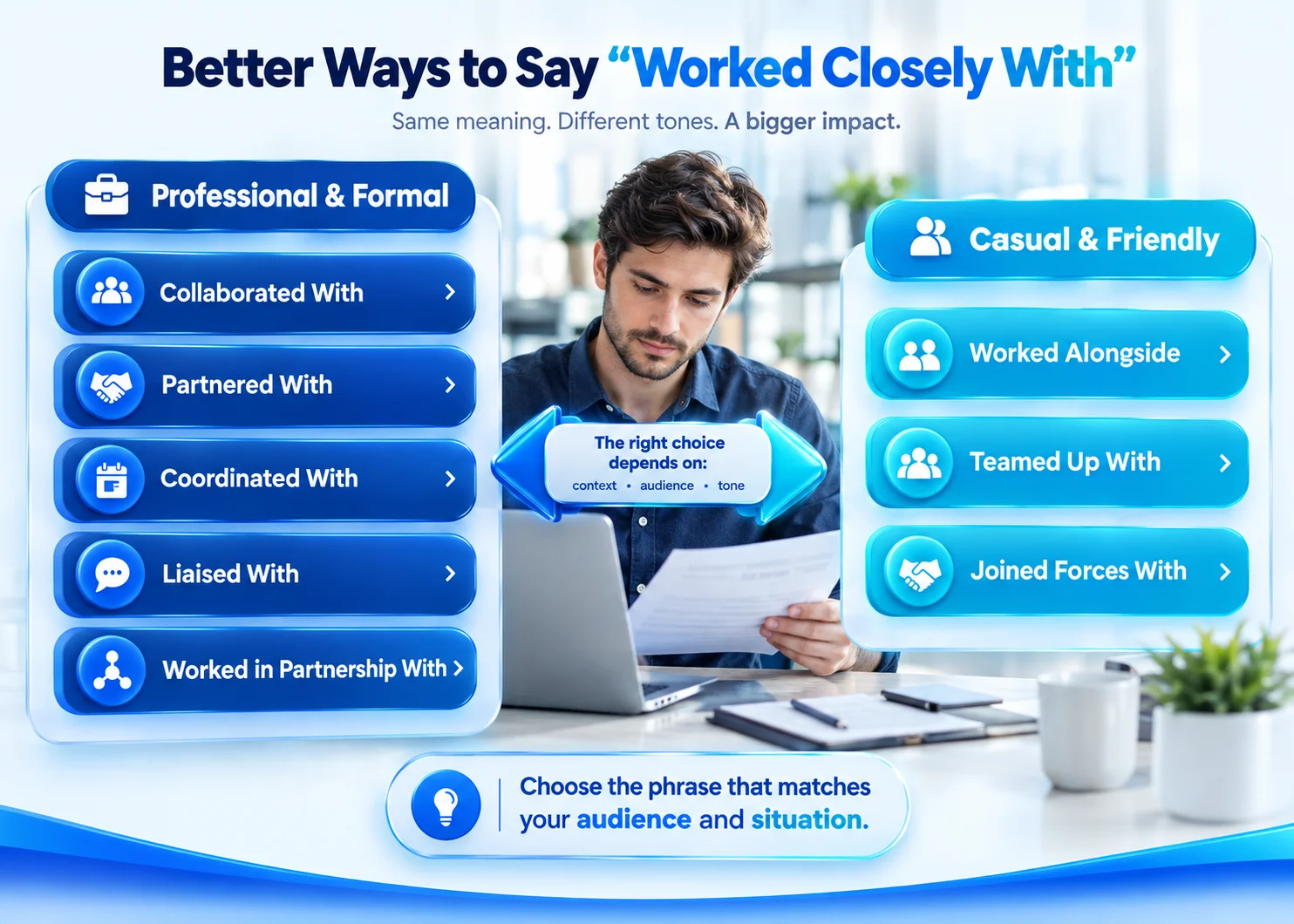
Using alternatives can make your writing clearer and more engaging. It also lets you match the wording to the exact relationship or task you want to describe.
- Avoid repeating the same phrase.
- Make professional writing sound more polished.
- Show the type of teamwork involved.
- Match your language to formal or casual situations.
- Add more precision to resumes and business communication.
- Describe collaboration without sounding generic.
12 Best Other Ways to Say “Worked Closely With”
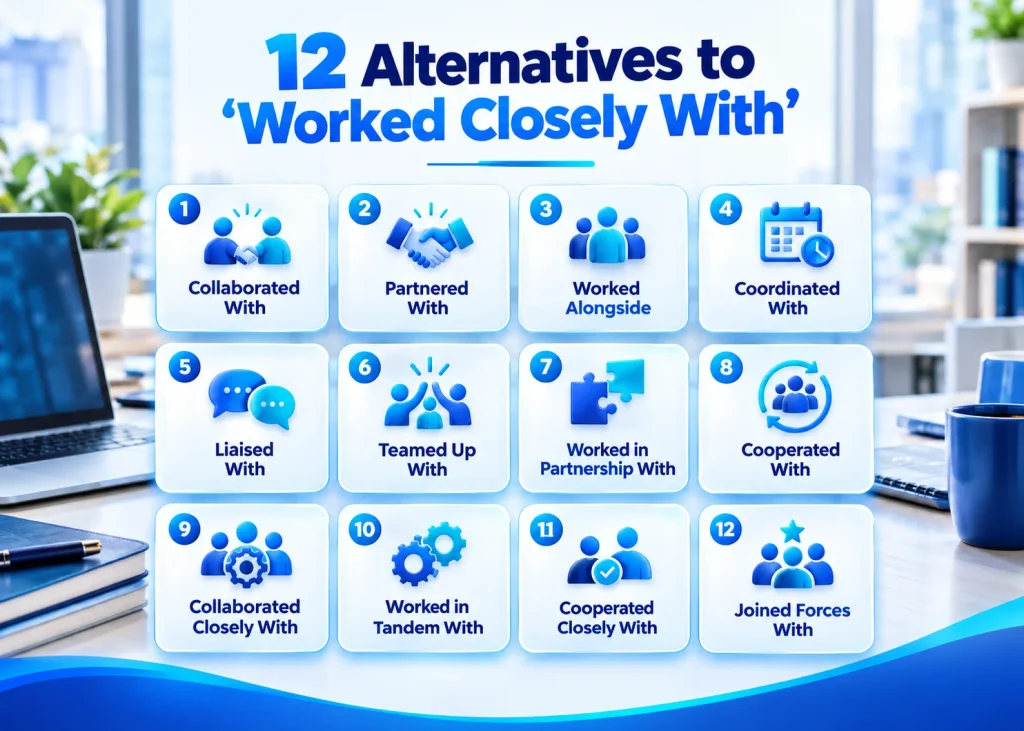
1. Collaborated With
Meaning
“Collaborated with” means you worked together with someone to achieve a shared goal or complete a task. It is one of the most natural and widely useful replacements for “worked closely with.”
Best For
Professional, Formal, Friendly
Example 1
I collaborated with the marketing team to develop the company’s new product launch strategy.
Example 2
She collaborated with several designers to create a consistent brand identity.
Quick Tip
Use “collaborated with” when the work involved genuine teamwork or shared responsibility.
2. Partnered With
Meaning
“Partnered with” suggests that two people, teams, or organizations worked together toward a common objective. It can imply a stronger sense of shared ownership than “worked closely with.”
Best For
Professional, Formal
Example 1
We partnered with local businesses to expand the community outreach program.
Example 2
The sales manager partnered with the product team to improve customer retention.
Quick Tip
Choose this phrase when you want to emphasize a shared goal or joint effort.
3. Worked Alongside
Meaning
“Worked alongside” means you worked directly with another person or group, often as part of the same project or environment. It sounds natural while still being professional.
Best For
Professional, Casual, Friendly
Example 1
I worked alongside experienced engineers to test the new software platform.
Example 2
She worked alongside the customer service team during the company’s busiest season.
Quick Tip
This is a good choice when you want to highlight proximity and teamwork without sounding overly formal.
4. Coordinated With
Meaning
“Coordinated with” emphasizes organizing activities, people, schedules, or information. It works especially well when successful communication and planning were important.
Best For
Professional, Formal, Polite
Example 1
I coordinated with regional managers to organize the annual training sessions.
Example 2
The project lead coordinated with vendors to ensure all materials arrived on time.
Quick Tip
Use this option when your role involved planning, scheduling, or keeping multiple groups aligned.
5. Liaised With
Meaning
“Liaised with” means you communicated and worked with another person or group to maintain cooperation and exchange information. It has a more formal tone than most alternatives.
Best For
Formal, Professional, Polite
Example 1
She liaised with government agencies to complete the required documentation.
Example 2
I liaised with external consultants throughout the implementation process.
Quick Tip
This phrase works best in formal reports, business documents, and professional descriptions.
6. Teamed Up With
Meaning
“Teamed up with” describes joining another person or group to accomplish something together. It is more conversational and energetic than “collaborated with.”
Best For
Casual, Friendly, Professional
Example 1
Our design team teamed up with the developers to build the new website.
Example 2
I teamed up with a colleague to create a more efficient reporting system.
Quick Tip
Avoid this phrase in highly formal documents, but it works well in conversational professional writing.
7. Worked in Partnership With
Meaning
“Worked in partnership with” emphasizes a cooperative relationship built around shared objectives. It sounds polished and is useful when describing long-term cooperation.
Best For
Professional, Formal
Example 1
We worked in partnership with nonprofit organizations to improve access to educational resources.
Example 2
The company worked in partnership with suppliers to reduce production delays.
Quick Tip
Use this wording when the relationship itself is important, not just the individual task.
8. Cooperated With
Meaning
“Cooperated with” means you willingly worked with others and contributed to a common effort. It focuses on mutual assistance and a positive working relationship.
Best For
Formal, Professional, Polite
Example 1
I cooperated with the audit team to provide the requested financial records.
Example 2
The department cooperated with outside researchers during the study.
Quick Tip
Use “cooperated with” when mutual support or participation is more important than leadership.
9. Collaborated Closely With
Meaning
“Collaborated closely with” keeps the meaning of the original phrase while making teamwork the central idea. It works well when you want to emphasize frequent communication and joint effort.
Best For
Professional, Formal
Example 1
I collaborated closely with senior analysts to evaluate quarterly performance data.
Example 2
She collaborated closely with teachers to develop new classroom materials.
Quick Tip
This is useful when you want a professional alternative without changing the original meaning too much.
10. Worked in Tandem With
Meaning
“Worked in tandem with” suggests that two people or groups performed complementary tasks together. It often highlights coordination and a shared workflow.
Best For
Professional, Formal
Example 1
The communications team worked in tandem with the legal department on the announcement.
Example 2
I worked in tandem with the project manager to monitor weekly deadlines.
Quick Tip
Use this phrase when two parties had closely connected responsibilities.
11. Cooperated Closely With
Meaning
“Cooperated closely with” emphasizes both teamwork and frequent interaction. It is slightly more formal than simply saying “cooperated with.”
Best For
Formal, Professional, Polite
Example 1
The researchers cooperated closely with hospital staff during the clinical project.
Example 2
I cooperated closely with the finance department to resolve billing discrepancies.
Quick Tip
Choose this option when you want to stress a high level of communication and mutual support.
12. Joined Forces With
Meaning
“Joined forces with” means two people or groups combined their efforts to accomplish something. It has an energetic tone and can make writing sound more engaging.
Best For
Casual, Friendly, Professional
Example 1
Our community group joined forces with a local nonprofit to organize the food drive.
Example 2
The two departments joined forces to improve the company’s customer onboarding process.
Quick Tip
Use this phrase for collaborative projects where combining resources or expertise was important.
Comparison Table

| Alternative | Best Used In | Tone |
|---|---|---|
| Collaborated with | Resumes, business writing | Professional |
| Partnered with | Business, projects | Professional |
| Worked alongside | Workplace descriptions | Friendly |
| Coordinated with | Planning, operations | Professional |
| Liaised with | Reports, formal writing | Formal |
| Teamed up with | Conversational workplace writing | Casual |
| Worked in partnership with | Long-term cooperation | Formal |
| Cooperated with | Reports, professional writing | Polite |
| Collaborated closely with | Resumes, formal descriptions | Professional |
| Worked in tandem with | Joint projects | Formal |
| Cooperated closely with | Research, business | Formal |
| Joined forces with | Collaborative projects | Friendly |
Common Mistakes
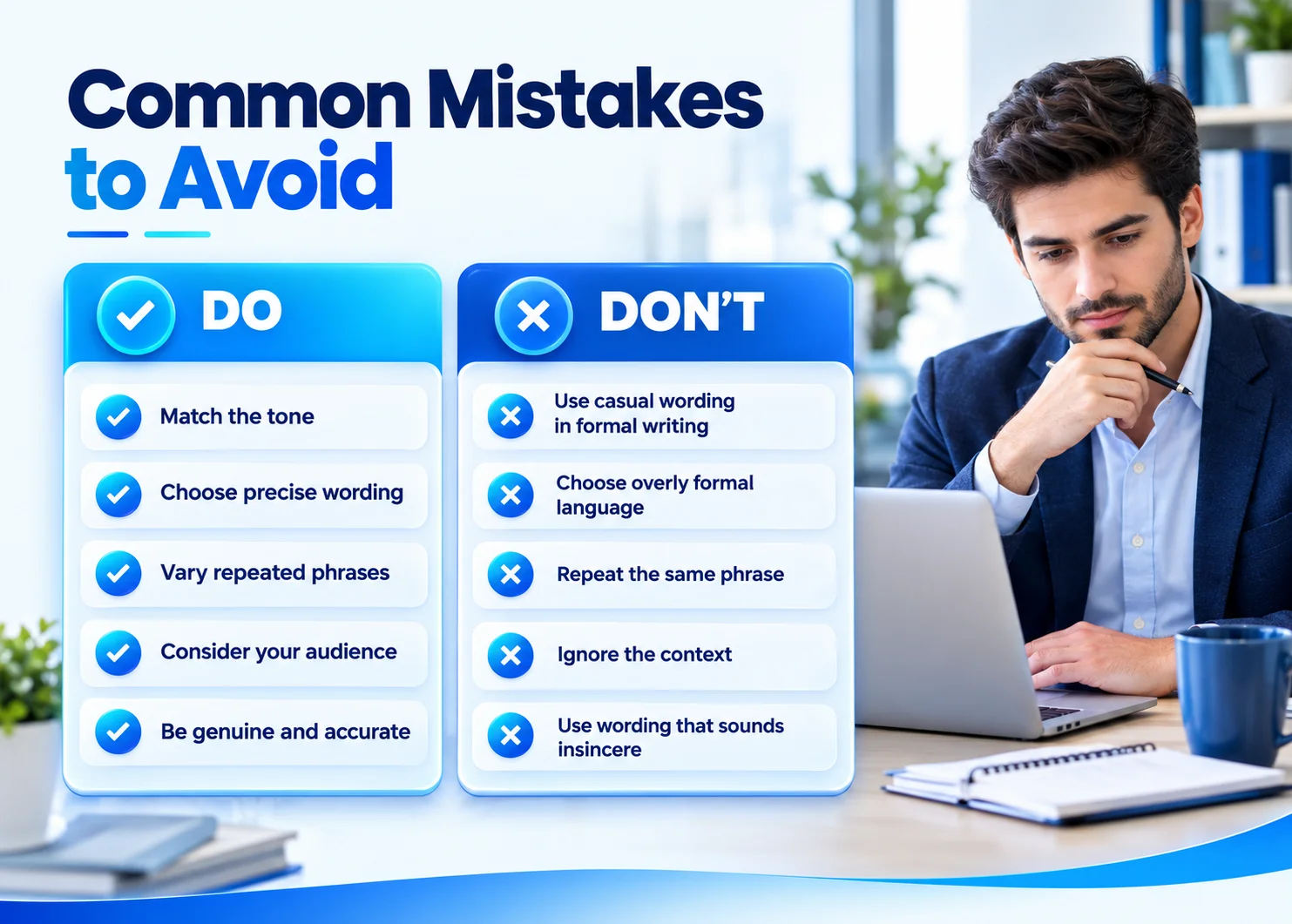
1. Using Casual Phrases in Professional Emails
Expressions such as “teamed up with” or “joined forces with” may sound too relaxed in a highly formal document. Consider “collaborated with” or “coordinated with” instead.
2. Choosing Overly Formal Language
“Liaised with” can sound stiff in everyday workplace communication. Use it when the formal tone fits the audience and situation.
3. Repeating the Same Phrase
Using “worked closely with” several times in a resume can make your accomplishments sound repetitive. Vary your wording when the meaning remains accurate.
4. Forgetting Context
Not every alternative means exactly the same thing. “Coordinated with” suggests planning, while “partnered with” suggests shared responsibility.
5. Sounding Insincere
Avoid choosing sophisticated phrases simply to make your writing sound impressive. The best wording should accurately describe what you actually did.
Frequently Asked Questions
What is a professional way to say “worked closely with”?
“Collaborated with” is one of the strongest general-purpose alternatives. It clearly communicates teamwork and works well in resumes, cover letters, reports, LinkedIn profiles, and business communication. Depending on the situation, “partnered with,” “coordinated with,” or “worked alongside” may provide a more precise description.
What is another way to say “worked closely with” on a resume?
For a resume, consider “collaborated with,” “partnered with,” “coordinated with,” or “worked alongside.” Choose the phrase that best reflects your actual role. For example, use “coordinated with” if you organized people or activities and “partnered with” if you shared responsibility for an outcome.
Can I say “collaborated with” instead of “worked closely with”?
Yes. “Collaborated with” is a natural replacement when you and another person or group worked together toward a shared objective. It is especially useful in professional writing because it communicates teamwork clearly without sounding overly casual or formal.
What is a formal way to say “worked closely with”?
“Liaised with,” “worked in partnership with,” and “worked in tandem with” can provide a more formal tone. The best choice depends on the context. “Liaised with” is particularly appropriate when your role involved communication between different departments, organizations, or professional groups.
What is a casual way to say “worked closely with”?
“Worked alongside,” “teamed up with,” and “joined forces with” sound more conversational. “Worked alongside” is the safest choice for most casual workplace contexts because it remains clear and professional while sounding natural.
How can I avoid repeating “worked closely with” in a resume?
Focus on the specific action you performed. Replace the phrase with verbs such as “collaborated,” “coordinated,” or “partnered” when accurate. You can also restructure the sentence to emphasize the result, such as improving a process, completing a project, or supporting a team.
Is “worked alongside” the same as “worked closely with”?
The meanings are similar, but they are not always identical. “Worked alongside” mainly emphasizes working with someone directly, while “worked closely with” can suggest frequent communication, cooperation, or coordination. Choose the phrase that most accurately reflects the relationship.
Which alternative should I use in a business email?
“Collaborated with” is usually a safe choice for a business email because it sounds professional without being overly formal. If you are describing planning or communication between groups, “coordinated with” may be more precise. Always choose the phrase that matches what actually happened.
Conclusion
There are many natural ways to say “worked closely with,” and the best choice depends on what you want to emphasize. “Collaborated with” is a versatile option for most professional situations, while “partnered with” highlights shared goals and responsibility. “Coordinated with” works well when planning and organization were central to the relationship.
For a more conversational tone, try “worked alongside” or “teamed up with.” Formal documents may benefit from phrases such as “liaised with” or “worked in tandem with.” Most importantly, choose language that accurately reflects the work you performed. A precise phrase will make your resume, email, report, or professional profile clearer and more credible.

The Majestic Studio Editorial Team creates practical resources about synonyms, alternative phrases, vocabulary, and English usage. Our content is designed to help readers choose clearer, more natural words and communicate effectively in everyday, professional, and academic contexts.
Each article is researched, edited, and reviewed for clarity, context, usefulness, and language accuracy. We regularly update our content to keep examples and recommendations relevant.